How a Filipina entrepreneur turned modest beginnings into a mission to democratize digital opportunities, empower communities, and build a more inclusive economy. From starting a business with less than ₱3,000 to empowering Filipino entrepreneurs and underserved communities, Lorna Bondoc demonstrates how digital innovation, intentional stewardship, and inclusive leadership can transform lives.
Not every transformative enterprise begins with substantial capital, sophisticated infrastructure, or an extensive network of investors. Sometimes, it begins with a few thousand pesos, the courage to start, and a deep understanding of what people need.

For Lorna Bondoc, that beginning came in 2016, when she started her own business with less than ₱3,000. What began as an entrepreneurial journey eventually evolved into a larger mission: making the digital economy accessible, equitable, safe, and sustainable for those who are often left behind.
Today, as Founder and Chief Experience Officer of YOVEO Digital Inc., a Lead Digital Expert and Consultant, and an advocate for the Future of Work and micro, small, and medium enterprises (MSMEs), Lorna is helping bridge the distance between technological advancement and grassroots economic empowerment.
Her journey is a compelling reminder that the true value of technology is measured not by its sophistication, but by its capacity to improve human lives.
Beyond Digital Access: Building Equitable Opportunities
Early in her entrepreneurial journey, Lorna recognized a fundamental problem in digital transformation: access does not necessarily translate into equity.
Having an internet connection or owning a smartphone does not automatically equip individuals with the skills, resources, confidence, and support necessary to participate meaningfully in the digital economy.
For marginalized communities, these barriers are often compounded by inadequate infrastructure, fragmented capacity-building programs, and limited awareness of available opportunities.
Lorna witnessed how small entrepreneurs struggled to navigate a development ecosystem where resources existed but were not always coordinated, accessible, or responsive to their needs. Rather than building her advocacy in isolation, she chose collaboration.
By working alongside organizations already addressing these challenges, she developed an approach grounded in practical solutions, shared expertise, institutional partnerships, and an entrepreneurial mindset.
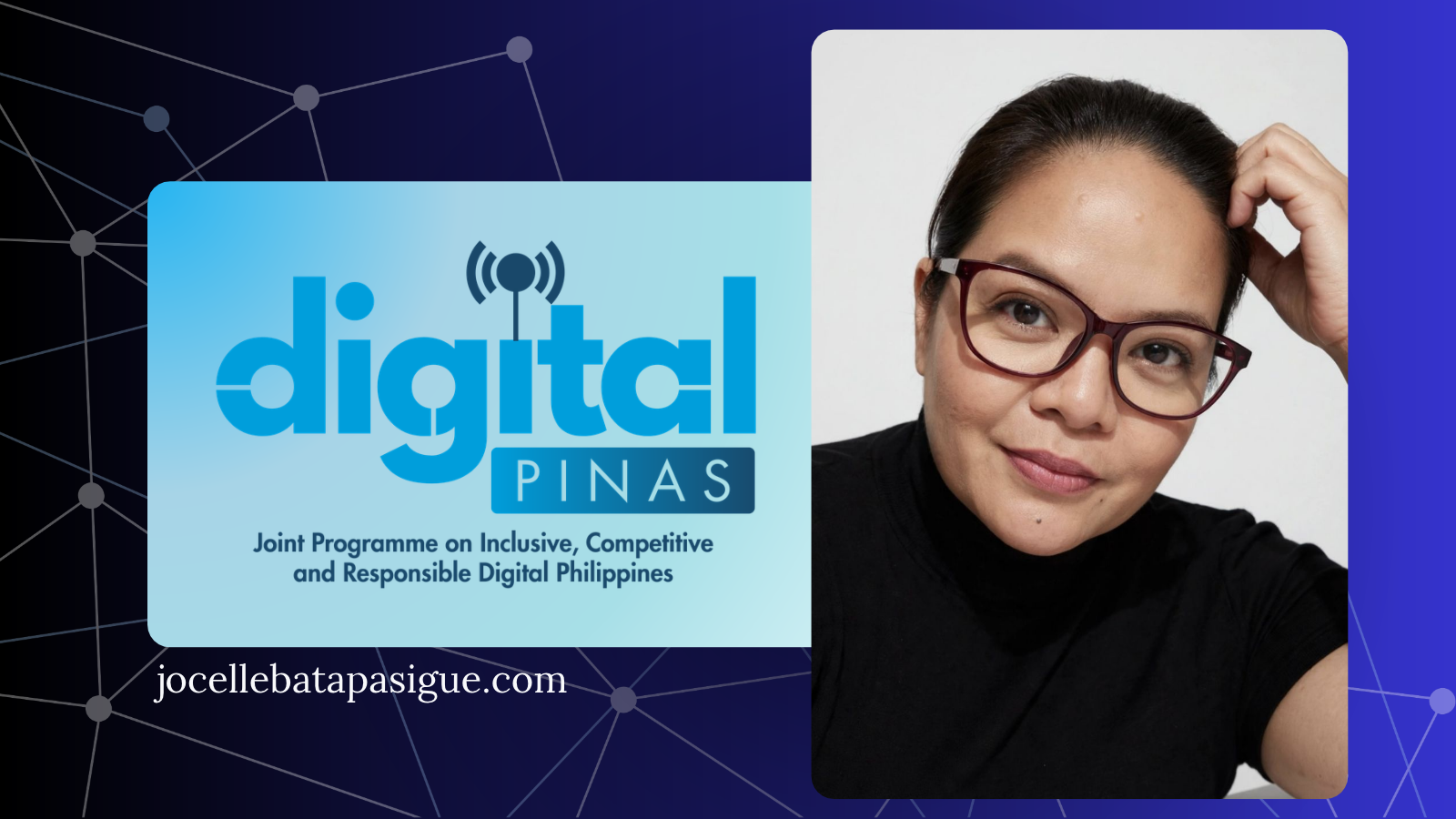
Her work and engagements span initiatives involving The Asia Foundation through Go Digital ASEAN, Skills2Work, and ACF Cyber Hygiene programs; Virtualahan Inc. through coaching and mentorship; the International Trade Centre through the Digital-PINAS Joint Programme; and UNCTAD eTrade for Women, where she serves as a community leader.

Her continuing commitment to professional development and international collaboration is also reflected in her participation as a 2026 Vital Voices Venture Fellow and a Digital for Sustainability Fellow under the ITU-UNSSC initiative.
These engagements reflect a leadership philosophy that recognizes collaboration as an essential mechanism for scaling impact.
From the Shores of Libertad to the Digital Marketplace
One of the most meaningful illustrations of Lorna’s advocacy comes from Libertad, a coastal municipality in Misamis Oriental known for its traditional fermented fish, or ginamos, and emerging lamayo products.
For years, members of a local fisherfolk association relied primarily on traditional market channels, personal connections, and word-of-mouth recommendations to sell their products.
Among them was Daisy Ubanan, a fisherfolk association president and owner of Libertad’s Best Ginamos.
Like many micro-entrepreneurs, Daisy possessed valuable industry knowledge, established community relationships, and quality products. What she lacked was the confidence and technical knowledge to extend her business into the digital marketplace.
During a Digital-PINAS workshop, Lorna and her team introduced digital technologies not as complicated technical systems, but as extensions of the skills Daisy already possessed.

Using her own smartphone, Daisy created the first official Facebook Business Page for her fisherfolk association, learned to use ChatGPT to generate product descriptions and develop a weekly content calendar, and explored smartphone photography and Canva to improve her promotional materials.
More than acquiring new technical skills, Daisy discovered that she could take ownership of her community’s digital presence.
“This training has been a great help, especially for me as the leader of our association. I will not only be able to apply what I learned to my own business, but also use it to support and guide our fellow members,” Daisy shared, as recalled by Lorna.
This is the kind of transformation that rarely makes national headlines but deserves greater recognition.
A community leader becomes a digital advocate. A traditional livelihood gains new avenues for market expansion. Knowledge acquired by one entrepreneur becomes a resource for an entire community. It is digital inclusion in its most practical and meaningful form.
Technology That Empowers Rather Than Overwhelms
Lorna’s work challenges the assumption that digital transformation requires expensive technologies or complex enterprise systems.
For smallholder farmers, cooperatives, women entrepreneurs, and microenterprises, the most effective innovations are often those that can be integrated into their existing workflows.
In another initiative involving cacao farmers and local women entrepreneurs, Lorna and her collaborators focused on straightforward digital solutions to address limited market visibility, operational bottlenecks, and difficulties in reaching new customers.
The cooperative began working toward expanding its market beyond its immediate community, including opportunities for recurring orders from regional cafés and online buyers.
Equally important was enabling the women managing these operations to take ownership of their digital presence.
For Lorna, technology should strengthen the independence of entrepreneurs rather than create new forms of dependency.
This means designing interventions that communities can understand, afford, manage, and sustain long after a training program ends.
Progress Over Perfection, Progress Over Participation
Throughout her journey, Lorna has embraced three important lessons:
“If you do not ask, you do not receive.”
“You do not have to be ‘finished’ in order to recognize progress.”
“Progress over perfection. Progress over participation.”
The last principle is particularly relevant to the Philippine development landscape.
Success cannot be measured solely by the number of workshops conducted, participants trained, certificates distributed, or programs launched.
The more important questions are whether entrepreneurs have improved their operations, whether communities have become more economically resilient, whether individuals practice greater cybersecurity vigilance, and whether local institutions can sustain initiatives independently.
Lorna recognizes that capacity-building programs require time to generate measurable and lasting outcomes. Their true legacy emerges when local institutions adopt these initiatives and continue implementing them as part of their own development strategies.
It is a shift from counting activities to cultivating capabilities, from delivering interventions to building sustainable ecosystems.
Preparing Filipinos for the Age of Artificial Intelligence
As artificial intelligence reshapes industries and employment, Lorna believes that the next generation must develop capabilities beyond conventional technical proficiency.
Learning how to operate a particular application is useful. Learning how to adapt when that application becomes obsolete is even more valuable.
She emphasizes the importance of AI literacy, critical thinking, communication, empathy, curiosity, and adaptability.
The future belongs not simply to those who understand technology, but to those who can translate technological complexity into practical solutions for people and communities.
For Filipino entrepreneurs, this means using AI to improve business decisions, streamline operations, strengthen market positioning, and develop products without losing the human relationships and cultural identities that make their enterprises distinctive.
Her perspective places human stewardship at the center of technological advancement. Technology may accelerate progress, but people must determine its purpose, direction, and impact.
A Philippines Where Geography Does Not Limit Opportunity
Lorna’s vision extends beyond individual enterprises. She sees the need for systemic reforms that enable Filipino communities to participate more competitively in the digital economy.
She advocates for reducing administrative burdens on teachers, modernizing education around real-world digital competencies, improving access to affordable business technologies, and strengthening regional supply chains.
She also underscores the importance of government interoperability, reducing repetitive bureaucratic processes, expanding last-mile internet connectivity, and developing strong regional innovation hubs outside Metro Manila.
At the heart of these aspirations is a belief that economic opportunity should not be determined by geography.
A fisherfolk entrepreneur in Misamis Oriental, a cacao farmer in a rural municipality, or a woman operating a microenterprise in a remote province should have meaningful opportunities to benefit from the same technological advancements available in major economic centers.
Digital transformation must reach beyond metropolitan boundaries and become an instrument of inclusive regional development.
The Everyday Builders of the Philippine Economy
Despite her professional engagements and international exposure, Lorna draws her greatest inspiration from the people working quietly in their communities.
She calls them the everyday builders: regional micro-entrepreneurs, agricultural cooperatives, and women leaders who maximize limited resources to improve livelihoods and uplift others.
Their resourcefulness reminds her that innovation does not always emerge from laboratories, corporate boardrooms, or technology conferences.
It can emerge from a public market, a fishing community, a farming cooperative, or a small business operating from someone’s home.
These entrepreneurs may not describe themselves as innovators, but their ability to adapt, solve problems, and create value under challenging circumstances embodies the very spirit of innovation.Their stories deserve to be heard, supported, and celebrated.
Small Starts, Intentional Stewardship
When asked to describe her journey in a single phrase, Lorna chose four powerful words:
“Small starts, intentional stewardship.”
It is a philosophy that captures both her entrepreneurial beginnings and her continuing commitment to inclusive development.
Her journey from starting a business with less than ₱3,000 to contributing to international development initiatives demonstrates that leadership is not necessarily defined by the resources one possesses at the beginning, but by how responsibly and purposefully those resources are used.
Her advice to young Filipinos is equally compelling: have the courage to begin and the discipline to stay the course.
We need more stories like Lorna Bondoc’s—stories of Filipino women who are not merely participating in digital transformation but actively shaping its direction, expanding its reach, and ensuring that its benefits are shared.
Her work reminds us that the most valuable investments in the digital economy are ultimately investments in people.
As the world moves toward increasingly intelligent technologies, the Philippines must also become more intentional about building intelligent, inclusive, and compassionate communities.
Because digital transformation is not complete when technology reaches people.
It becomes meaningful when people gain the power to transform their own futures.
This feature is based on an interview with Lorna Bondoc, Founder and Chief Experience Officer of YOVEO Digital Inc., digital transformation specialist, and Future of Work and MSME advocate.