Building an Innovation Ecosystem Through Connected Communities and AI-Powered Enterprises
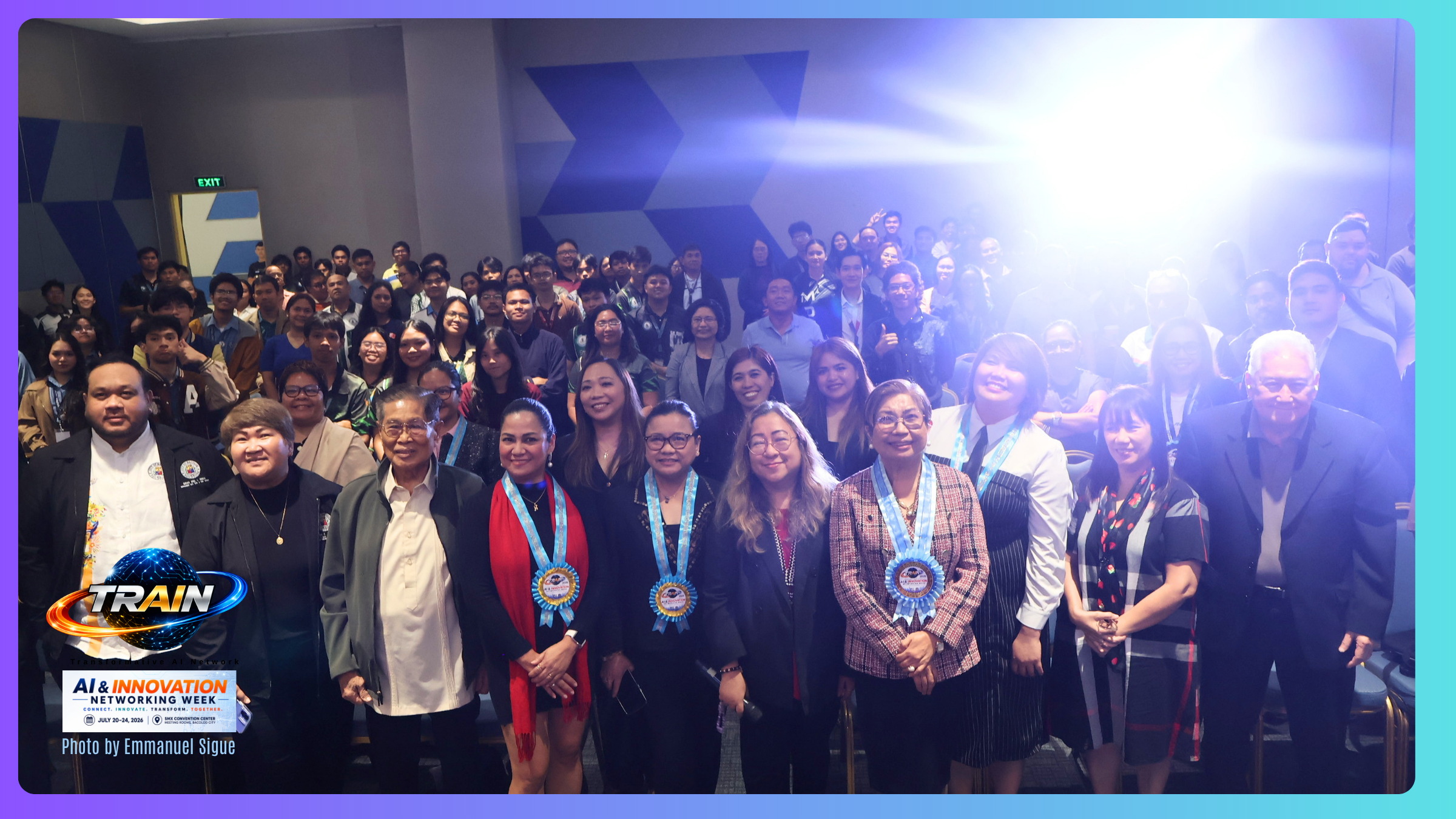
BACOLOD CITY, Philippines — More than a thousand participants from across the Philippines converged at the SMX Convention Center Bacolod from July 20 to 24 for what organizers described as one of the country’s most comprehensive regional gatherings on artificial intelligence, digital transformation, innovation ecosystems, entrepreneurship, and technology governance. Known as TRAIN 2026—short for Transformative AI Network: AI & Innovation Networking Week—the five-day event sought to answer a question that is becoming increasingly relevant not only for the Philippines but for developing economies around the world: how can artificial intelligence become a practical tool for inclusive economic development rather than simply another emerging technology discussed by experts?
The answer, according to TRAIN organizers, was never confined to artificial intelligence itself.
Instead, TRAIN 2026 demonstrated that sustainable technological progress begins with people, institutions, collaboration, and a shared willingness to learn.

Convened by the Philippine ICT Innovation Network (PIIN) under the leadership of Atty. Jocelle Batapa-Sigue, the conference deliberately departed from the common narrative surrounding AI as either an existential threat or an inevitable technological revolution. Throughout the week, speakers consistently emphasized that artificial intelligence should be understood as one component of a much broader innovation ecosystem that includes digital infrastructure, entrepreneurship, workforce development, education, creativity, ethical governance, and regional collaboration.
The event carried a simple but ambitious message that resonated throughout every session: Knowledge is the New Currency. This reflected the central philosophy underpinning TRAIN 2026—that knowledge, when shared across sectors and translated into practical action, becomes the foundation of economic competitiveness and social progress.


The choice of Bacolod City as host carried symbolic significance. Long recognized for its vibrant culture, educational institutions, and growing technology community, Bacolod has increasingly positioned itself as an emerging digital city outside Metro Manila. Together with the provinces of Negros Occidental and Negros Oriental, now forming the newly established Negros Island Region (Region XVIII), organizers viewed the conference as an opportunity to demonstrate that innovation leadership need not remain concentrated within the country’s traditional metropolitan centers.
Instead, regional communities can become laboratories for digital transformation.


A Deliberate Focus on Regional Innovation
Unlike many technology conferences that emphasize software demonstrations or product launches, TRAIN 2026 focused on building relationships among institutions that often operate independently.
Government agencies, local government units, universities, startups, multinational corporations, MSMEs, ICT councils, development organizations, investors, creative professionals, and students occupied the same venue, participating not merely as audiences but as contributors to an ongoing conversation about regional development.
This ecosystem approach reflected Batapa-Sigue’s long-standing advocacy that innovation should be understood as a collaborative undertaking rather than the responsibility of any single institution.


For nearly two decades, she has consistently argued that creating digital jobs requires more than technical training or investment incentives. It requires interconnected ecosystems where government develops enabling policies, universities cultivate talent, industry creates opportunities, communities identify local challenges, and innovators work together to transform ideas into sustainable enterprises.
TRAIN 2026 became a practical demonstration of that philosophy.
Rather than organizing isolated technical lectures, the conference intentionally combined keynote presentations, panel discussions, startup competitions, policy dialogues, networking sessions, exhibitions, and specialized workshops into a continuous learning environment designed to encourage collaboration among participants from different sectors.
Opening the Conversation
The opening day, themed “Connected Communities & Innovation Ecosystems,” established the intellectual foundation for the remainder of the conference.
Participants were welcomed by Dr. Naomi Cosette R. Luis, Regional Director of the Department of Science and Technology–Negros Island Region, who emphasized that innovation flourishes when knowledge is openly shared rather than closely guarded.
Her remarks echoed one of the conference’s recurring messages—that knowledge derives its greatest value when it circulates among communities, institutions, and generations.

Batapa-Sigue reinforced this perspective during her opening address, challenging participants to move beyond passive discussions of artificial intelligence and instead become active builders of innovation ecosystems within their respective communities.
She argued that technological transformation cannot succeed through government initiatives alone nor through private-sector investments in isolation. Sustainable innovation requires meaningful collaboration among academe, government, industry, and communities—a framework she has consistently promoted through what she describes as MAGICC: Making Academe, Government, Industry, and Communities Collaborate.
Throughout the first day, discussions explored how digital infrastructure, institutional partnerships, research collaboration, entrepreneurship, and community participation collectively determine whether regions become consumers of technology or creators of innovation.
The message was particularly relevant for local government officials, educators, entrepreneurs, and startup founders attending the conference, many of whom represented communities seeking to strengthen their own digital economies.
Industry presentations further illustrated how digital connectivity, cloud technologies, artificial intelligence, and data-driven decision-making increasingly shape competitiveness across sectors, while panel discussions examined the responsibilities of both public and private institutions in creating environments where innovation can flourish.
Rather than presenting technology as an end in itself, speakers repeatedly emphasized technology’s role in improving governance, expanding educational opportunities, increasing productivity, and generating employment.
Day Two: Artificial Intelligence Meets Enterprise
If the opening day established the philosophical framework for TRAIN 2026, the second day translated those ideas into practical business applications.

Under the theme “AI-Powered Enterprises: Empowering People. Creating Digital Jobs,” discussions shifted toward the ways artificial intelligence and digital technologies are reshaping enterprises of every size—from agricultural cooperatives and microenterprises to multinational corporations.
The day’s welcome address was delivered by Teodora P. Sumagaysay, CESO V, Officer-in-Charge Assistant Regional Director of the Department of the Interior and Local Government, who encouraged local governments to develop greater familiarity with emerging technologies so they can improve governance and public service delivery.

Her remarks underscored a growing recognition among government institutions that digital transformation is no longer optional but essential to responsive governance.
One of the morning’s keynote presentations featured Lorna Bondoc, International Trade Centre–Digital PINAS Joint Programme Lead, who examined how digitalization can strengthen agricultural micro, small, and medium enterprises.

Her presentation demonstrated that digital transformation need not begin with sophisticated artificial intelligence applications. Instead, enterprises often achieve meaningful productivity gains through incremental adoption of digital tools that improve market access, streamline operations, enhance financial management, and connect producers more efficiently with customers.
Bondoc emphasized that technology should serve people rather than overwhelm them. By focusing on practical solutions rather than technological complexity, she encouraged participants to view digitalization as an accessible pathway toward competitiveness rather than an intimidating technological leap.


The conference subsequently turned toward workforce development through a presentation by Nieva Mortiz of Pinnacle Technologies, Inc., who discussed the evolving relationship between education and enterprise.
Mortiz argued that preparing the workforce for artificial intelligence requires more than teaching technical skills.

Educational institutions must also cultivate adaptability, critical thinking, creativity, ethical reasoning, and continuous learning—qualities increasingly valued in rapidly changing labor markets.

Her presentation resonated particularly with educators attending the conference, many of whom sought practical strategies for preparing students for occupations that continue evolving alongside technological advancement.
To reinforce the discussion was Daniel Santos, a senior global executive at Toon Boom Animation, the Canadian company behind Toon Boom Harmony and Storyboard Pro, two of the world’s most widely used professional animation software platforms for 2D animation, television, feature films, game cinematics, and educational institutions.

Financial technology formed another important component of the morning discussions.
Aljon Candelasa, Branch Head of Ephraim Branch–Manulife Philippines, explored how digital technologies and artificial intelligence are transforming financial advisory services while maintaining the essential human relationships upon which trust depends.


Rather than portraying AI as a replacement for financial professionals, Candelasa emphasized that technology enhances advisors’ capacity to serve clients more effectively by improving access to information, streamlining administrative processes, and supporting more informed decision-making.
His presentation reinforced one of TRAIN’s recurring themes: technological innovation achieves its greatest value when it strengthens rather than replaces human capability.
Conversations Across Generations
Perhaps the most distinctive feature of the second day emerged during the panel discussion moderated by Batapa-Sigue.
Joining Bondoc, Mortiz, and Candelasa was Osias, a student representative whose participation reflected the conference’s commitment to intergenerational dialogue.

Instead of limiting discussions to experienced professionals, organizers intentionally provided young participants with opportunities to contribute their perspectives on education, employment, entrepreneurship, and technological change.
The resulting conversation extended beyond enterprise productivity to broader questions concerning workforce transformation, responsible artificial intelligence adoption, lifelong learning, and the future of regional economies.
The presence of students alongside senior executives highlighted an important characteristic of TRAIN 2026.
Knowledge was not treated as flowing exclusively from experts toward audiences.
Instead, organizers encouraged reciprocal learning in which government officials, business leaders, educators, entrepreneurs, and students exchanged ideas as equal contributors to a shared conversation.
This collaborative environment became one of the conference’s defining characteristics.
Participants frequently observed that discussions remained grounded in practical realities rather than abstract technological speculation.
Instead of asking whether artificial intelligence would eventually transform society, speakers consistently explored how communities can begin applying digital technologies today to improve productivity, strengthen institutions, expand educational opportunities, and create sustainable employment.
As the second day concluded, one observation had become increasingly evident.
TRAIN 2026 was developing into something larger than a technology conference.
It was becoming a regional platform where communities collectively examined how knowledge, innovation, entrepreneurship, and responsible governance might converge to shape a more competitive and inclusive future for the Negros Island Region and the Philippines.
Digital Business, Sustainable Growth, Startups, and the Rise of a Regional Innovation Movement
The momentum established during the first two days of TRAIN 2026: AI & Innovation Networking Week reached an even higher level as discussions shifted from understanding artificial intelligence to applying it as a catalyst for enterprise growth, entrepreneurship, and regional competitiveness.
If the opening sessions focused on building innovation ecosystems and preparing enterprises for digital transformation, the succeeding days challenged participants to think beyond technology adoption. The conversations increasingly centered on how innovation ecosystems create businesses, how businesses create jobs, and how regions become globally competitive by investing in knowledge, creativity, and collaboration.
For many participants, this transition reflected the central philosophy behind TRAIN itself.
Artificial intelligence is not the destination. It is one of the many tools that can help communities build stronger economies.
From Digital Transformation to Sustainable Growth
Day Three carried the theme “Digital Business & Sustainable Growth,” bringing together business leaders, technology experts, entrepreneurs, educators, and government representatives to explore how digital transformation is reshaping industries across the Philippines.


The day’s welcome remarks were delivered by Jam Colas-Villaber, Officer-in-Charge Regional Director of the Department of Economy, Planning, and Development (DEPDev) for the Negros Island Region. She emphasized that economic development and innovation must advance together if the newly established region is to realize its full potential. Her message reflected the aspirations of many local leaders who see technology as an opportunity to diversify the regional economy while creating better jobs for future generations.
Unlike discussions that portray digital transformation as a purely technological undertaking, TRAIN 2026 framed it as a strategic business decision.
Companies increasingly recognize that competitiveness depends not only on acquiring new technologies but also on redesigning business processes, investing in workforce capabilities, improving customer experiences, and using data more effectively to guide decision-making.
Industry leaders shared practical experiences on how organizations are integrating digital platforms into everyday operations while balancing innovation with sustainability and long-term resilience.
Participants examined how businesses of all sizes—from small family-owned enterprises to larger corporations—can benefit from cloud technologies, automation, artificial intelligence, digital marketing, and modern workforce practices.


Equally important were conversations about responsible growth. Several speakers emphasized that successful digital transformation requires organizational culture, leadership commitment, and continuous learning rather than simply purchasing new software or adopting emerging technologies.
Throughout the morning, attendees repeatedly returned to a recurring question that had surfaced during previous sessions:
How can innovation become inclusive rather than exclusive?
Rather than benefiting only large corporations, participants explored ways by which digital technologies can empower MSMEs, rural enterprises, cooperatives, educators, creative professionals, and local governments.
This perspective distinguished TRAIN from many technology conferences where discussions often remain centered on large enterprises or metropolitan innovation hubs.
Innovation as an Economic Strategy
By the third day, an increasingly important message had emerged from the conference.
Innovation should no longer be viewed merely as an activity undertaken by technology companies.
Instead, innovation has become an economic development strategy.
This idea resonated strongly among participants representing local governments, business organizations, chambers of commerce, educational institutions, and startup communities.
Artificial intelligence was repeatedly presented not as an industry in itself but as a capability that enhances nearly every sector of the economy. Agriculture can become more productive through data-driven decision-making. Healthcare can improve through digital systems. Manufacturing can become more efficient through automation. Creative industries can expand through digital production. Government services can become more responsive through analytics. Education can better prepare students for emerging careers.
Viewed collectively, these applications demonstrated that the future digital economy depends less on technology alone than on the willingness of institutions to collaborate and continuously adapt.


Day Four: The Energy of Entrepreneurship
If the first three days focused on ecosystems, enterprises, and digital transformation, the fourth day shifted attention toward those who will build the next generation of businesses.
Under the theme “AI Startups & Innovation,” TRAIN 2026 celebrated entrepreneurship, creativity, and the growing confidence of young innovators across the Negros Island Region.
The day opened with welcome remarks from Lynna Joy Cardinal, Provincial Director of the Department of Trade and Industry–Negros Occidental, who underscored the critical role of startups and innovation-driven enterprises in expanding regional economies. She emphasized that supporting entrepreneurs means creating environments where ideas can evolve into sustainable businesses capable of generating employment and attracting investment.
Her remarks reinforced one of TRAIN’s central messages. Economic growth begins with people who are willing to solve problems. Technology simply accelerates their ability to do so.
Building an Innovation Ecosystem
One of the day’s highlights was a high-level panel discussion moderated by Atty. Jocelle Batapa-Sigue, bringing together leaders representing telecommunications, startup ecosystems, and the creative industries.
Joining the discussion were Raymond Lacdao, Vice President for Enterprise of DITO Business; Engr. Jovel Young of the BUGLAS NIR Consortium; and Pauline Oderon, President of the Multimedia Arts Council of the Philippines (MMACP).


Although their professional backgrounds differed significantly, their discussions converged around a common theme.


Innovation flourishes when different sectors work together. Lacdao emphasized the importance of reliable digital infrastructure in enabling startups and enterprises to compete in an increasingly connected economy. Connectivity, cloud services, and digital platforms, he explained, have become foundational requirements for innovation rather than optional business investments.
Young discussed the role of regional innovation ecosystems in nurturing entrepreneurs from the earliest stages of idea development through mentoring, incubation, technical assistance, and collaboration among government, universities, investors, and private industry.
Oderon brought another important perspective by highlighting the expanding role of the creative economy. She argued that innovation is not limited to software developers or engineers.
Artists, designers, filmmakers, multimedia professionals, storytellers, and digital creators are increasingly contributing to economic development by combining creativity with technology.
The panel illustrated one of TRAIN’s defining characteristics. Artificial intelligence was consistently discussed within a broader framework that included entrepreneurship, infrastructure, creativity, education, investment, and community collaboration.
DASIG.AI: A Stage for Young Innovators
The defining event of Day Four was undoubtedly DASIG.AI, the inaugural AI pitching competition that quickly became one of the most anticipated highlights of TRAIN 2026.
Unlike conventional hackathons that often reward technical complexity alone, DASIG.AI challenged students to identify real-world problems and develop practical AI-powered solutions capable of delivering meaningful social or economic impact.
High school and college teams from institutions across the region presented ideas addressing agriculture, education, healthcare, accessibility, business productivity, environmental sustainability, public services, and community development.
The competition reflected a deliberate shift in mindset.
Participants were encouraged not simply to ask what artificial intelligence could accomplish but rather what problems deserved solving.
Throughout the presentations, students demonstrated remarkable confidence as they defended their concepts before a distinguished panel of judges composed of technology executives, researchers, creative industry leaders, and innovation advocates.
The atmosphere inside the competition venue reflected excitement rather than anxiety. Students exchanged ideas, encouraged fellow competitors, and celebrated one another’s creativity regardless of the competition’s outcome.


Many participants acknowledged that the experience itself had become more valuable than the awards. For organizers, DASIG.AI represented something much larger than a student competition. It became a practical demonstration that innovation talent already exists within regional communities.
What young innovators often need is not permission to dream but opportunities to present, receive mentorship, refine ideas, and connect with potential collaborators.


The success of DASIG.AI reinforced one of TRAIN’s strongest convictions. The future of Philippine innovation will not be built solely inside major metropolitan centers. It will emerge from classrooms, universities, local communities, and regional ecosystems where young people are encouraged to solve problems that matter.


Beyond Artificial Intelligence
As discussions concluded on the fourth day, a broader realization had begun to take shape among participants.
TRAIN was not creating AI experts. It was cultivating innovation leaders. Participants increasingly viewed artificial intelligence not as an end goal but as one of many capabilities that can help improve governance, strengthen businesses, support entrepreneurs, enhance education, and expand opportunities for communities.
The conference also challenged long-standing assumptions about where innovation originates. Instead of waiting for ideas to arrive from abroad or from larger cities, TRAIN encouraged participants to recognize that many of the country’s most promising solutions may already exist within regional communities—waiting only for the right ecosystem to help them grow.
As the conference prepared to enter its final day, discussions naturally evolved toward an equally important question. If artificial intelligence is becoming increasingly accessible to everyone, how can societies ensure that it remains ethical, trustworthy, inclusive, and centered on human values?
TRAIN 2026 Positions the Negros Island Region at the Forefront of Responsible AI Leadership
Global AI Futures & AI Governance Close Five-Day Innovation Summit with a Call for Trustworthy, Inclusive and Human-Centered Artificial Intelligence
After four days of discussions on innovation ecosystems, enterprise transformation, digital business, entrepreneurship, and startup development, TRAIN 2026: AI & Innovation Networking Week concluded with a forward-looking conversation on one of the most pressing questions facing governments, industries, and societies today: How can artificial intelligence be governed responsibly while accelerating innovation and economic growth?

The fifth and final day, held on July 24 at the SMX Convention Center Bacolod, carried the theme “Global AI Futures & AI Governance” under the banner “Knowledge Is the New Currency for Global AI Leadership.” Rather than focusing on new AI applications alone, the day’s sessions examined the policies, ethical principles, workforce preparedness, institutional capabilities, and collaborative leadership required to ensure that artificial intelligence serves people, strengthens democratic institutions, and contributes to sustainable development.
The discussions reflected the evolution of TRAIN’s five-day journey. Participants had already explored connected communities, AI-powered enterprises, digital business transformation, and startup innovation. The final day challenged attendees to think beyond technology adoption and consider the responsibilities that accompany the widespread deployment of AI across government, business, education, healthcare, finance, and society.
Building Trust in the Age of Artificial Intelligence
The morning plenary formally opened with welcome remarks from Engr. Ramil Jeff Taboso, Regional Director of the Department of Information and Communications Technology (DICT) – Negros Island Region, who emphasized that digital transformation ultimately depends on public trust. While technology continues to evolve at unprecedented speed, he noted that successful AI adoption requires confidence in institutions, ethical leadership, secure digital infrastructure, and a workforce capable of navigating rapid technological change. His message highlighted the role of regional collaboration in ensuring that the benefits of AI are shared beyond major urban centers.

The conference was then formally opened by Atty. Jocelle Batapa-Sigue, Convenor of TRAIN 2026 and Convenor of the Philippine ICT Innovation Network (PIIN), through her address entitled “Knowledge Is the New Currency for Global AI Leadership.” She reminded participants that while artificial intelligence has become one of the defining technologies of this generation, knowledge remains the true driver of innovation. She challenged government leaders, educators, businesses, researchers, and communities to move beyond simply adopting AI technologies and instead develop institutions capable of governing them responsibly through collaboration, transparency, accountability, and continuous learning.


AI Futures Through the Lens of Truth, Safety, and Livelihoods
The day’s keynote address was delivered by Dominic Ligot, Founder of CirroLytix Research Services, whose presentation, “AI Futures, Region by Region — Truth, Safety, and Livelihoods in the Age of AI,” examined the opportunities and risks accompanying rapid advances in artificial intelligence. Rather than framing AI as either an inevitable threat or a technological cure-all, Ligot presented a balanced perspective that emphasized human responsibility, trustworthy innovation, and evidence-based governance.


He discussed how AI is reshaping economies, labor markets, public services, and information ecosystems, while stressing that responsible governance must evolve alongside technological capability. Participants were encouraged to consider issues such as transparency, fairness, explainability, safety, misinformation, workforce transformation, and the protection of livelihoods as governments and organizations increasingly integrate AI into decision-making processes. His presentation reinforced the conference’s recurring message that technological progress should always remain centered on people and public interest.
Preparing Communities for AI Readiness
Following the keynote, Jane Agonace, Provincial Director of DICT Negros Occidental, delivered the spotlight presentation entitled “Advancing AI Readiness Through Skills, Data, Innovation, and Governance.” She emphasized that AI readiness extends far beyond technology infrastructure. It requires investments in digital literacy, workforce development, institutional capability, cybersecurity, responsible data governance, and continuous innovation.
Her presentation underscored the importance of equipping local governments, educational institutions, businesses, and communities with the competencies needed to participate confidently in the digital economy. AI readiness, she explained, is measured not simply by the availability of digital tools but by the capacity of people and institutions to use those tools responsibly and effectively.
Examining the Future of AI Governance
The morning concluded with a panel discussion on “Global AI Governance, Trustworthy Innovation, Workforce Futures, Data, and Safety.” The session brought together representatives from Colliers Philippines, DICT, and CirroLytix Research Services to discuss how governments and industries can establish governance frameworks that promote innovation while safeguarding public trust.
Panelists examined emerging policy issues surrounding AI regulation, ethical standards, workforce adaptation, data governance, and digital resilience. Discussions explored how governments can balance innovation with accountability, encourage investment while protecting citizens, and prepare workers for occupations increasingly shaped by automation and intelligent systems. The panel reinforced that governance should not be viewed as a barrier to innovation but rather as an enabler of sustainable technological progress.
Strengthening the Creative Economy
While AI governance remained the central theme of the day, the afternoon also highlighted the growing role of the creative industries in the digital economy.
Pauline Oderon, President of the Multimedia Arts Council of the Philippines (MMACP), led the Organizational Session for the Multimedia Arts Council – Negros Occidental / Negros Island Region Chapter. The session gathered multimedia artists, educators, creative professionals, students, local government representatives, and industry partners to formally organize the regional chapter and strengthen collaboration among stakeholders in animation, multimedia, digital content creation, visual communication, and creative technology.
The establishment of the chapter reflected one of TRAIN’s broader objectives: recognizing that innovation ecosystems require not only engineers and software developers but also artists, designers, storytellers, educators, and creative entrepreneurs whose work contributes to regional competitiveness and cultural innovation.
Designing Policies for Responsible AI
The afternoon continued with a Policy Design Sprint on AI Futures, Truth, Safety, and Livelihoods, facilitated by CirroLytix Research Services. The workshop encouraged participants to move beyond theoretical discussions by collaboratively examining practical governance approaches for emerging AI technologies.


Government representatives, educators, researchers, and industry practitioners explored policy considerations surrounding transparency, accountability, human oversight, digital inclusion, workforce resilience, and responsible innovation. The design sprint emphasized collaborative policymaking and highlighted the importance of involving multiple sectors in developing governance frameworks capable of adapting to rapidly evolving technologies.
Five Days of Learning Culminate in a Shared Vision
TRAIN 2026 concluded with the Roundtable on AI Governance and Five-Day Synthesis, led by Atty. Jocelle Batapa-Sigue and Dominic Ligot. The closing dialogue reflected on the insights generated throughout the week and identified priority areas for continued collaboration among government, industry, academe, startups, and civil society.
Rather than simply summarizing previous discussions, the roundtable examined how the lessons from the conference could be translated into concrete action. Participants revisited themes that had emerged throughout the week, including digital inclusion, startup development, enterprise transformation, workforce readiness, responsible AI adoption, public-private collaboration, and regional innovation ecosystems. The synthesis underscored the need for continuous dialogue and institutional cooperation as the Philippines prepares for an increasingly AI-driven future.
Extending the Conversation Beyond the Conference
Complementing the onsite program were special remote presentations that broadened the conference’s global perspective. Frei Sangil, Data Scientist and President of Layertech Software Labs, delivered “Demystifying Data Science: Essential Skills for Data Analytics in the Age of AI,” emphasizing the growing importance of data literacy and analytical capability in both the public and private sectors.
A Regional Platform with National Significance
The conclusion of TRAIN 2026 marked more than the end of a conference. Over five days, the event brought together leaders from government agencies, local government units, industry, academe, startups, technology companies, investors, creative organizations, and community groups in a shared effort to examine how artificial intelligence can drive inclusive development and regional competitiveness.
The conference featured keynote addresses, executive panels, technology showcases, masterclasses, policy workshops, startup competitions, business networking, and collaborative dialogues aligned with five thematic pillars: Connected Communities & Innovation Ecosystems, AI-Powered Enterprises, Digital Business & Sustainable Growth, AI Startups & Innovation, and Global AI Futures & AI Governance. Together, these sessions demonstrated that AI is not merely a technological trend but a strategic tool for strengthening institutions, creating digital jobs, fostering entrepreneurship, and improving public service delivery.
As participants departed Bacolod City, the central message of TRAIN 2026 remained clear: knowledge is the new currency, and the future of artificial intelligence will be shaped not only by advances in technology but by the ability of governments, businesses, educational institutions, and communities to collaborate, innovate responsibly, and place people at the center of digital transformation. In positioning the Negros Island Region as a venue for these conversations, TRAIN 2026 demonstrated that global discussions on AI leadership, ethical governance, and innovation need not be confined to major metropolitan centers but can flourish in regional communities committed to building a more competitive, inclusive, and future-ready Philippines.
Strengthening the Creative Economy
While AI governance remained the central theme of the day, the afternoon also highlighted the growing role of the creative industries in the digital economy.
Pauline Oderon, President of the Multimedia Arts Council of the Philippines (MMACP), led the Organizational Session for the Multimedia Arts Council – Negros Occidental / Negros Island Region Chapter. The session gathered multimedia artists, educators, creative professionals, students, local government representatives, and industry partners to formally organize the regional chapter and strengthen collaboration among stakeholders in animation, multimedia, digital content creation, visual communication, and creative technology.
The establishment of the chapter reflected one of TRAIN’s broader objectives: recognizing that innovation ecosystems require not only engineers and software developers but also artists, designers, storytellers, educators, and creative entrepreneurs whose work contributes to regional competitiveness and cultural innovation.
Designing Policies for Responsible AI
The afternoon continued with a Policy Design Sprint on AI Futures, Truth, Safety, and Livelihoods, facilitated by CirroLytix Research Services. The workshop encouraged participants to move beyond theoretical discussions by collaboratively examining practical governance approaches for emerging AI technologies.
Government representatives, educators, researchers, and industry practitioners explored policy considerations surrounding transparency, accountability, human oversight, digital inclusion, workforce resilience, and responsible innovation. The design sprint emphasized collaborative policymaking and highlighted the importance of involving multiple sectors in developing governance frameworks capable of adapting to rapidly evolving technologies.
Five Days of Learning Culminate in a Shared Vision
TRAIN 2026 concluded with the Roundtable on AI Governance and Five-Day Synthesis, led by Atty. Jocelle Batapa-Sigue and Dominic Ligot. The closing dialogue reflected on the insights generated throughout the week and identified priority areas for continued collaboration among government, industry, academe, startups, and civil society.


Rather than simply summarizing previous discussions, the roundtable examined how the lessons from the conference could be translated into concrete action. Participants revisited themes that had emerged throughout the week, including digital inclusion, startup development, enterprise transformation, workforce readiness, responsible AI adoption, public-private collaboration, and regional innovation ecosystems. The synthesis underscored the need for continuous dialogue and institutional cooperation as the Philippines prepares for an increasingly AI-driven future.
Extending the Conversation Beyond the Conference
Complementing the onsite program were special remote presentations that broadened the conference’s global perspective. Frei Sangil, Data Scientist and President of Layertech Software Labs, delivered “Demystifying Data Science: Essential Skills for Data Analytics in the Age of AI,” emphasizing the growing importance of data literacy and analytical capability in both the public and private sectors. Kody Thompson, Co-Founder and CEO of WrkPod, presented “World-Class Filipino Talent: The Skills and Values That Spell Success in the Global Workplace,” highlighting how Filipino professionals can remain competitive in an increasingly digital and globally connected economy.
A Regional Platform with National Significance
The conclusion of TRAIN 2026 marked more than the end of a conference. Over five days, the event brought together leaders from government agencies, local government units, industry, academe, startups, technology companies, investors, creative organizations, and community groups in a shared effort to examine how artificial intelligence can drive inclusive development and regional competitiveness.
The conference featured keynote addresses, executive panels, technology showcases, masterclasses, policy workshops, startup competitions, business networking, and collaborative dialogues aligned with five thematic pillars: Connected Communities & Innovation Ecosystems, AI-Powered Enterprises, Digital Business & Sustainable Growth, AI Startups & Innovation, and Global AI Futures & AI Governance. Together, these sessions demonstrated that AI is not merely a technological trend but a strategic tool for strengthening institutions, creating digital jobs, fostering entrepreneurship, and improving public service delivery.
As participants departed Bacolod City, the central message of TRAIN 2026 remained clear: knowledge is the new currency, and the future of artificial intelligence will be shaped not only by advances in technology but by the ability of governments, businesses, educational institutions, and communities to collaborate, innovate responsibly, and place people at the center of digital transformation. In positioning the Negros Island Region as a venue for these conversations, TRAIN 2026 demonstrated that global discussions on AI leadership, ethical governance, and innovation need not be confined to major metropolitan centers but can flourish in regional communities committed to building a more competitive, inclusive, and future-ready Philippines.