Filipino leadership in the AI economy is emerging as a defining force in today’s global workforce. As artificial intelligence reshapes industries and leadership demands, Filipino professionals are increasingly recognized for their adaptability, communication skills, and values-driven approach to leadership.

As artificial intelligence reshapes industries and redefines the future of work, the global demand for leadership is shifting from purely technical expertise to human-centered capabilities such as communication, adaptability, and ethical decision-making. Within this transformation, Filipino professionals—long recognized for their global contributions—are gaining renewed attention as potential leaders in the AI era. At the center of this shift is Richard Caballero, a Filipino-Canadian executive whose Geese Project is building a structured pathway for Filipinos to move from skilled participation to strategic leadership in a rapidly evolving global economy.
Filipino Leadership in the AI Economy: A Global Shift
The global workforce is undergoing a structural transformation driven by artificial intelligence (AI), digitalization, and shifting economic models. AI is expected to generate substantial economic gains across the Asia‑Pacific region by 2030, driven by accelerated adoption, productivity improvements, and new market creation. representing a significant acceleration in economic activity and workforce change.
We are entering an era where leadership is being redefined. Artificial intelligence is leveling the playing field, and the skills that will matter most—relationship, resilience, integrity, and critical thinking—are the very strengths embedded in Filipino culture. This is our moment—not just to contribute, but to lead.
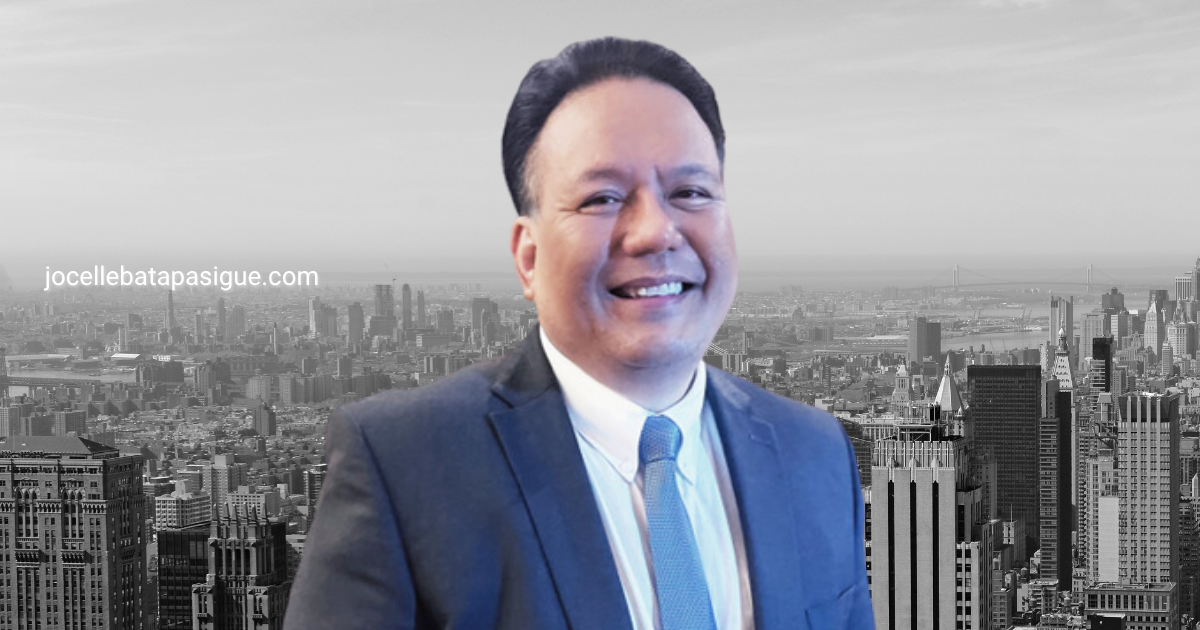
Richard M. Caballero
This transformation is not limited to technology adoption. It is reshaping how organizations define leadership, assess talent, and build competitive advantage. As routine and technical tasks become increasingly automated, the relative importance of human-centered skills—such as communication, critical thinking, and adaptability—continues to grow.
Within this evolving landscape, Filipino professionals represent a significant and globally distributed talent base. However, their presence in senior leadership roles remains comparatively limited. This gap between capability and representation is one of the central issues addressed by the Geese Project.
Richard Caballero and Filipino Leadership in the AI Economy
Richard Caballero’s career reflects both global exposure and sustained leadership performance. Born in the Philippines and relocating to Canada at age 15, he developed his professional career within multinational environments across North America, Europe, Asia, and the Middle East.

Over more than 25 years, Caballero held leadership roles in major technology organizations including Hewlett Packard, Ingram Micro, Corel, Aimetis, and Digifort. His experience spans sales, marketing, finance, product management, and business development.
His career journey has been shaped by milestones that speak to both excellence and global impact. He led cross-border teams in over 50 countries across six continents, navigating diverse markets with the confidence and discipline of a seasoned international executive. At Ingram Micro, he helped build the company’s Canadian Managed Services Division, opening new opportunities for growth and innovation. His leadership and results earned him the Global Award of Excellence, the highest recognition bestowed by the company. Later, at Aimetis, he led global sales operations and helped drive the company’s momentum to the point that it was recognized by Deloitte as one of the fastest-growing companies in Canada and North America.
In addition to corporate roles, Caballero completed executive leadership training programs, including Hewlett Packard’s LEAD program for top-performing global talent, and earned an MBA from the University of Toronto’s Rotman School of Management.
This combination of operational leadership and global exposure informed his subsequent work in leadership development.
Identifying the Leadership Gap
Throughout his career, Caballero observed a recurring pattern: Filipino professionals consistently performed at high levels across technical and operational roles, yet were less frequently represented in executive leadership positions.
This observation aligns with broader workforce research. Studies indicate that future job demand will increasingly emphasize advanced cognitive skills, social and emotional competencies, and digital and adaptive capabilities.
At the same time, reliance on traditional indicators such as credentials and tenure can limit access to leadership pathways, particularly for globally mobile and diverse workforces.
The issue, therefore, is not the absence of talent but the absence of structured pathways that translate capability into leadership positioning.
The Geese Project: A Structured Leadership Framework
To address this gap, Caballero founded the Geese Project, a leadership development initiative designed specifically for Filipino professionals operating in global environments.
The project integrates cultural context with leadership competencies, namely family upbringing, educational background, and societal environment.
At the heart of the Geese Project is a leadership model organized around four interconnected quadrants, each representing a critical dimension of leadership in today’s global and AI-driven environment.
The first, Power, is expressed through relationship, resilience, and resourcefulness—traits that enable leaders to earn trust, adapt under pressure, and respond effectively to changing conditions. The second, Challenge, is defined by conflict management, critical thinking, and communication, reflecting the reality that leadership often requires navigating difficulty, making sound decisions, and bringing clarity where there is uncertainty. The third, Aspirational, is shaped by leadership, excellence, and innovation, pointing to the need for vision, high performance, and the courage to pursue new ideas. Anchoring all of these is the Foundational quadrant, composed of discipline, integrity, and work ethic—the qualities that sustain credibility and ensure that leadership remains grounded in character. Together, these quadrants form a practical and culturally informed model for developing Filipino professionals into globally effective leaders.
Taken together, these twelve traits give the Geese Project its distinctive structure. They present leadership not as a single style, but as a balanced practice—one that requires human connection, sound judgment, aspiration, and strong values working together.
The framework is designed to translate culturally embedded strengths into competencies that align with global leadership expectations.
The Future of Filipino Leadership in the AI Economy
The relevance of the Geese Project framework is reinforced by current trends in AI and workforce transformation.
As AI systems expand in capability and adoption, routine and repetitive tasks are increasingly automated. Decision-making environments become more complex, and ethical, governance, and accountability considerations intensify.
Global AI governance frameworks emphasize the importance of transparency and explainability, bias mitigation and fairness, and accountability mechanisms across the AI lifecycle.
These requirements elevate the role of leadership beyond technical proficiency. Leaders are expected to integrate technological understanding with ethical judgment, stakeholder engagement, and systems thinking.
Parallel research on workforce skills indicates that demand for interpersonal and higher-order cognitive skills is increasing. Digital fluency must be combined with adaptability and continuous learning.
The competencies outlined in the Geese Project—particularly in communication, resilience, and integrity—align with these evolving requirements.
Institutionalization Through Global Partnership
A significant development in the Geese Project’s evolution is its partnership with George Brown Polytechnic in Canada, resulting in the launch of the Geese Project Leadership Accelerator Program.

The program is structured as an 8-week hybrid leadership course, and delivered through synchronous and asynchronous online sessions. It targets Filipino professionals, managers, entrepreneurs, and business owners.
The curriculum is based on the 3-4-12 framework and focuses on practical leadership application in AI-driven and performance-oriented environments.
This partnership represents the institutional adoption of a Filipino-centric leadership model within a recognized international education system. It also expands access to structured leadership development for Filipino professionals across geographic locations.
Regional and Global Context
The development of leadership frameworks such as the Geese Project must be understood within broader regional and global trends.
- Digital Development in Asia-Pacific: The region continues to experience rapid digital expansion, with increasing connectivity, digital services, and technology-driven economic activity. However, disparities in access, skills, and infrastructure remain.
- AI Workforce Transformation: Initiatives across Asia-Pacific highlight the need to build AI-ready workforces, expand access to digital skills, and ensure inclusive participation in emerging opportunities.
- Skills-Based Workforce Models: Global institutions advocate for skills-based hiring and development, standardized frameworks for identifying and measuring competencies, and continuous reskilling and upskilling. Within this context, leadership development is increasingly recognized as a critical component of workforce readiness.
From Participation to Leadership
Filipino professionals are widely represented across global industries, particularly in healthcare, technology, finance, and services. Their contributions are well documented in terms of productivity, adaptability, and reliability.
The current challenge is transitioning from participation to leadership. This transition involves developing leadership competencies aligned with global standards, i ncreasing visibility and representation in decision-making roles, and creating structured pathways for leadership advancement.
Programs such as the Geese Project Leadership Accelerator aim to address these areas by combining skills development with leadership positioning.
A Structured Path Forward
Richard Caballero’s work represents a shift from individual career success to systemic leadership development.
His approach is characterized by integration of cultural context into leadership frameworks, alignment with global workforce and AI trends, and institutional partnerships that expand reach and credibility
As AI continues to reshape the global economy, the demand for leaders who can navigate complexity, manage diverse teams, and uphold ethical standards will increase.
Filipino professionals are well positioned to contribute to this demand. The availability of structured leadership frameworks and programs will be a key factor in determining how effectively this potential is translated into leadership outcomes.
In this context, the work initiated by Caballero and the Geese Project provides an ideal model for aligning talent, culture, and global opportunity in a rapidly changing world.
In the age of artificial intelligence, leadership is no longer defined by access to technology, but by values, judgment, and the ability to bring people together. Richard’s work will help position Filipino professionals at the center of this transformation—and that is both timely and strategic for our nation.”
Jocelle Batapa-Sigue


Learn more about digital transformation at https://jocellebatapasigue.com