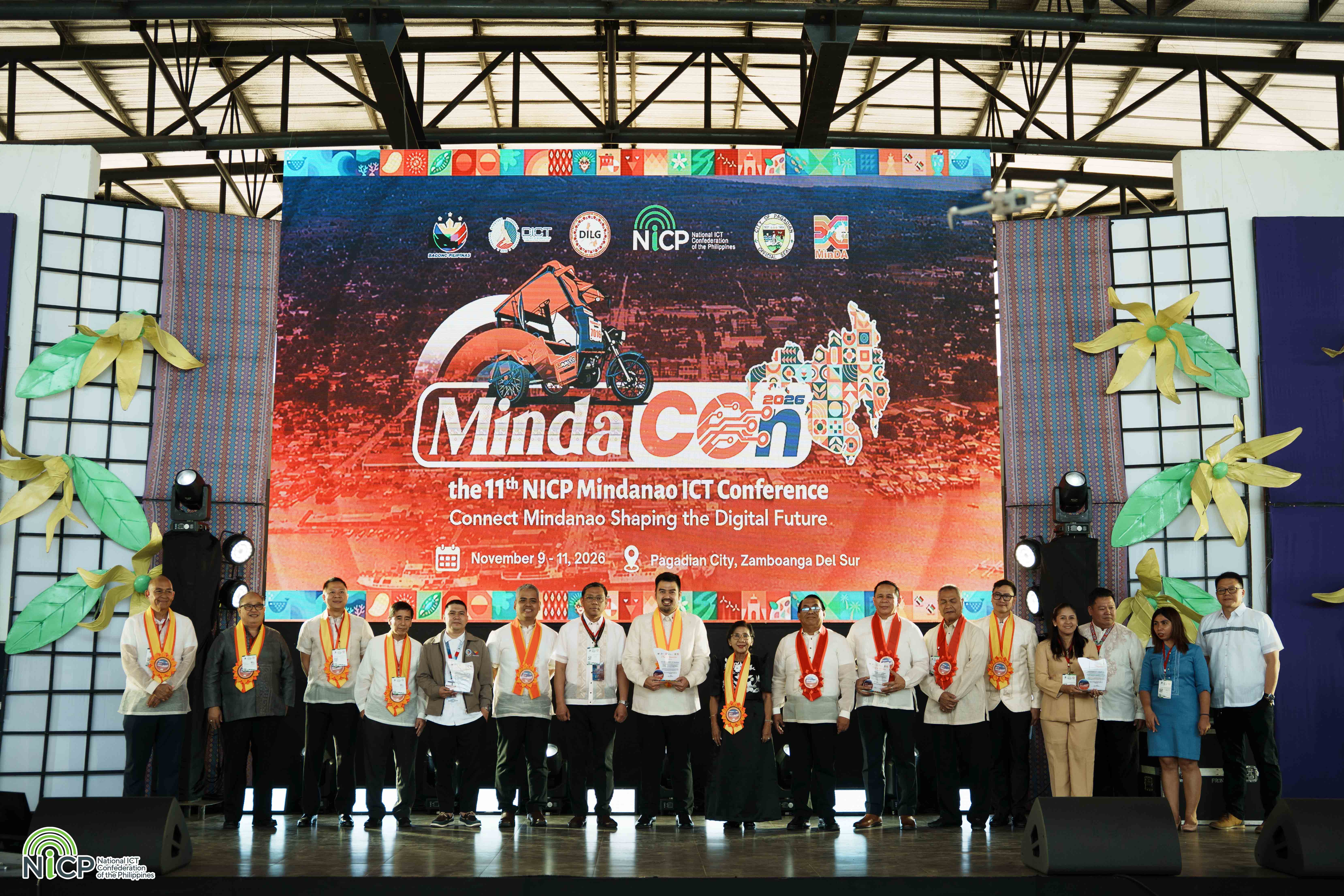
Led by National ICT Confederation of the Philippines (NICP) President Jessraf Palmares, the 11th Mindanao ICT Conference in Pagadian City brings together government policymakers, industry executives and local ICT councils to strengthen investment readiness, digital infrastructure, workforce competitiveness and technology-driven regional growth.
PAGADIAN CITY, Philippines, November 9–10, 2026 — Mindanao’s growing ambitions to attract technology investments, develop competitive digital talent and expand its participation in the Philippine digital economy took center stage at the 11th Mindanao ICT Conference (MindaCon 2026), as the National ICT Confederation of the Philippines (NICP), led by President Jessraf Palmares, convened national government officials, business leaders, technology entrepreneurs and regional ICT councils to advance a more coordinated approach to countryside digital development.

Hosted in partnership with the City Government of Pagadian under Mayor Samuel “Sammy” S. Co, the conference highlighted the emerging role of provincial cities in the country’s technology-driven economic transformation, with discussions addressing the infrastructure, talent, governance and innovation capabilities required to attract investment and strengthen local industry competitiveness.

Carrying the theme “Connect Mindanao, Shaping the Digital Future,” the gathering brought together national policymakers and regional stakeholders to examine how Mindanao can translate its human capital, expanding technology ecosystems and local government initiatives into sustainable economic opportunities.
The conference featured national government agencies such the Department of Information anf Communications Technology (DICT), Mindanao Development Authority and other agencies alongside private-sector executives, ICT entrepreneurs, researchers and regional industry leaders.
The event’s business significance extended beyond technology adoption. It placed attention on the conditions necessary to support investments in information technology and business process management (IT-BPM), telecommunications, digital services, technology entrepreneurship and innovation-driven industries outside Metro Manila.
Batapa-Sigue Champions Humanware-Driven Digital Transformation Through WISER Framework at MindaCon 2026
Former Department of Information and Communications Technology (DICT) Undersecretary and National ICT Confederation of the Philippines (NICP) Co-Founder Atty. Jocelle Batapa-Sigue highlighted the critical importance of humanware—the people, leadership, skills, values and institutional capabilities that enable technology to create meaningful economic and social impact—during the 11th Mindanao ICT Conference (MindaCon 2026) in Pagadian City.

Through her WISER Framework—Workforce, Innovation, Strategy, Ecosystem and Resilience, Batapa-Sigue emphasized that sustainable digital transformation cannot be achieved through investments in infrastructure, software and emerging technologies alone. Instead, regional competitiveness depends on the capacity of people and institutions to understand, adopt, develop and responsibly govern technology.

She positioned humanware as the essential link between technological advancement and inclusive economic development, particularly for Mindanao’s emerging digital destinations seeking to expand their participation in the national and global digital economy.
Batapa-Sigue presented WISER as an integrated approach to strengthening regional digital ecosystems by placing human capabilities and institutional collaboration at the center of development planning. Workforce focuses on equipping people with relevant digital competencies and creating pathways to quality employment; Innovation empowers entrepreneurs, researchers and local problem-solvers to develop technology-driven solutions; Strategy strengthens visionary leadership, evidence-based decision-making and coordinated implementation; Ecosystem promotes sustained collaboration among government, industry, academia and communities; while Resilience develops the capacity of people, organizations and local economies to adapt to technological disruption, cybersecurity threats and rapidly evolving industry requirements.
Through these five interconnected pillars, the framework encourages local ICT councils and regional stakeholders to move beyond isolated projects toward building institutions, developing leadership and strengthening the human capabilities necessary to sustain innovation and attract investment.
Central to Batapa-Sigue’s message was the proposition that technology may provide the tools for transformation, but people determine whether that transformation succeeds, whom it benefits and how long its impact endures. She emphasized the need for local ICT councils to evolve into strategic development platforms capable of mobilizing talent, nurturing innovation, strengthening public-private partnerships and translating regional aspirations into measurable economic outcomes.
In the context of Mindanao’s digital economy, this humanware-centered approach places equal importance on preparing workers for artificial intelligence and emerging technologies, empowering local enterprises to innovate, equipping public institutions to deliver responsive services and ensuring that underserved communities are not excluded from digital opportunities.
The WISER Framework ultimately advances a broader vision of countryside development in which human capacity becomes the foundation of digital competitiveness, technology becomes an instrument of empowerment, and inclusive regional growth becomes the measure of success.
Digital Governance Becomes an Economic Competitiveness Issue
The panel discussion on Digital Governance and Smart Communities at the 11th NICP Mindanao ICT Conference (MindaCon 2026) was moderated by Batapa-Sigue, also Co-Founder of NICP, bringing together government and industry practitioners to examine how digital transformation can improve public service delivery, strengthen local government capabilities and support regional economic competitiveness.
The panel featured Jaive Joseph Roble, City ICT Officer and Data Privacy Officer of Danao City, Cebu, who discussed technology-driven public service transformation; Engr. Mark Ruelson Gacutan, DICT Provincial Officer for Zamboanga Sibugay, and Wilmark Econar, Chairperson of the Philippine Council on Innovation and Information Technology (PCIIT) Inc., who contributed insights on industry-driven skills development and AI-enabled workforce readiness. The panel underscored the importance of integrating technological innovation with institutional leadership, human capital development and cross-sector collaboration to build more efficient, inclusive and future-ready local governments across Mindanao.


NICP Pushes Regional ICT Councils as Engines of Economic Development
NICP President Palmares, who also serves as President and Chief Executive Officer of IloBiz Solutions Inc. and has longstanding leadership experience in Iloilo’s ICT industry, presented an institutional overview of the confederation during the conference’s opening program.
His cites how NICP’s nationwide network of local ICT councils is at the center of driving regional digital competitiveness.
The confederation’s organizational model connects local government units, technology companies, educational institutions and industry stakeholders, providing opportunities to align local development initiatives with national industry priorities.
For emerging digital destinations, such coordination can help address recurring barriers to investment, including fragmented stakeholder engagement, limited industry visibility, uneven workforce preparation and gaps in digital infrastructure.
Unlike larger metropolitan economies, many provincial locations must build their investment propositions through coordinated local action, developing the talent base, institutional partnerships and infrastructure necessary to support business expansion.
NICP’s local council network provides a mechanism through which regional stakeholders can identify competitive advantages, strengthen industry relationships and pursue initiatives responsive to their respective economic conditions.
The conference reinforced the need for ICT councils to serve not merely as networking organizations but as development partners capable of supporting local investment readiness, industry promotion, workforce development and innovation ecosystems.
The participation of delegates and ICT council representatives from different regions also demonstrated the importance of sharing development approaches across emerging and established technology locations.
For Mindanao, strengthening these institutional connections offers a potential pathway toward improving regional competitiveness while reducing the concentration of digital economic opportunities in the country’s traditional growth centers.
Pagadian City Highlights the Business Potential of Emerging Digital Destinations
The decision to host MindaCon 2026 in Pagadian City placed the spotlight on the opportunities and challenges confronting emerging provincial economies.
Mayor Samuel S. Co welcomed conference delegates and reinforced the City Government’s participation in bringing together national agencies, technology companies and industry organizations.
The hosting of a major ICT conference represents an opportunity for provincial cities to increase their visibility among technology investors, industry associations and potential development partners.
While conference hosting alone does not establish investment readiness, it can contribute to the relationships and institutional engagement needed to support longer-term business development.
Pagadian’s geographic position in western Mindanao also offers a useful perspective on the need to develop economic opportunities across a wider network of urban and provincial centers.
Rather than concentrating technology investments exclusively in established locations, regional digital development initiatives increasingly require an understanding of how smaller cities can participate in distributed business operations, digital services and technology-enabled enterprises.
Pagadian City Councilor Lance Samuel F. Co, President and Chief Executive Officer of LSC Corporation, participated in the opening program by recognizing delegates, ICT councils and other stakeholders.

His involvement reflected the intersection of local governance and business leadership in efforts to strengthen the city’s economic and technological development.
The conference also provided opportunities for enterprises and technology providers to present products and services, interact with prospective institutional partners and explore opportunities for collaboration.
These engagements are particularly relevant in provincial markets where access to industry networks and technology providers can influence the ability of local businesses to modernize operations.
Government Participation Links Regional Competitiveness With National Digital Priorities
The presence of senior national officials reinforced the relationship between public policy and private-sector digital investment.
For technology enterprises and prospective investors, effective digital infrastructure and clear institutional coordination are important considerations in evaluating business locations.
Reliable connectivity, secure digital systems and a workforce capable of supporting technology-enabled operations contribute to the attractiveness of emerging provincial markets.
The participation of the DICT also underscored the importance of connecting national technology initiatives with implementation at regional and local levels.
Meanwhile, Olie Dagala, Director III of the Investment Promotion and Public Affairs Office of the Mindanao Development Authority, delivered a strategic regional message representing MinDA Chairperson Leo Tereso Magno.

MinDA’s involvement placed ICT development within the broader framework of Mindanao’s economic transformation and regional investment priorities.
As the island seeks to diversify economic activity and strengthen its participation in higher-value industries, the development of digital capabilities offers potential benefits across manufacturing, agriculture, services, logistics and other sectors.
The integration of digital infrastructure and technology-enabled business models can also influence productivity, market access and enterprise competitiveness.
Strengthening collaboration between government training institutions, employers and local industry councils can help narrow gaps between educational preparation and the technical competencies required by the digital economy.
The business implications extend to the ability of cities and municipalities to manage administrative processes, deliver services, protect information and respond to the needs of emerging enterprises.
The track also reinforced the importance of developing local government technology capabilities alongside private-sector innovation.
Improved public information systems, efficient administrative processes and stronger institutional coordination have potential implications for investment facilitation, business services and local economic planning.
The long-term challenge for local governments is to ensure that digital modernization produces meaningful improvements in service delivery rather than isolated technology acquisitions.
Workforce Development Takes Center Stage as Industries Adapt to AI and Digitalization
The second day of MindaCon 2026 focused on digital talent development and the infrastructure needed to sustain regional economic growth.
The second track, “Digital Talent and Future-Ready Workforce,” was moderated by NICP Vice President Michael Tiu Lim, representing the Zamboanga ICT Council.
Its discussions examined the importance of digital literacy, technical training, entrepreneurship and workforce adaptability.
Engr. Vermond S. Apostol, representing DICT Region IX Regional Director Engr. Cheryl C. Ortega, contributed perspectives on community-based digital literacy and technology access initiatives.
His work involving Digital Transformation Centers and Digital Bayanihan programs demonstrated how public-sector initiatives can extend digital skills opportunities to communities outside major urban centers.

Darwin J. Manubag, City Administrator of Iligan City, discussed ICT training and the role of capacity development in preparing communities for technological change.
Mary Rose Ofianga, Program Manager of the Wadhwani Foundation Entrepreneurship Program, presented an entrepreneurship development perspective grounded in institutional partnerships and innovation education.

Her work in expanding the foundation’s network to more than 100 partner institutions and supporting over 500 entrepreneurship educators illustrates the potential scale of coordinated entrepreneurship education initiatives.
The workforce track was especially relevant to business leaders evaluating emerging technology locations.
For IT-BPM companies, digital service providers and other technology-enabled enterprises, access to a capable and adaptable workforce remains an important operational requirement.
As artificial intelligence and automation change business processes, industry competitiveness increasingly depends on workers’ ability to adopt new technologies, develop higher-value competencies and respond to evolving customer requirements.
The discussions also highlighted the importance of creating meaningful pathways between training programs, entrepreneurship development and employment opportunities.
For Mindanao’s provincial economies, expanding those pathways could help strengthen local talent retention and support the growth of technology-based businesses.


Telecommunications and Cybersecurity Seen as Foundations for Business Expansion
The conference’s final technical track, “Connectivity, Cybersecurity and Digital Economy: Connecting Communities, Securing Networks, and Accelerating Growth,” addressed the infrastructure and security conditions supporting digital economic participation.
The session was moderated by Stephanie Caragos, President of the Cagayan de Oro Business Council, former NICP President, and Founder and Chief Executive Officer of technology services company Syntactics Inc.

With extensive experience in developing a Mindanao-based technology business, Caragos brought a private-sector perspective to discussions on digital infrastructure, cybersecurity and regional business growth.
Angelo Niño Gutierrez, Research Associate of Better Internet PH, contributed a policy perspective on broadband infrastructure, connectivity and cybersecurity.
Juanita C. Rimando, Vice President for Sales and Operations of Ignite Telecommunications Inc., represented the telecommunications industry’s role in expanding connectivity and strengthening commercial partnerships.

For businesses operating outside major metropolitan centers, reliable and affordable internet access is a basic requirement for accessing digital markets, serving clients and adopting modern business technologies.
Connectivity also affects the feasibility of distributed work arrangements, online services, digital entrepreneurship and the expansion of technology-enabled operations into emerging provincial destinations.
Cybersecurity represents an equally important concern, particularly as enterprises and government agencies become increasingly dependent on digital platforms and information systems.
The track emphasized the need to examine digital infrastructure and security together rather than as separate development priorities.
For prospective investors, the availability of reliable infrastructure and appropriate cybersecurity capabilities contributes to operational resilience and long-term business confidence.


Agricultural Technology Expands the Scope of Mindanao’s Digital Economy
The final track also highlighted the application of technology beyond conventional ICT businesses.
Prof. Moises A. Dorado of the University of the Philippines Los Baños discussed areas of expertise involving agricultural engineering, geographic information systems, remote sensing and artificial intelligence applications in agriculture.

His involvement in Project SARAI, a DOST-PCAARRD-supported initiative using satellite technology and data-driven systems for crop monitoring, forecasting and climate adaptation, illustrated the growing relevance of digital technologies to traditional economic sectors.
For Mindanao, where agriculture remains economically significant, digital innovation presents opportunities to support better production decisions, resource management and climate resilience.
The inclusion of agricultural technology broadened the conference’s business perspective by demonstrating that digital transformation can contribute to productivity and competitiveness across multiple industries.
The session also featured Lord Bonie Dalinas, Chief Executive Officer of Custard Tech Innovations and Head of Channel Management and Corporate Sales for Mindanao at Ignite Telecommunications Inc.

Dalinas’ experience in technology entrepreneurship, cybersecurity, Internet of Things applications and telecommunications reflected the potential role of homegrown enterprises in developing regional digital capabilities.
His participation underscored the importance of supporting local technology companies that can provide solutions for businesses, institutions and communities.
Together, the discussions suggested that Mindanao’s digital economic opportunities extend beyond outsourcing and telecommunications to include agricultural technology, enterprise software, digital services, cybersecurity and other innovation-driven activities.
Recognition, Industry Exhibits and Business Networking Reinforce Regional Partnerships
The conference combined technical presentations with industry networking, exhibition opportunities and recognition activities.
Participating companies and event partners were given opportunities to showcase technology products and services and engage with delegates from government, industry and academic institutions.
The conference also included a press conference, partner presentations and dedicated networking periods designed to encourage professional engagement among stakeholders.
A Mayor’s Night celebration featured the Seal of Good ICT Governance in the Philippines, recognizing local government contributions to digital governance.
The evening included a gala dinner, recognition ceremonies and performances by Pagadian City artists and the awarding of outstanding ICT Councils.
For regional ICT stakeholders, such recognition activities can help draw attention to government initiatives and encourage the exchange of approaches to digital public administration.
The conference’s broader networking activities also reflected the importance of building relationships among technology providers, policymakers, local business organizations and industry councils.
Although the program documents did not specify investment commitments or signed business agreements, the gathering provided a venue for stakeholder engagement and exploration of potential collaborations.
Business Competitiveness Requires More Than Technology Investment
A recurring development perspective across the conference was the need to approach digital transformation as an integrated economic strategy.
For provincial cities aspiring to attract technology-based enterprises, the presence of internet connectivity or a trained workforce alone may not be sufficient.
Business competitiveness also depends on institutional reliability, industry relationships, available talent, infrastructure resilience, local enterprise capabilities and government responsiveness.
The conference’s three technical tracks collectively addressed these factors. Digital governance discussions examined institutional modernization and the delivery of public services. Workforce presentations explored skills development, entrepreneurship and the preparation of workers for emerging industries. Connectivity and cybersecurity sessions considered the technological conditions necessary for secure and sustainable business operations.
Taken together, as designed by LDR Solutions and NICP, these key panel areas provide a useful framework for evaluating the readiness of emerging digital locations.
For local ICT councils, the challenge is to translate these development priorities into coordinated initiatives responsive to regional industry needs.
For local governments, the priority is to create an environment in which businesses can operate efficiently and communities can participate meaningfully in the digital economy.
For private-sector organizations, the opportunity lies in developing commercially sustainable solutions, supporting workforce development and identifying markets beyond established urban centers.
The conference’s emphasis on collaboration reflected the practical reality that none of these objectives can be achieved by government or industry acting independently.


MindaCon 2026 Reinforces Mindanao’s Role in National Digital Growth
The conference concluded with a closing program featuring Pagadian City Councilor Ronald Christopher Glenn Ariosa, a member of the city’s ICT council leadership, and a review of the event’s principal discussions.
The two-day gathering reinforced the importance of sustained cooperation among government agencies, ICT councils, telecommunications providers, technology companies, educational institutions and local governments.
For NICP, the conference represented another opportunity to strengthen the institutional relationships supporting the growth of local ICT ecosystems.
For Pagadian City and other emerging provincial locations, it demonstrated the value of participating in national industry conversations while developing relationships with stakeholders capable of supporting regional digital initiatives.
More broadly, MindaCon 2026 highlighted a strategic opportunity for Mindanao: to develop its own contribution to the Philippine digital economy through a combination of skilled talent, resilient infrastructure, stronger local institutions and innovation-driven enterprise development.
The scale of that opportunity will depend on how effectively stakeholders translate conference discussions into investment-ready initiatives, sustained partnerships and measurable improvements in regional business conditions.
As the Philippines pursues a more competitive digital economy, Mindanao’s ability to develop connected, secure and investment-ready ICT ecosystems will be increasingly important to the country’s long-term growth.
Under the leadership of NICP President Jessraf Palmares and through continued collaboration among local ICT councils, government institutions and private-sector partners, MindaCon 2026 reaffirmed the role of regional cooperation in building a stronger and more geographically inclusive digital industry.
The conference’s message carried a clear economic implication: the future of Philippine digital competitiveness will depend not only on the continued growth of established technology centers but also on the capacity of emerging regions such as Mindanao to develop talent, attract enterprise investment, strengthen infrastructure and generate new economic opportunities.
For Mindanao, the next challenge is to convert digital potential into sustained business growth, quality employment and competitive regional industries.
Source: MindaCon 2026 technical and emcee program scripts, November 9–10, 2026. Statements concerning investment opportunities and business implications are editorial analysis; the scripts do not establish actual investment commitments, new job figures or signed commercial agreements.