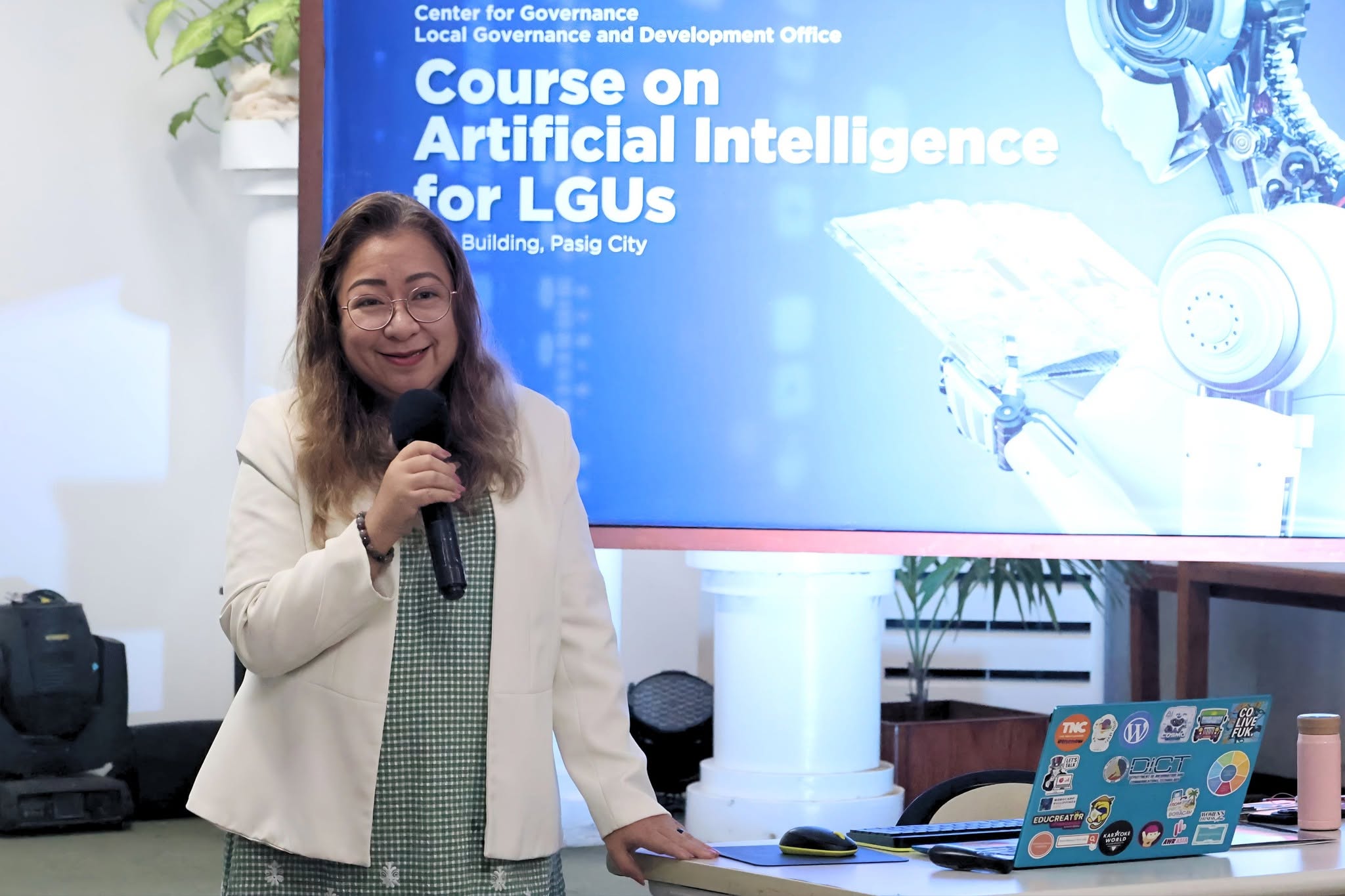
At the 14th Visayas ICT Cluster Organization or VICTOR Summit last October, Jocelle Batapa-Sigue Calls for ICT Councils and Ecosystems to Evolve into Transformation Networks, Strengthening Local Governance, Innovation Ecosystems, and AI Readiness

A New Chapter for Regional Digital Development
DANAO CITY, CEBU, PHILIPPINES — As artificial intelligence accelerates changes in public administration, labor markets, business models, and economic competitiveness, local governments face an increasingly consequential question: How can technological advancement translate into stronger institutions, inclusive economic opportunities, and measurable improvements in people’s lives?
Lawyer and co-founder of National ICT Confederation of the Philippines gave the challenge in her keynote address, “WISER LGUs: Building Human-Centered, Data-Driven and AI-Ready Communities,” delivered on October 22, 2026, at the 14th National ICT Confederation of the Philippines Visayas ICT Organization Conference (VICTOR 2026), at the first day of the conference held at the Danao Civic Center in Cebu.

Organized by the National ICT Confederation of the Philippines (NICP), in partnership with the City Government of Danao, the conference brought together ICT councils, local government leaders, technology professionals, industry representatives, entrepreneurs, and educational institutions under the theme “Connecting Visayas. Empowering Communities. Building the Future.”
For nearly two decades, ICT councils across the Philippines have helped position secondary cities and provinces as investment destinations, develop local talent, encourage industry collaboration, and expand participation in the digital economy.
Their contributions established important foundations for countryside development, particularly in the information technology and business process management sector.However, the next stage of digital transformation requires a more comprehensive institutional mandate.
ICT councils must evolve from industry promotion organizations into transformation councils and ecosystem orchestrators—institutions capable of connecting public policy, workforce development, entrepreneurship, innovation, data governance, and institutional resilience.
This evolution represents a shift from attracting digital economic activity toward developing the long-term capabilities that enable communities to generate, sustain, and benefit from innovation.

The Real Challenge: Fragmented Transformation
Across developing economies, digital transformation has often been implemented through individual projects rather than integrated institutional strategies.
Government offices acquire software, educational institutions launch digital training programs, businesses adopt new technologies, and development organizations implement innovation initiatives. Yet these activities frequently operate independently.
The result can be duplication, limited interoperability, disconnected information systems, fragmented financing, and weak accountability for long-term outcomes.
In the Philippines, these challenges are particularly significant for local government units operating with different levels of financial capacity, technological infrastructure, workforce readiness, and institutional maturity.
A municipality may digitize its permit applications without integrating business information into its broader development planning. A university may produce technology graduates without a corresponding local employment or enterprise development strategy. A government agency may provide digital skills training without establishing pathways toward sustainable livelihoods. These efforts may create individual benefits while falling short of systemic transformation.
The central problem is not necessarily the absence of digital initiatives. It is the absence of effective coordination, shared priorities, institutional ownership, and continuity.
The Organisation for Economic Co-operation and Development (OECD) recognizes that successful digital government requires more than technology adoption. Its Digital Government Policy Framework emphasizes digital-by-design public administration, data-driven decision-making, integrated government platforms, openness, user-centered services, and proactive governance. These principles underscore the importance of institutional capacity and coordinated action.
For Philippine LGUs, the policy implication is clear: digital transformation must be integrated into governance and economic development rather than treated as a series of isolated technology projects.
HumanWare: The Missing Foundation of Smart Government
A central argument of her keynote was that the prevailing understanding of digital transformation remains excessively focused on technology.

For years, institutions have concentrated on three major components: hardware, software, and data. Hardware provides the physical infrastructure. Software enables digital processes and services. Data supplies information that can support analysis and decision-making. However, these components alone cannot ensure effective governance or sustainable development.
She introduced HumanWare as a framework for understanding the human and institutional infrastructure necessary for successful innovation. HumanWare rests on four interconnected foundations.
Capabilities encompass technical knowledge, critical thinking, professional competence, adaptability, ethical judgment, and continuous learning. Values include integrity, human dignity, fairness, inclusion, accountability, and commitment to public purpose. Institutions provide leadership, legal frameworks, organizational continuity, effective processes, and mechanisms for oversight. Ecosystems connect government, educational institutions, industry, entrepreneurs, civil society, and communities through sustained collaboration.
HumanWare recognizes that technology creates public value only when people and institutions possess the capacity and commitment to apply it responsibly.
A highly sophisticated digital system cannot compensate for ineffective leadership. Artificial intelligence cannot independently establish institutional integrity. Automated decision-support tools cannot substitute for legitimate public accountability. The smartest technology inside a weak institution will not produce smart governance.
This argument is consistent with global discussions on human-centered digital transformation, including the United Nations Global Digital Compact, which emphasizes inclusion, digital cooperation, human rights, and responsible governance of emerging technologies.
The strategic priority for developing communities should therefore extend beyond acquiring technologies toward strengthening the institutional capabilities required to govern them.
From Digitization to AI-Ready Local Government
Artificial intelligence introduces new possibilities for improving public services, identifying development needs, strengthening disaster preparedness, and supporting evidence-based resource allocation. However, AI readiness requires a sound foundation of data governance and organizational capacity.
During her presentation, she emphasized a principle that local government leaders must understand: “You cannot leapfrog bad data with good AI.”
An AI system trained on or supplied with incomplete, inaccurate, inconsistent, or improperly managed information can produce unreliable outputs, even when the underlying technology is advanced.
To illustrate this challenge, Batapa-Sigue presented an LGU Data Maturity Ladder consisting of five developmental stages. The first is fragmented, where information is maintained across disconnected offices and records. The second is digitized, where information is converted into electronic formats. The third is integrated, where relevant systems can exchange information through appropriate technical and governance arrangements. The fourth is data-driven, where information systematically informs public planning, budgeting, implementation, and evaluation. The fifth is AI-augmented, where artificial intelligence responsibly assists human decision-makers through analysis, forecasting, and operational support.
This progression is a planning model rather than a claim that every government must complete an identical sequence. Nevertheless, it highlights the importance of institutional foundations.
She further proposed six interconnected dimensions of LGU AI readiness: leadership and strategy, digital processes, data, infrastructure, people and skills, and governance and trust.

Readiness should be assessed across all six. Strong connectivity cannot compensate for weak data governance. Advanced software cannot substitute for an adequately trained workforce. Technical expertise cannot eliminate the need for accountability. The weakest institutional capability can constrain the performance of the entire system.
Responsible AI Must Begin With Public Purpose
Artificial intelligence introduces opportunities for greater government efficiency but also creates risks involving privacy, bias, cybersecurity, transparency, misinformation, and excessive reliance on automated outputs.
These risks require proportionate governance. In her keynote, she advanced three principles for responsible AI adoption by local governments.
First, begin with public purpose. Every proposed application should address a clearly identified public need rather than merely demonstrate technological sophistication.
Second, match governance to risk. Applications affecting fundamental rights, public benefits, or consequential decisions require stronger safeguards than low-risk administrative assistance tools.
Third, maintain human accountability. Public officials must remain responsible for the systems they authorize and the decisions made under their authority.
These principles are aligned with UNESCO’s Recommendation on the Ethics of Artificial Intelligence, which emphasizes human oversight, transparency, fairness, privacy, and accountability.
They are also compatible with the United States National Institute of Standards and Technology’s AI Risk Management Framework, which identifies governance, risk mapping, measurement, and management as essential components of responsible AI practice.
These global approaches reinforce an important governance distinction. AI may assist government. It cannot inherit government’s accountability.
For local authorities, responsible AI must be embedded throughout system design, procurement, deployment, monitoring, and evaluation—not treated as an optional technical consideration.
Knowledge Is the New Currency
Artificial intelligence is also transforming the sources of economic competitiveness.
Increasingly, productivity, innovation, and value creation depend on knowledge, research capability, digital skills, creativity, and the capacity to apply technology to practical challenges. Traditional economic advantages such as location and labor costs remain relevant, but they are no longer sufficient.
Regions must also develop the ability to create and apply knowledge. This has profound implications for countryside development. A secondary city need not replicate the industrial structure of a major metropolitan economy to participate in global markets. It can cultivate specialized digital services, creative industries, innovative enterprises, technology-enabled agriculture, research partnerships, and other knowledge-intensive activities suited to its comparative advantages.
However, workforce development must evolve alongside technological change. Automation may reduce or redesign certain tasks. Augmentation may improve the productivity of existing workers. Emerging industries may introduce new occupations and business opportunities.
Local education and training systems must therefore prepare people not simply for current employment vacancies, but for continuous occupational transformation. This requires stronger collaboration among universities, training providers, employers, entrepreneurs, and policymakers.
Knowledge becomes economically valuable when institutions can translate it into competence, productivity, employment, enterprise creation, and innovation. It must also remain accessible.
Women, young people, rural populations, persons with disabilities, and communities historically excluded from technological development must have meaningful opportunities to participate in the emerging economy.
Digital inclusion is not peripheral to competitiveness. It is central to expanding a country’s productive and innovative capacity.
WISER: Five Interconnected Drivers of Transformation

To translate these principles into an actionable local development approach, I presented the WISER Framework, consisting of five mutually reinforcing drivers.
W — Workforce Transformation
Communities must develop the talent, digital capabilities, leadership, and lifelong learning systems required for changing economic conditions. Workforce strategies should connect education with employment, entrepreneurship, and innovation opportunities.
I — Innovation and Entrepreneurship
Local ecosystems must enable researchers, startups, MSMEs, and established enterprises to develop solutions, test ideas, access markets, and commercialize innovations. Innovation should respond to actual community and industry needs.
S — Strategy and Digital Transformation
LGUs require coherent development strategies that align digital infrastructure, data governance, public investment, institutional capacity, and economic priorities. Technology investments should be justified by measurable public value.
E — Ecosystem Collaboration
Sustainable transformation requires cooperation across government, industry, academe, entrepreneurs, and civil society. ICT councils can serve as convening and coordinating institutions, helping stakeholders establish shared objectives and mobilize complementary resources.
R — Resilience
Communities must strengthen their capacity to withstand technological, economic, environmental, and institutional disruptions. This includes cybersecurity, privacy protection, responsible AI, continuity planning, and trusted governance.

The WISER Framework treats these drivers as one integrated system. Workforce capability supports innovation. Innovation creates economic opportunities. Strategy directs resources toward priorities. Ecosystems mobilize collaboration. Resilience protects institutional and economic progress.
The framework is conceptually consistent with the International Telecommunication Union’s Innovation and Entrepreneurship Alliance for Digital Development, which emphasizes strengthening local innovation ecosystems and organizational capabilities to accelerate inclusive, sustainable digital transformation.
The WISER Framework is my proposed approach to translating these interconnected development priorities into local and regional institutional action.
ICT Councils as Ecosystem Orchestrators
The transformation of ICT councils represents one of the most important institutional opportunities identified in the keynote.
Historically, many councils concentrated on attracting ICT investments, supporting talent development, strengthening industry linkages, and promoting locations. These functions remain important. However, councils can assume a broader coordinating role by connecting local government priorities with the capabilities of universities, businesses, startups, workers, and communities.
Under this approach, ICT councils become ecosystem orchestrators rather than merely event organizers or promotional organizations. An ecosystem orchestrator helps identify shared challenges, connects appropriate stakeholders, facilitates cooperation, supports implementation, and promotes accountability for agreed outcomes. It does not replace government authority or assume the mandates of other institutions. Instead, it helps institutions work together more effectively within their respective responsibilities.
For the Visayas and other Philippine regions, this could support provincial transformation networks linking cities and municipalities around common economic and governance challenges. Such networks could facilitate workforce partnerships, shared learning, innovation projects, responsible technology practices, and cross-sector collaboration. This approach offers a pathway from isolated local initiatives toward stronger regional ecosystems.
From Roadmaps to Institutional Ownership
The most consequential measure of transformation is implementation.
At VICTOR 2026, Batapa-Sigue challenged ICT councils and LGUs to move beyond producing strategies and conducting conferences toward establishing identifiable responsibilities and measurable outcomes. She proposed five practical steps: Assess, Convene, Focus, Govern, and Scale. Local institutions should first assess their digital and institutional maturity. They should then convene relevant stakeholders, select a priority public problem, establish appropriate governance arrangements, and scale interventions supported by evidence.
Each WISER priority should have an accountable lead institution, defined partners, resource requirements, and a practical implementation timetable. She suggested a planning horizon consisting of initial actions within 90 days, measurable one-year targets, and longer-term outcomes over three years.
Possible indicators include improved public service processing times, strengthened workforce placement pathways, increased enterprise participation, more effective institutional data sharing, and stronger cybersecurity practices. These indicators must be adapted to local circumstances and established baselines.
The purpose is not to impose a uniform development model, but to strengthen institutional ownership. A roadmap without ownership is merely a document. A roadmap supported by committed institutions, resources, timelines, and accountability becomes a development strategy.
Building WISER LGUs, WiSER ICT Councils and a WISER Visayas
The significance of WISER extends beyond individual local government units. It presents an opportunity to rethink how regional development institutions can work together to build competitive, inclusive, and resilient communities.
For the Philippines, this is particularly relevant to the continuing challenge of distributing economic opportunities more equitably across regions. The future of digital development should not depend exclusively on the growth of established metropolitan centers. Secondary cities, municipalities, and provinces must become active participants in producing knowledge, developing innovations, and shaping technological change.
As a member of the ITU Digital Innovation Board and a longstanding advocate of countryside ICT development, I see this as both a local development challenge and an international imperative, she said.
Globally relevant innovation does not have to originate exclusively from global technology capitals. It can emerge wherever capable people, responsible institutions, knowledge resources, and effective partnerships come together.
Batapa-Sigue congratulated and extend her appreciation to the City Government of Danao for hosting VICTOR 2026, to Jaive Joseph Roble, ICT Officer of Danao City, to the National ICT Confederation of the Philippines and its officers, particularly NICP President Jessraf Palmares, and to Lucette De La Rosa of LDR Events Solution for their dedication in organizing the conference.
The continued commitment of ICT council leaders and partners reflects the strength of the movement that has supported regional ICT development for many years.
We must build WISER ICT Councils, WISER LGUs, and a WISER Visayas—communities where innovation is guided by public purpose, economic opportunities reach beyond traditional centers, and technological progress strengthens democratic institutions and human development. The future will not be built by technology alone. It will be built by HumanWare. Because in the emerging global economy, Knowledge is the New Currency. And Trust Is the Value. – Jocelle Batapa-Sigue
Gallery
All Photos were taken during the event by Jarryd Palmares (IFIT – Iloilo)


About the Author
Atty. Jocelle Batapa-Sigue is a lawyer, former Undersecretary of the Department of Information and Communications Technology of the Philippines, co-founder of the National ICT Confederation of the Philippines, and a member of the International Telecommunication Union’s Digital Innovation Board. Her work focuses on regional ICT ecosystem development, digital inclusion, innovation, entrepreneurship, and responsible artificial intelligence.