With Contributions from Alexandra Soledad
Cambodia’s Leap Towards Digital Excellence

In the heart of Southeast Asia, the Royal Kingdom of Cambodia hosted the landmark Digital Governance Forum 2024, illuminating Phnom Penh with insights from digital governance experts and international delegates. From March 11-12, the forum, themed “Driving Sustainable and Inclusive Development through Digital Policy Implementation,” highlighted Cambodia’s accelerated digital transformation, catalyzed by the COVID-19 crisis, which has remarkably boosted the nation’s digital infrastructure and services.
The Digital Governance Forum served as a platform for discussion and collaboration on various aspects of digital governance, including data protection, privacy, cybersecurity, e-governance, digital rights, and more. It brought together policymakers, experts, researchers, and stakeholders from around the world to share knowledge, insights, and best practices in the field of digital governance. The forum facilitated dialogue and cooperation to address the challenges and opportunities of governing the digital space effectively and responsibly.

Prime Minister Hun Manet expressed pride in Cambodia’s digital advancements, noting significant increases in mobile internet subscriptions and digital payments, which in 2023 alone amounted to about $492 billion, showcasing an impressive leap in digital financial integration. The forum served as a crucial platform for discussing advancements in digital governance, with a strong focus on data protection, privacy, and cybersecurity.
To enhance the implementation of digital policies in Cambodia, the Royal Government established the National Council for Digital Economy and Society, Digital Government Committee, Digital Economy and Society, and the Digital Security Committee. The National Council, led by the Prime Minister, coordinates digital policies and initiatives, aiming to advance digital technology, improve ICT infrastructure, and elevate digital skills to bolster economic growth and citizens’ quality of life, focusing on strategy, regulation, and addressing cybersecurity and privacy issues. The Digital Government Committee oversees digital initiatives within the government to enhance public service, transparency, and technological innovation, setting policies and standards, and fostering inter-agency collaboration.
The Digital Economy and Society department is pivotal in Cambodia’s digital transformation, developing policies for digital economy growth, infrastructure improvement, digital literacy, technology adoption by businesses and the government, ensuring data privacy, and promoting digital inclusion and innovation. These entities collectively work to ensure Cambodia’s competitiveness in the digital global economy, focusing on policy formulation, infrastructure development, digital inclusion, and security.
The Philippines’ Active Role and Commitment

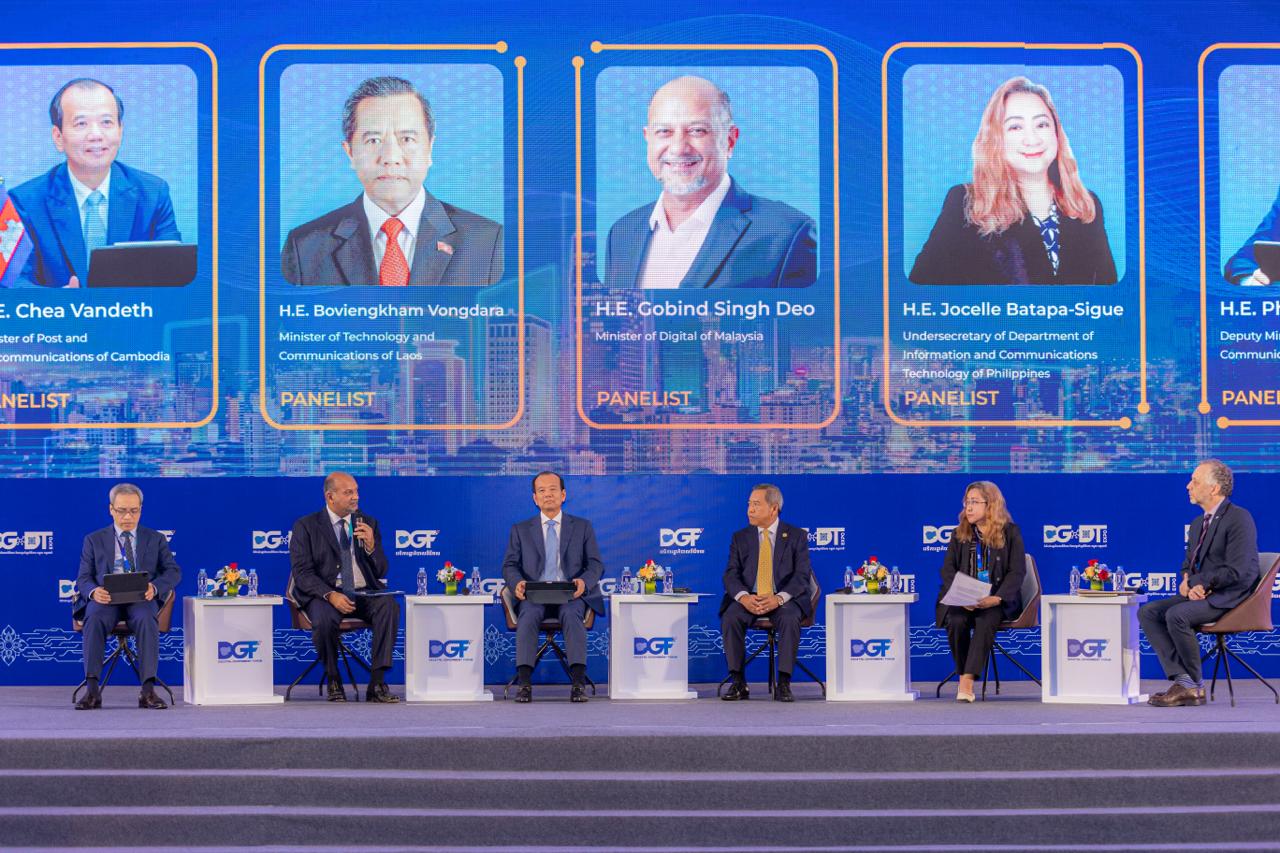
The Philippines, represented by Atty. Jocelle Batapa-Sigue, Undersecretary for ICT Industry Development, and Atty. Alexandra Garcia Soledad, played a pivotal role in the forum. Atty. Batapa-Sigue shared comprehensive insights into the Philippines’ strategies to bridge the digital divide and enhance government service delivery through digitalization. Her discussions emphasized the country’s ongoing initiatives like the National Broadband Plan and the integration of advanced digital technologies, such as partnerships with Starlink for satellite internet connectivity, showcasing a strong commitment to advancing digital literacy and inclusion.
Undersecretary Batapa-Sigue outlined five key pillars driving the Philippines’ digital governance strategy. The first pillar, eGovernment System & Platforms (eGov), aims to create a seamless digital experience across government services. The second, National Government Digitalization (eNGA), focuses on enhancing back-end functions for service continuity. The third, Local Government Digitalization (eLGU), aims to revolutionize local service delivery. The fourth, Government Cloud & Data Centers (eGovCloud), establishes robust cloud infrastructure for NGAs, LGUs, GOCCs, and SUCs. The fifth pillar, eGOV Cloud, highlights cloud computing as a priority for government administration and service delivery, emphasizing cybersecurity and operational excellence. Additionally, the Information Systems Strategic Plan (eGov ISSP) ensures oversight and alignment of ICT system requirements across government agencies. Together, these pillars demonstrate a commitment to transparent, service-oriented governance leveraging technology to better serve citizens.
She answered several questions that were focused on what projects and programs are being undertaken by the Philippine government in adapting with the digitalization of government transactions and breaking the gender digital divide among its citizens.
The Philippines under the leadership of President Ferdinand Marcos implemented the national broadband plan or the broadband ng Masa under the Build Build More Program, the promotion of the National ICT Development Agenda pursuant to R.A. No. 10844, the implementation of programs implementing the Digital Masterplan (DGMP) 2023-2028.
She also emphasized the DICT’s commitment to the Common Tower Policy which seeks to enhance the wireless network coverage and improve the quality and affordability of ICT services in the country to reach underserved and unserved areas or the Geographically Isolated and Disadvantaged Areas (GIDA).
Regarding the Philippine’s efforts to achieve digital transformation, the DICT has partnered with both local and foreign private sector stakeholders such as Starlink to harness the innovation brought by satellite internet connectivity; signed a Memorandum of Understanding for digital cooperation with Singapore where the DICT and the Ministry of Communications and Information of Singapore agreed to collaborate in areas of Digital Connectivity, Scam Calls and Short Message Services (SMS), Personal Data Protection, Emerging Technologies, Digital Government, and Cybersecurity among others.
The Philippine government also has international collaborations with the United Nations Economic and Social Commission for Asia and the Pacific (UNESCAP) and the Korea International Cooperation Agency (KOICA) wherein through joint projects, digital ID systems, technology applications, and regulatory frameworks to enhance crisis resilience and foster digital transformation in the Philippines and the ASEAN region are enhanced.
Lastly, highlighted how the Philippines, through the DICT has leverage in enticing more investors, business owners, and Micro, Small, and Medium Enterprises or MSMEs with the launching of the Integrated Business Permit and Licensing System (iBPLS) under our Integrated Local Government Unit (iLGU) initiative.

Undersecretary Batapa-Sigue took the podium during the closing ceremony on March 12, expressing sincere gratitude to all attendees, including representatives from the local and international private sectors, as well as ministers from various ASEAN governments, South Korea, and Japan. She extended warm congratulations to the Ministry of Posts and Telecommunications (MPTC), led by Minister Chea Vandeth, and to the Cambodian government and people for hosting such a commendable event. Reflecting on the proceedings, she encapsulated her experience in three poignant words.
Firstly, she described the event as “trailblazing.” Undersecretary Batapa-Sigue emphasized the importance of prioritizing citizens’ needs, advocating for a citizen-centric approach to governmental service provision. By shifting the focus towards the people they serve, ASEAN nations could position themselves as global leaders in delivering effective and responsive public services, ultimately benefiting the region’s 600 million citizens. Secondly, she labeled the event as “ground-breaking,” underscoring its potential to usher in new opportunities for Cambodia in the digital era, particularly for its youth. By fostering an environment conducive to the exchange of best practices and collaborative learning, the event paves the way for transformative progress. The convergence of government, industry, and academia serves as the cornerstone for a brighter future, where innovation and cooperation drive sustainable development and prosperity.
On March 11, 2024, Undersecretary Batapa-Sigue was invited to join the courtesy call on Samdech Moha Borvor Thipadei Hun Manet, Prime Minister of the Kingdom of Cambodia by the esteemed ASEAN Digital Ministers, digital leaders, and development partners regional and global.

During the exclusive meeting, the Prime Minister underscored the critical importance of collaboration and cooperation among nations amidst the swiftly evolving digital landscape. He illuminated Cambodia’s steadfast efforts in spearheading digital transformation and fostering innovation across diverse sectors, spanning government, education, and business.
ASEAN’s Collective Push for Digital Integration

The event also underscored the ASEAN Secretary General Dr. Kao Kim Hourn’s call for leveraging digital tools to enhance governmental services and foster economic growth. He stressed the importance of the Digital Economy Framework for ASEAN (DEFA), which aims to streamline digital trade, promote innovation, and improve digital connectivity across the region.
The Digital Government Forum facilitates ASEAN Member States’ exchange of best practices, experiences, and challenges in advancing digital government initiatives. It aims to strengthen cooperation among ASEAN countries and enhance coordination with external partners to promote digital integration and connectivity in the region. Secretary General Hourn and Dr. Kao stressed the importance of leveraging digital tools for government service improvement and fostering innovation and entrepreneurship in the digital economy.
Secretary General Hourn expressed gratitude to the Prime Minister of Cambodia for leadership in promoting digital government and the digital agenda in ASEAN. Emphasizing digitalization’s importance for realizing the digital economy’s full potential and achieving sustainable development goals, he called for continued collaboration to build a resilient and inclusive digital government benefiting all citizens.
Secretary-General Hourn highlighted DEFA’s importance in facilitating cross-border digital trade, promoting innovation and entrepreneurship, enhancing digital connectivity, and addressing digital challenges like cybersecurity and data privacy shortages. DEFA plays a crucial role in shaping the ASEAN region’s digital economy, focusing on cost competitiveness, digital trust, accelerating digital transformation and literacy, investing in digital skills and competitiveness, and advocating for sustainable and inclusive digital inclusivity.
Key Highlights and Collaborative Initiatives
Several sessions focused on the practical aspects of digital transformation, from policy implementation to technological enablers like blockchain and AI. The forum provided a venue for ASEAN countries to share best practices and explore collaborative projects aimed at enhancing digital capacities across the region.
Session 1 delved into an overview of Cambodia’s Digital Transformation policies, highlighting frameworks like the Digital Economy and Society Policy Framework 2021-2035 and the Digital Government Policy 2022-2035. The former aims to propel Cambodia’s digital economy by leveraging technology for growth, innovation, and improved quality of life. Key focus areas include digital infrastructure, skills development, e-commerce, and data protection.
In Session 2, the discussion centered on the role of technology in driving digital transformation within government. The Royal Kingdom of Cambodia showcased various digital government products, ranging from online portals and citizen feedback applications to data analytics tools and cybersecurity solutions. The exhibition highlighted technologies such as blockchain, cloud computing, AI, and virtual reality.
Session 3 explored the challenges and strategies in adapting policies to implementation in digital government transformation. It addressed issues like limited technology access, data privacy concerns, skills gaps, infrastructure challenges, and regulatory constraints, emphasizing the importance of coordination, change management, and sustainability.
The presentation on data analytics, AI, data warehousing, and blockchain in Session 4 showcased Cambodia’s efforts in integrating data-driven approaches across sectors. Initiatives like the National Strategy for Statistics Development and the Data4Development program aim to enhance data quality and utilization for socioeconomic development.
Session 5 focused on improving public service efficiency and accessibility through digital adoption, covering topics from ID registration to online tax filing systems. Session 6 underscored the importance of fostering an inclusive digital transformation, particularly in rural and remote communities, emphasizing connectivity, digital inclusion, and skills development.
Lastly, Session 7 delved into the growth value and opportunities of original content on media platforms, addressing the significance of creating unique content, its value to audiences and platforms, and opportunities for content creators to showcase their work. Each session contributed to a comprehensive understanding of Cambodia’s digital transformation journey, from policy frameworks to practical implementations and inclusive strategies.
Looking Forward
As the forum concluded, the digital leaders, including Cambodia’s Minister of Post and Telecommunications Chea Vandeth, and delegates from ASEAN member states, reaffirmed their commitment to a collaborative digital future. They recognized the forum as a catalyst for transformative digital governance that could significantly benefit citizens across Southeast Asia.
During the Closing Ceremony, Minister Vandeth of Post and Telecommunications, expressed gratitude for the active participation and insightful contributions during the Digital Governance Forum in Cambodia. He highlighted the crucial role of digital governance in shaping the nation’s future and emphasized the forum’s discussions as a catalyst for positive change. Stakeholders were urged to harness technology for societal and economic progress, aiming to cultivate an inclusive, transparent, and efficient digital ecosystem. Anticipation was expressed for the discussions to translate into actionable steps towards a digitally advanced Cambodia. The host extended thanks to all attendees for their dedication to enhancing digital governance and encouraged ongoing collaboration towards realizing a digital Cambodia.
The Philippines, through Atty. Batapa-Sigue’s closing remarks, extended gratitude and highlighted the forum’s role in setting a direction for ASEAN governments to focus on people-centric services. This event not only marked a significant step towards digital integration for Cambodia but also for ASEAN, establishing a model for cooperation and innovation in government services across the region.

The Digital Governance Forum and Cambodia-International Digital Government and Digital Technology Expo showcased Cambodia’s digital government achievements, including the development and advantages of digital platforms for public service provision by ministries and institutions. Looking ahead, Cambodia aims to lead ASEAN states and partners such as South Korea and Japan in sharing best practices and incorporating digital products to enhance basic social services. By fostering collaboration and knowledge-sharing, Cambodia seeks to create a more connected and efficient digital ecosystem, driving economic growth and innovation while ensuring inclusivity in the digital revolution. Attendees also had the opportunity to explore the latest technology equipment and services from regional and international companies. As such, it’s recommended for the Philippines to collaborate with Cambodia and other ASEAN governments to improve digital literacy, particularly in rural areas, ensuring equitable access to digital technology benefits through training programs and resources.
Undersecretary Batapa-Sigue outlined several recommendations from her learnings from the Digital Governance Forum. Firstly, the DICT should initiate data warehousing projects to bolster the Philippine government’s data management and analytics capabilities, facilitating informed decision-making. Secondly, fostering a data-driven culture in policymaking involves creating a National Data Warehouse, promoting data integration and standardization across government entities, and enhancing international cooperation to leverage global best practices. Thirdly, expanding investment in e-Government solutions beyond existing applications is vital to boost service efficiency and transparency, accelerate digitization of government processes, and develop a comprehensive national digital identity framework. Fourthly, strengthening cybersecurity infrastructure is essential to safeguard government data and systems against cyber threats. Fifthly, championing digital literacy and skills development initiatives ensures widespread access to and engagement with digital governance efforts, equipping citizens with necessary competencies. Lastly, leading the creation of an ASEAN Digital Innovation Network and hosting a Digital Government Forum in 2026 are encouraged to further advance digital governance initiatives.