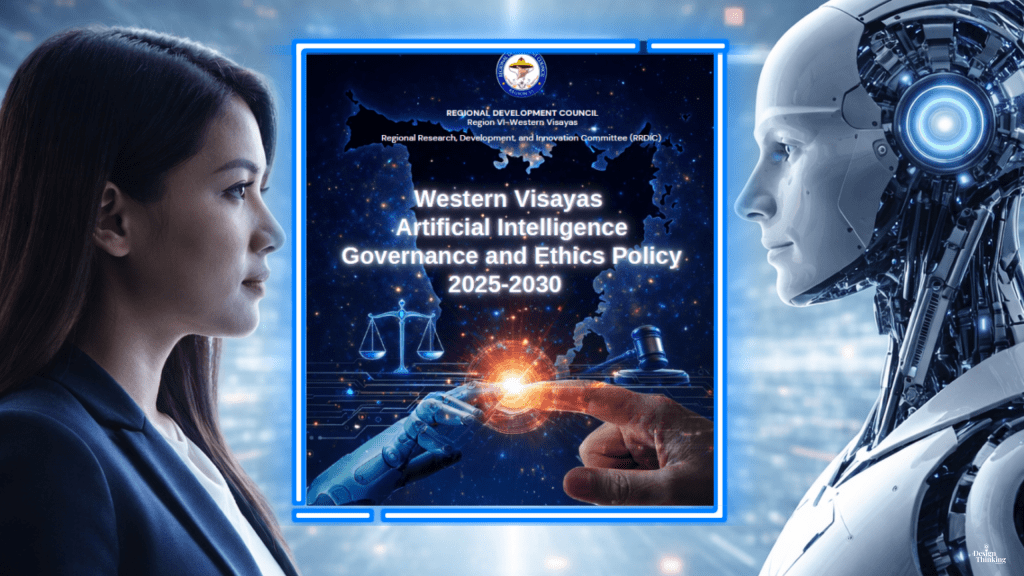
New framework sets rules on ethics, risk classification, data governance, accountability, implementation and oversight for AI use in Region VI
Western Visayas has formally adopted a regional policy framework to govern the development, procurement, deployment and use of artificial intelligence across Region VI, setting out rules on ethics, accountability, transparency, security, data governance, implementation and oversight.
The Western Visayas Artificial Intelligence Governance and Ethics Policy 2025–2030, backed by the Regional Development Council VI and the Regional Research, Development and Innovation Committee, establishes a structured regional approach to AI governance for public-sector and public-impact applications.
In the signed resolution endorsing the policy, Department of Science and Technology (DOST) VI Regional Director Rowen R. Gelonga, as RDC-RRDIC VI chairperson, described the framework as one that will “guide the ethical, inclusive, transparent, and sustainable development and use of AI within Region VI,” and stated that the committee “endorses this policy as one of the key regional targets to advance responsible and ethical AI development and use in Western Visayas.”
The policy states that its purpose is to provide a framework for the ethical, inclusive, transparent and sustainable development and use of AI in Western Visayas. It is aligned with the Philippine Development Plan 2023–2028, the National AI Strategy for the Philippines (NAIS-PH), and international and regional guidance, including frameworks from UNESCO, the International Telecommunication Union and ASEAN.
In the acknowledgements section of the Western Visayas Artificial Intelligence Governance and Ethics Policy 2025–2030, the document states: “Special appreciation is extended to Atty. Jocelle Batapa-Sigue, Policy Innovation Expert, for her valuable insights which helped guide the policy directions reflected in this document.”
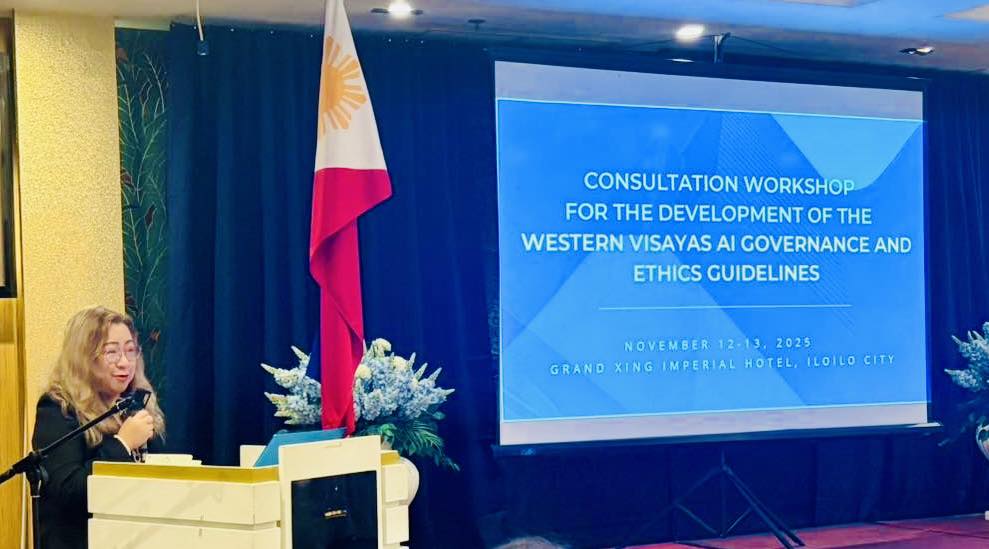
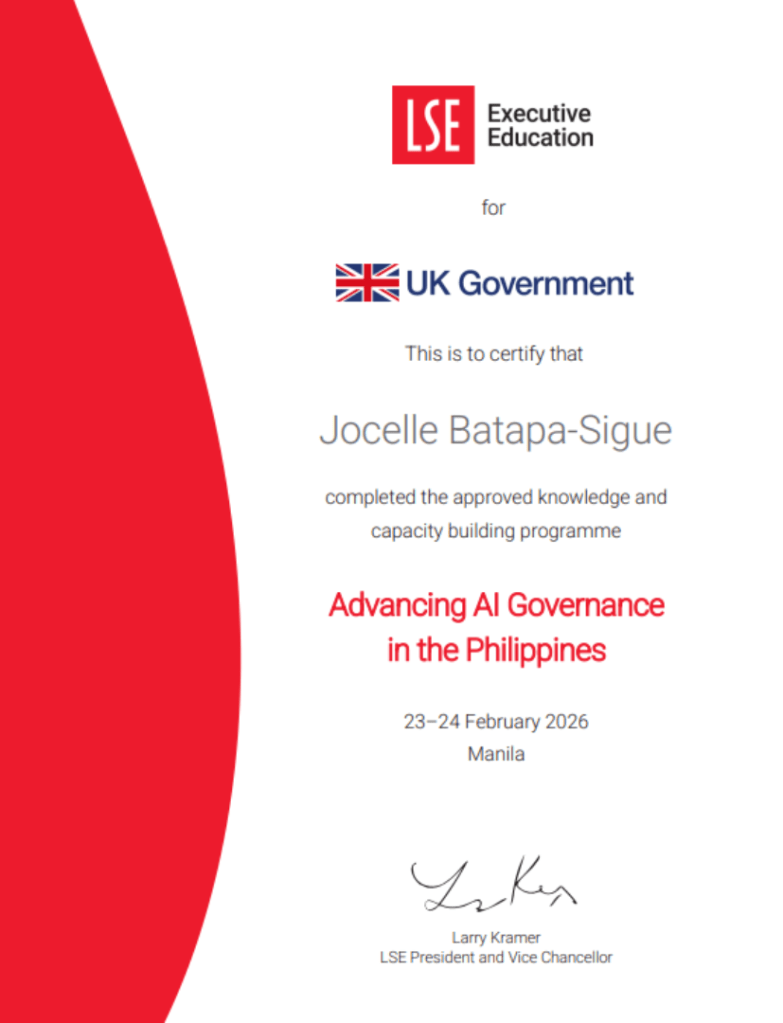
Batapa-Sigue said she is deeply grateful to be a part of this milestone in Western Visayas. “I am truly honored to have been cited in the Western Visayas Artificial Intelligence Governance and Ethics Policy 2025–2030. I value the document’s acknowledgment of my contribution as a Policy Innovation Expert, and I am grateful for the opportunity to apply my trainings from the Alan Turing Institute, the ITU Academy, and the London School of Economics to the development of AI governance frameworks that are ethical, inclusive, transparent, and responsive to regional development needs.”
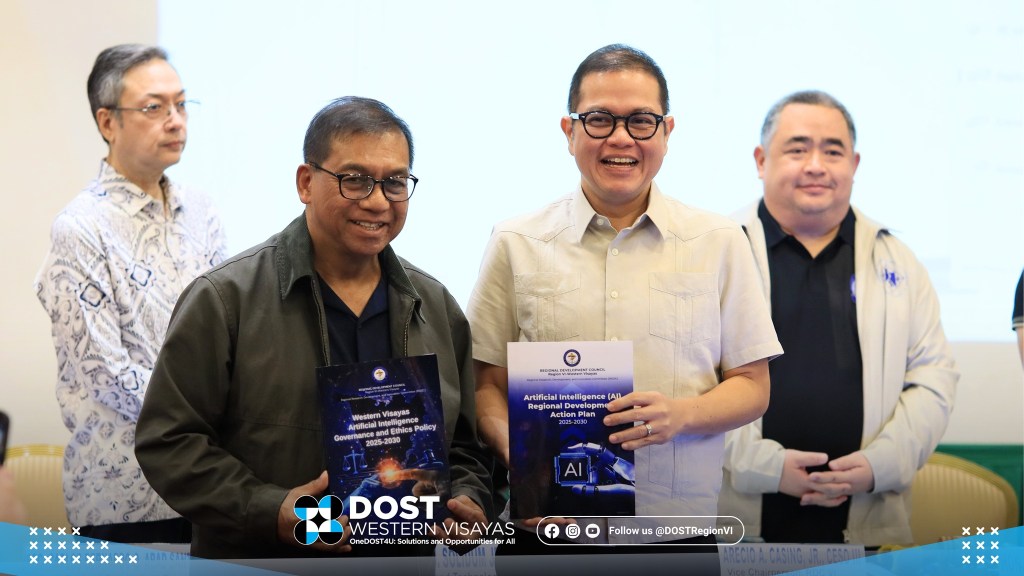
RDC VI chaired by Aklan Governor Jose Enrique “Joen” Martin Miraflores turned over policy to DOST Secretary Renato Solidum as part of the Western Visayas AI Regional Development Action Plan, AI Governance and Ethics Policy together with RDC Region VI AI-powered Chatbot last March 20, 2026. The Ceremonial Turnover took place during the 1st Quarter Regional Development Council (RDC) Meeting at the Paradise Garden Resort Hotel in Malay, Aklan.
RELATED STORY: Western Visayas Unveils Artificial Intelligence Action Plan, Ethics Policy
Western Visayas Artificial Intelligence Governance and Ethics Policy 2025–2030
Under the policy’s opening provisions, Region VI identifies four main objectives: to establish a clear regional framework for ethical AI governance, to promote responsible and innovation-enabling AI use aligned with development priorities, to protect human rights and public trust while safeguarding data integrity and institutional accountability, and to strengthen regional capacity and coordination in response to AI-related opportunities and risks.
The framework applies to AI systems developed, procured, deployed or used in Region VI by regional offices of national government agencies, local government units, state universities and higher education institutions, programs supported by RDC VI, and private-sector or civil-society partners engaged in public-sector or public-impact AI initiatives. It covers AI applications in public services, governance, research and innovation, education and training, economic development, and other areas with social, economic or rights-based effects. The policy also states that purely private AI applications without public-sector involvement are encouraged, though not required, to align with the framework.
The document defines AI broadly as machine-based systems capable of performing tasks usually associated with human intelligence, including learning, reasoning, pattern recognition, prediction, content generation and decision-making. It also distinguishes among different forms of AI, including narrow AI, generative AI and agentic AI systems, and recognizes the full AI lifecycle, from research and design through deployment, monitoring, updating and decommissioning. An equity lens is included as part of the region’s governance and assessment approach.
A central part of the policy is its section on ethics, bias, fairness and accountability. The framework requires institutions to address risks of exclusion, discrimination and inequitable outcomes in the design and deployment of AI systems. It also emphasizes explainability and transparency, especially where AI is used in public services or other high-impact settings. The policy calls for inclusive and multidisciplinary participation in AI initiatives, including the involvement of technical experts, legal practitioners, social scientists and affected communities.
For accountability, the policy promotes the use of impact assessments before the deployment of AI systems with social or rights-based implications. It also requires documentation and traceability across the AI lifecycle, independent audits and reviews for high-impact uses, and grievance and redress mechanisms for affected individuals and communities. RDC VI is identified as the principal regional advisory platform for ethical AI governance, coordination and policy improvement.
The framework also sets out provisions on security, data governance and digital sovereignty. AI systems are classified into low-risk, moderate-risk and high-risk categories, with the level of oversight and safeguards depending on the potential impact of the system. High-risk systems include those used in public services, health, education, social protection, law enforcement and other settings where errors, misuse or bias may cause significant harm.
For these systems, the policy requires stronger measures for robustness, reliability and security, including protection against unauthorized access and misuse, and monitoring for unexpected behavior or system failure. It also sets requirements for lawful and transparent data collection and use, data quality and integrity, and the protection of personal and sensitive information.
On digital sovereignty, the framework states that data and digital systems must be governed consistently with public interest and legal obligations, with transparency, accountability and respect for rights identified as foundations of public trust.
The policy’s section on ethical principles and sustainability standards lists the core principles that must guide AI use in the region: human-centeredness, fairness and non-discrimination, transparency and explainability, accountability and responsibility, and safety and reliability. Institutions are required to inform relevant stakeholders about the use, purpose and limitations of AI systems; document the purpose, scope and decision logic of such systems; provide explanations when AI-assisted decisions materially affect individuals or communities; disclose when AI is used to support or automate decision-making; and allow authorized oversight bodies access to information needed for monitoring, audit or review.
The same section requires institutions to designate responsible officials or units, maintain documentation and traceability, establish audit and corrective-action mechanisms, and provide accessible grievance and redress channels. It also requires testing before deployment, safeguards against misuse and cyber threats, monitoring after deployment, and updating, suspension or decommissioning when risks are identified. Sustainability considerations are also included, covering resource efficiency, energy use, lifecycle environmental impacts and long-term societal effects.
On governance, the policy adopts a multi-stakeholder structure. RDC VI provides overall policy direction, strategic guidance, endorsement and advisory oversight. The Regional Research, Development and Innovation Committee, supported by its Technical Working Group for AI, is tasked with coordination, technical review and integration of AI governance into the regional research and innovation agenda. The framework also adopts a whole-of-government and whole-of-society approach, involving government agencies, local government units, state universities and colleges, research institutions, training providers, private-sector entities, industry groups, civil-society organizations and affected communities.
The implementation framework for 2025–2030 is designed as a phased and adaptive process. It includes awareness-building and capacity development, institutional strengthening and coordination, integration of ethical and governance mechanisms into AI-related programs and projects, and continuing refinement through monitoring and evaluation. The policy provides for training for policymakers, technical personnel, legal and ethics officers and implementers, and supports the development of regional expertise in AI ethics, safety and governance. It also points to knowledge-sharing, research collaboration and communities of practice as part of implementation support.
The policy states that implementation may be supported through integration of AI governance activities into RDC VI and RRDIC planning and investment frameworks, mobilization of support from national government and development partners subject to funding availability, and strategic partnerships with academic institutions, industry and civil society. Responsibilities are to be coordinated through RDC VI and RRDIC, with technical input from the AI Technical Working Group and other stakeholders.
It also provides for monitoring, evaluation and adaptive governance. Periodic monitoring and reporting will cover AI-related initiatives, governance practices and emerging issues in the region. The framework allows for progress reviews, stakeholder consultations and synthesis of implementation experiences across sectors, with evaluation findings intended to support continuous improvement. The policy may be updated in response to technological developments, policy changes and evolving international standards, and RDC VI may undertake periodic review upon recommendation of the RRDIC.
The annexes specify how the framework is to be applied. Annex A lists indicative high-risk AI use cases, including systems used in law enforcement, public safety, employment and economic opportunity. Examples include predictive policing, risk profiling, surveillance technologies, AI-assisted tools influencing arrest or enforcement priorities, and AI systems used for recruitment, hiring, performance evaluation or creditworthiness assessment. These uses are subject to mandatory ethical and algorithmic impact assessments, enhanced documentation and traceability, clearly defined human oversight and accountability, and periodic independent review or audit where feasible.
The AIG policy comes with an Ethical Impact Assessment Framework (Annex B) for identifying, assessing and mitigating risks before deployment. It is strongly recommended for high-risk AI systems, AI used in public services or decision-making, and systems processing personal or sensitive data. The framework includes screening questions on purpose, affected persons, decisions influenced by the system, risks of bias or discrimination, data sources, safeguards for transparency and human oversight, and complaint or redress mechanisms. It also requires risk identification across data, technical, social and institutional dimensions, documentation of findings, and periodic review when systems are updated or deployed in new contexts.
Annex C also outlines the institutional governance structure, clarifying the roles of RDC VI, RRDIC, the Technical Working Group for AI, implementing institutions and partner organizations. Annex D sets out an indicative monitoring matrix linking policy objectives to intended outcomes and indicators, including whether governance mechanisms are operational, the share of AI projects that undergo Ethical Impact Assessments, the existence of audits and grievance processes, the number of trainings conducted and personnel trained, and public disclosure and stakeholder engagement activities.
The policy document identifies a broad group of institutions involved in its formulation, including representatives from DOST, DEPDev, DICT, DTI, CHED, TESDA, DILG, universities, health institutions and indigenous peoples’ representation.
Batapa-Sigue stresses the importance of ecosystem-building for global enterprise engagement. This will align the region’s priority industries, digital capabilities, talent pool, and local government support mechanisms with the requirements and growth objectives of international enterprises seeking expansion into the Philippines. She puts a premium on coordinated collaboration among local government units, industry associations, ICT councils or associations, academic institutions, startups, and investment promotion stakeholders to ensure that market entry and business expansion initiatives contribute to long-term regional development. This will further require the localization of solutions and investments through market-sensitive adaptation, workforce development, innovation pilots, and sector-based partnerships that respond to the specific needs and competitive strengths of Western Visayas. Through this approach, Western Visayas is well positioned as a strategic hub for co-innovation, digital services, countryside talent development, and inclusive participation in the ASEAN and global economy.
This gives Western Visayas a formal regional policy framework that not only defines principles for AI governance, but also sets operational requirements on risk management, transparency, accountability, institutional oversight, implementation and evaluation across the 2025–2030 period.
Batapa-Sigue Focuses Policy Lens on AI Governance
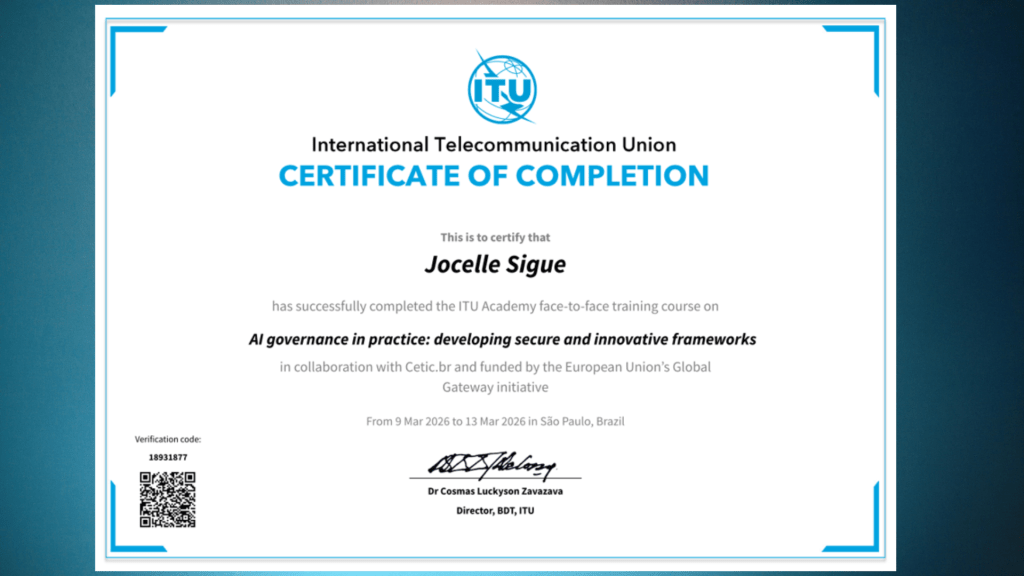
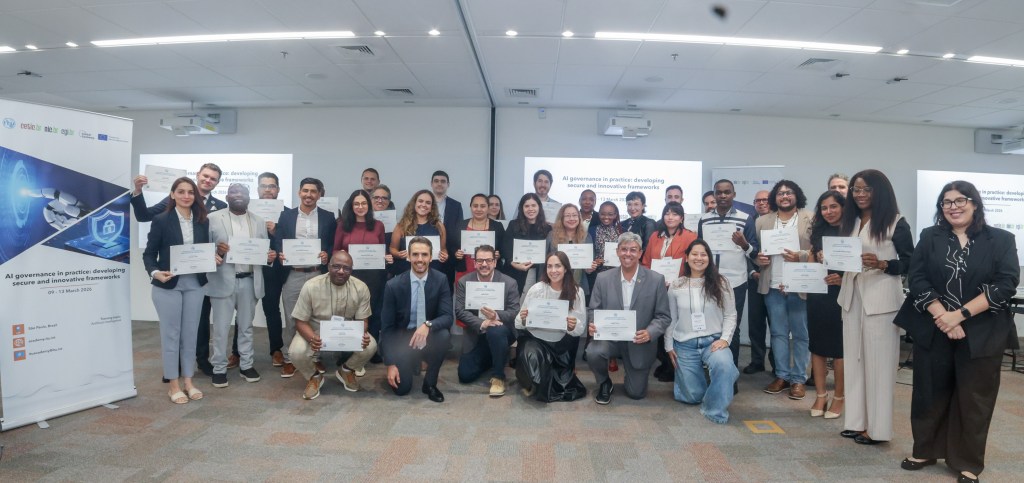
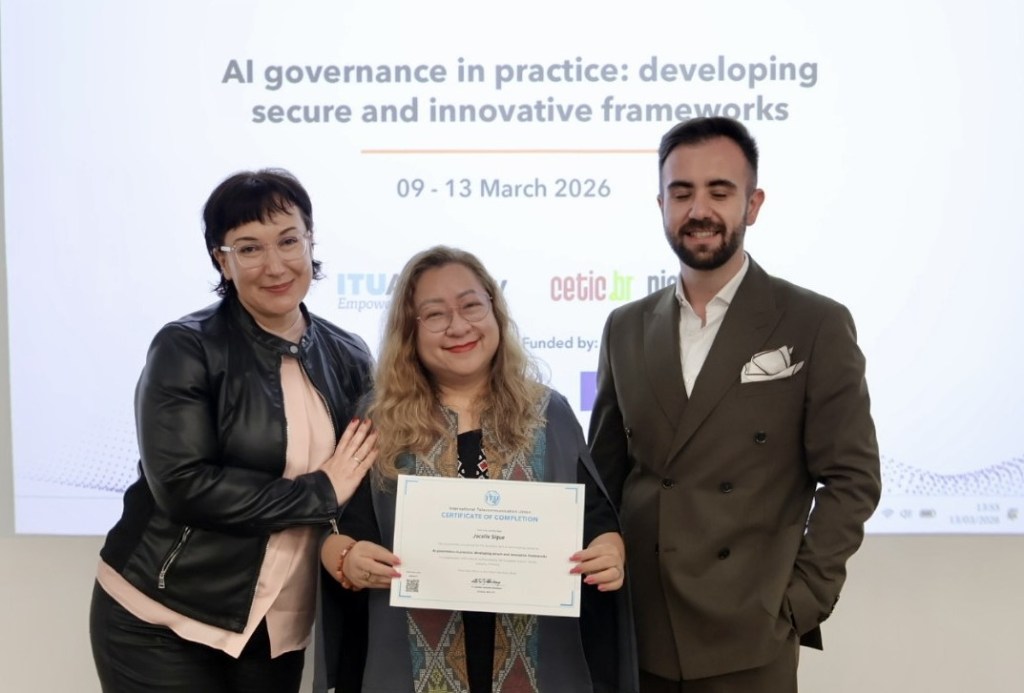
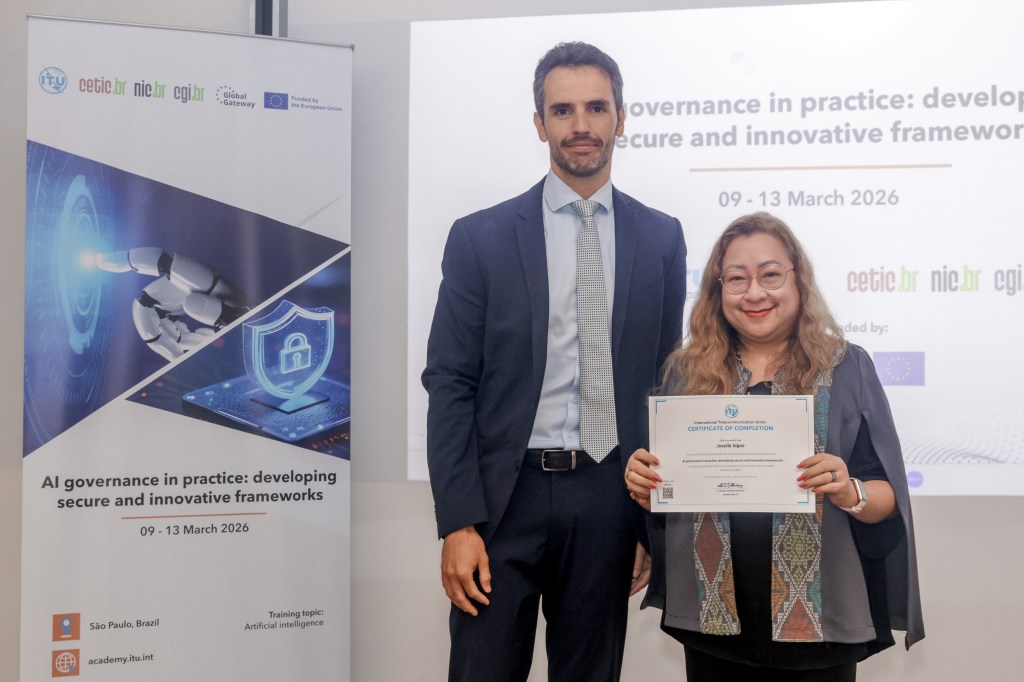
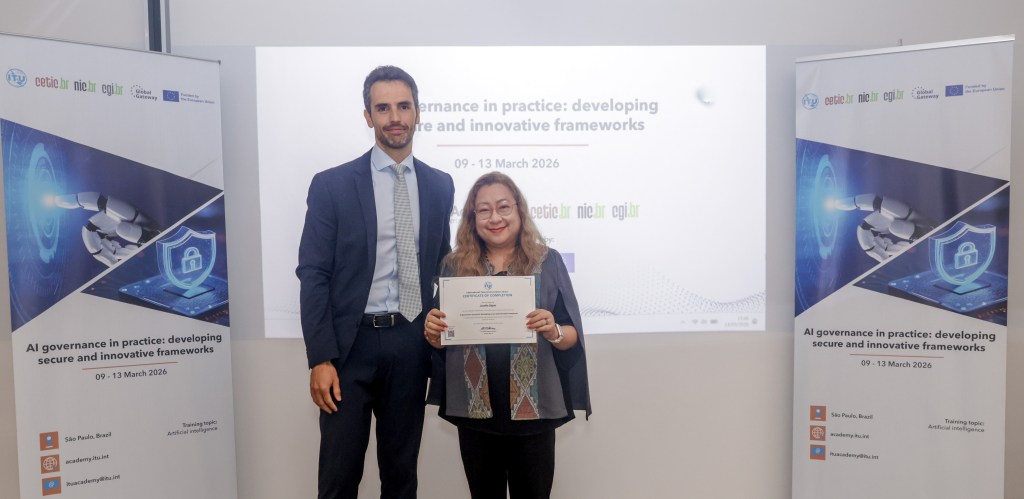
Last March 9 to 13, 2026, Atty. Jocelle Batapa-Sigue, who was acknowledged as the Policy Innovation Expert for AI Governance of by RDC Western Visayas, was among the 28 trainees chosen to undergo a five-day ITU Academy training on AI Governance in Practice: Developing Secure and Innovative Frameworks in Sao Paulo, Brazil.



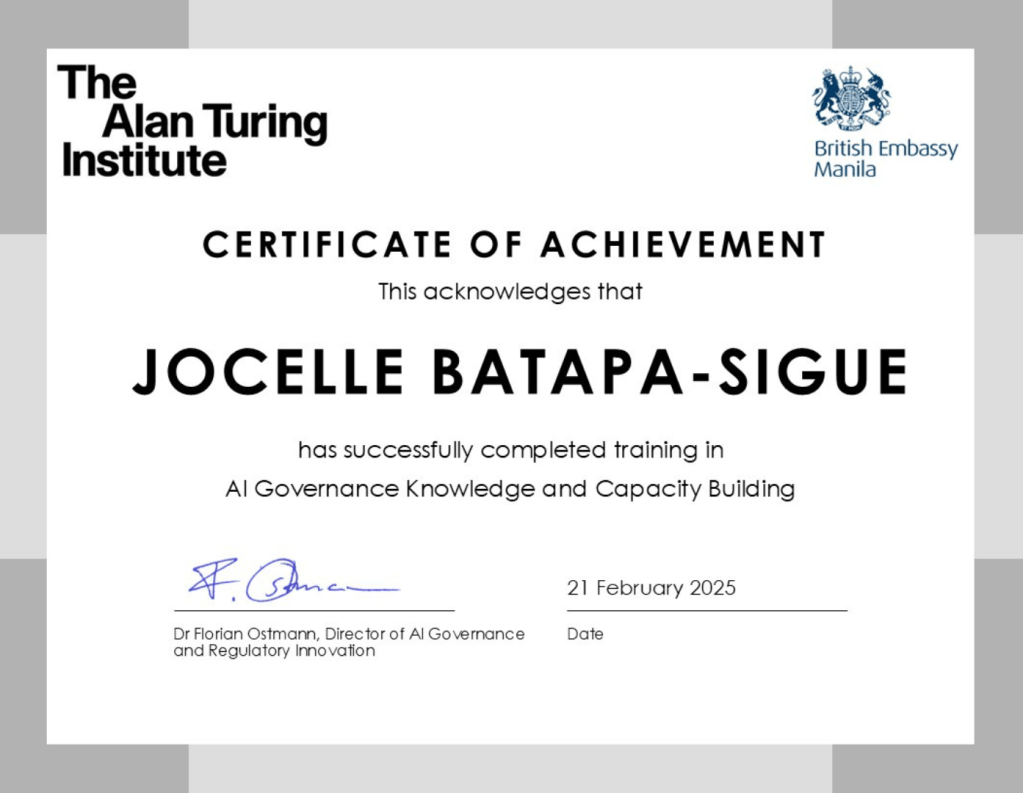
Batapa-Sigue also helped lead and undertake the AI Ethics and Governance in Practice: An Introduction 4-day training program by The Alan Turing Institute last year, which aims to provide government leaders with the latest best practices in AI policy, governance, and ethical deployment organized by the British Embassy in the Philippines.
The training, which brough 9 experts from London focused on ensuring responsible AI innovation, covering key governance frameworks such as the Process-Based Governance (PBG) Framework and the CARE and Act Principles. These frameworks are designed to help policymakers anticipate AI risks, mitigate biases, and implement ethical AI systems in government services. It also explores real-world AI applications through case studies, participants examined how AI-driven decision-making must be transparent, fair, and aligned with societal values.
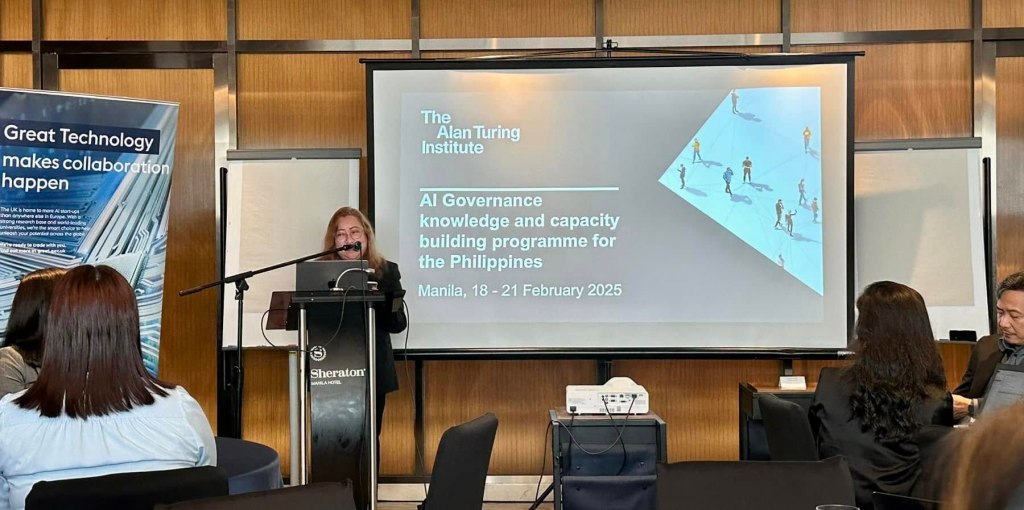
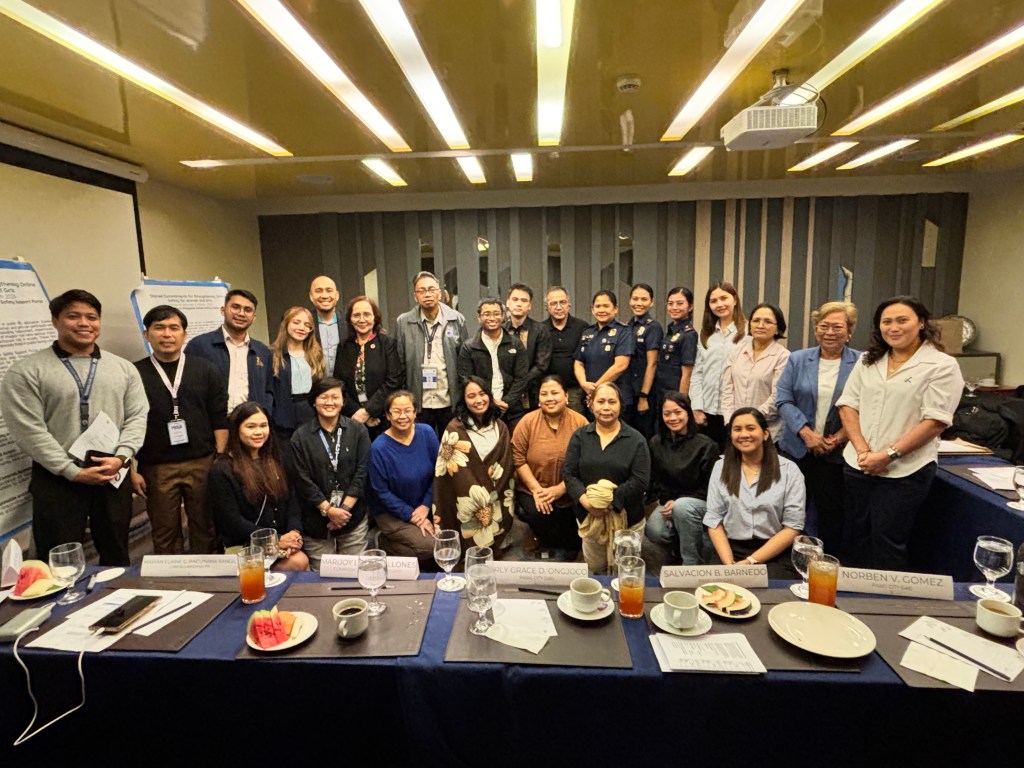
Another set of AIG training was held in Manila last February 23-24, 2026 with the support of the UK Government and London School of Exchange.

 Jocelle Batapa Sigue
Leave a comment