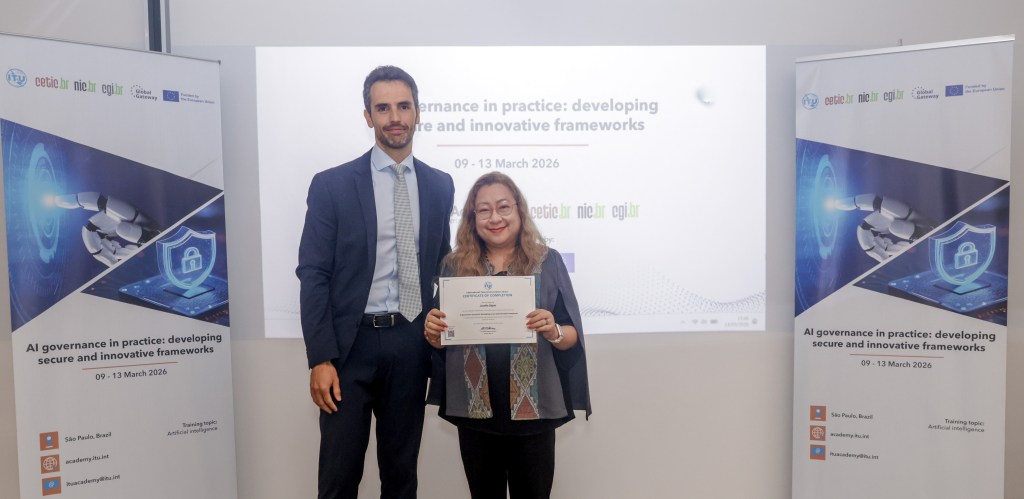
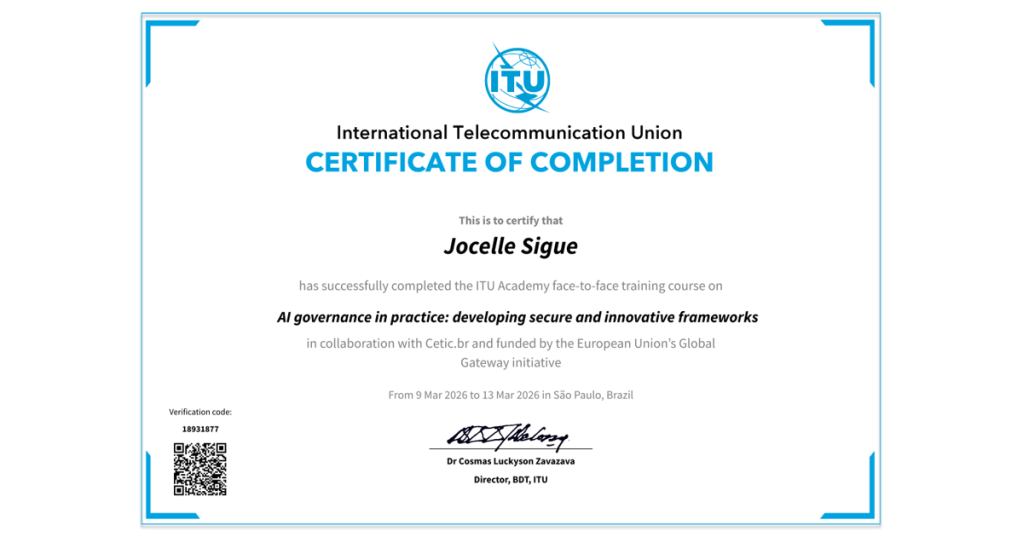
SÃO PAULO, 20 March 2026 — AI governance advocate Jocelle Batapa-Sigue has successfully completed the International Telecommunication Union (ITU) Academy face-to-face training course on AI governance in São Paulo, Brazil, bringing home practical insights that can help strengthen the Philippines’ approach to secure, ethical, and innovation-friendly AI governance.
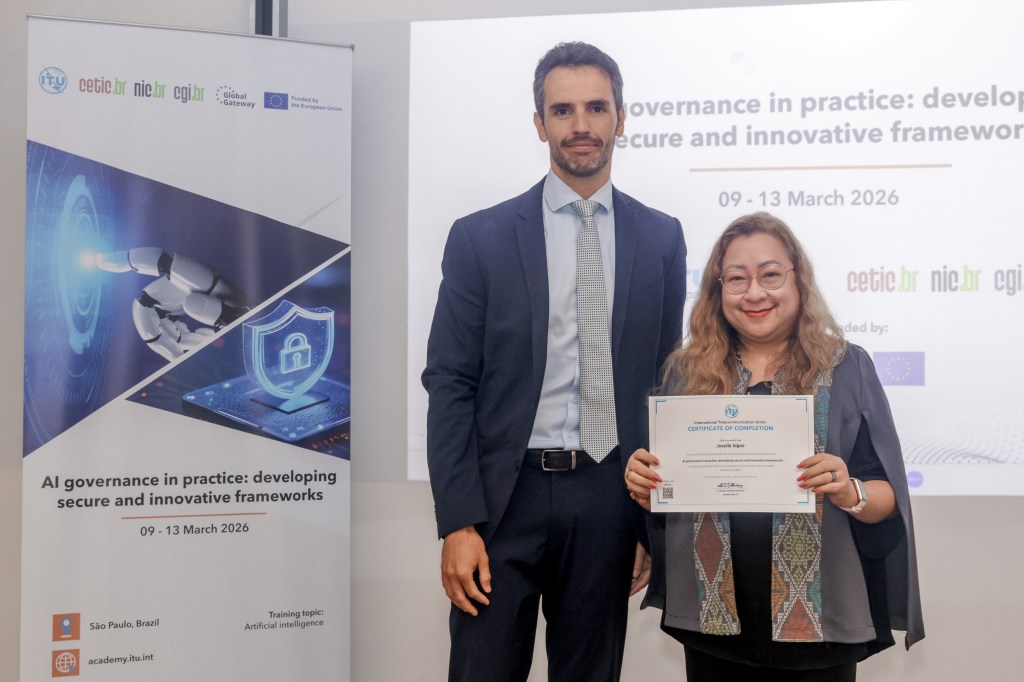
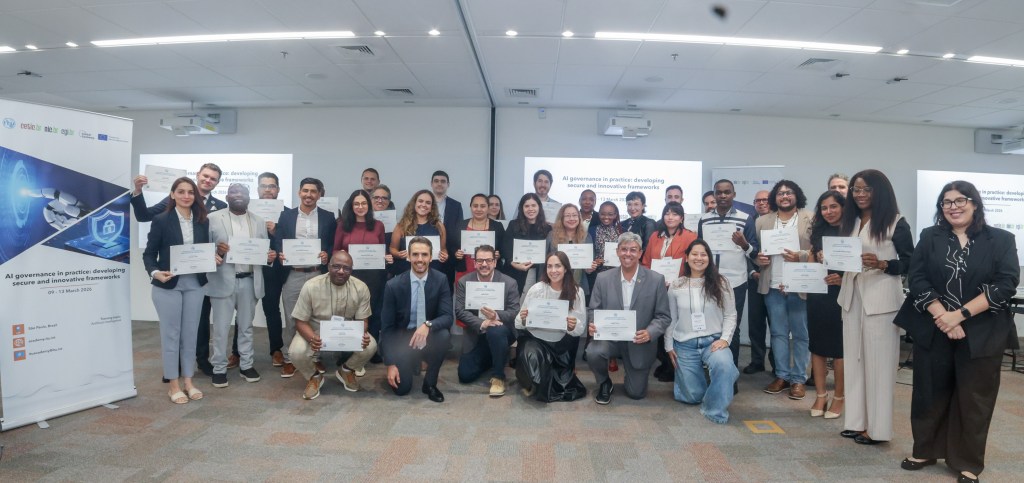
Batapa-Sigue, former Undersecretary of the Department of Information and Communications Technology (DICT) and convenor of the Philippine ICT Innovation Network joined 28 other fellows from different countries for the “AI Governance in Practice: Developing Secure and Innovative Frameworks,” held in São Paulo, Brazil from 9 to 13 March 2026.
The programme brought together policymakers, regulators, civil society leaders, and professionals working to strengthen practical capacity in artificial intelligence governance at a time when countries are facing growing pressure to harness AI’s benefits while managing its risks.
For Batapa-Sigue, the training marked an important step in deepening her understanding of how governments, institutions, and communities can shape AI systems that are not only innovative, but also safe, accountable, and aligned with the public interest.
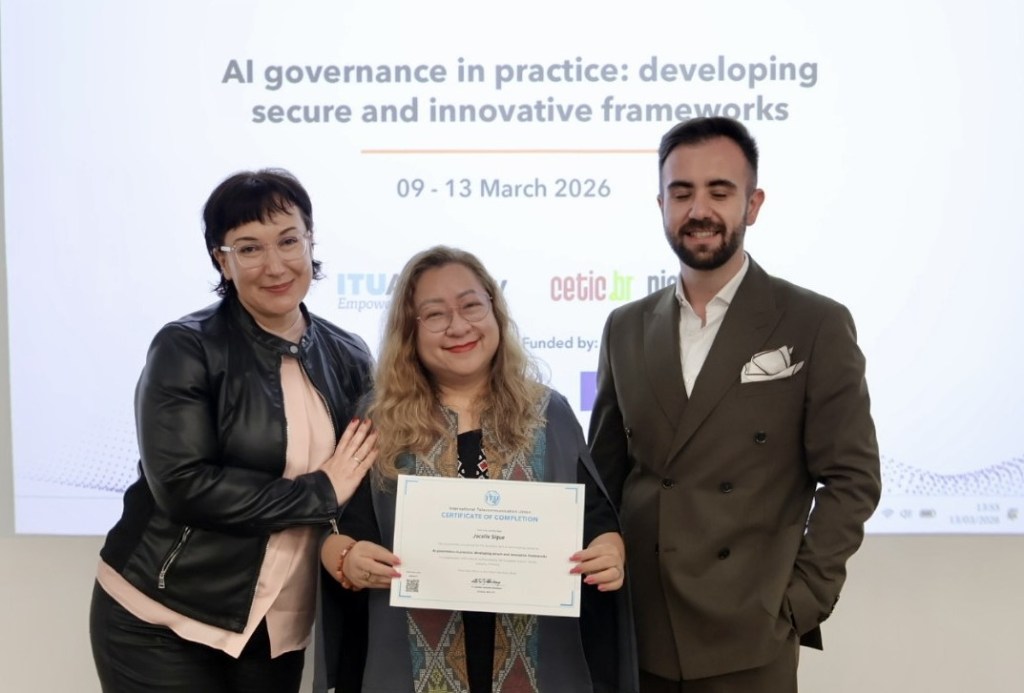
“I am deeply grateful for the opportunity to complete this programme and to learn alongside practitioners from different countries,” Batapa-Sigue said. “I am especially grateful to have met Miriam Stankovich and Nikola Neftenov, whose insights and generosity made the experience even more meaningful. The training strengthened my commitment to advancing AI governance frameworks that are secure, innovative, and firmly grounded in the public interest.”
The course provided participants with a comprehensive introduction to core AI concepts and governance challenges. Batapa-Sigue gained deeper knowledge of the different types of AI, including narrow AI, artificial general intelligence, and emerging generative and agentic systems. The programme also examined the AI lifecycle, helping participants understand how governance issues can arise from design and data collection to deployment, monitoring, and use in real-world settings.
A key part of the training focused on ethical and responsible AI governance. Participants explored how bias, opacity, and weak accountability mechanisms can undermine trust in AI systems and produce harmful outcomes for individuals and communities. Through this, Batapa-Sigue strengthened her understanding of why fairness, transparency, inclusivity, accountability, and human oversight must be built into governance frameworks from the outset.
The programme also addressed the growing range of AI-related risks, including cybersecurity threats such as adversarial attacks, model inversion, and data poisoning, as well as concerns related to data governance, privacy, misuse, and system reliability. These discussions helped participants assess how AI risks emerge across the lifecycle and how institutions can develop safeguards that are practical and context-sensitive.
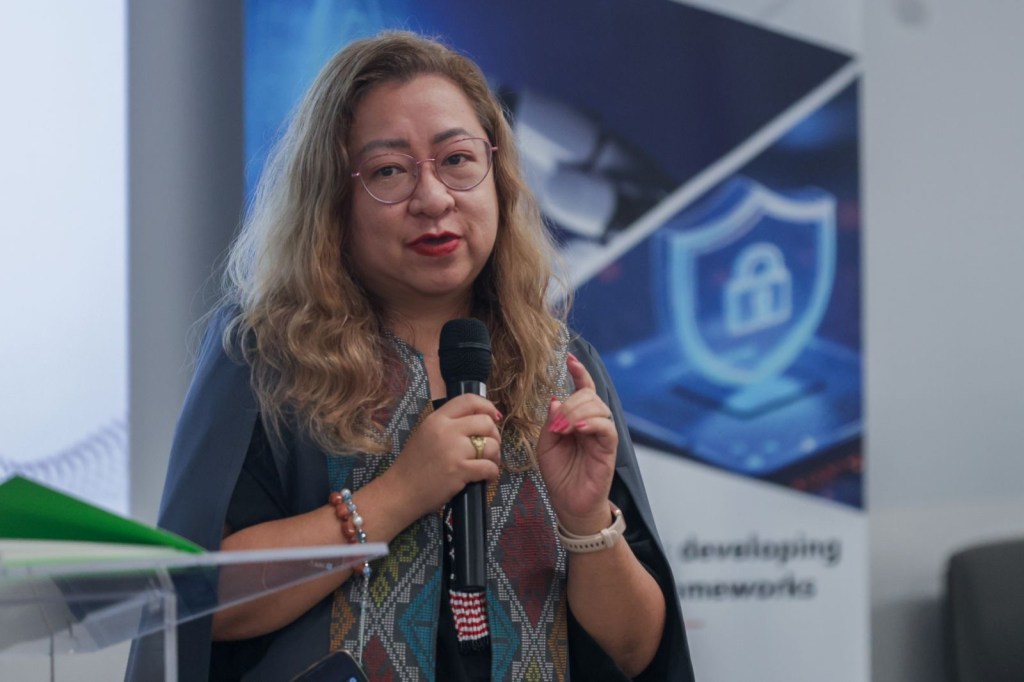
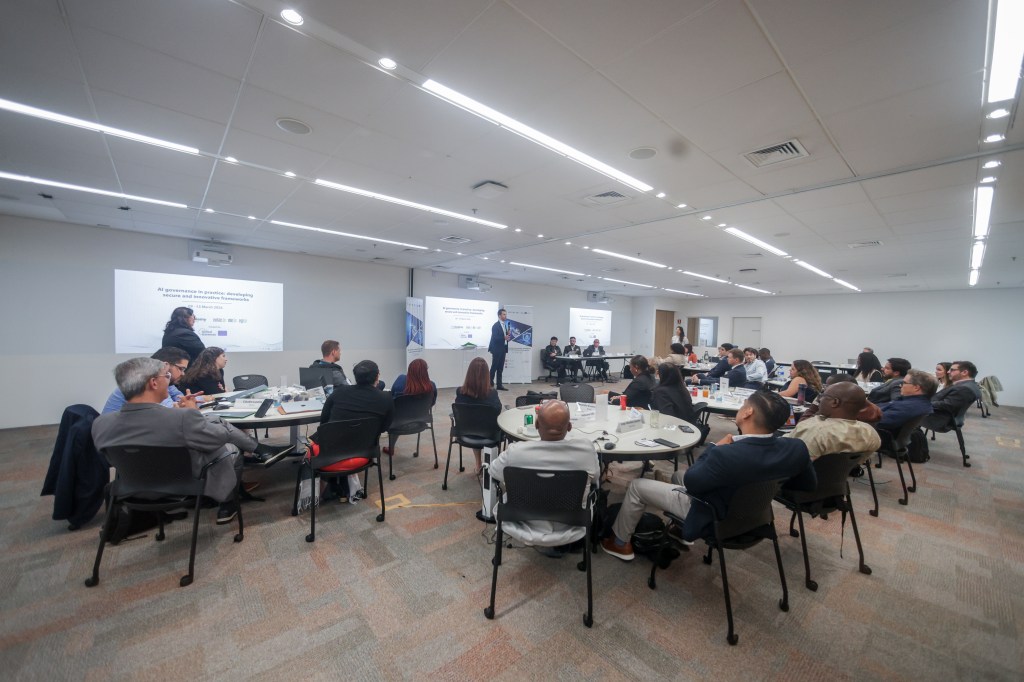
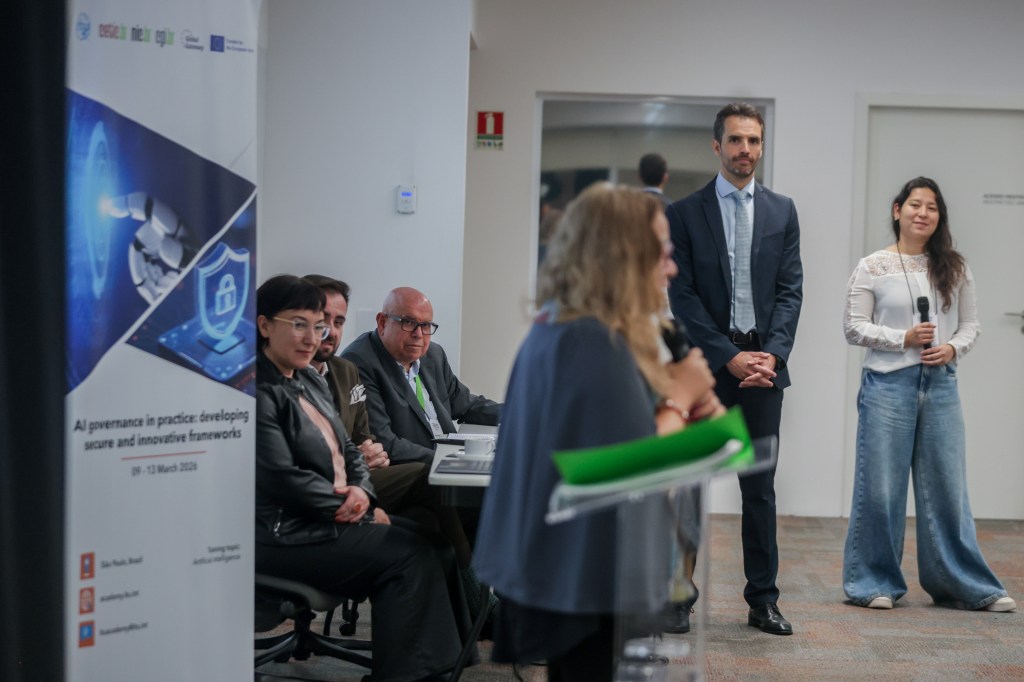

Another major area of learning was the evolving global legal and policy landscape for AI. Batapa-Sigue examined risk-based and rights-based approaches to regulation and reviewed the role of international institutions and frameworks shaping global AI governance. The training emphasized the importance of policy coherence, especially as countries and regions adopt different legal models and regulatory approaches.
Beyond lectures and discussion, the programme emphasized hands-on and collaborative learning. Participants engaged in design thinking labs, simulations, journey mapping, and prototyping exercises to identify governance gaps, test oversight tools, and co-develop policy responses. These scenario-based activities addressed sector-specific challenges, multi-stakeholder trade-offs, and cross-border regulatory issues, allowing participants to apply governance principles to realistic policy situations.
One of the programme’s most important outcomes was the collaborative development of a five-year AI governance roadmap tailored to institutional or national contexts. This exercise required participants to translate theory into action by identifying priorities, designing interventions, and aligning governance strategies with international best practices.
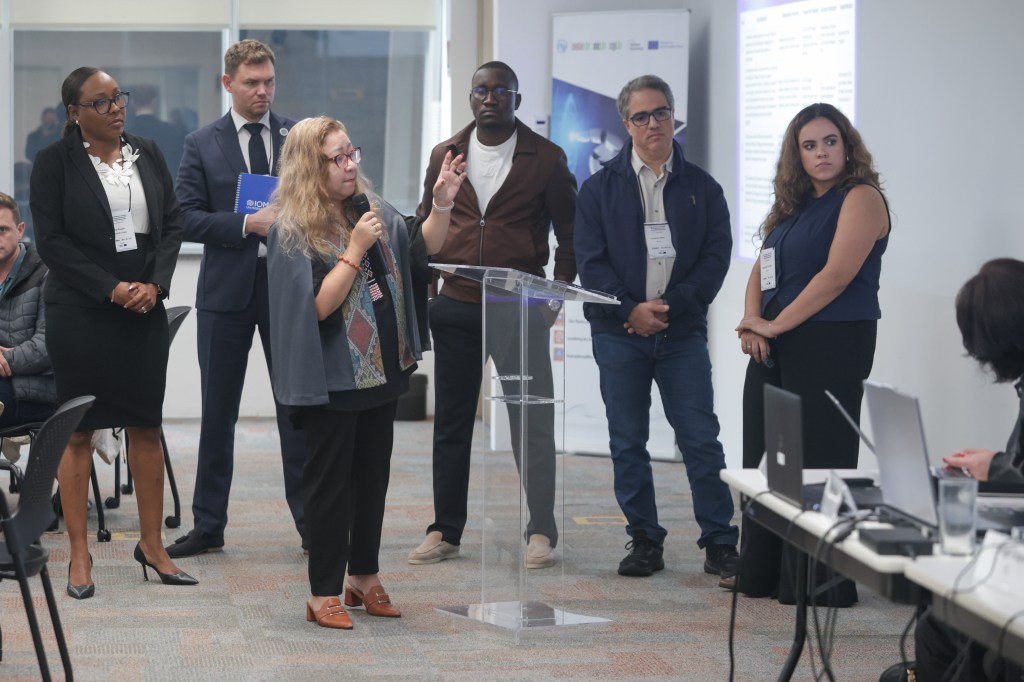
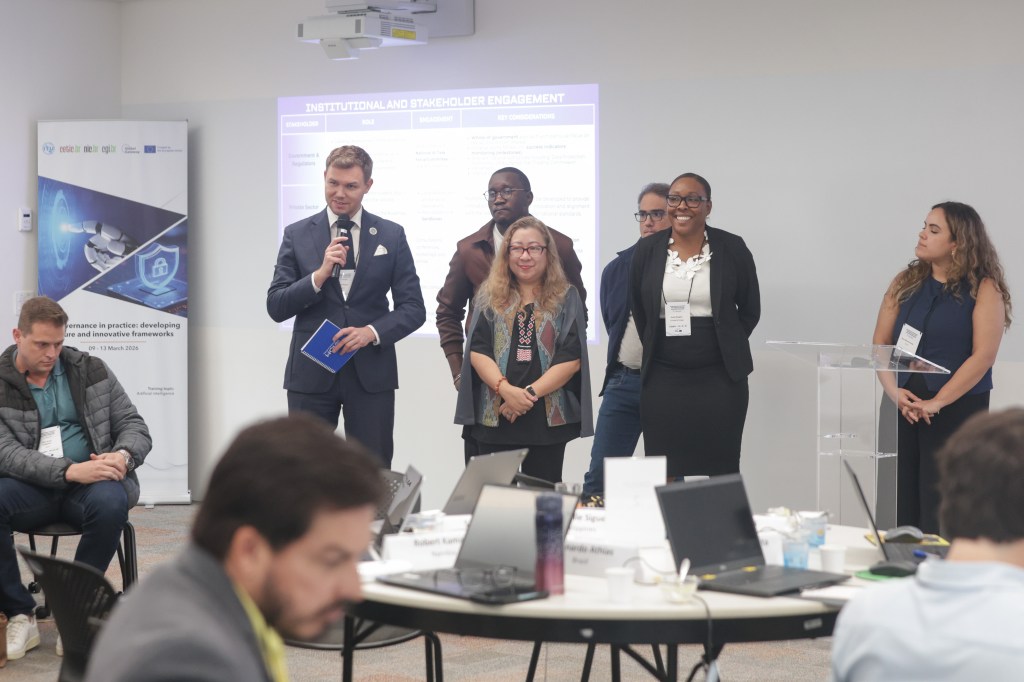
Batapa-Sigue said the experience reinforced the importance of building AI governance ecosystems that are both forward-looking and people-centered.
“As AI becomes more deeply embedded in public services, business, and everyday life, governance must keep pace,” she said. “We need approaches that encourage innovation while protecting rights, strengthening trust, and ensuring that technology works for people and the common good.”
Her completion of the programme comes amid growing international recognition that AI readiness is not only about infrastructure, talent, or investment, but also about governance capacity. For countries seeking to benefit from AI while minimizing harm, the ability to design credible, adaptive, and inclusive governance systems is becoming a strategic priority.
Batapa-Sigue’s participation also reflects continuing efforts to promote a public-interest approach to digital transformation—one that places human dignity, democratic accountability, and inclusive development at the center of technological change.
Through the programme, she joined an international community of practitioners working across government, civil society, and the private sector to advance more trustworthy and effective approaches to AI governance.
About The Instructors
In this program, Dr. Miriam Stankovich draws on more than two decades of global experience in AI governance, digital policy, and innovation ecosystems, shaped through her work with institutions such as UNESCO, ITU, UNDP, UNIDO, the World Bank, ADB, and IDB. Holding a PhD in Technology Transfer and Development Economics, an LLM from Duke University as a Fulbright Fellow, and recognition as LLM Valedictorian at Chicago-Kent College of Law, she brings a rare combination of academic rigor and policy depth. Her instruction emphasizes the design of responsible, inclusive, and resilient AI governance frameworks, grounded in her extensive research on algorithmic transparency, digital social services, Industry 4.0, and climate‑tech innovation.
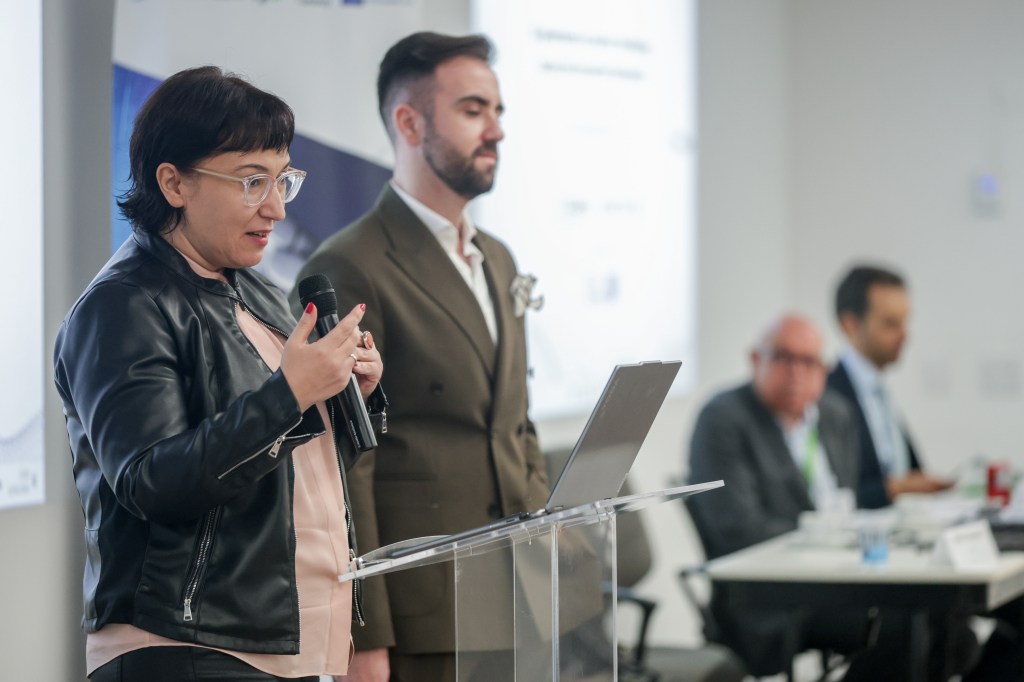
Complementing her expertise, Nikola (Nikolo) Neftenov contributes a strong legal and regulatory foundation shaped by his specialization in intellectual property law, data governance, and emerging technology regulation. He holds an LL.B., an LL.M. summa cum laude in Intellectual Property Law, and a Diplôme d’Université in IP Law from the University of Strasbourg, with research focused on the intersection of patents, economics, and AI. His professional portfolio includes collaborations with UNESCO, IDB, UNDP, UNIDO, APEC, ESCAP, and multiple development banks, where he has authored influential work on data minimization, AI ethics, gender and innovation, and digital transformation in public services. His teaching equips learners to navigate the legal complexities of secure AI systems, from privacy‑by‑design to rights‑based regulatory models.
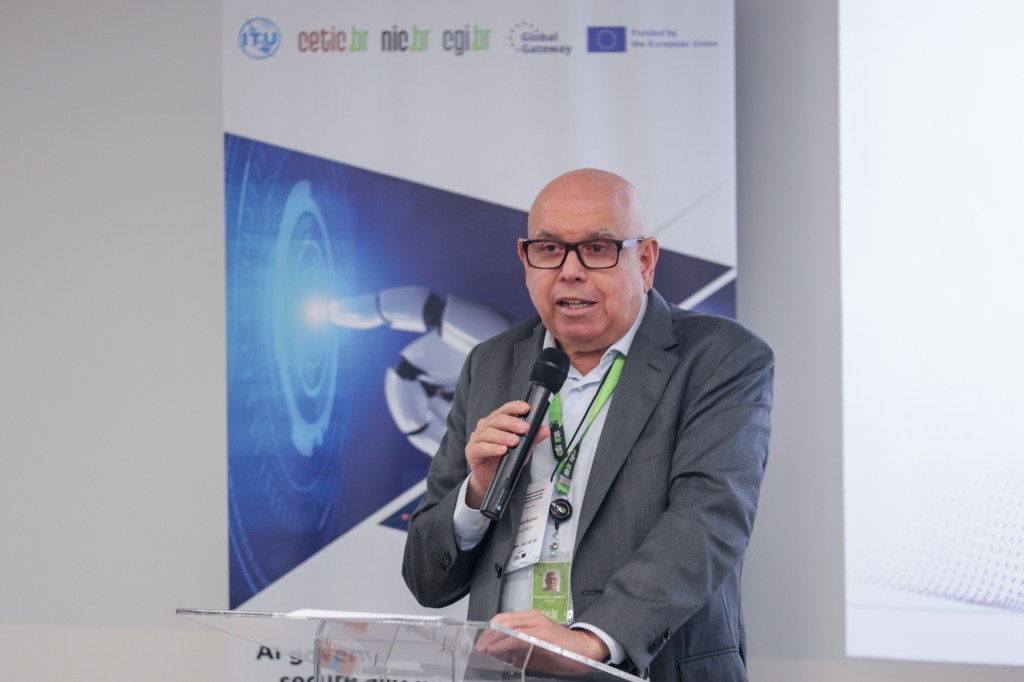
CETIC.br, the Regional Center for Studies on the Development of the Information Society and a UNESCO Category II Center, recently hosted the International Telecommunication Union (ITU) AI governance in practice: developing secure and innovative frameworks. The engagement highlighted CETIC.br’s role as a leading institution in ICT measurement and digital policy research, providing an ideal environment for ITU’s capacity‑building initiatives. By bringing together experts, regulators, and policymakers, the event underscored the shared commitment of CETIC.br and ITU to advancing inclusive digital transformation and supporting countries in developing secure, data‑driven, and future‑ready digital ecosystems.
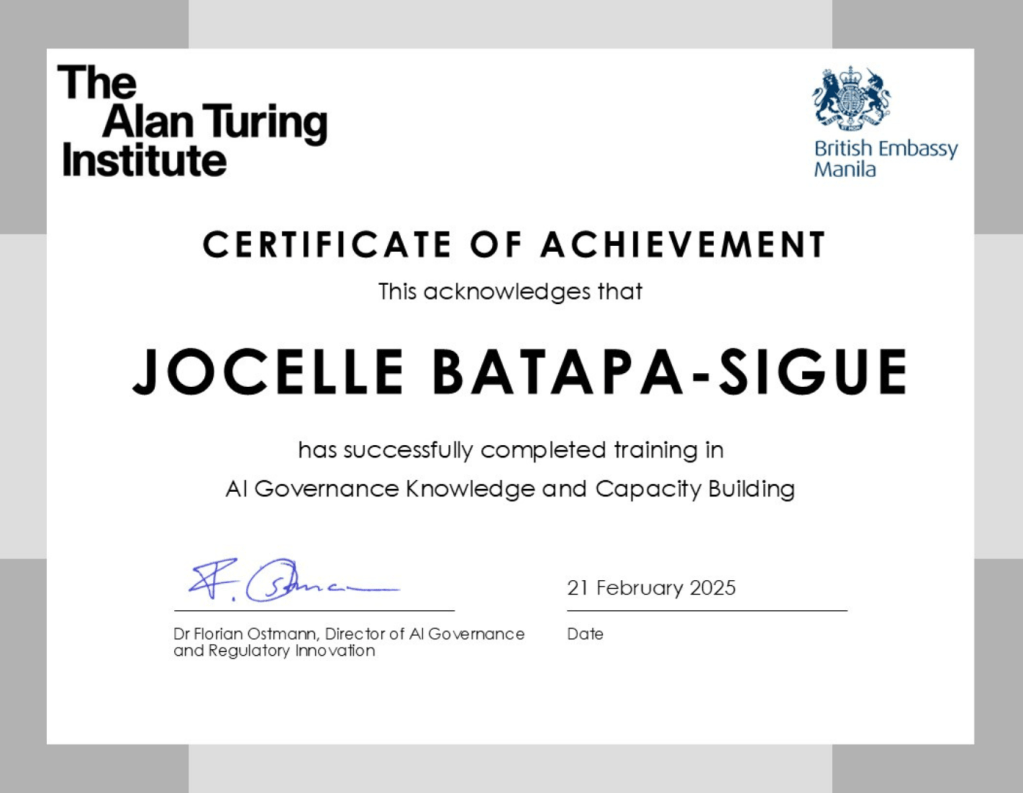
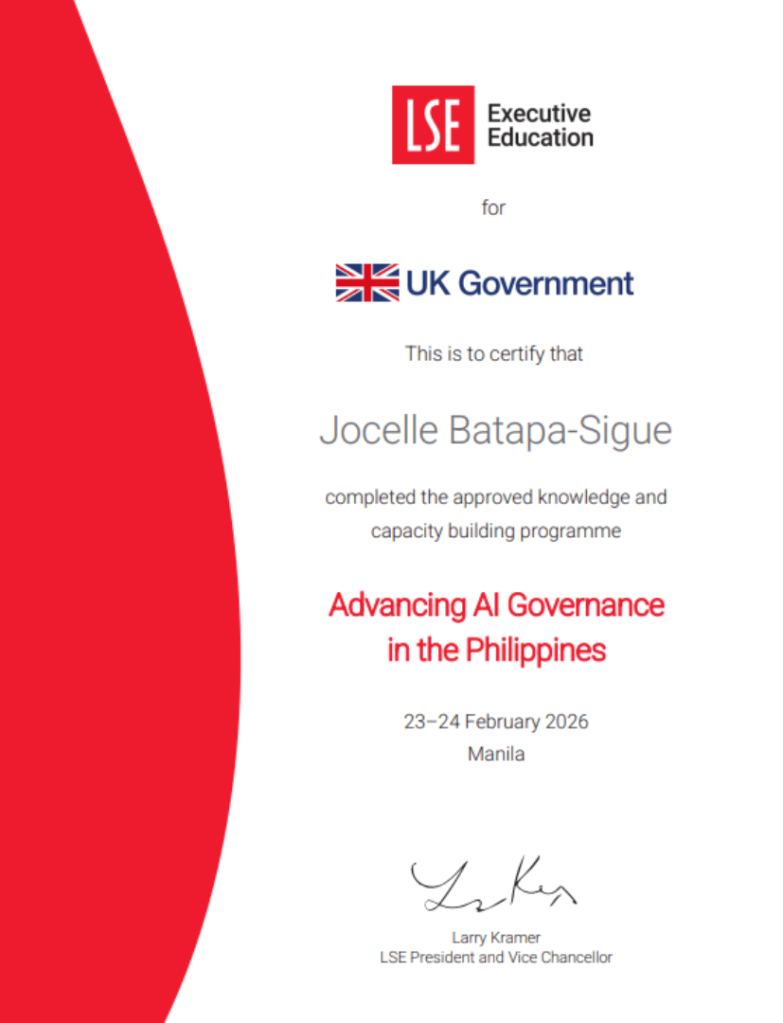
The São Paulo programme also builds on Batapa-Sigue’s growing body of AI governance training. Prior to this, she completed the LSE Executive Education knowledge and capacity-building programme, Advancing AI Governance in the Philippines, in Manila in February 2026, as well as the Alan Turing Institute’s AI Governance Knowledge and Capacity Building training delivered with the British Embassy Manila in February 2025. Taken together, these three programmes reflect a sustained commitment to deepening expertise in responsible AI and bringing globally informed governance insights to Philippine policy and practice.


 Jocelle Batapa Sigue
Leave a comment