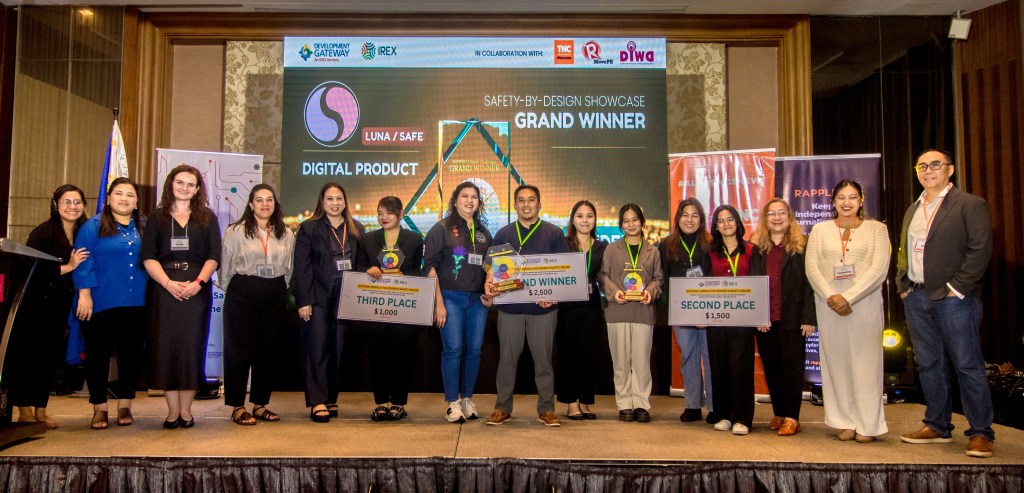
In a digital economy that too often asks women to adapt to unsafe systems, Filipino innovators are redesigning the systems themselves.
At the National Models for Women’s Safety Online (NMWSO) Philippines Safety-by-Design Grand Challenge, women technologists, student builders, survivor-advocates, and community innovators demonstrated how prevention-first, women-centered design can transform digital spaces from sites of harm into platforms for protection, participation, and power.
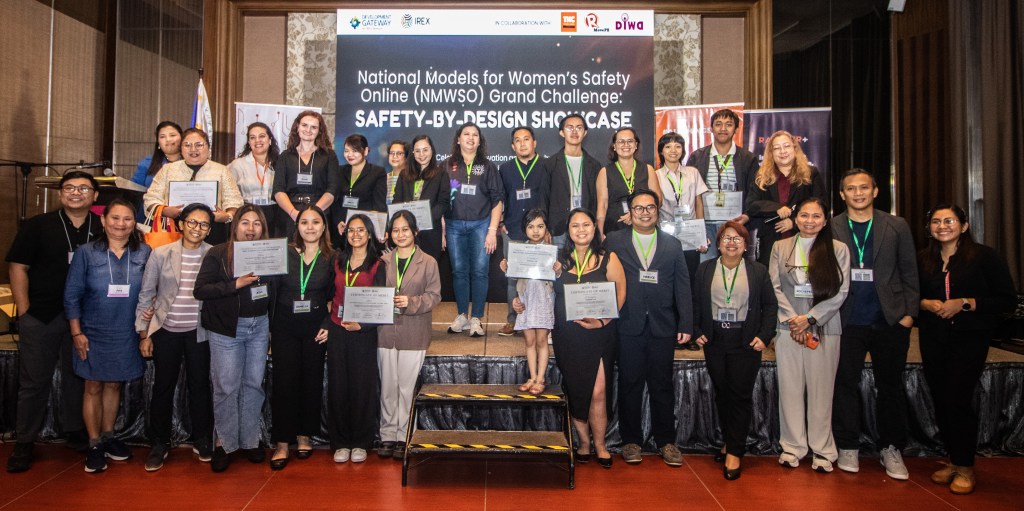
Held on January 29, 2026 at Marco Polo Ortigas, the national showcase brought together leaders from government, technology, civil society, academe, development organizations, and media around a shared conviction: digital safety must be designed, not assumed. Rather than asking users—particularly women and girls—to manage risk on their own, the Safety-by-Design approach challenges developers to anticipate harm early and embed dignity, accountability, and care directly into the architecture of technology.
What unfolded was not a conventional tech competition. The NMWSO Safety-by-Design Grand Challenge became a living demonstration of how innovation changes when women’s lived realities are treated as design inputs rather than edge cases.
A Digital Landscape That Was Never Neutral
Digital platforms are often framed as neutral tools—value-free, efficient, scalable. Yet for many women, the online world has become an extension of offline inequality. Harassment, impersonation, doxxing, scams, non-consensual content, and technology-facilitated gender-based violence increasingly shape who speaks, who leads, who withdraws, and who pays the price for visibility.
In the Philippines, these risks are not abstract. They affect women in public life, entrepreneurs, students, freelancers, commuters, survivors of abuse, and everyday users navigating essential services. The cost is not only personal harm, but lost participation, constrained opportunity, and silenced voices.
The National Models for Women’s Safety Online (NMWSO) program emerged in response to this reality—not to add another reporting mechanism or content moderation tool, but to confront a deeper question: What if safety failures are not bugs, but design outcomes?
From Harm Mapping to System Redesign: The NMWSO Journey
NMWSO is a catalytic initiative led by Development Gateway: An IREX Venture, working across countries to address growing threats to women’s participation, leadership, and safety in digital spaces. In the Philippines, the program began in early 2025 with a comprehensive landscape assessment examining how online harms and technology-facilitated gender-based violence affect Filipinos, particularly women and children.
The findings were clear and urgent: women experience disproportionate exposure to online harm, with real consequences for safety, economic participation, mental health, and civic engagement. Importantly, stakeholders agreed that reactive approaches—takedowns, reporting hotlines, and after-the-fact enforcement—were necessary but insufficient.
What was missing was prevention at the point of creation.
Through consultations with government agencies, civil society, universities, media, and the private sector, NMWSO facilitated a shift in perspective. Instead of asking how do we respond when harm happens, stakeholders began asking how do we prevent harm from being built in at all?
This shift laid the foundation for Safety-by-Design (SbD).
What Safety-by-Design Really Means
Safety-by-Design is not a slogan. It is a disciplined, technical, and ethical framework that places user safety and rights at the center of the product lifecycle—from ideation and architecture to deployment and everyday use.
In practice, it asks hard questions early:
- Who is most vulnerable if this system fails?
- What power does this feature create, and for whom?
- How could this data be misused?
- What defaults protect users who have the least capacity to protect themselves?
Safety-by-Design treats women and girls not as special cases, but as baseline users whose experiences reveal where systems break.
To translate this framework into practice, NMWSO organized a three-day Safety-by-Design training in September 2025 for technologists across sectors, including online safety, cybersecurity, data governance, and product development. Participants were equipped with practical tools to map risks, design mitigations, and convert ethical intent into technical reality.
From this training emerged the Safety-by-Design Grand Challenge—an invitation to move from learning to building.
The Grand Challenge: Innovation With Accountability
Unlike traditional hackathons that reward speed or novelty, the NMWSO Safety-by-Design Grand Challenge emphasized intentionality.
Over several months, participating teams:
- Applied SbD principles to real products and real users
- Received mentorship and technical feedback
- Underwent pre-evaluation focused on risk mitigation and design choices
- Prepared for a live showcase where safety was weighted as heavily as innovation
The process was guided by Annie Kilroy, Technical Advisor for Data and Analytics at Development Gateway, who emphasized that Safety-by-Design is a mindset that reshapes product decisions at every level—from database architecture to user flows.
NMWSO Country lead Christine Sumog-oy, who led the implementation of the challenge together with Jene Anne Pangue, Project Consultant, expressed how grateful she was for the teams behind the solutions — for their collaboration, care, and commitment fundamental to the success of the Safety-by-Design challenge.
The judging process was chaired by Ashlin Simpson, Senior Associate for Engagement and Partnerships at Development Gateway, ensuring that solutions were evaluated through a multidisciplinary lens combining technical rigor, gender analysis, governance, and lived experience.
Serving as host for the showcase proper was Jocelle Batapa‑Sigue, who serves as the Digital Safety and Policy Specialist for NMWSO, bringing her extensive background in digital governance, women’s empowerment, and technology policy to guide the program’s strategic direction and ensure its alignment with national frameworks and community needs.
The Showcase: When Design Meets Real Life
On January 29, 2026, eleven finalist teams presented their solutions at Marco Polo Ortigas. Each demonstration was followed by rigorous questioning—not only about what the product could do, but what it deliberately chose not to do in the interest of safety.
From stealth features to data minimization, from community validation to human-approved AI, the solutions revealed a common thread: safety was not added—it was embedded.
The Winners: Building Protection Into Everyday Technology
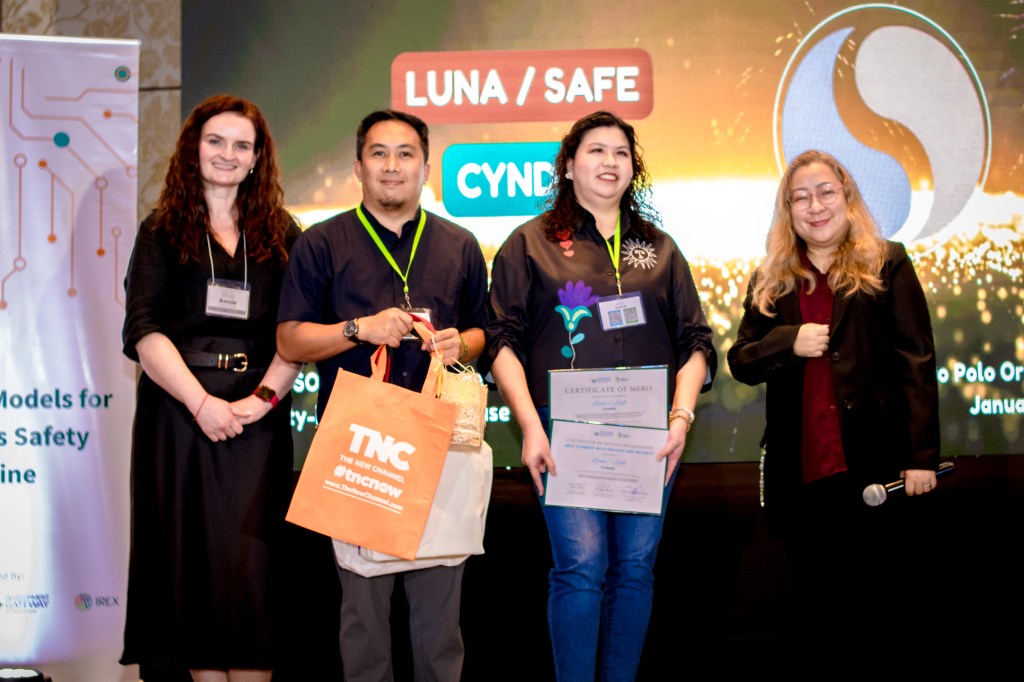
Grand Winner: Luna / Safe (Cynder)
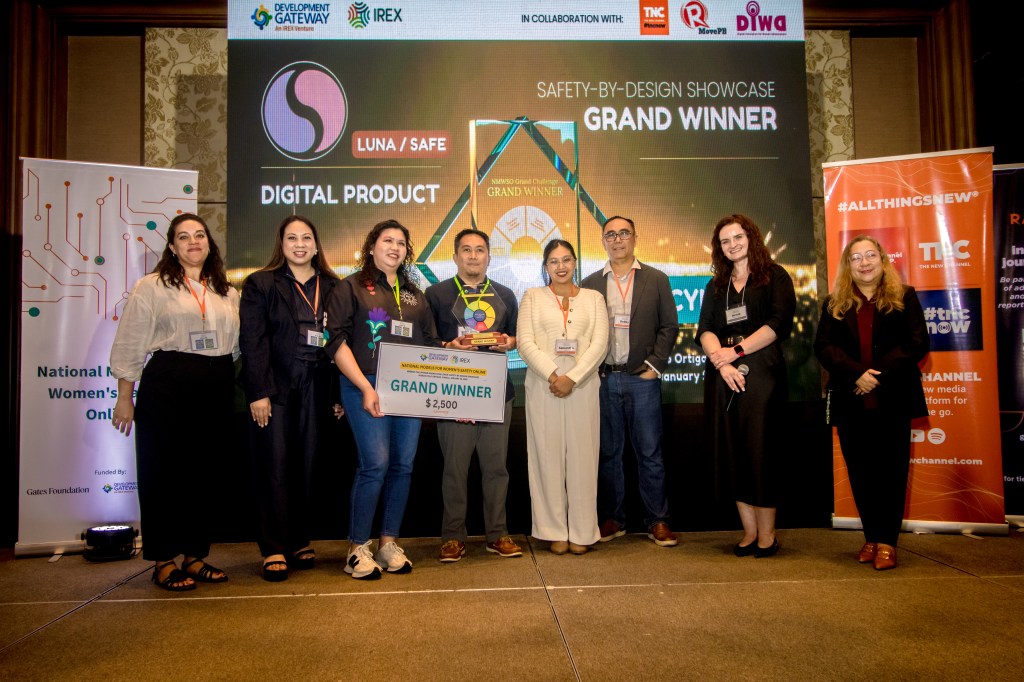
Luna / Safe emerged as the Grand Winner for its deeply survivor-centered approach to safety. Designed for women experiencing abuse, the app addresses one of the most dangerous realities in digital design: that visibility itself can be a risk.
On the surface, Luna / Safe appears to be a menstrual health tracker. Beneath that interface lies a secure evidence diary and SOS system that allows users to:
- Document incidents in encrypted form
- Trigger one-tap SOS alerts to trusted contacts
- Access localized hotlines and barangay VAWC desks
- Use decoy screens, multi-PIN protection, and stealth modes to reduce coercion
Every design decision reflects an understanding of power, fear, and control—making Luna / Safe not just a tool, but a protective companion.
The team behind the app includes:
- Carla Francesca Nobleza, a neurodivergent woman with a disability who translated lived experience into technical safeguards
- Giovanni Angelo Balaguer, a systems architect ensuring security at the infrastructure level
- Ma. Criselda Bisda, a GEDSI consultant grounding the app in rights-based design
- Chel, a survivor-advocate whose insights shaped high-risk user protections
Use case: Survivor safety, evidence protection, and access to justice
Luna / Safe stands out for addressing one of the most dangerous realities in technology design: that for survivors of abuse, being discovered can be as risky as being unheard. The app’s dual-layer design—appearing as a menstrual health tracker while functioning as a secure evidence diary—reflects a deep understanding of coercive control, surveillance, and fear.
Beyond encryption and SOS alerts, Luna / Safe’s innovation lies in its design restraint. It minimizes digital footprints, avoids features that could escalate risk, and prioritizes user agency. Its stealth modes, decoy interfaces, and multi-PIN protection embody Safety-by-Design not as a technical flourish, but as a survival-informed design philosophy.
The team’s strength comes from the convergence of lived experience, gender expertise, and systems architecture—proving that survivor-centered technology must be built with, not just for, those it seeks to protect.
Second Place: LIWA (Polytechnic University of the Philippines – Sta. Mesa)
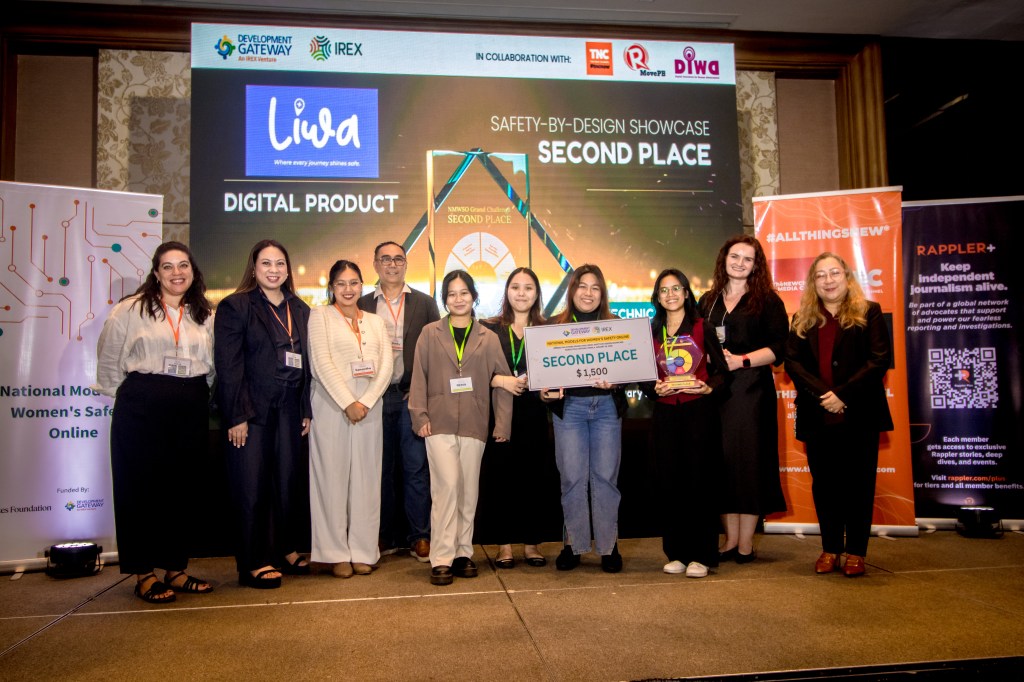
LIWA took Second Place for reimagining everyday mobility through a safety lens. Designed for women and gender-diverse commuters, LIWA guides users toward well-lit, safer routes using community-validated inputs while applying privacy-first principles to prevent stalking and data misuse.
Unlike conventional navigation apps, LIWA avoids persistent tracking and risky data exposure. At the same time, it offers aggregated insights that can help institutions identify unsafe areas without compromising individual privacy.
Developed by a student team from PUP Sta. Mesa, LIWA demonstrates how young technologists can build systems that are both innovative and socially grounded.
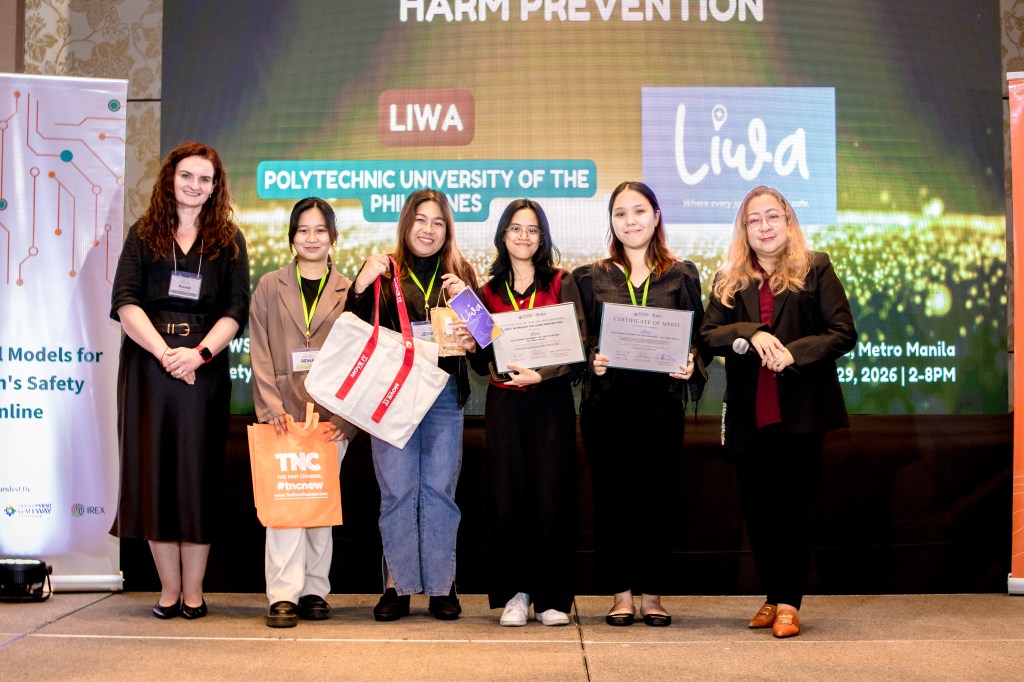
Use case: Women’s mobility, urban safety, and privacy-first navigation
LIWA reimagines everyday commuting through a gender-aware lens. For many women, choosing a route is not just about speed—it is about lighting, visibility, crowd density, and perceived safety. LIWA responds to this reality by prioritizing well-lit and community-validated routes, while deliberately avoiding features that could enable stalking, tracking, or misuse of location data.
What makes LIWA notable is its dual orientation: it serves individual commuters while also generating aggregated, anonymized insights that can inform institutions about unsafe areas—without exposing personal data. This balance between utility and restraint reflects a mature understanding of privacy as a safety mechanism, not a trade-off.
Developed by a student team, LIWA demonstrates that emerging technologists can lead with ethics, empathy, and technical discipline—challenging the notion that responsible innovation must come from industry alone.
Third Place: Alerto (WiredField Philippines, Inc.)
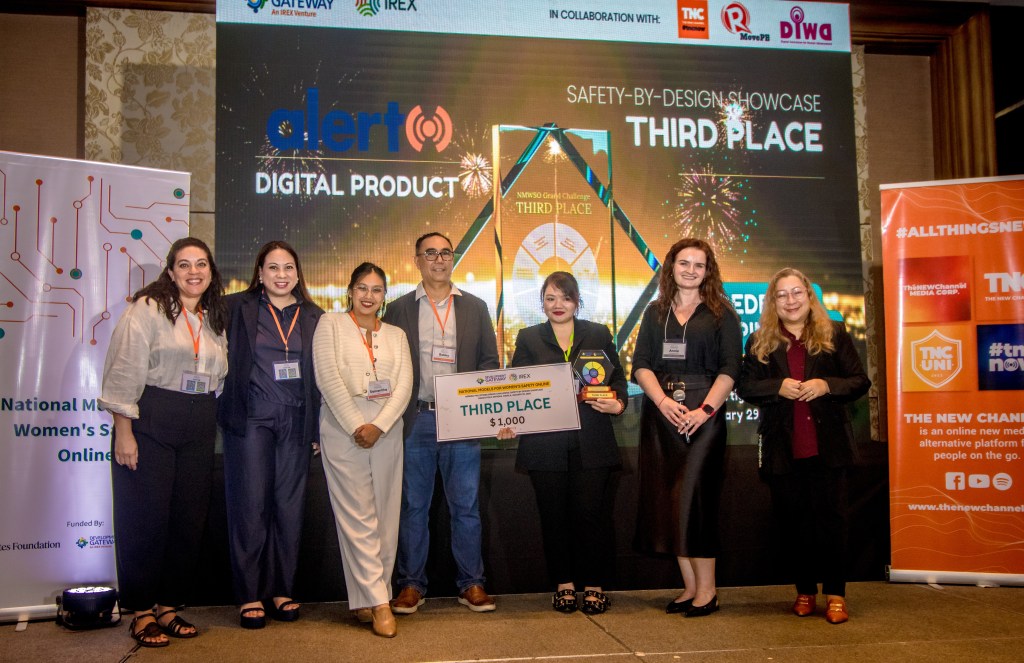
Alerto was awarded Third Place for its integrated approach to community safety and emergency response. Supported by DOST, the platform combines AI-based reporting, live CCTV feeds, SOS alerts, and smart sensors to enable real-time, coordinated response to disasters and protection-related risks, including VAWC and OSAEC.
Led by Cristina Macaraig and advocacy lead Erica Lu, Alerto shows how smart city technologies can prioritize dignity and coordination over surveillance.
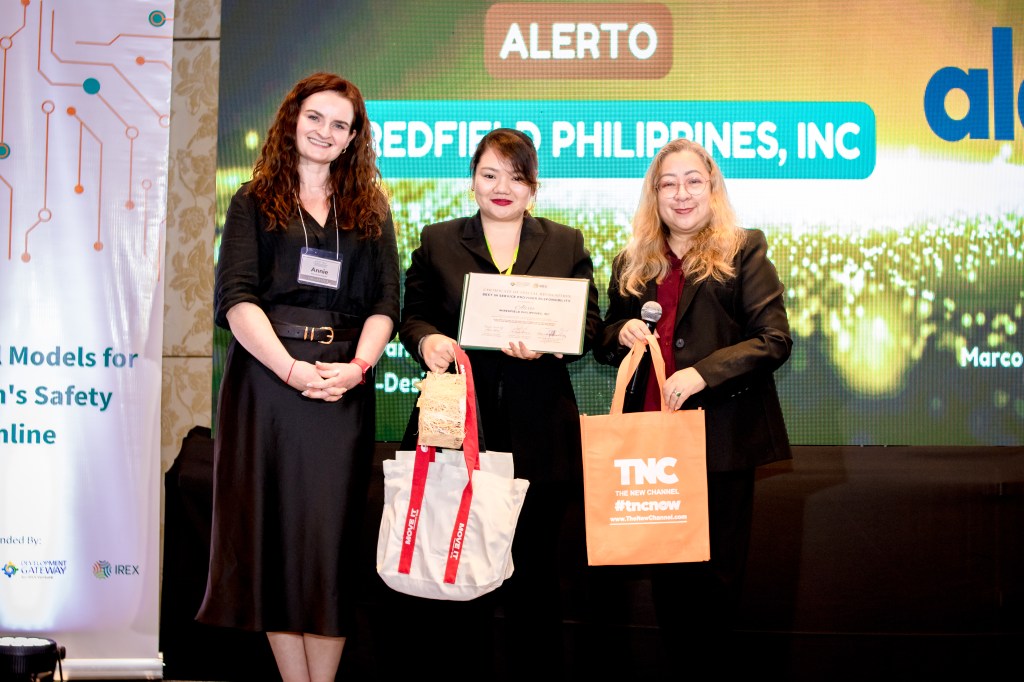
Use case: Community safety, disaster response, and coordinated action
Alerto approaches safety at scale. Designed as a community-level protection platform, it integrates AI-based reporting, live CCTV feeds, SOS alerts, and smart sensors to enable real-time situational awareness and response.
What distinguishes Alerto is its intent to coordinate rather than surveil. By fusing multiple data sources into actionable intelligence, the platform supports barangays, LGUs, and responders in acting quickly during emergencies—whether natural disasters or protection-related risks such as Violence Against Women and Children (VAWC) and Online Sexual Abuse and Exploitation of Children (OSAEC).
As a female-led initiative, Alerto demonstrates how smart-city technologies can be shaped by care, governance, and accountability—placing human dignity at the center of automation.
Other finalist teams included AIDA: Aid Assistant Chatbot (Maikling Digital) — privacy-preserving LGU communication; Protegere (GumDrop Lab) — safeguarded mentorship platforms; Lokal First (Aikrest) — women-led MSME digital enablement; CoOp / CoOptimized (FOPSCo) — consent-driven cooperative automation; Hearth PH (Cedar Stone Asia) — stigma-free reproductive health information; SafeTransit (TIP Manila) — community-powered commuter safety; and PeaceEdHub.org (Teach Peace Build Peace Movement) — safe, inclusive peace education.
Together, these solutions illustrated that Safety-by-Design applies across sectors—from fintech and governance to education and mobility.
Who Made It Possible
The NMWSO Philippines Safety-by-Design Grand Challenge was delivered with strong participation from government agencies, universities, civil society organizations, private sector platforms, and international development partners, in partnership with The New Channel, Rappler’s MovePH, and Digital Innovation for Women Advancement (DIWA).
The NMWSO Safety-by-Design Grand Challenge demonstrated that when women’s realities shape design decisions, technology becomes not just smarter—but fairer, safer, and more humane.
In a world racing to innovate, the Filipino innovators behind NMWSO offered a powerful reminder:
How we design technology determines who it protects—and who it leaves behind.
The Finalists: Safety-by-Design in Practice
While the podium recognized three winning teams, the strength of the NMWSO Safety-by-Design Grand Challenge lay in the breadth and depth of its finalists. Together, the teams demonstrated how Safety-by-Design can be applied across public service delivery, mobility, health, education, cooperatives, livelihoods, and community safety—each responding to a different facet of risk faced by women and communities in digital spaces.
Other Safety-by-Design Finalists
AIDA: Aid Assistant Chatbot (Makiling Digital)
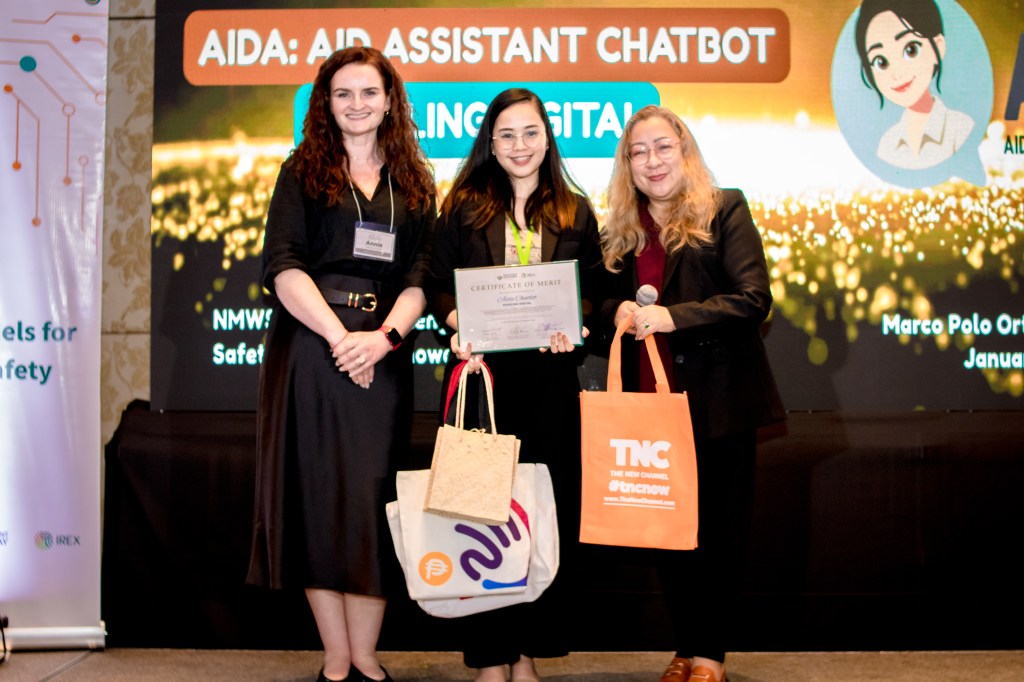
Use case: Public service delivery, privacy, and dignity
AIDA addresses a quiet but pervasive risk in public service: the routine exposure of personal data. In many local government processes, beneficiary lists are still posted publicly—creating opportunities for doxxing, scams, stigma, and harassment.
AIDA replaces this practice with secure, one-to-one communication, delivering social welfare updates only after identity verification and consent. By applying data minimization and safe defaults, AIDA demonstrates how government digital tools can respect dignity while remaining efficient—particularly for women, senior citizens, persons with disabilities, and other vulnerable groups.
Protegere (GumDrop Lab)
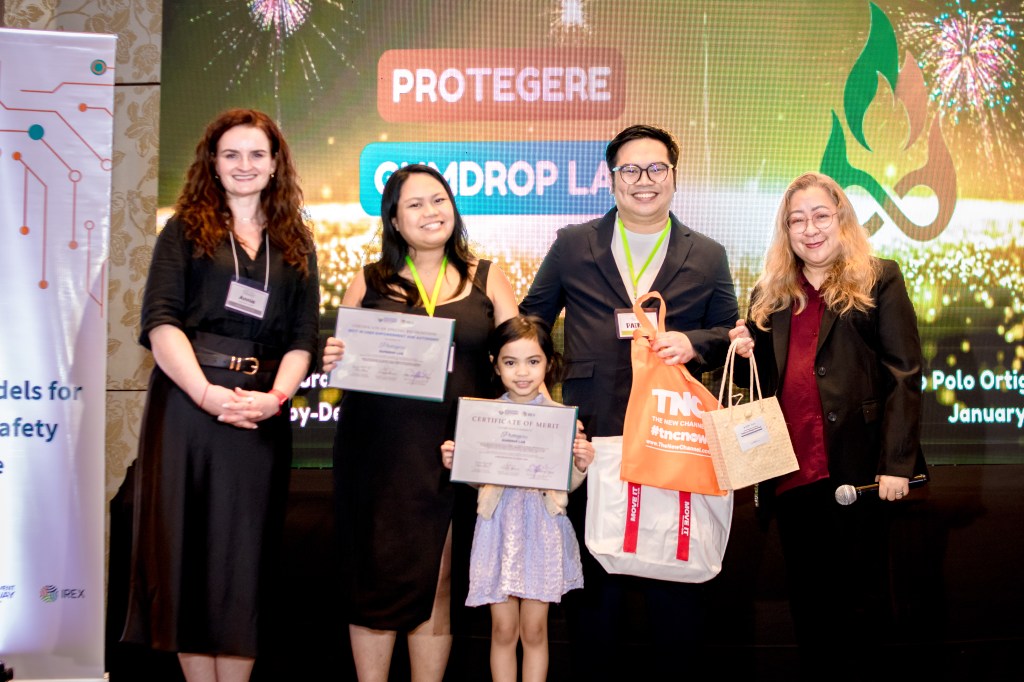
Use case: Mentorship, knowledge transfer, and safe professional relationships
Protegere responds to risks that often go unspoken in professional and mentorship spaces: power imbalance, boundary violations, and lack of accountability. The platform enables structured video mentorship sessions with built-in transcription, documentation, and reporting mechanisms.
By intentionally limiting unnecessary data sharing and preserving session records, Protegere creates a safer environment for both mentors and mentees. Its Safety-by-Design approach recognizes that learning relationships, while valuable, require safeguards—especially in digital settings where misinterpretation or abuse can occur.
Lokal First (Aikrest)
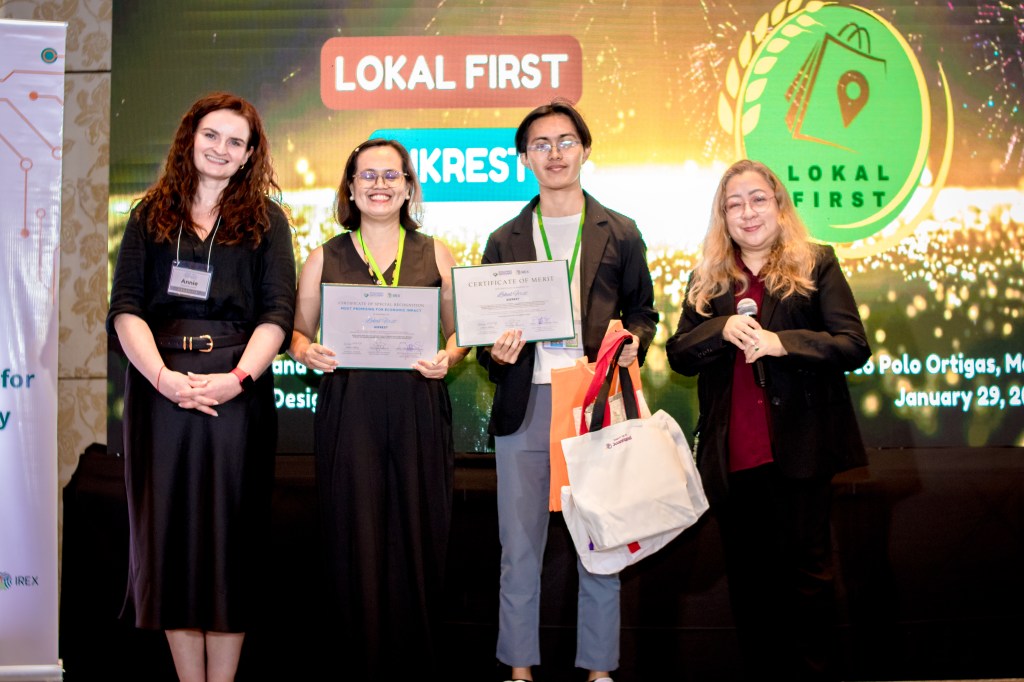
Use case: Women-led MSMEs, countryside development, and digital inclusion
Lokal First tackles risk from an economic inclusion perspective. Many women-led MSMEs in the countryside face digital exclusion—not because of lack of talent, but because of technical overwhelm, cost barriers, and unsafe online marketplaces.
The platform provides guided digital support to help small businesses expand their reach safely, while also offering aspiring freelancers real-world experience through MSME collaboration. Safety-by-Design here is expressed through simplicity, guided workflows, and community-based promotion—reducing exposure to fraud, exploitation, and platform dependency.
CoOp / CoOptimized (Filipino Online Professional Service Cooperative – FOPSCo)
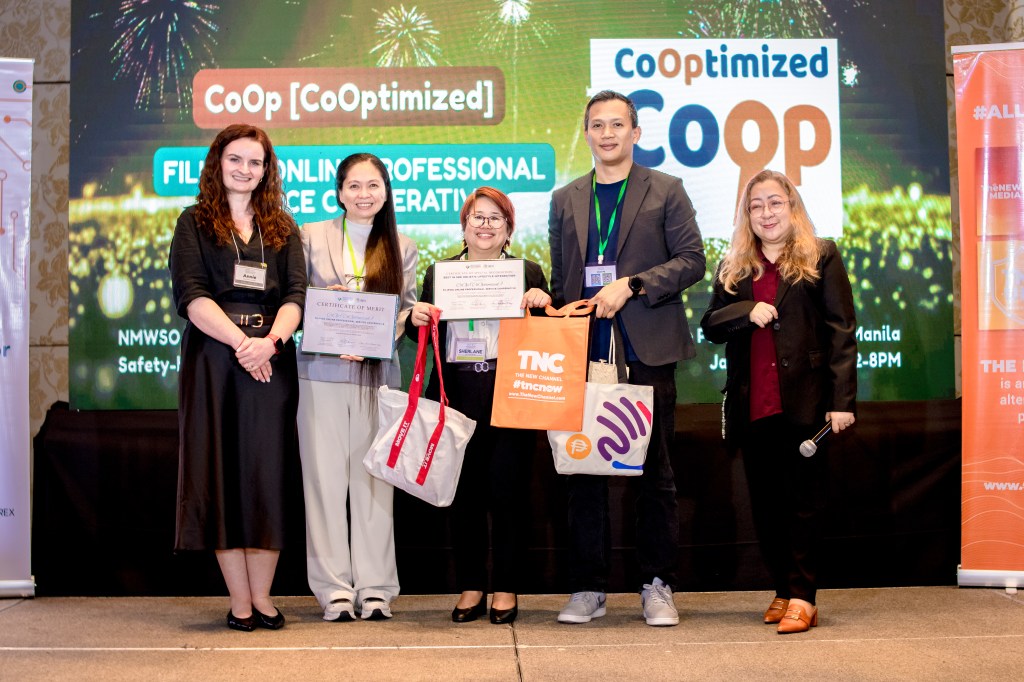
Use case: Cooperative governance, consent, and ethical automation
CoOp, also known as CoOptimized, brings Safety-by-Design into the cooperative sector. Unlike conventional CRM or automation tools, CoOptimized embeds verified sign-ups, role-based approvals, audit logs, and human-approved AI directly into workflows.
The system is designed to prevent harm before it happens—protecting member data, ensuring accountability, and supporting inclusive participation even in low-bandwidth or low-tech environments. It demonstrates how automation can strengthen trust rather than erode it.
Hearth PH (Cedar Stone Asia)
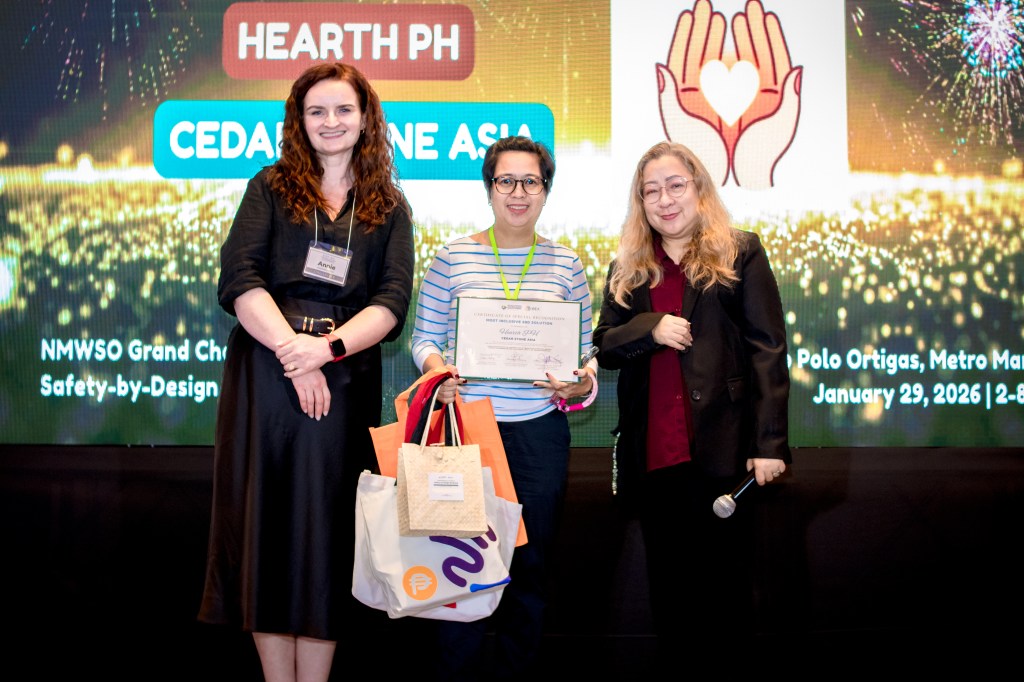
Use case: Sexual and reproductive health, privacy, and stigma reduction
Hearth PH provides women and girls with a safe, private digital space to access trusted sexual and reproductive health information. In a context where stigma, judgment, and misinformation can prevent help-seeking, Hearth PH prioritizes dignity, anonymity, and ethical content design.
Its Safety-by-Design principles are expressed through careful information architecture, culturally sensitive framing, and strong privacy protections—ensuring that learning and self-reflection can happen without fear of exposure.
SafeTransit (Technological Institute of the Philippines – Manila)
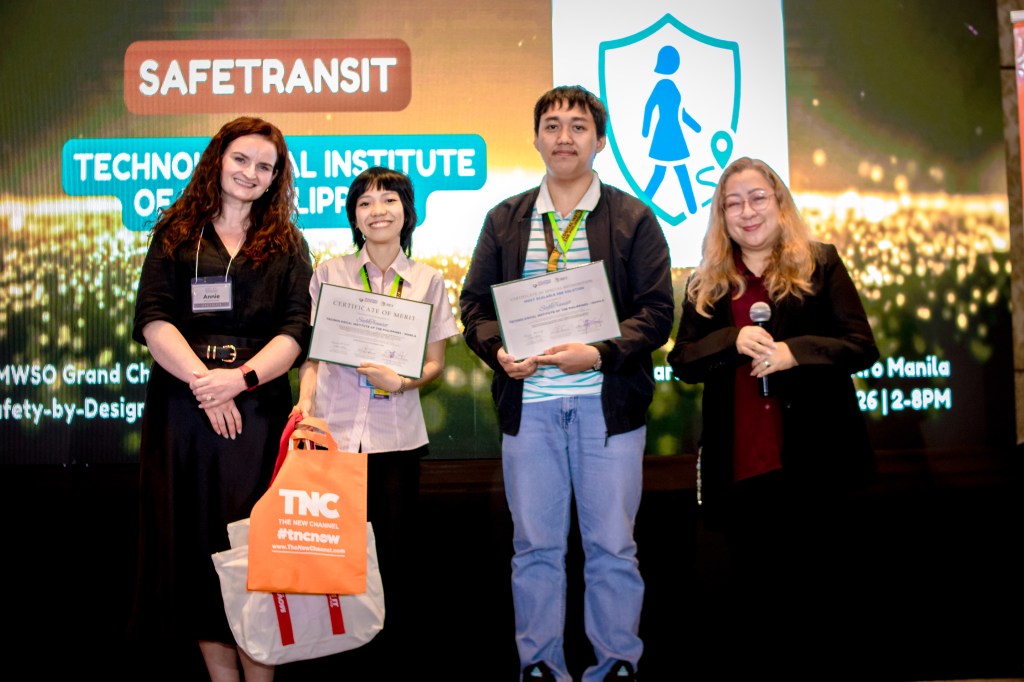
Use case: Public transport safety and community intelligence
SafeTransit transforms commuters into active safety contributors. The app enables users to share real-time safety tips, flag risky areas, recommend safer routes, and use trip-sharing and SOS alerts.
Rather than relying solely on authorities, SafeTransit builds a community-powered safety network, turning everyday observations into collective protection. Its design balances openness with verification to prevent misuse—demonstrating how crowd-sourced safety can be structured responsibly.
PeaceEdHub.org (Teach Peace Build Peace Movement)
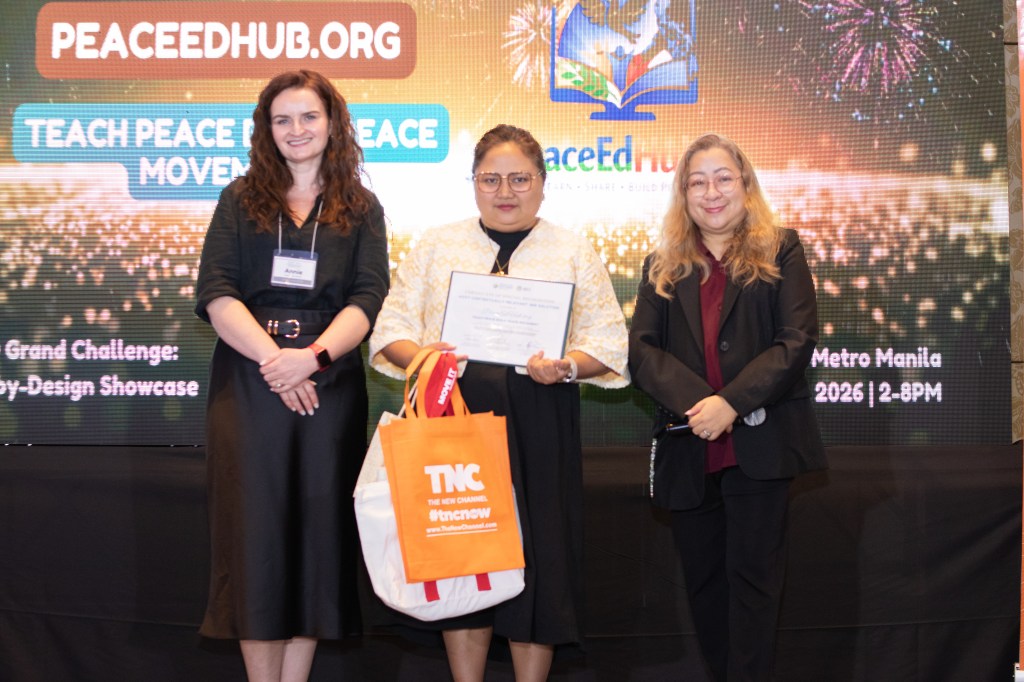
Use case: Education, peacebuilding, and safe digital learning
PeaceEdHub.org responds to the need for peace education that is both accessible and safe—particularly in conflict-affected or marginalized communities. The platform offers open-access learning resources designed to be inclusive, child-friendly, and responsibly shared.
Safety-by-Design here extends beyond technical safeguards to content governance, ensuring that learning materials promote dignity, dialogue, and non-violence without exposing learners to harm.
Collectively, a New Design Baseline
Taken together, the finalists illustrate a powerful shift:
Safety-by-Design is not confined to one sector or technology stack. It is a design posture—one that treats women’s safety, dignity, and participation as foundational requirements.
Rather than asking women to be more careful online, these teams asked a different question: What if technology did the caring by default?
Where Safety Begins: A Feature Narrative on Safety-by-Design
For a long time, safety in technology was treated like an emergency service—something called in after harm had already occurred. Reports were filed. Content was taken down. Accounts were suspended. Apologies were issued.
But for women navigating digital spaces—especially those already exposed to harassment, surveillance, coercion, or abuse—these responses often came too late.
The Safety-by-Design approach begins with a different question:
What if safety didn’t arrive after the damage, but before the risk?
At the heart of the NMWSO Safety-by-Design Challenge was this quiet but radical shift in thinking. Instead of asking users to be more careful, more vigilant, or more resilient, the framework asked something far more difficult of technology builders themselves: to anticipate harm before it happens—and to design accordingly.
This meant imagining not just the ideal user, but the most vulnerable one. It meant asking how a feature might be misused, how data might be exploited, how visibility itself could become dangerous. It meant accepting that harm is rarely accidental—and that many risks are, in fact, foreseeable.
In this worldview, safety is not an ambulance racing toward a crash. It is the seatbelt built into the car. That shift carries consequences. Because once harm is understood as predictable, responsibility can no longer be passed quietly to users.
Safety-by-Design insists that platform owners and service providers carry real responsibility—not just legal responsibility, but architectural and moral responsibility. The choices made in system design, default settings, and operational workflows shape who is protected and who is exposed.
Under this framework, safety cannot be outsourced to a help page, a reporting form, or a line in the terms of service. It lives in governance structures. It lives in how systems are built and maintained. It lives in the decisions engineers make long before users ever log in.
And yet, Safety-by-Design is not about control—it is about agency.
A system can be safe and still leave users powerless. That, too, is a form of harm. True safety requires that users are given meaningful control: clear choices, understandable settings, and the ability to decide how technology interacts with their lives.
Empowerment, in this sense, is not cosmetic. It is not buried in menus or hidden behind legal language. It is designed into the experience itself—so that technology adapts to users, rather than forcing users to adapt to technology.
This emphasis on agency also demands transparency.
Where safety is concerned, there can be no black boxes. Users deserve to understand how decisions are made, how data is used, and who is accountable when things go wrong. Regulators and civil society must be able to trace responsibility. Systems must be explainable, auditable, and open to scrutiny.
Transparency is not about perfection. It is about honesty—about acknowledging that systems fail, and that when they do, there are clear pathways for redress, learning, and correction.
Crucially, Safety-by-Design recognizes that safety is not a moment—it is a process.
A product may launch safely and become risky six months later. A feature may work well at small scale and cause harm at scale. Contexts change. Users change. Threats evolve.
That is why safety cannot be treated as a checkbox completed at launch. It must be revisited continuously—across updates, expansions, integrations, and even decommissioning. Safety-by-Design treats protection as something that must evolve alongside the technology itself.
None of this is possible without strong foundations in privacy and security.
Data protection is not a compliance requirement—it is a safety mechanism. Encryption, consent, and data minimization reduce exposure to harm. Secure systems protect users from exploitation, manipulation, and abuse. For women, children, persons with disabilities, and marginalized communities, these safeguards are often the difference between participation and withdrawal.
Safety-by-Design understands these connections clearly:
you cannot have safety without privacy, and you cannot have trust without security.
Taken together, these ideas form more than a framework. They form a new design ethic.
One that moves innovation away from the familiar rhythm of “build fast, fix later,” and toward something quieter but more durable: innovation that is responsible, inclusive, and worthy of trust from the very beginning.
This is not anti-technology. It is not anti-progress.
It is technology that remembers who it is built for—and who pays the price when safety is treated as an afterthought.
And in a digital world that increasingly shapes power, participation, and protection, that shift may be the most important innovation of all.
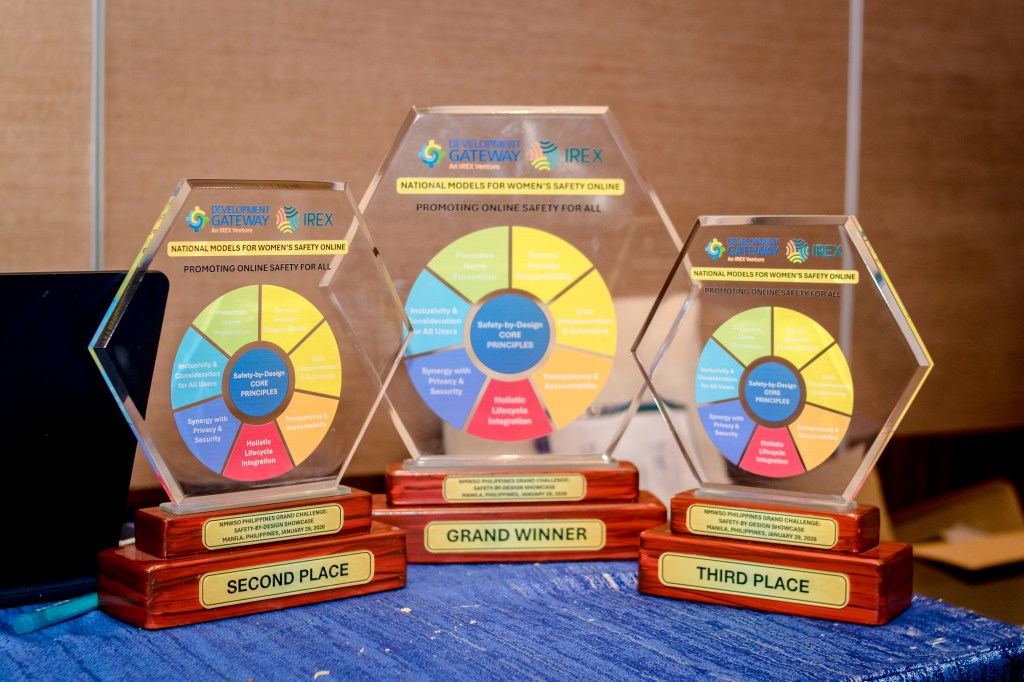
Photo Credits to Development Gateway and IREX and The New Channel (TNC)
 Jocelle Batapa Sigue
Leave a comment