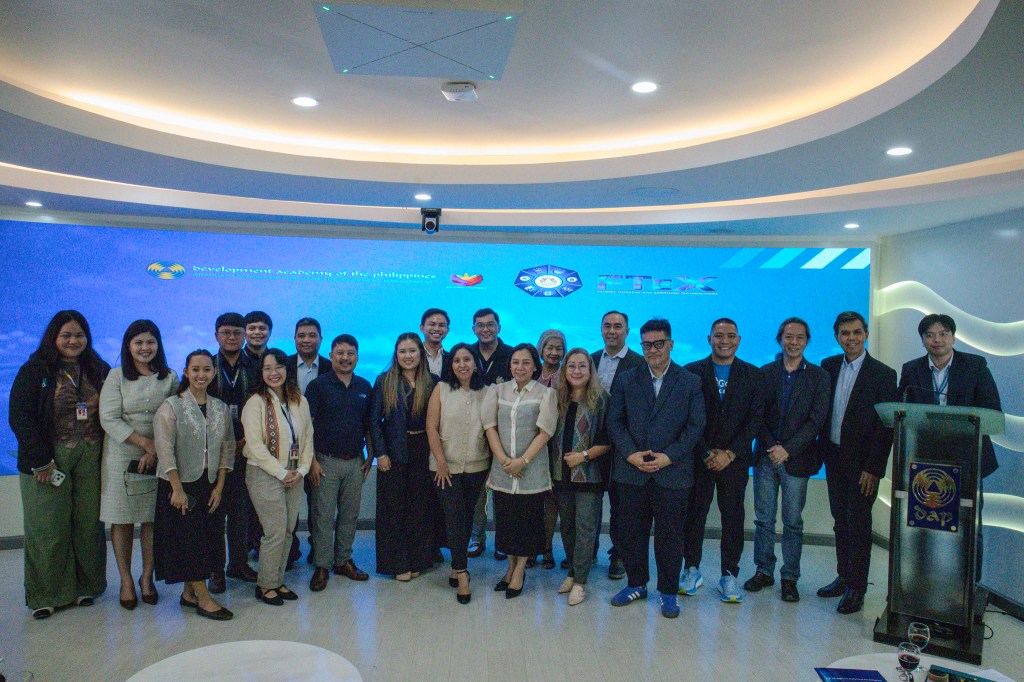
The Development Academy of the Philippines–Graduate School of Public and Development Management (DAP–GSPDM) has officially launched the Executive Course on Emerging Technologies and Anticipatory Governance (ECETAG), a flagship executive program designed to cultivate futures thinking, anticipatory governance, and the strategic use of emerging technologies for public value among leaders committed to driving transformative change in the public sector.
The launch marks a significant milestone in DAP–GSPDM’s continuing efforts to strengthen public sector leadership amid rapid technological disruption and growing policy complexity.
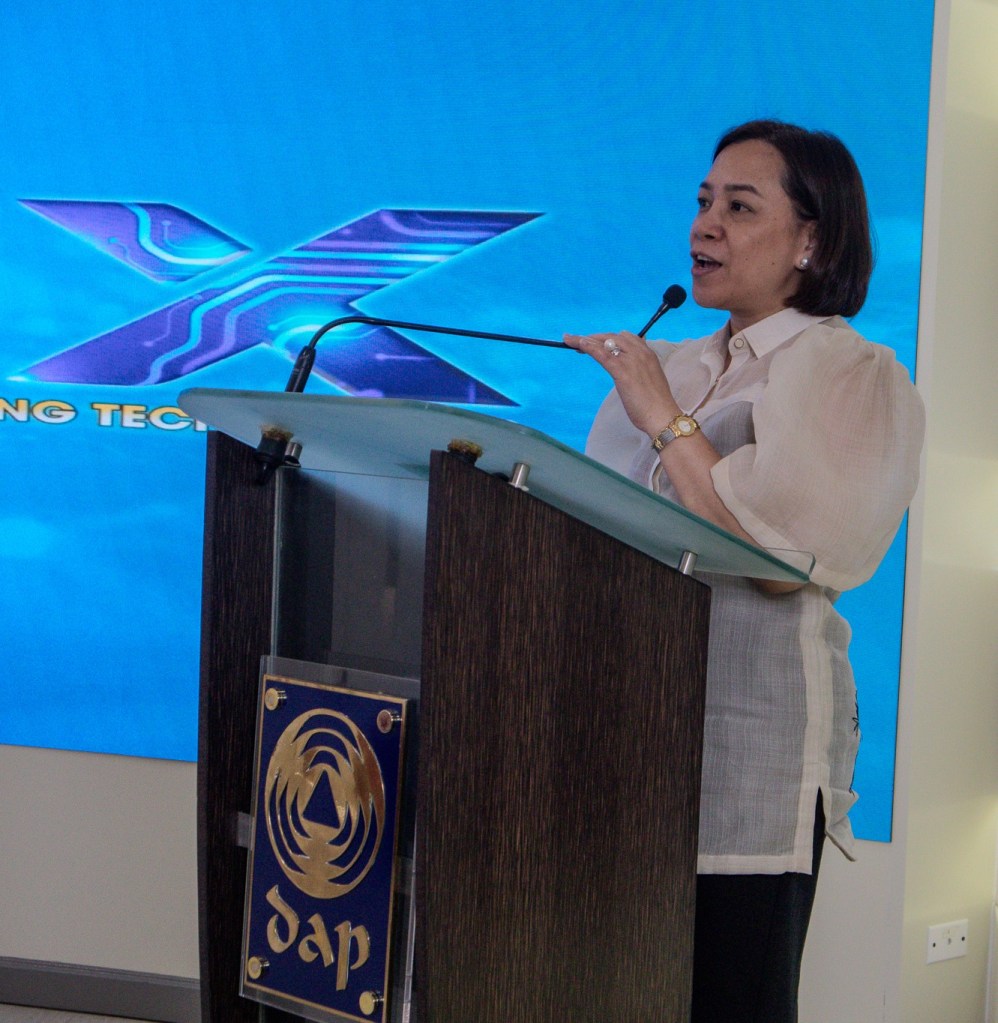
The program was formally opened with keynote remarks from Dr. Lizan E. Perante-Calina, Dean of DAP–GSPDM, who underscored the mounting challenges faced by governance institutions as emerging technologies increasingly reshape existing systems, structures, and decision-making processes. Framing the urgency of anticipatory governance, she posed a critical question to participants: “If the future is already shaping today’s policy choices, are we governing it by design—or inheriting it by default?”
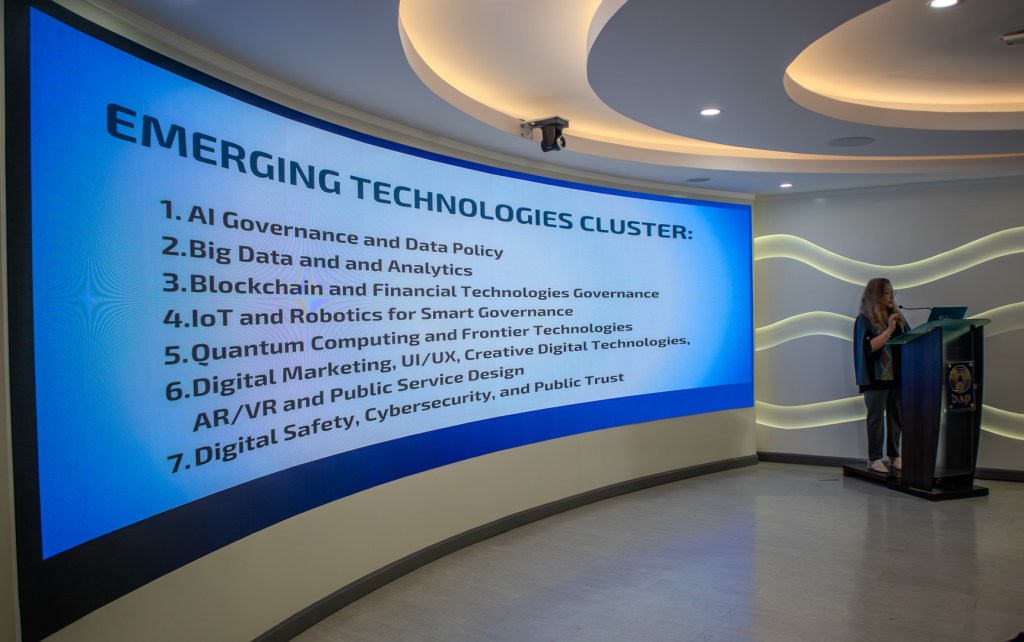
Atty. Jocelle Batapa-Sigue, Program Supervising Fellow, formally introduced ECETAG and outlined its core objectives. She highlighted the course’s focus on developing future-ready public sector leaders while reinforcing GSPDM’s role as a national hub for policy innovation and foresight-driven governance.
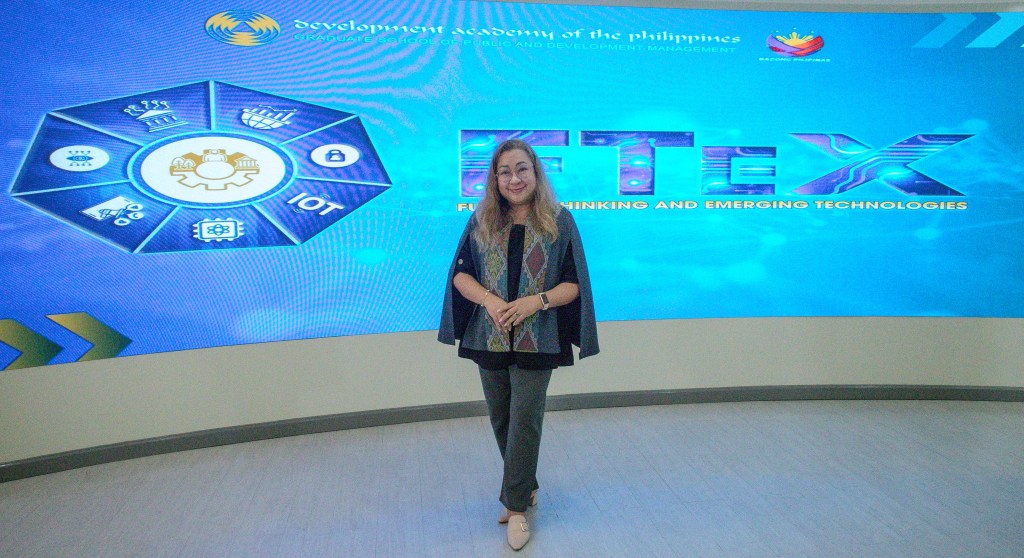
“The future of governance will be shaped not only by policy intent,” she emphasized, “but by how well public leaders understand and govern emerging technologies.”
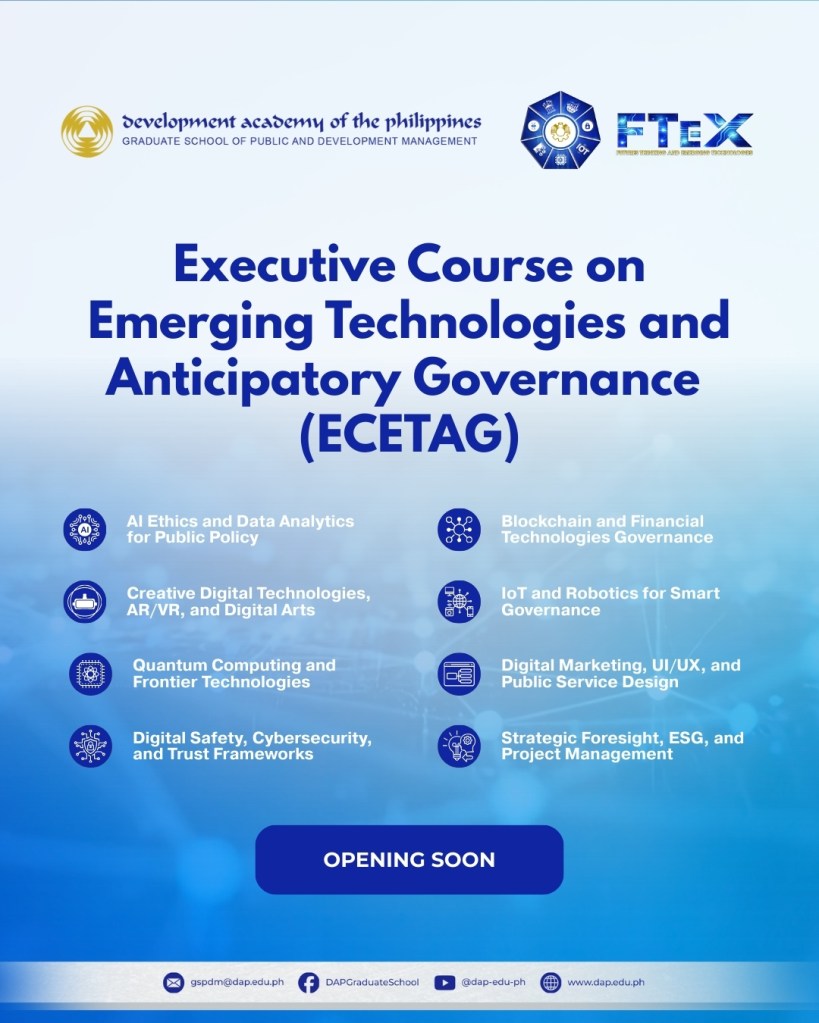
The ECETAG curriculum covers seven core thematic areas that reflect the breadth and depth of technologies shaping public governance today.
These include:
- AI Governance and Data Policy
- Big Data and Analytics
- Blockchain and Financial Technologies Governance
- IoT and Robotics for Smart Governance
- Quantum Computing and Frontier Technologies
- Digital Marketing, UI/UX, Creative Digital Technologies, AR/VR, and Public Service Design
- Digital Safety, Cybersecurity, and Public Trust
Together, these thematic tracks are designed to equip senior decision-makers with a strategic, non-technical, and policy-oriented understanding of emerging technologies and their governance implications.
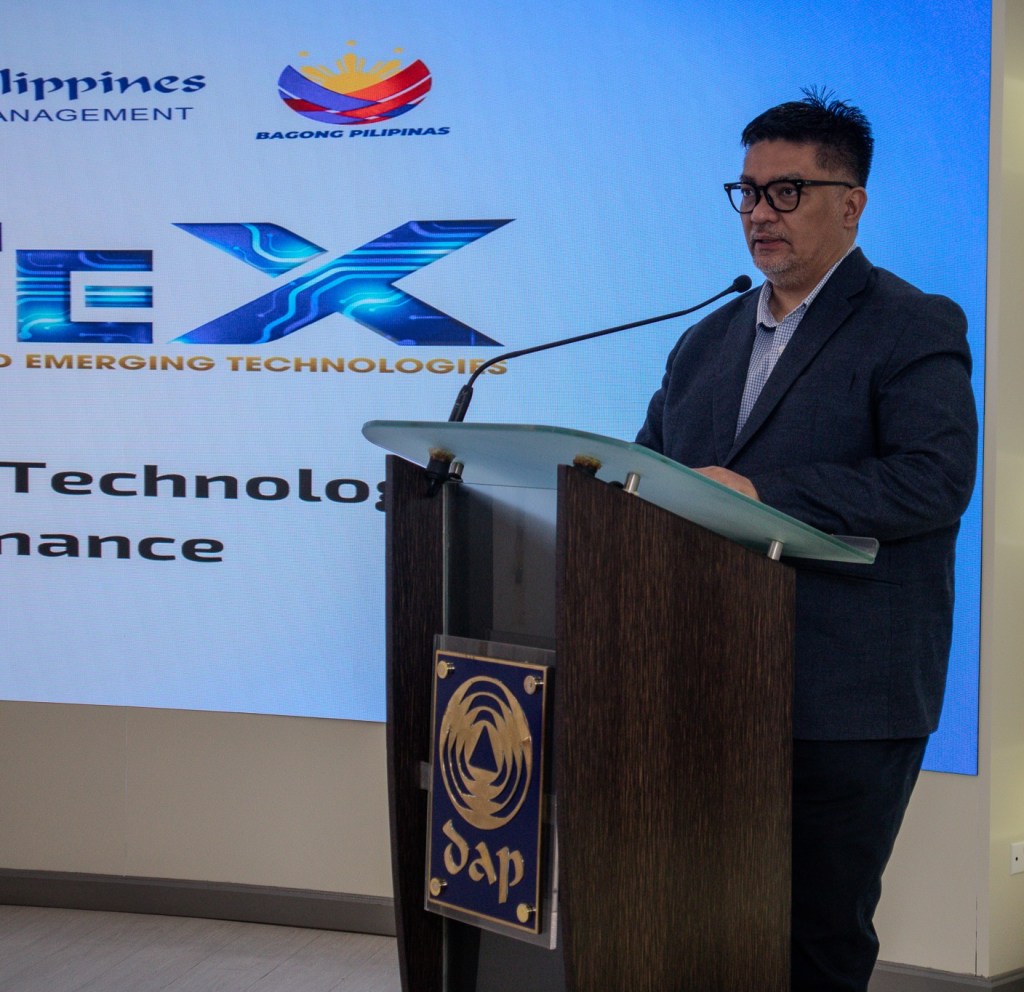
Providing a broader national perspective, Dominic Vincent Ligot, one of the program’s teaching fellows, spoke on the significance of ECETAG beyond the local context, stressing the importance of ambition in public sector innovation.
He noted that meaningful reform requires ideas that are “big, bold, and ambitious” to truly change the country’s trajectory. He added, “It’s not technology we’re leveraging—it’s the power of the Filipino people.”

The launch of the FTEX Executive Course comes at a time when public institutions worldwide are grappling with the pace, scale, and complexity of technological change. Artificial intelligence, automation, digital platforms, and frontier technologies are reshaping economies and governance systems faster than traditional policymaking processes can adapt. Without anticipatory governance, governments risk becoming reactive rather than strategic, resulting in fragmented regulation, misaligned investments, and diminished public trust.
On Futures Thinking and Anticipatory Governance
At the heart of the FTEX Executive Course is the institutionalization of futures thinking and anticipatory governance as core leadership competencies in the public sector. Rather than focusing on technology adoption alone, the course emphasizes the ability of leaders to anticipate long-term risks and opportunities, design adaptive policies, and align technological innovation with ethical, inclusive, and development-oriented goals. This approach reflects a growing global consensus that governance must evolve from reactive regulation to proactive, foresight-driven leadership.
The Course Design and Learning Model
FTEX is structured as a 6.0-unit executive course under the Master of Public Management program, combining synchronous sessions, asynchronous learning, and guided outputs. Designed for senior decision-makers with limited time, the program balances academic rigor with practical application. Participants engage in scenario-building, horizon scanning, and policy simulation exercises, ensuring that learning outcomes translate directly into actionable governance strategies.
A defining feature of the FTEX Executive Course is its emphasis on concrete policy outputs. Fellows are required to produce executive foresight briefs, policy directions, draft legislative or executive instruments, and strategic roadmaps aligned with their institutional mandates. Each output is accompanied by a 90-day action execution plan, reinforcing the course’s focus on implementation, accountability, and real-world impact.
Data for Development (D4D)
FTEX also contributes to the development of a Data for Development (D4D) Portal, envisioned as a shared dashboard for policy intelligence, evidence-based decision-making, and public transparency. Fellows identify relevant data indicators during the course, linking foresight insights with measurable governance outcomes. This initiative strengthens DAP–GSPDM’s commitment to data-informed policymaking and open governance.
The program’s eight learning domains reflect the interconnected nature of modern governance challenges. From AI governance and big data analytics to blockchain, smart systems, quantum technologies, digital safety, and ESG-integrated policymaking, FTEX provides a comprehensive yet strategic overview of the technologies shaping public institutions today. Each domain is framed through governance, ethics, and public value rather than technical specialization.
Ethics, inclusion, and public trust are embedded across all FTEX modules. The course emphasizes human-centered governance, responsible innovation, and the protection of vulnerable sectors, including women, youth, and marginalized communities. By integrating digital safety, data privacy, and trust frameworks into leadership training, FTEX reinforces the principle that technological progress must strengthen—not undermine—democratic institutions and social equity.
Beyond technical understanding, FTEX is designed as a leadership formation program. Fellows are encouraged to cultivate strategic judgment, ethical reasoning, and long-term vision—qualities essential for governing uncertainty and complexity. The course fosters a mindset of continuous learning, collaboration, and responsible stewardship of emerging technologies in the public interest.
The FTEX learning environment brings together leaders from government, academe, and industry, fostering cross-sectoral dialogue and shared sensemaking. This collaborative approach reflects the reality that effective governance of emerging technologies requires coordination across institutions, disciplines, and sectors. Through structured discussions and foresight conversations, fellows build networks that extend beyond the classroom.
FTEX is positioned not merely as a one-time executive course but as part of a broader institutional effort to embed futures thinking within public governance. Alongside the Futures Commons initiative, the program signals DAP–GSPDM’s long-term commitment to advancing anticipatory governance, policy innovation, and leadership development in the Philippines.
The FTEX Executive Course aligns with global frameworks and best practices from the United Nations, OECD, ITU, and World Economic Forum, while remaining grounded in Philippine development priorities. By bridging global foresight frameworks with local governance realities, the program strengthens the country’s capacity to participate meaningfully in regional and international policy conversations on emerging technologies.
As governments confront increasingly complex challenges—from digital disruption and climate risks to cybersecurity and economic transformation—programs such as FTEX play a critical role in shaping the next generation of public sector leaders. By equipping decision-makers with foresight, strategic insight, and ethical grounding, DAP–GSPDM is contributing to a more resilient, innovative, and future-ready public sector.
During the launch, DAP–GSPDM also introduced the Futures Commons: Foresight Research and Anticipatory Governance Conversations, a year-long weekly series designed as an open platform for sustained, cross-sectoral sensemaking on foresight research and anticipatory governance. The Futures Commons aims to foster continuous dialogue, shared learning, and collaborative problem-solving among policymakers, researchers, and practitioners.

These initiatives reflect the Graduate School’s continued commitment to public service excellence, purposeful leadership, and proactive governance amid the uncertainty of increasingly interconnected and fast-evolving policy challenges.
Both ECETAG and the Futures Commons are part of the broader Futures Thinking and Emerging Technologies (FTeX) Program, which seeks to strengthen public sector digital leadership through executive-level capability building in artificial intelligence, data systems, financial technology, and related fields. The ECETAG course is scheduled to formally open in February 2026.
The Teaching Fellows for the FTEX / ECETAG Executive Course are Derick Adil, Lorna Bondoc, Bobby Corpus, Jr., Joie Cruz, Mariecar Gecale, Dominic Vincent Ligot, Kristel Anne Villanueva-Libunao, Christopher Misola, Sherwin Pelayo, Jiro Luis Reyes, and Maria Jihan Sangil.
The program is supervised by Atty. Jocelle Batapa-Sigue, FTeX Program Supervising Fellow, and Mr. Mark Rex Jayson T. Atole, Program Manager of the Sustainable Development and Regional and Local Governance Office (SDRLGO). It is managed by Learning Managers Kent Elmann Cadalin and Andrea Francesca Camago.
#DAPGraduateSchool #FTeX #FuturesThinking #AnticipatoryGovernance #EmergingTechnologies #PublicSectorLeadership
 Jocelle Batapa Sigue
Leave a comment