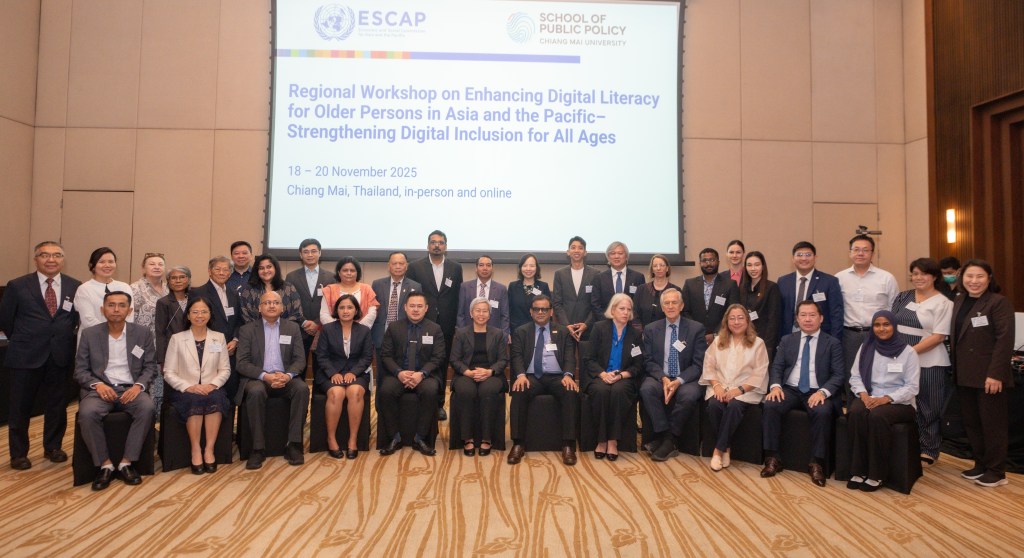
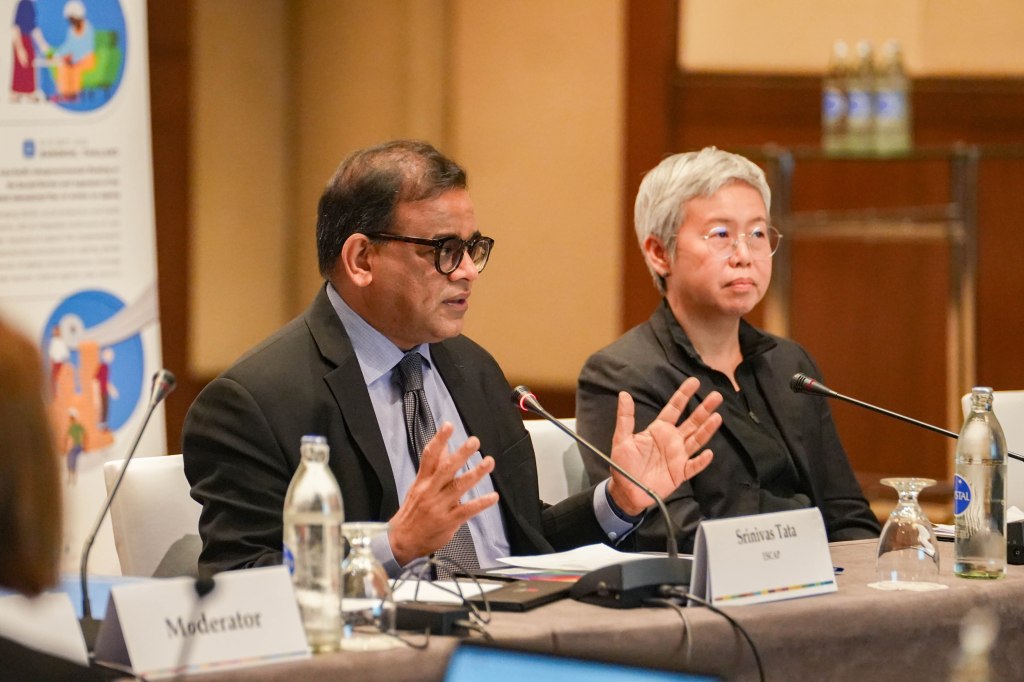
CHIANG MAI, THAILAND — The Philippines must urgently design targeted, multi-sector strategies to prepare for the economic and social impacts of a rapidly ageing population, according to insights drawn from the UNESCAP Regional Workshop on Enhancing Digital Literacy for Older Persons in Asia and the Pacific held in Chiang Mai from 18–20 November 2025. The event gathered policymakers, academics, civil society leaders, and digital governance experts to address the widening “grey digital divide” across the region.
Atty. Jocelle Batapa-Sigue, invited by the United Nations Economic and Social Commission for Asia and the Pacific (ESCAP) in an expert capacity as reflected in ESCAP’s formal invitation, shared initiatives from the Philippines in sessions dedicated to digital literacy systems, ageing policy, and regional demographic transitions. The workshop forms part of ESCAP’s larger initiative ahead of the Fifth Review and Appraisal of the Madrid International Plan of Action on Ageing (MIPAA).
The Philippines’ accelerating aging curve based on ESCAP data demands comprehensive action on digital Inclusion for older persons, Batapa-Sigue says.

Demographic Risks Are Accelerating Faster Than Policy Responses
Data presented by Batapa-Sigue during the workshop—including the ESCAP 2024 Population Data Sheet—confirms that ageing across Asia-Pacific is accelerating, with the Philippines projected to reach 14 million senior citizens by 2035 and enter its demographic transition shortly after.
Despite this shift, digital adoption among Filipino older persons remains critically low – only 18% of Filipinos aged 65+ possess even one basic digital skill, and only 6% use the internet.
These figures underscore the potential economic risks of exclusion in a digital-first environment—where access to health services, e-government systems, financial services, emergency communications, and even daily transactions increasingly require digital capability.
Batapa-Sigue joins experts in emphasizing that the implications of inaction extend far beyond social welfare—they pose tangible risks to a country’s economic stability, digital governance agenda, and long-term competitiveness.
As ESCAP’s demographic briefings and workshop discussions repeatedly underscored, she emphasized thar the Philippines risks significantly higher public expenditure as digitally excluded seniors become more dependent on manual, in-person welfare systems and health interventions.
Economic productivity could also slow, with older adults unable to tap into micro-entrepreneurship, digital freelancing, or small-scale online commerce—sectors that have become vital engines of inclusive growth in the region.
Government efficiency may likewise suffer: while eGovPH adoption accelerates, older beneficiaries who cannot navigate online systems will require duplicated offline service pathways, undermining the efficiency gains of digitalization.
Compounding this is the heightened exposure of seniors to scams, fraud, and cyber threats, which not only endanger household finances but also weaken broader consumer trust in digital markets.
Finally, without focused national strategies, inequality between tech-enabled urban seniors and digitally underserved rural populations will deepen, creating structural disparities that affect financial inclusion, healthcare access, and overall resilience.

These risks, all highlighted across ESCAP’s working sessions and mirrored in Batapa-Sigue’s interventions, point to a clear and urgent mandate: senior digital inclusion must be treated as an economic and governance priority, and not merely a social aspiration.
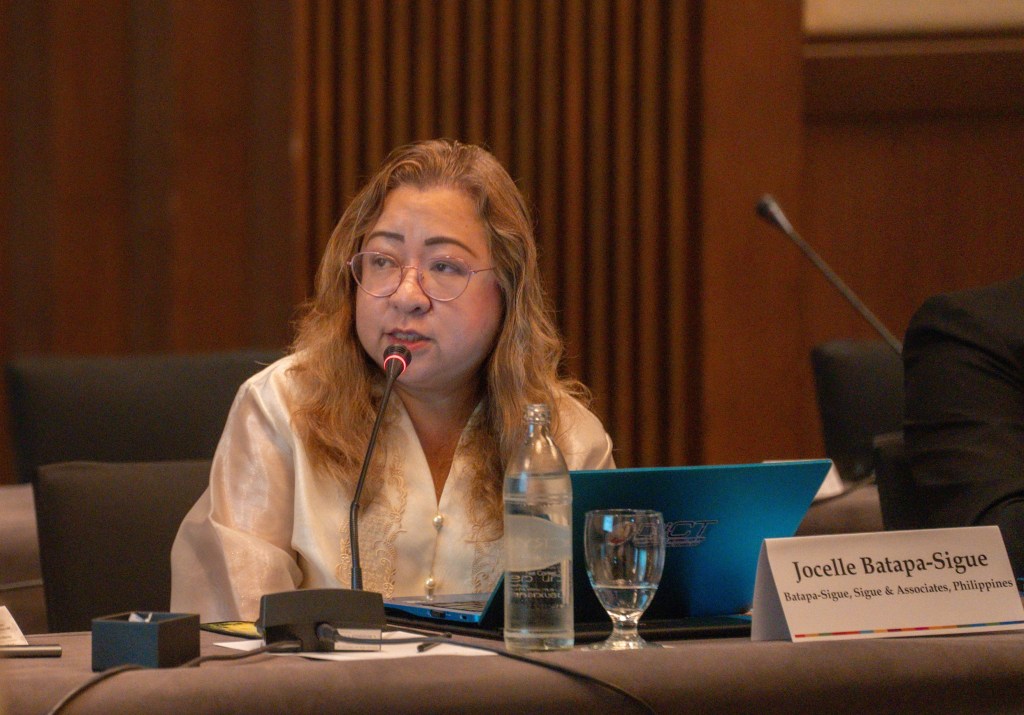
Drawing from her ongoing advocacies on digital governance, inclusion, and AI ethics, she argued that ageing must be treated not merely as a social welfare issue, but as a strategic economic priority requiring synchronized action across government agencies, business sectors, local governments, the academe, and civil society.

She identified several critical gaps and also highlighted strategic directions the country is undertaking:
Digital Inclusion as Economic Infrastructure
Digital skills are now prerequisites for health access, financial participation, business creation, and disaster resilience. Senior exclusion translates into direct losses across industries and public systems.
NCSC’s Strategic Role Must Be Strengthened
The National Senior Citizens Commission (NCSC) is emerging as a key driver of digital empowerment for older Filipinos, guided by its official Strategic Roadmap and Development Plan for 2023–2028, which outlines programs on digital onboarding, welfare integration, social protection coordination, and inclusive digital services for seniors. As the agency mandated to promote the rights and well-being of older persons, the NCSC has been coordinating with national and local bodies to streamline processes such as digital ID issuance, access to government platforms, and participation in community-based digital literacy activities. To fully harmonize nationwide efforts—including those of DICT, LGUs, and civil society—the NCSC must receive stronger institutional and budgetary support, enabling it to scale its roadmap, strengthen inter-agency alignment, and ensure that every senior citizen benefits from a coherent and accessible digital inclusion ecosystem.
Digital Senior Citizen ID Rollout Must Be Backed by Literacy Programs
With over 1 million senior citizens now enrolled through the eGovPH app, Batapa-Sigue highlighted this milestone as a breakthrough moment for inclusive digital transformation. She lauded the proactive efforts of the regional offices of the Department of Information and Communications Technology (DICT), which have been onboarding elderly Filipinos into the eGovPH ecosystem to help them secure their digital Senior Citizens ID—a vital gateway to government services, privileges, and social protection benefits. She noted the inspiring initiatives across the regions: the DICT Region XI Digital Literacy Campaign for Senior Citizens, the DICT Region X Digital Campaign encouraging seniors to actively use the eGovPH App, and the ongoing TechEd and Digital Transformation Centers (DTCs) skills trainings in various DICT regional offices nationwide. These programs go beyond simply teaching seniors how to navigate digital tools—they rebuild confidence, strengthen independence, and demonstrate that technology can empower, not exclude. Batapa-Sigue emphasized that this collective push is more than a technical rollout; it is a commitment to ensuring that older persons remain visible, connected, and valued as the country accelerates its digital shift.
Age-Friendly Design in Public and Private Platforms
Banks, fintech companies, telecommunications providers, and government agencies are now redesigning platforms for accessibility—larger text, simplified workflows, predictable interfaces, and human-assisted service options.
AI-Era Accessibility
The region risks an AI-based digital divide if automated systems, chatbots, and algorithm-driven services are not designed with seniors in mind. This aligns with Batapa-Sigue’s ongoing advocacy on AI ethics, risk mitigation, and responsible design.
On one hand, targeted skilling programs, intergenerational mentoring, and lifelong learning pathways can open real opportunities for older adults to participate in the digital economy. When seniors are equipped with the right competencies, and given accessible learning environments and mentors, they can contribute meaningfully to digital jobs, online entrepreneurship, and community-based digital services. Age should never be a barrier to participation—what matters is creating the enabling systems that allow every generation to thrive in a technology-driven world, Batapa-Sigue says.

The Technical Education and Skills Development Authority (TESDA) also commits to multi-sector efforts to advance digital inclusion for senior citizens to create a powerful ripple of empowerment across communities. By strengthening digital learning pathways, TESDA is helping older Filipinos build the confidence and competencies needed to thrive in an increasingly connected world. Local government units are now integrating TESDA’s curated digital courses into their senior citizen programs, ensuring that lifelong learning becomes both accessible and community-driven. This progress was also reported by Batapa-Sigue at UN ESCAP, highlighting the Philippines’ commitment to inclusive digital transformation on an international stage. Complementing these initiatives is the introduction of the Digital Skills Passport, a simple yet transformative tool that records every newly acquired skill—turning each milestone into a stepping stone for further growth. And beyond learning, TESDA is enabling seniors to participate meaningfully in the digital economy by supporting practical digital livelihoods such as live selling, e-commerce assistance, and online micro-entrepreneurship.
Regional Benchmarks: Lessons for Philippine Policymakers
Discussions throughout the workshop—documented in the programme and bio sketches—highlighted innovations across the region that the Philippines can adopt or adapt:
Thailand’s MEEDE Project
A senior-focused digital learning ecosystem leveraging university resources, integrating health, entrepreneurship, and digital safety for older adults.
Vietnam’s Intergenerational Self-Help Clubs (ISHCs)
A proven model where seniors learn digital skills alongside younger volunteers, reducing intimidation and accelerating learning.
India’s Community-Based Digital Coaching
Low-cost, high-impact grassroots strategies using local volunteers—highly replicable in Philippine barangays.
Japan’s Digital Health Innovations
Age-friendly telehealth models that reduce distance barriers and support independent ageing.
The workshop also showcased tools from ESCAP, particularly its Digital Literacy Toolkit for Older Persons, which Batapa-Sigue cited the Philippines can localize for LGUs, barangay training hubs, and universities.
Policy Recommendation
Build the Philippines’ Age-Inclusive Innovation Agenda
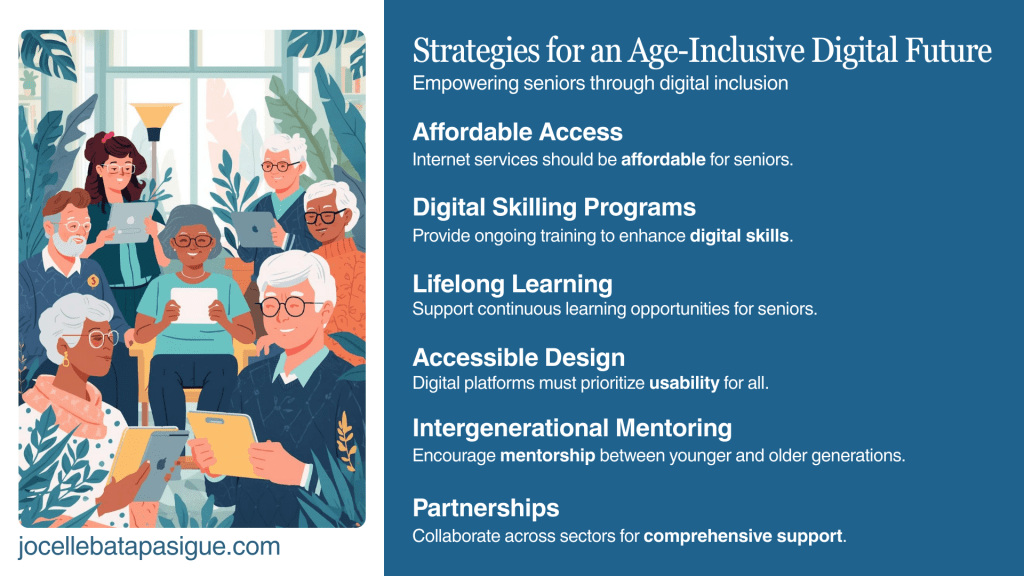
Based on the workshop’s findings and her long-standing advocacies on AI governance, women’s digital safety, and countryside digital development, Batapa-Sigue’s believes the Philippines must rapidly adopt an age-inclusive innovation agenda with the following pillars:
1. Age-Inclusive Digital Infrastructure
Public Wi-Fi, community digital centers, and connectivity must accommodate senior needs.
2. National Digital Upskilling Program for Seniors
Delivered through LGUs, State Universities and Colleges (SUCs), NGOs, and intergenerational volunteers.
3. Senior-Friendly Government and Financial Platforms
Mandatory usability standards for older persons across e-government and private-sector services.
4. Integrated Senior Digital Safety Framework
Protection from online scams, fraud, misinformation, and AI-driven risks.
5. Data-Driven Monitoring and Evaluation
Aligned with ESCAP methodologies and the forthcoming MIPAA review.
PH Faces Rapid Ageing Driving Urgent Need for Senior-Inclusive Policies
The Philippines is ageing faster than expected, and new demographic data from the United Nations Economic and Social Commission for Asia and the Pacific (ESCAP) shows the country may not be fully prepared for the economic and social pressures ahead.
ESCAP’s latest charts reveal a dramatic shift in the Philippine population structure. The traditional “youth-heavy” pyramid of 1990 has transformed into a narrowing base and widening senior population, with projections showing a near “dome-shaped” structure by 2050—an indicator of an ageing society. Fertility has declined, while life expectancy continues to rise, reaching 70.9 years for men and 75.3 years for women in 2020, and projected to increase further by 2050.
The ageing acceleration is striking. It took France more than a century to double its senior population from 7% to 14%. The Philippines will do it in just 33 years (2028–2061), making it one of the fastest-ageing nations in the region. At the same time, the working-age population (15–64) peaks at 64.7% in 2025 before beginning a long decline, closing the country’s demographic dividend window.
Gender imbalance in older years is another critical insight. Women make up as much as 81% of Filipinos aged 100+, reflecting longer female life expectancy—and signalling the need for gender-responsive senior policies in health, digital literacy, pensions, and financial inclusion.
These numbers highlight a looming dependency shift: fewer young people, more elderly dependents, and significant pressure on labor markets, healthcare, and social protection systems. Without targeted interventions—especially in digital literacy, senior-friendly e-government services, and age-inclusive technology—the Philippines risks inefficiency, higher public expenditure, and deeper inequality between urban and rural seniors.
The message from ESCAP’s demographic visuals is clear: ageing is no longer a distant scenario. It is happening now. Policymakers must act urgently to build age-inclusive systems that protect and empower older Filipinos before demographic pressures intensify further.
Economic and Social Return on Investment (ROI)
The cost of inaction is extraordinarily high. When seniors remain disconnected from e-commerce, the country loses an entire consumer segment with significant purchasing power. Digital exclusion also weakens workforce continuity in SMEs, cooperatives, and micro-enterprises, where older adults could otherwise contribute through flexible or community-based digital tasks. Government efficiency gains from digitization are diluted when senior beneficiaries remain offline and still require parallel manual service channels. At the same time, the heightened exposure of digitally unskilled seniors to scams and fraud increases systemic financial risks, while health systems face higher long-term costs as older persons cannot access telehealth, remote monitoring, or digital health advisories. Together, these pressures show that bridging the digital divide for older persons is not merely a social goal—it is an economic and governance imperative.
Conversely, countries that integrate seniors into digital ecosystems gain higher productivity, stronger intergenerational solidarity, and more resilient local economies.
Conclusion: The Window for Action Is Narrow
The Philippines remains in a unique position—still benefiting from a demographic dividend, yet rapidly approaching ageing thresholds. If the Philippines does not act now, the economic and social costs of demographic inaction will be irreversible.
But with strategic planning, cross-sector alignment, and age-inclusive digital transformation, the country can turn demographic risk into demographic advantage.
As Batapa-Sigue emphasized during the workshop:
“A digital society is only truly advanced when every generation can move forward together.”








 Jocelle Batapa Sigue
Leave a comment