
A creative reflection by Jocelle Batapa-Sigue
Introduction: When Folklore Meets the Front Page
Halloween in the Philippines has never just been about pumpkins or trick-or-treat. It has always been about stories—haunting tales whispered by our elders under flickering kerosene lamps, where the boundary between myth and moral lesson blurred. But as I look around today, I realize these stories were not meant only to entertain us—they were warnings.
Because the truth is, these monsters are not confined to forests or graveyards. They are alive, evolved, and thriving in daylight—inside offices, boardrooms, and government halls. They no longer hide in shadows; they sit in power.
This is Filipino Halloween—our yearly reminder that some of the oldest creatures in our folklore are still walking among us, wearing designer suits and campaign smiles.

The Vampires of the Treasury
Western vampires feed on blood. Our bampiras feed on taxes.
Every peso earned by the Filipino worker passes through the fangs of bureaucratic vampires who drain the lifeblood of this nation through waste, excess, and deceit. These are the ones who thrive on “commissions,” ghost projects, and inflated budgets.
Their bite is invisible but deadly—it seeps through education shortfalls, underfunded hospitals, non-existing flood control structures, and delayed disaster responses. And like all good vampires, they are immortal. They reinvent themselves every few years, changing slogans, parties, and surnames, but their hunger remains eternal.
The Tiyanaks of False Victimhood
Then come the tiyanaks—those deceptive little creatures that appear innocent but lure victims to their doom.
In modern form, they are politicians or public figures who weaponize sympathy. They cry on cue, claiming to be victims of smear campaigns, “fake news,” or injustice—while quietly enabling the very systems they condemn.
They make you believe they’re the underdogs, the “ordinary folk.” But when the lights dim, you see the claws. They thrive in the art of manipulation, feeding not on blood but on empathy—a resource far more potent in the age of disinformation.
Tikbalangs and the Lost Path to Justice
The tikbalang leads travelers astray, confusing the path until one forgets where home even is.
In today’s context, these are the institutions or individuals who twist laws, exploit legal loopholes, and bury truth beneath bureaucracy. They craft policies so complex that only insiders can understand them—and that’s the point.
Justice in the Philippines often feels like being trapped in a forest where every turn leads back to the same dead end. The tikbalang laughs, towering above, knowing that confusion is the perfect cover for corruption. And so Filipinos forget easily, like walking in daze, hypnotized by palliative programs.
The Tamawo and the Invisible Elite
The tamawo (this is how we can non-human creatures that live among us in Ilonggo) is perhaps the most cunning creature—beautiful, unseen, and irresistibly persuasive.
They are the unelected powers behind the throne: financiers, lobbyists, and shadow brokers. They never appear on camera, but they whisper into the ears of kings. They draft laws disguised as “consultations,” shape national discourse through subtle influence, and decide which projects see daylight—all while remaining invisible to the public eye.
Corruption in the Philippines is not just about stolen money—it’s about stolen agency. The tamawo make sure that real power never belongs to the people, only to those who can afford it. These creatures are dangerous because you do not see them at all but they make things move or happen.
Manananggals: The Two-Faced Servants
The manananggal splits itself in half: one side stays human, pretending to serve; the other flies off at night, feeding on the unborn.
This is the perfect symbol for our double-lived officials—those who speak of public service while secretly devouring the nation’s future. They inaugurate schools with one hand while cutting the education budget with the other. They promise integrity while signing contracts that starve the next generation.
The manananggal’s trick is separation—between conscience and action, between campaign promises and public service. They thrive in contradiction, comfortably living with both halves of themselves intact.
The Fairies of Illusion
The engkanto are fairies known for beauty and deception.
In our political theater, they are the masters of illusion—public relations teams, propaganda architects, spin doctors. They throw grand festivals of distraction, painting poverty as progress and chaos as order.
They feed us spectacles so dazzling we forget to ask questions. In the age of social media, their spells are powerful, crafted not with wands but with hashtags and paid reach.
Corruption looks very festive when dressed in lights.
The Kapres and the Empire of the Oligarchs
High up the tree sits the kapre, smoking his giant cigar, looking down at the world he owns.
He is the oligarch who controls industries—telecoms, energy, food, transport—entire ecosystems that keep citizens dependent. The kapre doesn’t need to move; power naturally gravitates upward.
He sits comfortably above regulation, above competition, above the law. And as he exhales thick smoke, the rest of the country coughs beneath his shadow.
We have mistaken his height for greatness, forgetting that trees cannot grow where no sunlight reaches.
The White Ladies of Whistleblowing
Every ghost story has a white lady—a haunting presence that cannot rest because of injustice.
They are the truth-tellers, journalists, and whistleblowers—those who have seen too much and refuse to stay silent. They haunt our collective conscience, showing up in exposés, documentaries, and viral posts that refuse to disappear.
But like ghosts, they are often silenced, erased, or forgotten. Their names fade from headlines, but their stories linger in the nation’s subconscious, reminding us of truths buried too soon.
The Aswangs of Power
And then there are the aswangs—shapeshifters who were once human but lost their souls to greed.
They began as idealists, promising reform, hope, and change. But somewhere along the way, power consumed them. The longer they fed on privilege, the less human they became.
They can change form—politician, tycoon, influencer—but their hunger remains constant. They feast on the flesh of the people, on their trust, their labor, and their dreams.
The greatest tragedy is that they still look human. They still smile, shake hands, and promise light—even as they move in darkness.

The Real Horror: Desensitized to the Monstrous
The most terrifying part of this story is not the existence of monsters—but our acceptance of them.
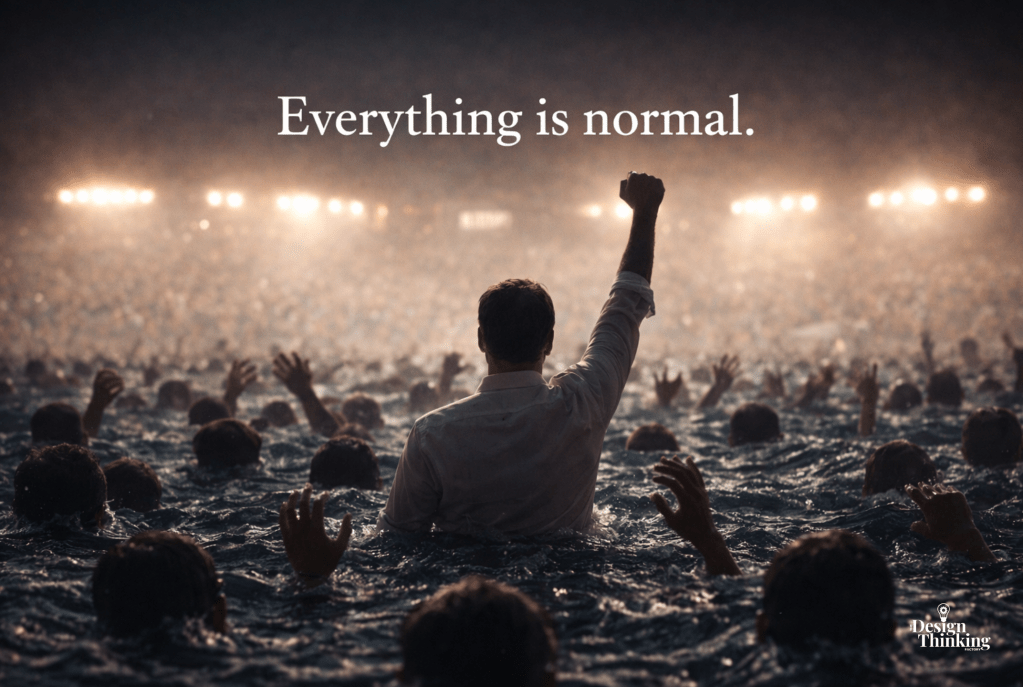
We have grown so used to corruption that it barely shocks us anymore. Scandal after scandal passes, and we scroll on. Public outrage lasts a week; the monsters wait it out.
This is how evil survives—not through power, but through our indifference.
We have learned to coexist with horror, to shrug it off with humor and memes. The Filipino horror story continues because its audience no longer screams.
Exorcism and Accountability
Every horror tale needs an exorcism. In ours, the priests are not holy men but informed citizens.
Accountability is our holy water. Transparency is our stake through the heart. Civic participation—our light against darkness.
We exorcise corruption when we refuse to tolerate it, when we stop defending thieves because they “got things done.” We fight the tikbalangs of bureaucracy with clarity and digital transparency. We weaken the kapres of monopoly by supporting local innovators.
The antidote to darkness is not silence—it is collective courage.
Exorcism and Accountability: The Courage to Clean Our Own House
Every horror tale needs an exorcism. But in this version, there’s no single hero with a silver bullet or holy water. There’s only us—citizens who’ve had enough of the night.
Accountability begins when we stop treating it as a punishment and start seeing it as purification. The cleansing of systems, not people; the restoration of integrity, not vengeance.
And here’s how we start driving the monsters away:
1. Strengthen Transparency by Design
Transparency should not depend on good intentions. It must be engineered into every system—every database, every procurement portal, every local government project.
When we make information public and understandable, we weaken the tamawo of invisibility. Data dashboards, open budgets, AI-powered tracking tools—these are our crucifixes.
Citizens must see not only what the government spends, but why and how—in formats ordinary people can actually understand.
2. Build Digital Literacy as Civic Armor
The next battlefront is not the streets—it’s the screens.
Disinformation is the new dark magic. The fairies of illusion thrive when people cannot tell what is real.
Digital literacy must become a national skill, not an optional subject. Teach every student, vendor, and senior citizen how to verify facts, protect privacy, and question narratives. Empower the peripheries—the rural youth, women, and small business owners—to use digital tools for advocacy and accountability.
Because a digitally literate citizenry is the garlic no monster can stand.
3. Demand Metrics, Not Mantras
Accountability is not about slogans—it’s about measurable outcomes.
Ask for indicators. Demand scorecards. Track how many promises were kept, not just how many were made. Whether it’s digital transformation, agriculture, or women’s empowerment—every policy must have tangible metrics, accessible to the public.
A nation that counts its progress properly stops being fooled by numbers meant only to decorate speeches.
4. Empower the Countryside Watchdogs
Accountability must not be Metro Manila-centric.
We need empowered local councils, citizen watch groups, and university-based data labs in every province. They are the sunlight that keeps vampires from breeding.
When local governments open their budgets to public participation and use technology for co-creation—like participatory GIS mapping, data dashboards, or AI-assisted consultations—the power equation shifts. The peripheries become protectors.
5. Make Whistleblowing a Culture, Not a Crime
The white ladies of truth must no longer haunt in fear.
Protect whistleblowers. Celebrate journalists who expose wrongs. Build secure digital channels where citizens can report misuse safely and anonymously. Accountability systems should not punish honesty—they should protect it.
When the truth has defenders, the monsters retreat.
6. Practice Integrity in Microactions
Every small decision matters. Accountability begins in how we sign forms, how we spend budgets, how we use public Wi-Fi.
When we learn to reject “shortcut culture,” when we stop glorifying “palakasan,” we perform micro-exorcisms daily.
Integrity isn’t a project. It’s a habit.
7. Modernize Oversight Institutions
We need institutions that can keep up with the monsters’ evolving forms.
Auditors who understand digital systems. Investigators who can trace blockchain trails. Ombudsmen who can spot algorithmic bias. Our legal frameworks must grow alongside innovation.
Because corruption today doesn’t always come in envelopes—it comes in data manipulation, AI-generated disinformation, and coded favoritism.
Accountability in the digital age must be technologically fluent.
8. Cultivate Ethical Leadership
As I always remind young leaders: ethics is not an elective.
True leadership is not about charisma or slogans—it’s about conscience and courage. Leaders must be trained not only in policy or management but in the moral imagination to foresee the human impact of every decision.
Leadership development programs—from barangay to national level—should integrate ethics, AI governance, sustainability, and systems thinking.
Because accountability is not just about punishing monsters—it’s about preventing people from becoming them.
9. Celebrate Reformers, Not Just Performers
Let us make heroes of those who quietly build integrity, not only of those who loudly perform it.
Celebrate public servants who return unspent funds, who simplify processes, who empower citizens. The fight for accountability must also reward goodness, not just expose evil.
A culture that honors reform inspires others to follow.
10. Turn Accountability into a Collective Movement
Finally, accountability must move from compliance to culture—from fear of punishment to pride in transparency.
Let citizens, journalists, educators, and entrepreneurs collaborate to build an ecosystem of trust. The Philippines can become a model of open governance—where innovation and integrity coexist, where technology amplifies empathy, and where every Filipino knows their power does not end at the ballot box.
Because real democracy doesn’t just elect leaders. It audits them.
Accountability is the light we carry together. It’s not the work of saints—it’s the discipline of citizens.
Each report filed, each budget tracked, each data portal checked—these are our modern prayers for a nation we still believe in.
When we practice accountability with love for country, the monsters lose their power. And perhaps, someday soon, Filipino Halloween will no longer be a horror story—but a victory tale of a people who learned to face their ghosts and finally turn the lights on.

Why We Keep Telling These Stories
Folklore was never meant to scare children—it was meant to raise them wisely. Our ancestors told tales of monsters not to terrify, but to teach vigilance, humility, and community.
Maybe that’s what we’ve lost—the moral of the story. We turned myth into amusement and forgot its message.
Each generation must retell the tale in its own voice. The creatures of old remind us that corruption, deceit, and greed are not new—they simply adapt. And so must we, if we are to outsmart them.
The Hope Beyond Horror
Despite the shadows, light persists.
For every vampire draining the treasury, there’s a barangay volunteer feeding the hungry. For every kapre guarding privilege, there’s a startup founder creating jobs from nothing. For every silenced truth-teller, there’s a new voice rising online.
Filipino resilience is not denial—it’s defiance. It’s the refusal to give up even when surrounded by monsters.
We may live among the aswangs, but we are also descendants of heroes who once fought colonizers, dictators, and despair. We have slain giants before.
Conclusion: Rewriting the Ending
So yes, Halloween is timely for the Philippines. But this year, maybe instead of dressing up as vampires and witches, we should look in the mirror.
Have we been feeding the monsters? Have we become part of their story—or are we ready to write a new one?
Because the horror story we know too well can still have a different ending—if we choose to rewrite it.
When November dawns and the candles burn for our ancestors, may we also light one for the nation’s conscience—so the monsters finally see the light.
Author’s Note
Jocelle Batapa-Sigue is a lawyer, former Undersecretary of the Department of Information and Communications Technology, and long-time advocate of innovation, ICT development, and digital inclusion in the countryside. She believes that stories—folklore or fact—can awaken a nation’s collective will toward transparency, ethics, and hope.

 Jocelle Batapa Sigue
Leave a comment