
The release of the Global Innovation Index (GII) 2025 is both a wake-up call and a roadmap for the Philippines. While our country does not yet appear among the world’s Top 100 innovation clusters, the report makes one truth impossible to ignore: innovation is no longer the exclusive domain of advanced economies—it is now the engine driving growth across Asia. Countries like China, India, Singapore, and Vietnam are rapidly climbing the ranks, not because they are bigger or richer, but because they have made deliberate, bold investments in research, venture capital, and cluster integration. For the Philippines, the lessons are clear. If we want to transform from a consumer of technology to a producer of global innovation, we must act with urgency and vision.
Philippines in the Context of GII 2025 Innovation Clusters
The Global Innovation Index (GII), produced by the World Intellectual Property Organization, goes beyond ranking countries. It identifies innovation clusters—geographic hotspots where inventors, researchers, startups, and venture capitalists converge.
In 2025, the GII refined its method by adding venture capital activity to its metrics, alongside patents and scientific publications. This means the clusters that make it to the Top 100 worldwide are not just research-driven but also commercially vibrant. The GII 2025 Top 100 Innovation Clusters highlights the world’s densest hubs of innovation—where patents, scientific publications, and venture capital converge.
These clusters are the nerve centers of global innovation. They represent ecosystems where universities, industry, government, and financiers co-create breakthroughs.
Clusters such as Shenzhen–Hong Kong, Silicon Valley, Seoul, Bengaluru, and Singapore dominate, showing strong university-industry linkages, startup density, and global capital flows.
In Asia-Pacific, China, India, Japan, and Singapore remain strong players, with VC-backed ecosystems fueling breakthroughs.
The map of global innovation is shifting East. Asia-Pacific now hosts some of the world’s top clusters—with China’s Shenzhen–Hong Kong–Guangzhou leading the globe, and India’s Bengaluru rapidly climbing thanks to AI and deep tech.
Venture capital flows are reshaping the rankings, elevating cities that may not be traditional R&D giants but are hubs of startup activity.
This confirms a simple truth: innovation is borderless but not evenly spread. The global economy will be driven by the density and strength of these clusters.
Philippines in the Context of GII 2025 Innovation Clusters
Today, the Philippines does not yet appear in the Top 100 innovation clusters of the Global Innovation Index (GII) 2025. But this absence should not discourage us—it should challenge us. It should fuel our determination to build the innovation ecosystems that our people deserve and that our economy requires to thrive in the digital age.
We already see the sparks of innovation across our archipelago. Metro Manila is home to vibrant fintech firms, digital service providers, and an emerging generation of AI-driven startups. Cebu is evolving beyond traditional outsourcing into IT-BPM 2.0, software-as-a-service, and creative digital industries. Davao is positioning itself as a hub for agritech and green innovation, where technology meets sustainability. Meanwhile, Iloilo, Bacolod, and Cagayan de Oro are showing the power of countryside innovation, where strong ICT councils nurture local ecosystems and digital jobs transform communities.
Yet for these hotspots to scale into globally recognized innovation clusters, we must confront the gaps that hold us back.
First Strategic Gap: Underinvestment in R&D

First strategic gap – our investment in research and development remains less than 0.5% of GDP—far below the benchmark set by countries like Singapore, which invests over 2%. Without sustained R&D, our ideas cannot mature into patents, products, and global solutions.
Research and Development (R&D) is the lifeblood of innovation. It is the process by which raw ideas—generated in universities, labs, and industries—are developed, tested, and transformed into patents, technologies, and market-ready products.
Countries that lead in R&D spending consistently lead in patent output, startup creation, global competitiveness, and high-value job generation.
The Philippines vs. Global Leaders
When it comes to research and development (R&D), the Philippines is far behind its peers. We invest less than 0.5% of GDP in R&D, a fraction of what other innovation-driven economies commit. By comparison, Singapore allocates over 2% of its GDP, ensuring a steady pipeline of patents, technologies, and startups. South Korea and Israel go even further, investing above 4%—the highest levels in the world, which explains their consistent leadership in semiconductors, defense, and frontier technologies. Even the OECD average stands at around 2.5%, underscoring just how underfunded Philippine R&D is relative to global standards. This disparity reveals a critical gap: without significant investment, the Philippines risks remaining a consumer of technology rather than a creator of globally competitive innovations.
This means that for every 100 pesos of economic output, the Philippines spends less than 50 centavos on R&D, while Singapore spends at least 2 pesos, and Korea spends more than 4 pesos.
Countries like Singapore, Korea, and Israel generate high volumes of patents, deep-tech startups, and globally competitive industries. Meanwhile, the Philippines risks being stuck as a consumer of technology rather than a producer of innovation.
The Consequences of Low R&D Spending
Missed Patents and Intellectual Property: Philippine researchers publish papers but rarely translate them into patents or spinoff companies. Without R&D funding, innovations remain in the lab instead of becoming real products.
Weak University–Industry Collaboration: Our universities excel in talent development but lack strong technology transfer systems.Compare this to Singapore, where universities actively partner with startups and global firms, creating an ecosystem of applied research.
Dependence on Imported Technology: Because local R&D is weak, industries rely on foreign technologies. This dependency creates a technology trade deficit: we import innovation but export raw labor.
Limited Startup Scaling: Without R&D funding, startups cannot develop deep-tech solutions in AI, biotech, or clean energy. This limits Philippine startups mostly to apps and services, rather than breakthrough innovations that attract global venture capital.
Why We Must Invest More in R&D
Investing in research and development (R&D) is not just about science—it is about economic transformation. Studies by ITU and WEF show that even a 1% increase in R&D spending can boost long-term GDP growth by up to 2%, underscoring its power as a growth driver. Beyond economic output, R&D-intensive industries are proven job creators, generating higher-value, future-ready work in fields like AI, robotics, biotechnology, and green energy. For the Philippines, scaling R&D is also a matter of global standing; without it, we cannot break into the GII Top 100 innovation clusters where leading nations compete. Just as importantly, R&D can be a tool for inclusive innovation. By engaging countryside universities, ICT councils, and local innovators, we can develop homegrown solutions that empower MSMEs, farmers, and local industries, ensuring that the benefits of R&D reach communities across the archipelago—not just the urban elite.
The Way Forward for the Philippines
To close the innovation gap, the Philippines must pursue a bold and targeted R&D strategy. First, we should increase public R&D spending, setting a goal of reaching 1% of GDP by 2030, effectively doubling today’s levels. Our universities must be empowered through well-funded technology transfer offices that can turn academic research into patents, startups, and market-ready products. At the same time, the private sector needs stronger incentives, with tax credits and grants that encourage companies—especially MSMEs and startups—to invest in R&D. These efforts should be concentrated through cluster-based R&D investments, channeling resources into areas where regions already show strength: AI in Metro Manila, agritech in Davao, creative industries in Cebu, and digital governance in Iloilo. Finally, we should expand global partnerships with ASEAN, WIPO, and development banks to co-finance R&D initiatives and integrate Philippine research into international networks. Together, these measures will build a stronger, more inclusive innovation ecosystem that positions the Philippines to compete globally.
Second Strategic Gap: Weak Capacity for Patents and Commercialization

We need to strengthen our capacity for patents and commercialization. Our universities are rich in talent and research, but too few breakthroughs are translated into intellectual property and market-ready innovations.
The Philippines has a strong talent base. Our universities produce world-class graduates and generate promising research across science, technology, and creative fields. However, very few of these outputs are translated into patents, intellectual property (IP), or commercially viable products.
In other words, we have knowledge generation but lack knowledge valorization—the process of turning ideas into innovations that create jobs, industries, and global competitiveness.
Evidence of the Gap
Low Patent Filings:The Philippines consistently lags in Patent Cooperation Treaty (PCT) applications, a core measure in the Global Innovation Index. In contrast, countries like Singapore and South Korea, with smaller populations, file exponentially more patents annually.
Weak Technology Transfer: Most universities lack robust technology transfer offices (TTOs). Faculty research often ends with academic publications, not spin-off companies or licensable technologies.
Fragmented Support for Startups: While we have incubators and accelerators, many focus on apps and services, not deep tech or research-driven ventures. Startups that require years of R&D (like biotech, semiconductors, or advanced materials) rarely emerge due to lack of funding and IP support.
When we fail to transform research into patents and commercial products, we lose more than just opportunities—we lose economic value, competitiveness, and talent.
First, the missed economic value is immense. Every year, countless ideas and innovations emerge from Philippine universities and research centers. But without systems to protect and commercialize them, these ideas remain locked in academic papers instead of powering new industries, exports, and jobs. What could have been a Filipino-developed agricultural technology, a homegrown health innovation, or a breakthrough in AI often ends as untapped potential.
Second, our global competitiveness suffers. In the global race for innovation, patents and commercialization are the currency of leadership. Countries that successfully turn research into intellectual property dominate emerging industries. If the Philippines lags behind in this area, we risk being permanently bypassed—a nation of bright minds but not of globally recognized innovations.
Third, investors are watching. Venture capital flows where there is confidence in intellectual property protection and scalability. Startups with patented technologies are far more attractive to investors because their innovations can’t be easily copied. But with our weak patenting and commercialization ecosystem, we lose the chance to bring in the kind of venture capital that fuels rapid startup growth.
Finally, we face the risk of brain drain. Our brightest researchers, eager to see their work make an impact, often leave the country for ecosystems where patents are supported and commercialization pathways are clear. In effect, we are not only losing innovations but also the Filipino innovators themselves—a double loss for our economy.
Without strong capacity for patents and commercialization, we stand to lose the full value of our talent, the trust of investors, and our place in the global innovation landscape. But if we address this gap, we can turn untapped ideas into industries of the future, anchor our talent here at home, and invite the world to invest in Filipino innovation.
Third Strategic Gap: Limited and Uneven Venture Capital

Venture capital is the fuel that powers high-growth startups. It is not just money—it is mentorship, networks, and risk-sharing that allow a small team with a big idea to scale rapidly and compete on the global stage. Around the world, the presence of strong venture capital ecosystems has been the difference between countries that produce unicorns and those that don’t.
In the Philippines, this remains a critical weakness. Venture capital is still thin and unevenly distributed, making it difficult for local startups to access the kind of investment needed to grow beyond seed stage and into global players. While some funding trickles into Metro Manila’s startup scene, the rest of the country—Cebu, Davao, Bacolod, Iloilo—rarely receives the same level of attention, despite having vibrant innovation communities.
The contrast with our ASEAN neighbors is striking. Indonesia has become a breeding ground for unicorns like Gojek and Tokopedia, backed by billions of dollars in venture funding. Vietnam has successfully attracted VC inflows in fintech, AI, and e-commerce, producing fast-scaling firms such as MoMo and VNPay. Singapore, meanwhile, has positioned itself as the venture capital hub of Southeast Asia, hosting hundreds of funds and drawing global investors who see the city-state as a gateway to the region.
The Philippines, by comparison, still lags behind. Despite having a large, young, and digital-savvy population, we have produced fewer unicorns and secured far less venture investment than our neighbors. The reasons are clear. Many investors remain cautious due to weak intellectual property protection and limited R&D outputs, which reduce confidence in the scalability of local startups. The funding culture in the country is also conservative, with capital still flowing more readily to real estate, retail, or traditional industries rather than high-risk technology ventures.
Even when startups do secure initial seed funding, many struggle to break through to Series A and beyond—the growth stages where real scaling happens. As a result, Filipino founders often make the difficult choice of incorporating abroad, in Singapore or Delaware, to access investors who would otherwise overlook them if they were based solely in the Philippines. This creates a paradox: the innovation is Filipino, but the value creation benefits another economy.
This matters greatly. Without a strong venture capital ecosystem, we miss out on the opportunity to build unicorns, to scale Filipino innovation globally, and to ensure that startups create jobs and wealth here at home. Innovation becomes a slow, uphill climb, and the countryside is left even further behind as VC concentrates only in Metro Manila.
To address this, the Philippines needs a bold, coordinated response. We must establish a national venture capital fund—a government-backed but private-sector-driven vehicle that co-invests in high-potential startups in deep tech, AI, agritech, and green industries. We must create stronger incentives for local and foreign VC firms to operate in the country, streamline regulations, and offer tax benefits that make investing here attractive. At the same time, we need to encourage corporate venture capital arms from major conglomerates—banks, telcos, logistics companies—to invest in startups that complement and modernize their industries.
But most importantly, venture capital must not be concentrated only in Metro Manila. If we are to create an archipelago of innovation, then Cebu’s creative industries, Davao’s agritech ventures, and Iloilo and Bacolod’s digital jobs ecosystems must also be connected to funding pipelines. By linking countryside innovation clusters to VC networks in Manila, Singapore, and beyond, we can ensure that no region is left behind.
The Philippines has no shortage of talent or ideas—what we lack is the capital to help them grow. If we can unlock venture capital and distribute it more evenly across the nation, we can finally unleash a new wave of Filipino-founded companies that not only thrive locally but compete globally. With stronger VC flows, we can ensure that the next generation of unicorns carries the mark: Made in the Philippines, Scaling Worldwide.
Fourth Strategic Gap: Lack of a National Strategy for Connected Clusters

Across the Philippines, local innovation ecosystems are beginning to thrive. In Metro Manila, fintech and AI startups are gaining momentum. Cebu is advancing in IT-BPM 2.0 and creative industries. Davao is emerging as an agritech and green innovation hub. Iloilo, Bacolod, and Cagayan de Oro are building their own models of countryside innovation through ICT councils and digital jobs initiatives. These are promising signs that Filipino talent and entrepreneurship are alive and well.
But here lies the gap: these ecosystems remain fragmented, growing in parallel but rarely in concert. While each city or region is developing its own strengths, there is no national framework that ties them together into a cohesive, globally competitive network of innovation clusters.
Without such integration, we face the risk of building isolated pockets of activity—clusters that may thrive locally but lack the scale, synergy, and visibility to compete internationally. For example, a startup in Cebu may struggle to connect with investors in Manila, or a researcher in Davao may lack pathways to collaborate with a tech transfer office in Quezon City. Talent, capital, and ideas flow unevenly, and the sum of our innovation efforts falls short of what they could achieve if strategically connected.
Contrast this with countries that have successfully built national innovation cluster strategies. Singapore has created a tightly coordinated ecosystem where universities, government agencies, and industries operate in sync, making the entire city-state a single innovation hub. South Korea strategically invests in sector-based clusters—semiconductors in Suwon, biotech in Daejeon, creative industries in Seoul—while ensuring they are interlinked by national policy. Even in larger countries like China and India, regional hubs like Shenzhen and Bengaluru are connected by deliberate policies, infrastructure, and global positioning.
The Philippines lacks this kind of integrative strategy. We have policies for startups, MSMEs, and ICT development, but we do not yet have a cluster-level approach that deliberately connects local strengths into a national system of innovation. Without it, our innovation journey risks being fragmented and underpowered.
This matters for several reasons. First, scale is everything in innovation. A globally competitive cluster requires density of talent, research, and capital. If we cannot connect and scale our local ecosystems, they will remain too small to attract major investors or compete with international hubs. Second, collaboration multiplies impact. When clusters are connected, universities, industries, and startups can share resources, co-develop technologies, and accelerate commercialization. Third, visibility matters. The world takes notice when a country presents itself as a coordinated innovation hub—not when it is divided into scattered, unlinked initiatives.
To move forward, the Philippines needs a National Innovation Cluster Strategy anchored on the principles of integration, inclusivity, and internationalization.
To transform the Philippines into an archipelago of innovation, we must begin by mapping and designating priority clusters across the country. Each region has its own comparative advantage: Metro Manila in fintech and AI, Cebu in IT-BPM and creative industries, Davao in agritech and green innovation, and Iloilo, Bacolod, and Cagayan de Oro in countryside digital hubs. By identifying and developing these strengths, we can build a diverse but complementary innovation landscape.
Once these hubs are defined, we should establish Innovation Cluster Zones, or ICZs—special areas where research and development, startups, and venture capital are actively supported through targeted incentives. These zones will not only attract entrepreneurs and investors but also encourage industries to co-locate with universities and research centers, accelerating the cycle from idea to innovation to market.
To ensure that innovation is not concentrated only in the capital, we must leverage ICT councils as regional managers. These councils, with their track record of inclusive governance, can provide the local leadership needed to manage clusters, coordinate stakeholders, and make sure that development reflects the needs and aspirations of their communities. This guarantees that innovation remains both locally grounded and nationally integrated.
But clusters cannot thrive in isolation. We must build national networks that link universities, industries, and startups across regions, allowing knowledge, talent, and capital to flow freely. A researcher in Davao should be able to collaborate with a startup in Cebu and an investor in Manila seamlessly, as part of a larger national innovation fabric.
Finally, we must position Philippine clusters globally, connecting them to ASEAN, Asia-Pacific, and the wider world. By joining regional innovation corridors and global partnerships, our clusters can tap into larger markets, attract foreign investments, and showcase Filipino innovation on the world stage.
With a clear strategy that maps clusters, establishes ICZs, empowers ICT councils, strengthens national linkages, and positions us globally, the Philippines can transform from scattered innovation islands into a cohesive, competitive, and globally connected archipelago of innovation.
If we can achieve this, we will no longer risk being a country of scattered innovation islands. Instead, we can become an archipelago of innovation—a network of interconnected clusters that leverage our diversity, amplify our strengths, and project the Philippines as a rising global hub of creativity, technology, and inclusive growth.
The Philippines does not lack talent or initiative. What we lack is a national strategy that binds our local ecosystems together into a powerful whole. The choice is clear: remain fragmented and risk being overlooked, or unite our clusters and step onto the global stage as a cohesive innovation nation.
Innovation clusters are the engines of growth for the future economy. For the Philippines, the challenge is equally clear: to transform our emerging hotspots into globally connected, resilient, and inclusive innovation clusters. If we take this challenge seriously—through bold policy, strategic investment, and countryside-driven innovation—we can ensure that by 2030, the Philippines will no longer be absent from the global map of innovation, but proudly present as a rising hub of creativity, technology, and opportunity.
This reflects a “missing middle” challenge: the Philippines has strong digital adoption and creative talent, but low density of R&D, patents, and venture capital clustering.
Opportunities for the Philippines
To build globally competitive innovation clusters, we must start by bringing innovation closer to the countryside. Expanding the ICT councils model, which has already proven successful in cities like Bacolod and Iloilo, will allow us to create localized “mini-clusters” beyond Metro Manila. These countryside innovation hubs can nurture digital jobs, startups, and local industries, ensuring that growth is more inclusive and not confined to the capital.
Alongside this, we must strengthen startup and MSME empowerment. Our entrepreneurs need stronger connections to venture capital and global accelerators, giving them not only access to funding but also mentorship and international networks. With the right support, Filipino startups can scale faster and compete on equal footing with their counterparts in Indonesia, Vietnam, and Singapore.
Equally important is university–industry collaboration. Our top universities must go beyond teaching and publishing—they must become research anchors for innovation clusters. By establishing strong technology transfer systems, universities can convert their research into patents, products, and spin-off companies, directly fueling economic growth.
We also have a unique opportunity to lead in AI and the digital economy. The Philippines is already a global hub for digital jobs, and with deliberate investment in AI workforce skilling, digital creativity, and knowledge process outsourcing, we can position ourselves as ASEAN’s leader in AI-enabled services and creative industries. This aligns with global trends identified by the WEF, ITU, and ASEAN reports, which point to AI and digital work as key drivers of future competitiveness.
Finally, this transformation requires strong policy levers. Laws and frameworks such as the Innovative Startup Act (RA 11337), the strategies of the National Innovation Council (NIC), and the programs of DICT and DTI must be harnessed to create cluster-friendly policies. These policies should incentivize R&D, streamline startup growth, and attract investors, while ensuring that innovation remains inclusive and countryside-driven.
By expanding countryside hubs, empowering startups and MSMEs, anchoring clusters in universities, leading in AI and digital jobs, and activating strong policy levers, the Philippines can transform scattered innovation efforts into a national ecosystem of globally competitive clusters.
Actionable Roadmap
Short Term (2025–2027)
In the short term, our focus must be on mapping and strengthening emerging clusters across the country. Metro Manila, Cebu, Davao, Iloilo, and Bacolod are already showing signs of innovation vitality. By consolidating their strengths and providing the right support, we can transform these local ecosystems into the foundation of a broader national cluster network.
At the same time, we must incentivize venture capital inflows. Through targeted tax incentives and regulatory reforms, we can encourage both local and foreign investors to fund Filipino startups. This will give our entrepreneurs the resources they need to scale beyond seed stage and compete regionally and globally.
Equally important is to scale AI and digital jobs reskilling programs, such as Harnessing AI PH and AI-for-All in Asia-Pacific. These initiatives will prepare our workforce to thrive in an economy increasingly shaped by artificial intelligence, automation, and digital platforms—ensuring that Filipinos are not only job seekers but also job shapers in the digital era.
By strengthening clusters, attracting venture capital, and investing in AI-enabled skills, the Philippines can lay the groundwork for a competitive innovation ecosystem within the next two to three years.
Medium Term (2027–2030)
In the medium term, our goal must be nothing less than to establish the Philippines in the Global Innovation Index Top 100. We can achieve this by developing focused R&D hubs in high-potential sectors such as artificial intelligence, health technology, and creative digital industries. These hubs will not only generate patents and startups but also place Filipino innovation on the global map of emerging technologies.
Equally critical is the task of integrating innovation clusters with countryside cities. By empowering ICT councils to act as governance anchors, we ensure that regional ecosystems are not isolated but instead connected to the national innovation network. This approach guarantees that innovation-driven growth benefits both urban centers and countryside communities, making development more inclusive and resilient.
At the same time, the Philippines must seize its advantage in the digital workforce by positioning itself as ASEAN’s hub for digital jobs and an AI-ready workforce. This aligns with global trends identified by the World Economic Forum’s Future of Jobs 2025 report, which highlights AI adoption and digital skills as major drivers of the future labor market. By investing in training, reskilling, and digital inclusion, we can transform our demographic strength into a strategic advantage for the region.
By 2030, through targeted R&D hubs, countryside cluster integration, and AI-driven workforce leadership, the Philippines can secure its place in the world’s top 100 innovation clusters and emerge as a key innovation player in ASEAN.
Long Term (2030 and beyond)
Looking toward the long term, the Philippines must set its sights on building globally competitive clusters that can stand shoulder to shoulder with the best in the world. By 2035, we should see the Philippines recognized not only as a participant but as a leader in areas such as digital services, fintech, healthtech, and green innovation. These sectors align with our strengths—digital talent, a young population, and creative industries—while also addressing the pressing needs of both our economy and the planet.
But global competitiveness must not come at the cost of exclusion. Our vision is to achieve inclusive innovation, where the benefits of growth are shared across the spectrum of society. This means deliberately ensuring that MSMEs, women, and youth are active participants in the innovation ecosystem. By empowering small enterprises to adopt and create technology, by supporting women in technology and entrepreneurship, and by nurturing the digital skills of the next generation, we will create innovation that is not only powerful but also just and equitable.
Finally, the Philippines must position itself as a regional innovation corridor—a gateway that connects ASEAN with global research and development networks. This means strengthening cross-border partnerships, hosting international R&D collaborations, and becoming a trusted hub where ideas, talent, and investments converge. By linking local clusters to global corridors, we ensure that Filipino innovations travel the world, while global discoveries find fertile ground in the Philippines.
By 2035, the Philippines can transform from a collection of local innovation hotspots into a globally connected archipelago of innovation clusters—competitive in digital services, fintech, healthtech, and green innovation; inclusive in empowering MSMEs, women, and youth; and strategic in serving as ASEAN’s innovation bridge to the world.
The Global Innovation Index 2025 is not just a ranking—it is a mirror. It reflects where the Philippines stands today, but more importantly, it reveals where we can go tomorrow. We may not yet be on the map of the world’s top innovation clusters, but the path to get there is within reach. If we commit to bold investments in R&D, empower our universities and startups, attract venture capital, and unite our local ecosystems under a national cluster strategy, the Philippines can turn its islands of talent into a true archipelago of innovation. The lesson is simple: innovation will define the future, and our choice is whether to watch from the sidelines or to lead from the front.
The Philippines is not yet in the world’s top 100 innovation clusters, but by scaling countryside innovation, boosting R&D, fostering startups, and investing in AI skills, we can graduate into the global cluster map by 2030. This requires bold policy, global partnerships, and grassroots innovation leadership—a true “archipelago of innovation.”


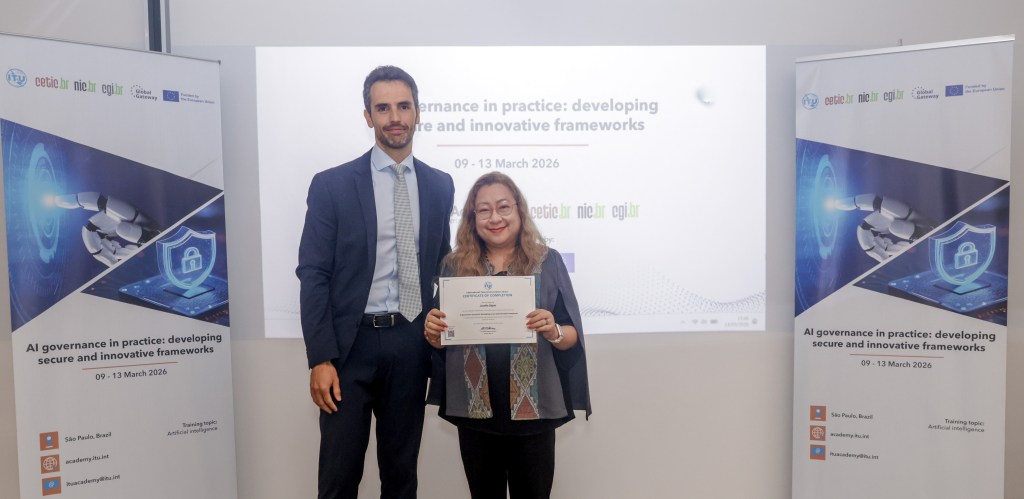

 Jocelle Batapa Sigue
Leave a comment