
Cebu, Philippines – In the vibrant startup ecosystem of Cebu, one founder’s story stands out as both pioneering and deeply purposeful. Ryan Michael Gelig, Founder and CEO of SugboDoc Technologies Inc., is building a platform that bridges healthcare and technology—proving that innovation from the provinces can have national and even global impact.
Founded in 2022, SugboDoc is a cloud-based electronic medical record (EMR) and digital health platform designed to make healthcare accessible, connected, and inclusive across clinics, hospitals, and specialized centers.
A Founder’s Journey
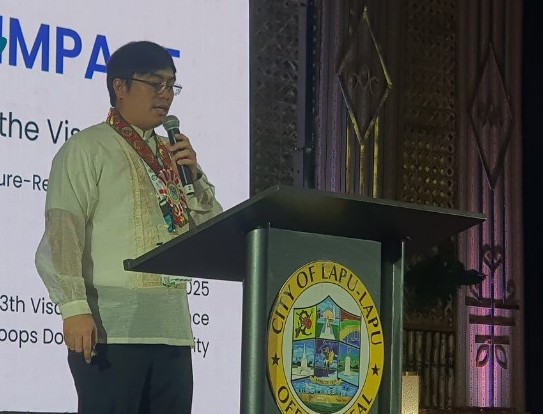
Ryan describes his leadership philosophy simply: “I always believe that collaboration is key. By working with others, we can overcome challenges and create solutions that really matter.”
Growing up, he learned to embrace adaptability. “Change doesn’t scare me—it excites me. Each new situation is a chance to grow, to innovate, to make things better.” These qualities laid the foundation for SugboDoc, which he launched not in Manila, but in Cebu—a bold choice reflecting his belief in countryside innovation.
“I want to show that the Visayas can lead in digital transformation,” he explains. “Innovation shouldn’t just come from big cities. It should start where communities need it most.”
Ryan highlights the human impact: “Every time a patient gets faster, safer care because their records are digitized, I know we’re making a difference. Every time a nurse becomes an informatics officer or a student joins our team, that’s innovation creating jobs right here in the Visayas.
“I don’t want young people to feel that success means leaving Cebu,” Ryan says. “With SugboDoc, we’re proving they can build meaningful careers right here at home.”

The Cebu Startup Spirit
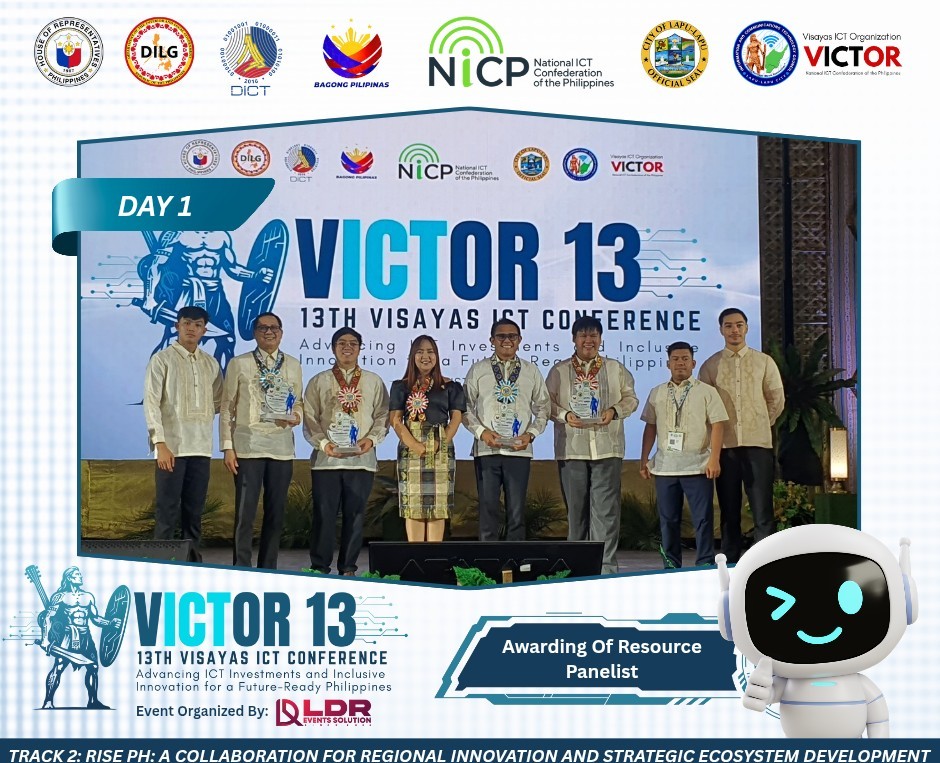
The 13th Visayas ICT Conference (VICTOR) – RISE PH Panel held at the Hoops Dome in Lapu-Lapu City, gathered innovators, ICT leaders, and entrepreneurs from across the Visayas, all united by one mission: to push the boundaries of digital transformation outside Metro Manila. Among the voices that captured the audience’s imagination was Ryan Michael Gelig, who delivered his talk, “From Islands to Impact.”
Onstage, Ryan painted an honest picture of the hurdles startups like SugboDoc face when building from the provinces. “Connectivity gaps in rural areas remain one of our toughest challenges,” he said, pointing to how limited internet infrastructure slows down hospitals and clinics eager to digitize their systems. He also underscored the reality of fragmented local government rules, where varying regulations across municipalities make scaling slower and more costly than in NCR.
Adding to the complexity, Ryan highlighted how capital remains concentrated in Metro Manila. “For many investors, the story begins and ends in NCR. But what about the rest of the Philippines?” he asked the crowd, drawing nods of recognition from fellow founders.
Perhaps most striking was his discussion on brain drain. Every year, nurses, med techs, and IT graduates leave the provinces—either for Metro Manila or abroad—seeking higher-paying opportunities. “We lose not just workers, but future innovators,” Ryan explained. “Imagine the talent we could keep here if they had meaningful, future-ready career paths in Cebu or Samar or Negros.”
And yet, amid this candid list of barriers, Ryan’s tone was never one of despair. Instead, it was a call to action. With conviction, he declared: “Every challenge is an opportunity. When we solve these issues here in Cebu, we’re not just helping one city or province—we’re creating a model that the whole Philippines can follow.”
His words resonated with the audience because they were not theoretical—they were grounded in SugboDoc’s lived experience. By developing a cloud-native, scalable platform, SugboDoc has shown that rural hospitals can leapfrog into digital healthcare systems without waiting for the same infrastructure enjoyed by NCR hospitals. By forging alliances with LGUs, academe, and hospitals, SugboDoc embodies the collaborative ecosystem Cebu has long aspired to build.
Ryan’s vision also speaks directly to the identity of Cebu as a startup hub. Over the last decade, Cebu has quietly built a culture of innovation—anchored on creative talent, tech-savvy graduates, and a strong sense of community among entrepreneurs. Unlike the hyper-competitive environment of Manila, Cebu’s startup scene thrives on collaboration, mentorship, and shared growth. Ryan’s story—and SugboDoc’s success—perfectly encapsulates this spirit.
As he concluded his talk, Ryan reminded the audience that Cebu and the Visayas don’t have to play catch-up to Metro Manila. Instead, they can carve their own path—one rooted in inclusive innovation. “Together we can scale startup innovation from Visayas to the world,” he said, his voice echoing the central theme of the conference: that the islands, once seen as periphery, can now lead the way in shaping the Philippines’ digital future.
Milestones in Building a Digital Health Future
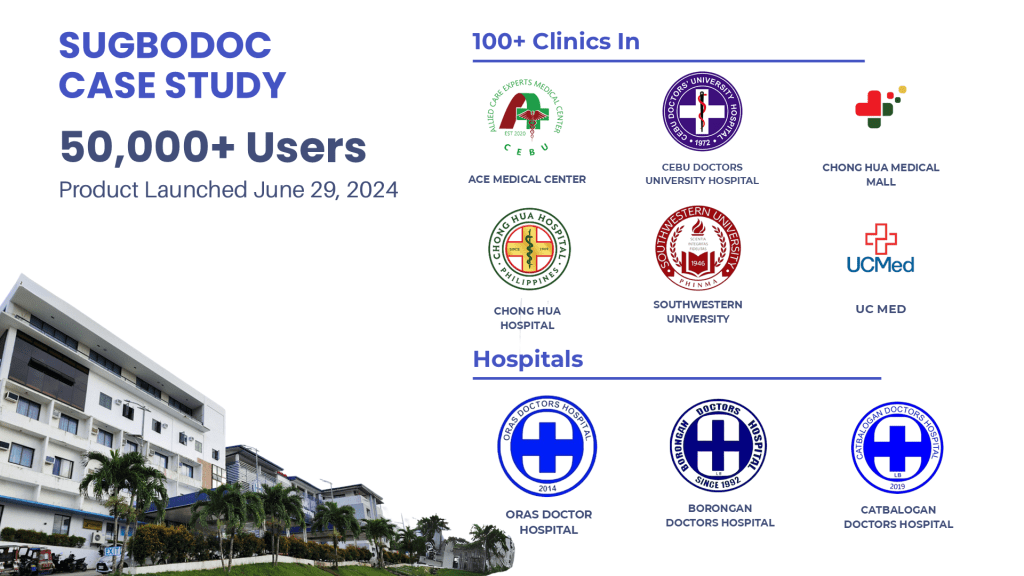
The year 2024 marked a turning point for SugboDoc with the official launch of SugboDoc eClinic, a flagship solution designed to bring digital healthcare closer to patients and providers. It wasn’t just a software release—it was a signal to the Visayas and beyond that a Cebu-born startup could build a platform rivaling those from larger, more resource-rich hubs. The eClinic empowered doctors to digitize consultations, track medical histories, and securely manage records, giving patients the chance to experience healthcare that was not only modern but truly patient-centered.
Following the launch, SugboDoc embarked on a series of hospital implementations across Eastern Visayas. Among its earliest adopters were Borongan Doctors Hospital, Catbalogan Doctors Hospital, and Oras Doctors Hospital. For these facilities—serving communities often left out of digital transformation—the shift to SugboDoc meant more than new technology. It meant doctors spending less time on paperwork and more time with patients, administrators gaining insights from real-time data, and families finally having confidence that their loved ones’ health records would follow them wherever they sought care.
SugboDoc then demonstrated its adaptability to specialized healthcare through its partnership with Dr. PAU Animal Bite Center. Here, the challenge was different: managing high-volume, urgent cases in a specialized treatment facility. By customizing its EMR platform, SugboDoc proved that its system wasn’t just for general hospitals or clinics—it could scale down and tailor-fit solutions for niche healthcare providers. It was a strong message to the ecosystem: digital innovation from Cebu can be flexible, inclusive, and highly responsive to community needs.
Today, that journey has expanded into something much larger. SugboDoc is now used by over 100 healthcare providers across the Visayas, collectively serving more than 50,000 patients. Each number tells a story: a patient whose records are now accessible in seconds, a nurse who no longer has to shuffle through mountains of paper, a young IT graduate who finds meaningful work as an EMR support specialist, and a hospital administrator who can finally see trends that help improve services.
For Ryan and his team, these milestones are not just about scaling a platform; they are about proving that innovation built in Cebu can reach—and transform—communities across the islands.
Ryan highlights the human impact: “Every time a patient gets faster, safer care because their records are digitized, I know we’re making a difference. Every time a nurse becomes an informatics officer or a student joins our team, that’s innovation creating jobs right here in the Visayas.”
Inclusive Innovation: Jobs Without Leaving Home
For Ryan Michael Gelig, the story of SugboDoc is not just about digitizing healthcare—it’s about redefining what success looks like for young professionals in the provinces.
In a country where the common path to career growth often means leaving home—whether for Metro Manila, BPO hubs, or even jobs abroad—SugboDoc is pioneering a different model: one where opportunities are created right where people live.
“I don’t want young people to feel that success means leaving Cebu,” Ryan explains. “With SugboDoc, we’re proving they can build meaningful careers right here at home.”
This philosophy has shaped how SugboDoc builds its teams and supports healthcare facilities. Instead of pulling talent away from communities, it creates new, future-ready roles that allow people to stay, grow, and thrive locally.
In hospitals where SugboDoc is implemented, nurses and medical technologists—long accustomed to traditional bedside care and manual paperwork—are being trained and empowered as health informatics officers and telehealth coordinators. These new roles keep them at the heart of patient care while giving them digital skills that future-proof their careers. “Every time a nurse becomes an informatics officer, we’re not just modernizing healthcare—we’re showing that Visayan talent can lead in digital health,” Ryan shares.
Meanwhile, local IT graduates who might once have considered BPO jobs as their only entry point to the tech industry are finding themselves in more specialized and impactful roles. SugboDoc trains them as EMR specialists, data analysts, and digital support officers—positions that not only use their technical skills but also allow them to directly improve the healthcare experiences of thousands of patients.
Even students are included in this cycle of inclusive innovation. Through internships with SugboDoc, they gain real startup exposure, learning to solve problems, adapt to client needs, and work within an agile team. Unlike traditional internship tracks, which often focus on call center shadowing or clerical work, SugboDoc offers them a chance to be part of a live project that impacts communities.
The result is a new kind of countryside digital economy, one where digital healthcare not only improves patient outcomes but also becomes a driver of job creation and talent retention in the Visayas.
This inclusive model is a deliberate break from the narrative that the best and brightest must migrate for better opportunities. In SugboDoc’s story, success means being able to stay—close to family, community, and culture—while still building a career at the cutting edge of technology and healthcare innovation.
For Ryan, this is the real impact: “Every patient we serve matters, but so does every job we create. Because when talent stays in Cebu, in Samar, in Negros—that’s when we start seeing innovation grow roots in our own soil.”
A Global Vision
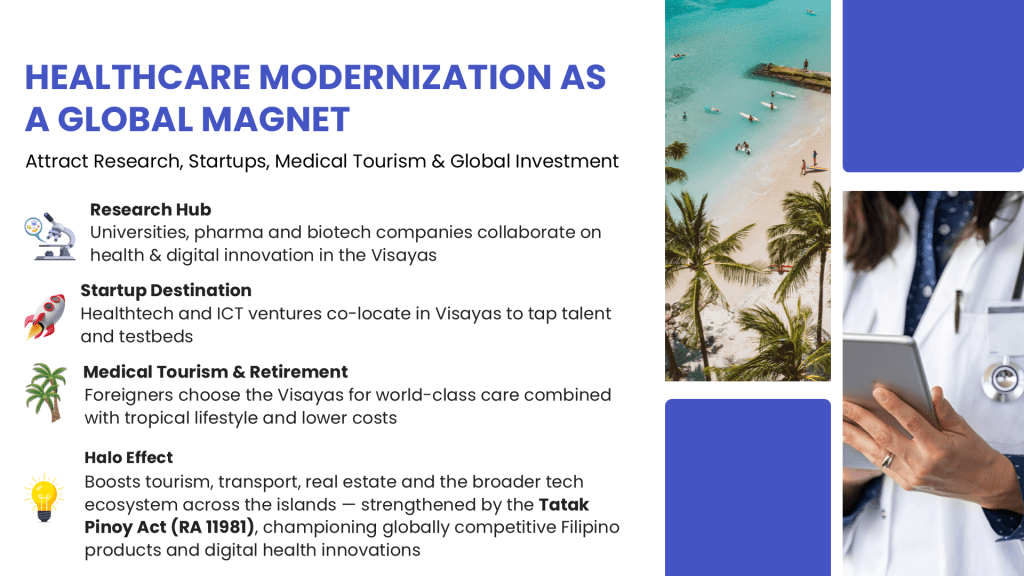
For Ryan Michael Gelig, SugboDoc is not just about solving today’s healthcare problems—it is about building a future where the Visayas can stand as a global leader in digital health and innovation. His vision goes far beyond the confines of a single startup; it is about transforming the region into a hub that attracts talent, investment, and opportunities from around the world.
“The Visayas has everything it needs to lead,” Ryan explains. “We have talented professionals, dynamic universities, strong medical institutions, and communities that are ready to embrace change. What we need is to harness all of these and create an ecosystem that is connected, inclusive, and globally competitive.”
In Ryan’s vision, the Visayas becomes a research hub—a place where universities, pharmaceutical companies, and biotech innovators collaborate on digital health breakthroughs. Instead of local talent leaving to join labs abroad, they could work on cutting-edge projects right at home, tackling global health challenges while keeping their roots in the islands.
It also becomes a startup destination, where healthtech ventures and ICT companies see Cebu and the broader Visayas as the ideal testbed for new ideas. “If you can prove a healthcare solution works in our islands—with all the challenges of connectivity, diverse regulations, and dispersed communities—you can prove it works anywhere in the world,” Ryan says. By co-locating in Cebu, startups gain access not just to tech talent but also to healthcare practitioners eager to innovate.
Perhaps most ambitiously, Ryan sees the Visayas evolving into a medical tourism and retirement hub. With world-class care delivered at competitive costs, combined with the region’s tropical beauty and hospitality, the Visayas can position itself as an attractive destination for foreign patients seeking treatment and retirees looking for long-term healthcare support. This, in turn, creates ripple effects across tourism, transport, real estate, and the broader innovation economy.
Underlying this vision is a deep belief in inclusivity. “The goal is not just to bring the world to the Visayas,” Ryan emphasizes. “It’s to make sure that the communities here benefit first—through jobs, education, and better healthcare access.”
His closing words at Victor2025 captured this ambition: “Together, we can scale startup innovation from the Visayas to the world.” For Ryan, this is not just a slogan but a roadmap: a future where Cebu and the islands become not just participants in global digital transformation, but leaders shaping its direction.
Conclusion
Ryan Michael Gelig’s journey with SugboDoc is more than a startup success—it is a pioneering model of how Cebu’s startup ecosystem can transform healthcare, create jobs, and inspire the country.
SugboDoc proves that innovation from the provinces is not only possible but powerful. And in the words of Ryan himself: “Every patient we serve, every hospital we digitize, every job we create—that’s the Visayas making an impact on the Philippines, and soon, the world.”
POST SCRIPT AS JOCELLE BATAPA-SIGUE
Why This Matters for Cebu and the Philippines
As someone who has spent decades advocating for countryside innovation and inclusive digital transformation, I see SugboDoc as a powerful and tangible proof of what we have always been fighting for: that innovation does not need to be confined to Metro Manila—it can be born, nurtured, and scaled right here in the Visayas.
SugboDoc is more than just a healthtech startup. It is a living example of the future we envision for Cebu and the Philippines—where technology is not an exclusive privilege of big cities, but a shared tool for progress across islands and communities. It embodies the essence of countryside development: bringing opportunities, jobs, and innovation closer to where people actually live.
This is why its story aligns so strongly with the principles of our landmark laws:
The Philippine Innovation Act (RA 11293), which empowers the National Innovation Council to support and fund initiatives like SugboDoc that drive inclusive, region-based innovation.
The Universal Health Care Act (RA 11223), which ensures that every Filipino has the right to accessible, affordable, and quality healthcare—a mission SugboDoc operationalizes by digitizing provincial hospitals and clinics.
The Tatak Pinoy Act (RA 11981), which champions globally competitive Filipino solutions, of which SugboDoc is a shining example: a homegrown digital health platform designed for local realities but with global potential.
When I invited Ryan to speak at Victor2025 – the 13th Visayas ICT Conference, it was because I knew his story had the power to inspire not just fellow founders, but policymakers, students, and industry leaders. His journey is a testament to the resilience and creativity of our people in the Visayas. It proves that innovation rooted in community can create opportunities for all—whether by modernizing healthcare, generating ICT jobs, or positioning Cebu as a hub for digital health.
As I have often emphasized, “Cebu is not just a consumer of innovation—it can and should be a producer.” SugboDoc validates this vision. It shows that from the Visayas, we can build solutions that not only address local challenges but also resonate across the country and capture attention on the global stage.
For me, supporting startups like SugboDoc is not only about cheering on their success—it is about cementing Cebu’s role in the national innovation agenda. It is about proving that inclusive digital innovation can lift up entire regions, transform industries, and give every Filipino—whether patient, nurse, or young tech graduate—the chance to be part of a future-ready nation.


 Jocelle Batapa Sigue
Leave a comment