
Artificial Intelligence (AI) is no longer a distant promise—it is shaping our lives today. From medical diagnostics to personalized learning, from disaster prediction to business competitiveness, AI has become a transformative force across the globe. Yet, the most profound transformations are still ahead. For the Philippines, this moment offers both opportunity and responsibility: to harness AI for inclusive growth while ensuring it reflects our values of fairness, empathy, and human dignity.
Under the leadership of former Department of Information and Communications Technology (DICT) Secretary Ivan John Uy and Undersecretary Jocelle Batapa-Sigue, the Philippines did its very best to ensure that the Philippines had a strong, credible, and active voice in global and national discussions on Artificial Intelligence. Together, we worked tirelessly to put the Philippines on the map as an advocate for responsible, ethical, and inclusive AI. From shaping domestic policies to contributing to international frameworks, our shared mission was clear: to champion a future where AI empowers people, strengthens industries, and uplifts communities.

Breakthroughs in Technology
The AI revolution is driven not only by software advances but also by innovations in hardware. Graphics Processing Units (GPUs), once designed for video games, now train the deep learning models powering modern AI. Specialized chips, such as Google’s Tensor Processing Units (TPUs), have reduced training times from weeks to mere hours. On the horizon, neuromorphic chips, modeled after the human brain, promise ultra-efficient computing. Meanwhile, quantum computing holds the potential to revolutionize fields like climate modeling and drug discovery—areas vital to our national interest.
For the Philippines, these breakthroughs translate into concrete possibilities: Agriculture can benefit through precision farming powered by AI, helping farmers adapt to climate change, increase yields, and secure food supply chains. In healthcare, AI-driven diagnostics could extend life-saving tools to rural communities. In education, personalized learning platforms could deliver quality education to every Filipino child, whether in Manila or in far-flung barangays. Meanwhile, enterprises, particularly micro, small, and medium enterprises (MSMEs), could leverage AI tools to compete globally.


Responsibility and Ethics in AI
As AI grows more powerful, it raises profound questions. How do we protect privacy in a data-driven economy? How do we ensure algorithms do not perpetuate biases? How do we prepare workers for jobs that AI will transform—or replace? These questions strike at the heart of our values. For AI to be trusted, it must be transparent, fair, and accountable. Explainable AI, where systems can “show their work,” is essential, especially in critical areas like healthcare, justice, and finance.
The answer lies in preparing our people, especially the youth, to thrive in an AI-powered economy. Beyond coding and data skills, we must cultivate creativity, empathy, adaptability, and critical thinking. Digital transformation must also be inclusive—ensuring women, rural communities, and marginalized groups are empowered to lead in the AI-driven future.

Building AI Through Global Partnerships
The Philippines cannot—and should not—navigate this journey alone. AI is a global challenge that demands global solutions. That is why we have engaged actively in international conversations on AI governance and safety.
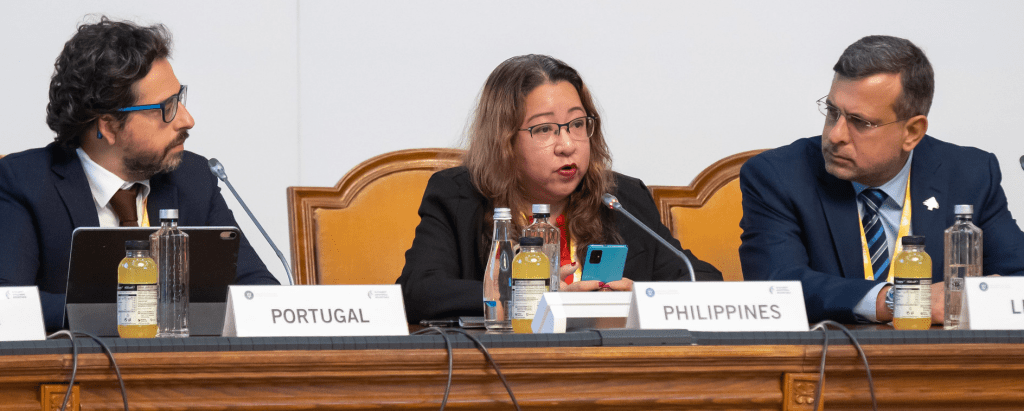
We contributed to the International AI Safety Report (2025), where Philippine perspectives joined 30 nations, the UN, EU, and OECD in shaping the first global scientific consensus on advanced AI risks. We took part in the AI Global Summit series—from Bletchley Park in the UK (2023), to Seoul (2024), and finally Paris (2025)—helping define the contours of global AI safety frameworks. We engaged in the Hiroshima Process, launched by the G7, to emphasize human-centric, transparent, and accountable AI development.
In our region, we helped shape the ASEAN Joint Guide on AI Governance and Ethics, promoting interoperability of standards and responsible AI practices across Southeast Asia. At the ASEAN Digital Ministers Meeting in Bangkok, we endorsed frameworks under the ASEAN-ITU Priority Cooperation Areas (2024–2026), strengthening regional digital governance and AI cooperation.
Through collaborations with partners like the Tony Blair Institute for Global Change and the Alan Turing Institute, we advanced capacity-building and knowledge exchange programs, enabling the Philippines to align with international best practices. These partnerships ensured that our AI governance is globally relevant while remaining locally grounded.
National Initiatives in AI Policy and Governance
Domestically, we have taken significant steps to build the foundations of AI governance. Under the leadership of former DICT Secretary Ivan John Uy, we:
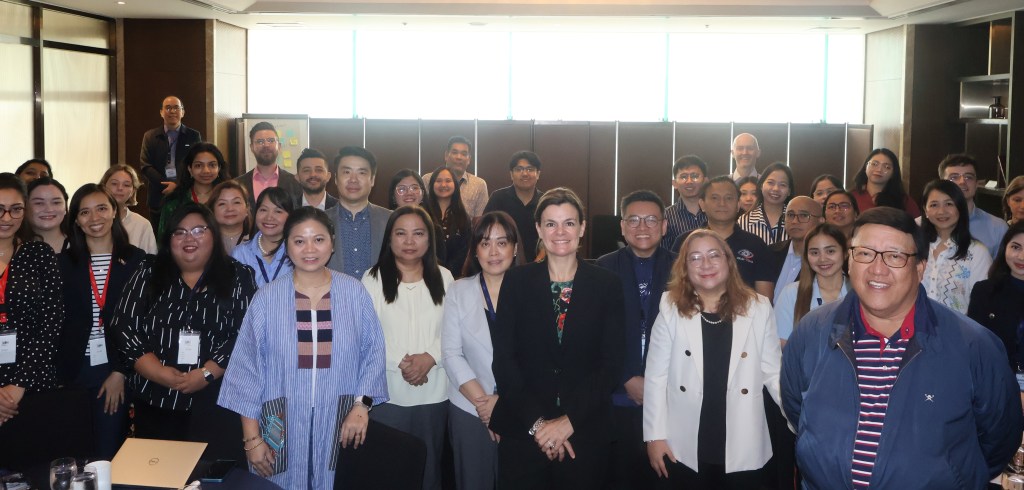
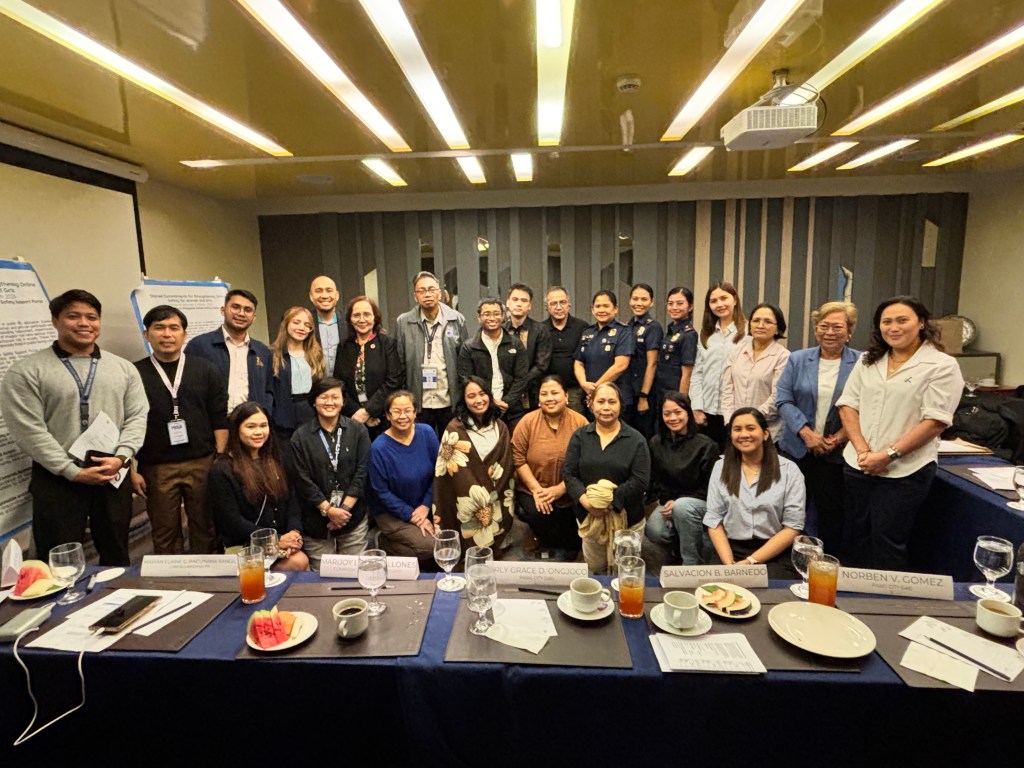
- Convened the first multi-sectoral AI Governance Policy and Strategy Meeting (April 2025), bringing together 43 representatives from government, academia, industry, and civil society.
- Initiated the AI Governance Knowledge and Capacity-Building Program with the Alan Turing Institute and the British Embassy, strengthening expertise on ethics, risk management, and regulatory frameworks.
- Partnered with various private sector organizations in discussions on AI Governance such as the Analytics and AI Association of the Philippines (AAP) and the IT Business Process Association of the Philippines (IBPAP), among others
- Advocated for the creation of the National Innovation Council’s Committee on AI (March 2025), uniting agencies such as NEDA, DOST, DTI, DOLE, DepEd, CHED, TESDA, DAP, and private sector representatives to coordinate national AI strategy.
- Introduced the EUREKA Framework, anchoring our vision on six pillars: Empowerment of human capital, Universal access to infrastructure, Responsible use, Ethical innovation, Knowledge-driven culture, and Agile governance.
- Engaged with Congress to influence AI-related bills (AI Development and Regulation Act, multiple House Bills and Resolutions), asserting the Philippines’ commitment to responsible innovation.
- Developed a roadmap for AI governance that includes sectoral working groups, a draft AI Governance Policy Framework, and pilot-testing domain-specific governance guidelines by the end of 2025.
These steps positioned the Philippines as one of the first in Southeast Asia to institutionalize AI governance at both the policy and strategy levels.
Summary of International Participation
International AI Safety Report (2025) – The Philippines was represented in the International Scientific Report on the Safety of Advanced AI, alongside 30 other countries, the UN, EU, and OECD. Dominic Vincent Ligot of CirroLytix was recognized as a contributor, ensuring that Philippine perspectives on AI safety were included in the global scientific dialogue.

AI Global Summits (Bletchley, Seoul, Paris) – The Philippines engaged in the series of global AI summits:
- Bletchley Park AI Safety Summit (2023), which initiated the commitment to a shared global AI safety framework.
- AI Seoul Summit (2024), where the interim AI Safety Report was presented.
- AI Action Summit in Paris (2025), where the final International AI Safety Report was launched.
Hiroshima Process (2023 G7 Initiative) – The Philippines, though not a G7 member, participated in dialogues aligned with the Hiroshima AI Process, which focused on governance for generative AI, transparency, accountability, and human-centric AI development.
ASEAN Joint Guide on AI Governance and Ethics – Through ASEAN cooperation, the Philippines helped shape a regional guide for trustworthy and responsible AI, ensuring interoperability of ethical standards across Southeast Asia.
ASEAN Digital Ministers (ADGMIN) 2025 – Bangkok – The Philippines joined ASEAN counterparts in endorsing the ASEAN Digital Government Technical Framework under the ASEAN-ITU Priority Cooperation Areas (2024–2026), strengthening AI and digital governance cooperation.
AI Standards Hub and Global Governance Dialogues – The Philippines also contributed to international discussions on AI standards and governance frameworks through platforms such as the AI Standards Hub Global Summit, which fosters alignment across jurisdictions.
AI for Good Global Summit – We also represented the country in the AI for Good Global Summit organized by the International Telecommunication Union (ITU), a premier platform aligning AI innovation with the UN Sustainable Development Goals. Our participation highlighted the Philippines’ commitment to ensuring that AI is developed and deployed to accelerate progress on health, climate, education, and inclusive economic growth.
We ensured that the Philippines had a seat at the table in shaping the global governance of AI—from the International AI Safety Report and the AI Global Summits to the Hiroshima Process, ASEAN’s Joint Guide on AI Governance, and the ASEAN Digital Ministers Framework. These contributions anchored the Philippines as an active participant in global and regional AI policymaking, ensuring that our local priorities are represented in the international AI safety, ethics, and governance agenda.

National Initiatives in AI Policy and Governance
Laying the Foundation for National AI Governance: We convened the first multi-sectoral AI Governance Policy and Strategy Development Meeting (April 10, 2025). This brought together 43 representatives from government agencies, academia, the private sector, and international partners to align AI efforts across the Philippines.
Integration of AI into the National Policy Framework: Responding to Presidential Directive No. PBBM-2025-1392-1393, we initiated planning for a cohesive national AI program aligned with the Philippine Development Plan 2023–2028 and the National Innovation Agenda 2023–2032. We led discussions that emphasized a whole-of-government, whole-of-society approach to AI—ensuring AI governance balances innovation with regulation, public trust, and inclusivity.
Creation of the National Innovation Council’s AI Committee: With strong support from DICT under Secretary Ivan John Uy , the National Innovation Council (NIC) approved the establishment of a Committee on Artificial Intelligence (March 2025).This high-level body now includes NEDA, DICT, DOST, DTI, DOLE, DepEd, CHED, TESDA, DAP, and private sector representatives to coordinate AI strategy across sectors.
Introduction of the EUREKA Framework for Responsible AI: We spearheaded the EUREKA Framework, which became the guiding policy principle for inclusive and ethical AI in the Philippines. It is built on six pillars: Empowerment, Universal access, Responsible use, Ethical innovation, Knowledge culture, Agile governance.
Policy Advocacy and Legislative Engagement: Together, DICT actively shaped legislative discussions by submitting formal positions on pending AI-related bills in Congress (AI Development and Regulation Act, multiple House Bills and Resolutions). We office asserted DICT’s role as the lead agency for AI policy, ensuring AI development is aligned with national priorities, ethical standards, and global best practices.
Strategic Global Partnerships: We engaged with the Tony Blair Institute for Global Change (2024–2025) to align Philippine AI strategies with international best practices, and ensure workforce preparedness amid digital disruption. These partnerships reinforced the Philippines’ commitment to responsible AI governance while opening pathways for global collaboration, capacity building, and knowledge sharing.
Concrete Next Steps for AI Governance: Prior to Jocelle Batapa-Sigue’s resignation from the DICT, she submitted a phased roadmap to the new DICT administration which was agreed upon by stakeholders on April 10, 2025:
- Formation of AI Governance Working Groups (Q2 2025) by sector and cross-sector themes.
- Drafting of the AI Governance Policy Framework (mid-2025) consolidating national insights with global standards.
- Pilot-testing domain-specific governance guidelines (Q4 2025) with selected agencies and partners.
- Continuous capacity building and international knowledge exchanges to keep Philippine AI governance globally relevant.
We positioned the Philippines at the forefront of AI governance in Southeast Asia by institutionalizing EUREKA, creating the NIC-AI Committee, aligning with global best practices, and laying down a roadmap for ethical, inclusive, and future-proof AI policies.
The EUREKA Framework

As we imagine an AI-powered future for our nation, we must remember that technology alone will not carry us there. What we need is a guiding framework—one that ensures our innovation ecosystems are both future-ready and people-centered.
- Empowerment of human capital: because people are at the heart of AI transformation. We must invest in education, digital literacy, and lifelong learning so that every Filipino is prepared to thrive in an AI-driven economy.
- Universal access and infrastructure: because opportunity must not depend on geography. From cities to far-flung barangays, every community must be connected to reliable digital networks.
- Responsible design and use of ICTs: because progress without responsibility risks deepening inequities and eroding trust. Our innovations must always respect rights, privacy, and dignity.
- Ethical innovation: because we cannot pursue growth at the expense of fairness or justice. AI must be transparent, inclusive, and accountable.
- Knowledge culture: because in the age of data, decisions must be informed by evidence, but always guided by human wisdom and compassion.
- Agile governance and policies: because the pace of technology demands policies that adapt quickly while safeguarding the public interest.
Together, these six principles form the backbone of AI-ready ecosystems—ecosystems that connect cities and communities, digital infrastructure and digital innovation, into a coherent force for national transformation.
EUREKA reminds us that while AI may be powered by machines, its true purpose is to empower people. It ensures that as we design and develop our innovation ecosystems, we are not only building smarter technologies but also creating a smarter, more inclusive, and more humane society.
The Human-AI Partnership
The rise of AI is not simply a technological revolution—it is a societal shift. AI can amplify human strengths but cannot replace imagination, compassion, or moral judgment. The Philippine story of AI must not be about machines surpassing people, but about people harnessing machines to uplift communities, empower innovation, and build resilience.
This requires balance: between automation and human intervention, between efficiency and empathy, between global standards and local values. AI must serve humanity, not the other way around.
Aligning the Philippines with the UN Framework on AI Governance
Context
In August 2025, the United Nations General Assembly adopted Resolution A/79/L.118, establishing two key mechanisms to govern artificial intelligence (AI): (1) the Independent International Scientific Panel on Artificial Intelligence and (2) the Global Dialogue on Artificial Intelligence Governance. These mechanisms form part of the Global Digital Compact and provide a multilateral, evidence-based, and inclusive approach to AI governance.
For the Philippines, a champion of digital inclusion, countryside innovation, and ethical AI adoption, this resolution presents an opportunity to shape global governance while advancing national digital transformation goals.
Key Elements of the UN Framework
- Independent International Scientific Panel on AI
- A multidisciplinary body of 40 experts serving in personal capacity, ensuring global geographic balance.
- Issues annual scientific assessments on AI opportunities, risks, and impacts, with policy-relevant but non-prescriptive recommendations.
- Emphasizes transparency, inclusivity, and alignment with international law and human rights.
- Global Dialogue on AI Governance
- A UN-led multi-stakeholder platform engaging governments, industry, academia, and civil society.
- Convenes annually, alternating between Geneva and New York, with sessions linked to events like the ITU AI for Good Summit and UN STI Forum.
- Focus areas: AI ethics, safety, human rights, bridging digital divides, and promoting open-source and inclusive AI.
Strategic Implications for the Philippines
- Global Positioning
- Opportunity for DICT and the National Innovation Council (NIC) to serve as regional voices in AI governance, particularly on issues of inclusion and MSME empowerment.
- Leverage the Philippines’ history of ICT policy innovation and digital jobs generation to shape dialogue on equitable AI adoption.
- Capacity Building & Countryside Innovation
- Secure international support for AI infrastructure, skills training, and high-performance computing access to benefit local startups and countryside industries.
- Align with initiatives like AI for All: Building an AI-Ready Workforce in Asia-Pacific to scale skills development.
- Ethics & Human Rights Leadership
- Promote a rights-based approach to AI adoption consistent with constitutional guarantees and global best practices.
- Champion AI as a tool for social good—healthcare, education, governance, and disaster resilience.
- Economic Opportunities
- By 2030, AI could contribute US$1 trillion to Southeast Asia’s GDP, with the Philippines capturing significant gains if MSMEs and startups are AI-enabled.
- Position Philippine talent and digital services to supply global AI-driven value chains.
Recommendations
- Establish a Philippine AI Governance Task Force to harmonize national AI policy with the UN framework, ensuring a whole-of-government and multi-stakeholder approach.
- Nominate Filipino experts to the Independent Scientific Panel on AI to amplify Philippine perspectives in global assessments.
- Host a Regional Dialogue on Inclusive AI Governance in partnership with ASEAN and ITU to highlight the Philippines as a hub for ethical and inclusive AI.
- Develop a National AI Capacity Building Roadmap, focusing on workforce upskilling, MSME enablement, and countryside innovation.
- Institutionalize AI Ethics Guidelines that align with UN human rights standards, ensuring transparency, accountability, and trust in AI adoption.
The UN resolution on AI governance provides a timely and strategic platform for the Philippines to advance its vision of digital inclusion and countryside innovation. By actively engaging with these mechanisms, the country can safeguard national interests, promote ethical AI, and secure its role as a regional leader in shaping the future of trustworthy, inclusive artificial intelligence.




Looking Forward
The future of AI is a story still being written. The authors are not algorithms—it is us, the Filipino people. Through the choices we make today about education, ethics, innovation, and collaboration, we will determine whether this era becomes one of exclusion or one of shared prosperity.
By engaging with global partners, shaping regional frameworks, and building our domestic AI governance structures, the Philippines has shown that it is ready to lead—not only as a participant in the AI age, but as a shaper of a human-centered AI future.
Let us choose wisely. Let us choose inclusively. Let us make AI a force for the greater good of every Filipino—and a beacon of collaboration for the world.
This long-form narrative captures our journey—both at home and abroad—in shaping AI governance for a future that is not only smarter, but also more humane, inclusive, and truly Filipino.



 Jocelle Batapa Sigue
Leave a comment