My ten-point legislative wish-list reflects a transformative vision for the Philippines—anchored in inclusive innovation, ethical technology, regional development, and youth empowerment. These policy proposals aim to build a resilient, future-ready nation that empowers every Filipino, regardless of geography or background, to thrive in the digital age. Central to this agenda is the full participation of women and girls in science, technology, and innovation—recognizing their vital role in driving national growth and ensuring that no one is left behind in the Fourth Industrial Revolution. These bills prioritize collaboration between sectors and regions to build a strong, diverse, and empowered society equipped to lead in a world of constant change.
1. National AI Governance and Strategy Policy
This bill seeks to institutionalize a national framework for the governance, development, and deployment of artificial intelligence (AI) in the Philippines. It will ensure that AI technologies are ethically designed, transparently implemented, and inclusively beneficial to all sectors—protecting Filipino rights while enabling innovation. While there are many AI-focused proposals on principles like transparency, accountability, and citizen AI rights which have been introduced in Congress, there is no enacted law providing a comprehensive framework for AI governance, making this proposal a timely and necessary move to guide responsible AI adoption.
I am deeply committed to ensuring that emerging technologies like artificial intelligence serve all Filipinos, not just a privileged few. This bill reflects my dedication to ethical and inclusive innovation. It will institutionalize a national framework to guide AI governance, ensuring that AI is safe, transparent, and aligned with human dignity. Although there are many proposals, none provide a comprehensive, future-proof strategy, which is why I consider this a foundational policy.
MORE READS:
Shaping the Future Responsibly: A Proposed AI Governance Policy and Strategy for the Philippines
International AI Safety Report 2025 – A Global Call for Responsible AI Governance
2. Quality Apprenticeship for Industry Competitiveness
This policy mandates the institutionalization of structured, meaningful apprenticeship programs across all industries, especially in digital and high-growth sectors. This bill would modernize and align apprenticeship systems with industry needs, nurturing a job-ready, competitive workforce for the future. The Philippines has existing laws which establish apprenticeship systems and councils. There are also labor standards protecting apprentices. While existing laws provide a foundation for apprenticeship programs, they remain outdated and insufficiently responsive to the evolving demands of the digital age. These legal frameworks were established prior to the rise of digital transformation and lack specific mandates to address the skills gaps in ICT and emerging technologies. To ensure relevance and impact, there is an urgent need to modernize apprenticeship policies by integrating competencies in artificial intelligence (AI), the Internet of Things (IoT), blockchain, and other frontier technologies—thereby aligning talent development with industry 4.0 and beyond.
In my work across industries and regions, I have witnessed how young people struggle to bridge the gap between education and employment. This bill addresses that disconnect by creating meaningful apprenticeship pathways tied to real industry needs, especially in high-growth sectors like digital and technology. Modernizing our apprenticeship system is critical to cultivating a workforce that is both competitive and inclusive.
3. Research and Innovation Fund (3% R&D Budget Mandate)
This bill mandates the allocation of at least three percent of the annual national budget to research, development, and innovation initiatives. While the Philippine Innovation Act (RA 11293) established a strategic approach, no current law guarantees a dedicated budget threshold for R&D. Current R&D spending hovers around 0.3–0.4 percent of GDP, below UNESCO’s two percent benchmark. It is guided by the Philippine Development Plan and RA 11293 (Philippine Innovation Act), but the latter does not automatically guarantee a fixed R&D budget allocation. Critically, this proposal also mandates inclusive access to funding—especially prioritizing programs that empower women and girls in ICT and innovation. Inclusive innovation is a national competitiveness imperative that must be backed by consistent investment.
Innovation must be backed by investment. I strongly believe that the Philippines cannot compete globally without consistently allocating funds for research and development. This bill ensures we reach at least 3% of the national budget for R&D—focused not just on science and tech but also innovation across industries. Critically, I champion this bill to ensure funding mechanisms prioritize women and girls in ICT and rural innovators, addressing both gender and regional disparities in innovation.
4. Regional Senate Representation
This bill introduces reforms to ensure that every region in the Philippines is represented in the Senate, either by mandating one senator per region or allowing up to two from each. No existing law mandates regional representation in the Senate. Under the current framework of the Philippine Constitution, senators are elected at-large by the entire national electorate, which often results in the overrepresentation of more populous and urbanized areas, particularly Metro Manila. As such, there is no present legislative mechanism ensuring guaranteed district-based or region-specific representation in the upper chamber of Congress. This proposed bill challenges a deeply entrenched system and therefore must be approached with careful sensitivity and broad-based consultation. It may necessitate constitutional amendments or legal reinterpretations to move forward effectively. However, its potential to decentralize legislative power and ensure more equitable development across regions makes it a bold and transformative intervention. It is a valid and important discussion to initiate if the goal is a more balanced and inclusive national governance structure.
Having worked extensively in the regions, I have seen how policies often reflect the priorities of urban centers. This bill proposes a bold but necessary shift—ensuring that every region is directly represented in the Senate. Although this would require constitutional reform, it is a crucial conversation to start. Real equity demands that legislative power is distributed, not centralized. I support this as a strategic intervention to uplift regional voices in national policymaking.
5. Equitable Executive Representation
This measure mandates that cabinet secretaries and undersecretaries are appointed from various regions, ensuring diversity and inclusive representation in the national government. There is no legal requirement today for regional diversity in national executive appointments. There is no law requiring cabinet secretaries or undersecretaries to come from diverse regions. Current appointment practices are discretionary and lack legally mandated regional quotas. This law will reflect the full spectrum of Filipino identity and bring regional insight and balance to national governance.
I firmly believe that our national leadership must reflect the full diversity of the Philippines. This bill mandates that cabinet and sub-cabinet appointments be regionally inclusive. As someone who has served in national government, I understand how critical it is to include regional perspectives in executive decisions. This policy ensures no region is left unseen or unheard in governance especially in major policy decisions.
6. Amendatory Bills to Strengthen Startup and Digital Workforce Laws
This bill strengthens the implementation of RA 11337 (Innovative Startup Act) and RA 11650 (Digital Workforce Competitiveness Act) by mandating regional rollout mechanisms, innovation hubs, and capacity-building programs nationwide. While the laws exist, implementation remains uneven. This amendment ensures their benefits are felt at the grassroots, generating jobs and fostering innovation in the countryside.
As one of the earliest champions of digital jobs and innovation hubs in the countryside, I have long supported the Startup Innovation Act and Digital Workforce Competitiveness Act. However, their implementation has been uneven. This will guarantee regional rollout of support mechanisms, allowing innovation and digital training to truly reach the grassroots.
7. Impact Investment Promotion and Framework
This policy institutionalizes a professionalized impact investing framework in the Philippines, allowing private capital to be directed toward socially impactful initiatives aligned with national development goals. Although the Philippine Innovation Act promotes innovation funding, there is no dedicated framework that supports impact investing as a tool for public mission delivery. This bill would fill that gap and unlock private sector participation in inclusive development. While RA 11293 (Philippine Innovation Act) and the National Innovation Council (NIC) oversee innovation financing, there is no dedicated legal framework for impact investing that channels private capital toward mission‑oriented public goals. Your bill would fill this legal gap.
My advocacy includes enabling the private sector to become a real partner in public service. This bill creates a structured framework for impact investing, allowing business to contribute meaningfully to social development. It’s about aligning capital with compassion—leveraging finance for inclusive, measurable outcomes. I support this to open up sustainable funding streams for local innovators, social enterprises, and public-good technologies.
My fellowship with the Asian Venture Philanthropy Network (AVPN) in 2018 as a Policy Leadership Fellow suggests her engagement with the broader ecosystem of social investment and impact-driven policy.
8. National Innovation Parks Development
This measure establishes government-supported science and technology parks in every region—designed to function as local innovation districts. These innovation parks will attract startups, R&D institutions, investors, and academic partners, creating ecosystems similar to Silicon Valley to stimulate regional tech development and retain local talent. A Senate Bill during the Eighteenth Congress and other proposals seek to establish guidelines and incentives for Science and Technology Parks nationwide – but as of now, they remain pending legislation, and no law is in force yet.
Regional innovation must be anchored in place-based ecosystems. That’s why I support this bill to create science and technology parks in every region. These hubs will attract talent, stimulate R&D, and retain local innovators. Having worked on countryside innovation programs, I see this as essential to decentralizing tech growth and replicating Silicon Valley-like ecosystems across the country.
9. Regional Industry Clustering for High-End Product Innovation
This policy formalizes a national strategy to identify and cluster regions based on their unique industrial and technological strengths. While the Philippine Innovation Council promotes innovation, there is no specific clustering framework to support high-value, globally competitive product development at the regional level. This bill would position the Philippines as a key contributor to the global tech economy by harnessing each region’s unique strengths and aligning national and regional programs to support high-value, innovation-driven development. It serves as a crucial policy intervention to drive regional growth, enabling local industries to scale globally while fostering inclusive and sustainable economic progress.
This bill embodies my belief that every region in the Philippines has a niche to contribute to the global economy. By clustering industries and aligning regional strengths with national strategies, we foster competitiveness beyond local markets. It’s a bold step to transform regional economies from raw product producers into innovation leaders. As someone dedicated to countryside advancement, I see this as a very important policy intervention to drive regional growth.
10. National Filipino Youth Leadership Academy
This bill establishes a National Youth Leadership Academy or Innovation Institute for Sangguniang Kabataan leaders. While Republic Act No. 10742 (Sangguniang Kabataan Reform Act of 2015), as amended, legislates youth engagement and mandates leadership development through the National Youth Commission (NYC), there remains a structural gap in the country’s approach to cultivating future-ready, innovation-driven young leaders. There is no law supporting a structured, innovation-focused national academy. This proposal cultivates a new generation of public servants grounded in innovation, digital resilience, and service-driven leadership—equipping them to lead with vision in the twenty-first century.
This proposal calls for the creation of a national Institute for innovation-oriented youth leadership—a state-backed institution mandated to deliver strategic, future-focused training and experiential learning programs designed to equip Filipino youth with the skills, mindset, and cross-sectoral exposure needed to drive inclusive innovation and societal transformation. The Institute shall operate with national scope and local reach, integrating policy, technology, sustainable development, and systems thinking to complement existing SK and LYDC programs.
Young leaders are the future of the nation. I have always believed in structured, values-driven leadership development. This bill establishes a national academy specifically for SK leaders, embedding innovation, resilience, ethics, and digital leadership into their training. It ensures that the next generation of public servants is ready to lead in a complex, fast-evolving world.
Several of these legislative proposals directly address critical legal gaps—particularly in areas such as budget mandates for research and innovation, equitable regional representation, the development of innovation parks, impact investing, regional industry clustering, and the creation of a youth leadership academy. While current laws do support aspects like apprenticeships, youth governance, innovation funding, and science and technology development, many remain broad and lack enforceable, targeted mechanisms. These proposals seek to embed regional inclusion, digital transformation, and gender equity at the core of national policy—ensuring that no Filipino is left behind in our journey toward an inclusive digital future.
As an advocate for digital inclusion, ethical innovation, and countryside development, my vision has always been rooted in empowering every Filipino—especially those in underserved regions—to thrive in the digital age. These ten legislative proposals represent the policy embodiment of that advocacy. They aim to decentralize opportunity, promote inclusive governance, invest in our youth, and harness emerging technologies like AI for the public good. Grounded in the principles of integrity, innovation, and resilience, this legislative agenda is a call to action for the 20th Congress to lay down the foundations of an inclusive, future-ready Philippines—where no one is left behind in the journey toward digital nation-building.


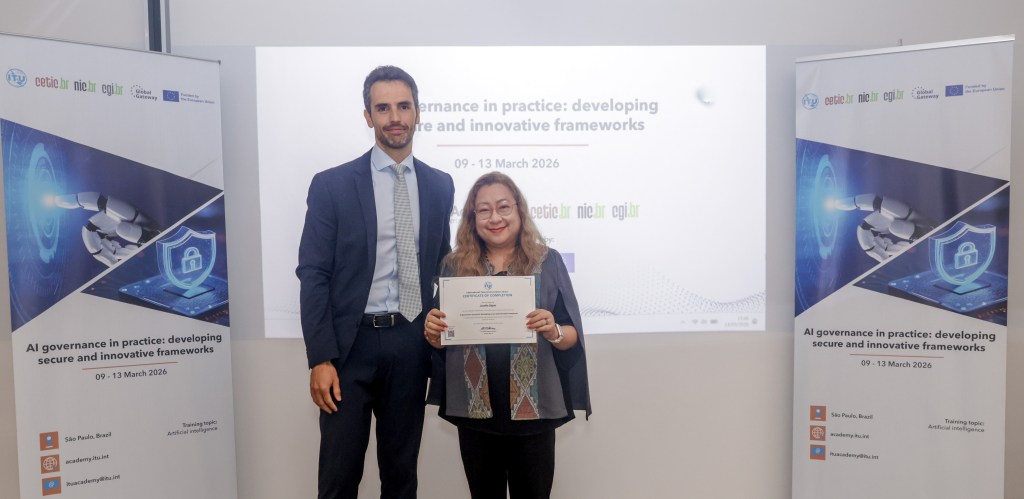

 Jocelle Batapa Sigue
Leave a comment