
Lapu-Lapu City, Cebu – The Philippines’ hosting of the first-ever Quantum Information, Science, and Technology Conference (QISTCon.ph 2025) is a landmark event as it marks the nation’s first major foray into quantum science and technology, a deliberate step toward countryside digital innovation. As part of the International Year of Quantum Science and Technology, this globally supported conference elevates the Philippines’ role in emerging tech while decentralizing ICT leadership from Metro Manila to the Visayas. The unveiling of the country’s first quantum computer for education, the SpinQ Gemini Mini, democratizes access to frontier tools, empowering students and educators, especially from public and regional institutions. The event fosters ethical innovation, science diplomacy, and cross-sector collaboration, aligning with national priorities to build a future-ready, inclusive, and digitally empowered society driven by Filipino talent and global cooperation.
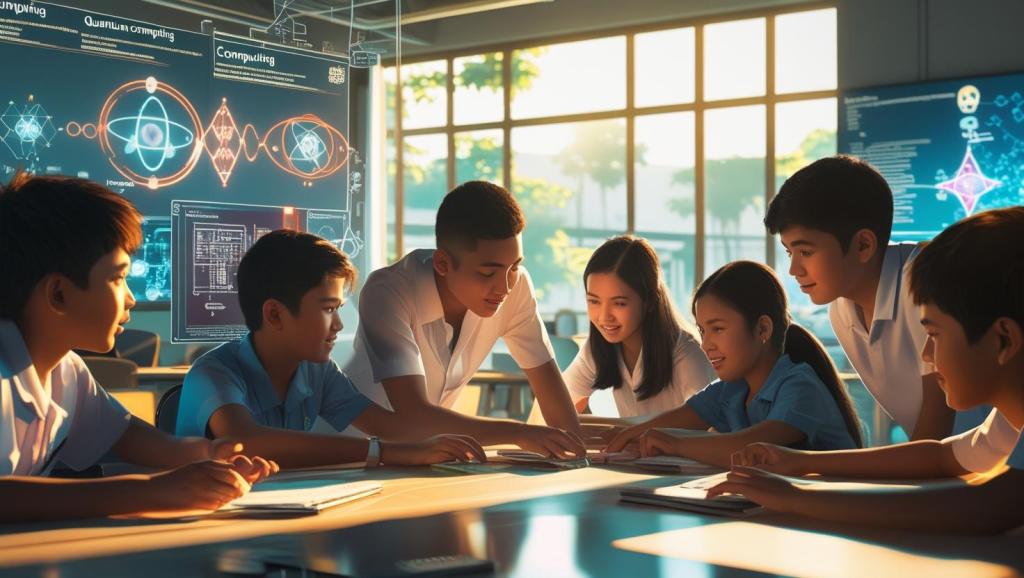
Happening from July 30 to August 1 at JPark Island Resort & Waterpark in Cebu, he event marks a major milestone for the country as it positions itself at the forefront of quantum research and innovation in Southeast Asia.
QISTCon.ph 2025 is a globally funded event under the banner of the International Year of Quantum Science and Technology (IYQ), affirming the Philippines’ active role in the global scientific community. Organized by the Quantum Computing Society of the Philippines (QCSP), in partnership with the Department of Science and Technology – PCIEERD, the Open Quantum Institute (OQI), and the Geneva Science and Diplomacy Anticipator (GESDA), the conference will gather over 100 invited participants, including scientists, educators, industry leaders, investors, students, and policymakers from the Philippines and abroad. Academic partners Cebu Institute of Technology–University and the University of San Carlos are also co-hosting the event.
In a historic highlight for the nation, QISTCon.ph 2025 will also witness the unveiling of the Philippines’ first quantum computer: a SpinQ Gemini Mini. This desktop-sized quantum computer, developed by SpinQ Technology, is designed for education and research, offering users hands-on access to a 2-qubit quantum processor capable of running basic quantum algorithms. It brings quantum computing out of the lab and into classrooms, making it an ideal tool for training the next generation of Filipino quantum scientists and engineers.
Quantum computing, a rapidly emerging field, leverages the principles of quantum physics to solve problems beyond the reach of today’s most powerful supercomputers. Unlike classical computers that use bits representing either 0 or 1, quantum computers use qubits, which can represent both 0 and 1 simultaneously through a property called superposition. This capability allows for parallel processing of vast amounts of data, enabling potential breakthroughs in medicine, logistics, finance, artificial intelligence, and secure communications.

QISTCon.ph aims to spark a national conversation around how quantum technology can be explored, adopted, and responsibly developed in the Philippines. Participants will discuss practical ways for the country to build its own quantum roadmap, integrate quantum concepts into the education system, and encourage industry involvement by highlighting global efforts from companies such as AWS, IBM, and Microsoft. The event also seeks to promote regional cooperation across the Indo-Pacific and to address ethical and security challenges in the quantum era.
Leading the initiative is a fellow Sugbuanon, Bobby Corpus Jr., a graduate of Cebu City National Science High School. He is the co-founder and president of the Quantum Computing Society of the Philippines and serves as a member of the Quantum Technology Board of DOST-PCIEERD. He is also the Vice Chairman of the Bureau of Philippine Standards Technical Committee on Information Technology Subcommittee on Artificial Intelligence & Quantum Technologies.
Also supporting the initiative are members of the QCSP national team, the QCSP Chapter at MSU-IIT, Cherry-Lyn Sta. Romana of CIT-University, Dr. Roland Otadoy of the University of San Carlos, and the international team from Responsible Quantum Computing and the Science and Education Group for Quantum Responsibility, with members from Singapore, the United Kingdom, and Germany.

QISTCon.ph 2025 is expected to ignite new collaborations across sectors and signal the country’s readiness to play an active role in shaping the global quantum future. For more details, visit www.qistcon.ph.
More information here: https://www.qistcon.ph/


 Jocelle Batapa Sigue
Leave a comment