BACOLOD CITY – June 25, 2025 — The Technological University of the Philippines Visayas (TUPV) marked its 46th Commencement Exercises with an inspiring ceremony held at the SMX Convention Center in Bacolod City, drawing families, faculty, and dignitaries to witness a pivotal moment in the lives of the graduating class. The program began promptly at 1:30 PM, unified by the theme “TUP@123: Transcend, Unite, Progress – Igniting Innovations Through Linkages and Partnerships.”

The keynote speaker, Jocelle Batapa-Sigue, a nationally recognized digital advocate and former Undersecretary for ICT Industry Development, delivered a powerful message to the graduates, challenging them to see themselves as digital nation-builders—capable of transforming the Philippines from the grassroots.
“In a universe without a single center, each of you has the right to stand in your own center of innovation,” Batapa-Sigue said, drawing a metaphor from cosmic expansion. “You don’t need to leave the province to lead. You are already at the center of change.”

Widely recognized as a trailblazer in digital innovation, she has spent decades advancing the causes of innovation, inclusion, and public service across the Philippines led national efforts to promote equitable growth through ICT. Her leadership extended beyond national borders as she currently serves on the Digital Innovation Board of the Innovation and Entrepreneurship Alliance for Digital Development under the International Telecommunication Union (ITU)—a global platform focused on harnessing technology for sustainable development.
She is also the convenor of the Philippine ICT Innovation Network, a collaborative initiative that bridges sectors to drive digital transformation and inclusive progress throughout the country. Her lifelong commitment to service and innovation earned her the prestigious TOWNS (The Outstanding Women in the Nation’s Service) Award in 2016 for her contributions to the ICT sector.
Batapa-Sigue’s address emphasized the urgency of digital empowerment, especially as the Philippines enters its demographic dividend window—a period when a large working-age population can drive national growth.
Demographic Dividend refers to a period in a country’s development when the working-age population (typically ages 15–64) is larger than the non-working-age population (children and the elderly). This creates a “sweet spot” for economic growth, because a greater proportion of people are contributing productively to the economy rather than being dependent on it.
However, this opportunity is not automatic. To fully benefit from a demographic dividend, a nation must make strategic investments in:
- Education and digital skills training
- Meaningful and inclusive job creation
- Accessible healthcare systems
- Gender empowerment
- Support for innovation and entrepreneurship
In the Philippine context, starting in 2025, the country enters this window of opportunity. But it must act swiftly and inclusively, especially in underserved areas like the countryside, to convert this demographic advantage into broad-based, innovation-driven progress.
However, the promise of a demographic dividend is not a guarantee, but a window of opportunity—one that must be intentionally seized through bold and strategic action. For a nation to fully harness the power of its growing workforce, it must invest where it matters most.
It begins with education and digital skills training. A young population must be equipped not only with traditional knowledge but with the tools to navigate and lead in a rapidly evolving digital world. From coding to critical thinking, from AI literacy to creative problem-solving, education must become a launchpad for innovation.
Alongside education, there must be meaningful and inclusive job creation. It is not enough to generate employment; the jobs must be relevant, decent, and accessible to all, especially in the countryside where opportunities often lag behind.
Equally vital is access to quality healthcare. A strong, resilient workforce depends on systems that protect their well-being. When people are healthy, they are empowered to learn, work, and thrive. Technology can play a powerful role here—bringing services to even the most remote communities through telemedicine and digital health platforms.
Empowering women to fully participate in the economy is also essential. When women are supported to lead, to build, and to innovate, entire communities benefit. Gender equity is not just a moral imperative; it is a catalyst for economic progress.
Finally, to truly capitalize on its demographic strength, a country must nurture its own wellspring of ideas. This means building ecosystems of support for innovation and entrepreneurship—spaces where young thinkers, makers, and dreamers can turn concepts into solutions, and challenges into opportunities.
In sum, the demographic dividend is not merely about numbers—it is about nurturing potential. And with vision, investment, and inclusion, it can become the foundation for a more prosperous and equitable future.
During the 46th Commencement Exercises of TUP Visayas, 862 students were formally presented as candidates for graduation from various colleges. This diverse range of programs reflects the university’s commitment to producing technologically skilled professionals ready to meet the demands of the modern workforce.
These included the Bachelor of Science in Chemistry and various majors under the Bachelor of Engineering Technology program. Graduates specialized in fields such as Automotive Engineering Technology, Chemical Engineering Technology, Electrical Engineering Technology, Electronics Engineering Technology, and Manufacturing Engineering Technology. Others completed degrees in Heating, Ventilating, Air-conditioning and Refrigeration Engineering Technology, Electro-Mechanical Engineering Technology, and Computer Engineering Technology. In addition, the university conferred degrees under the Expanded Tertiary Education Equivalency and Accreditation Program (ETEEAP), reflecting its commitment to accessible and flexible pathways for professional advancement. This impressive array of programs and specializations signifies TUP Visayas’ dedication to producing industry-ready professionals equipped to thrive in the evolving demands of the digital and engineering sectors.

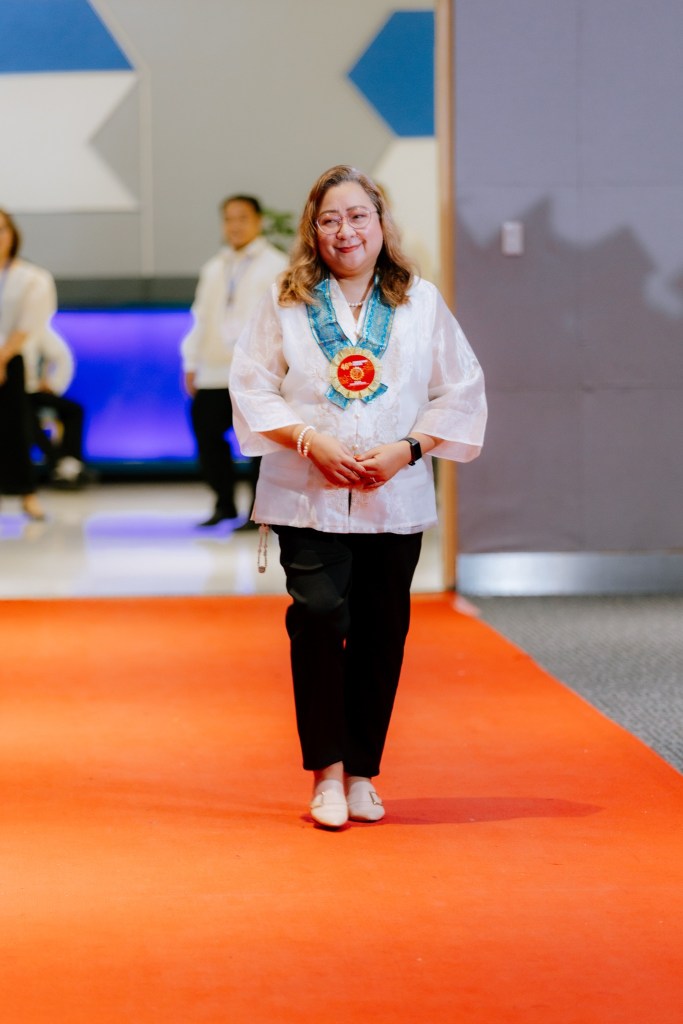
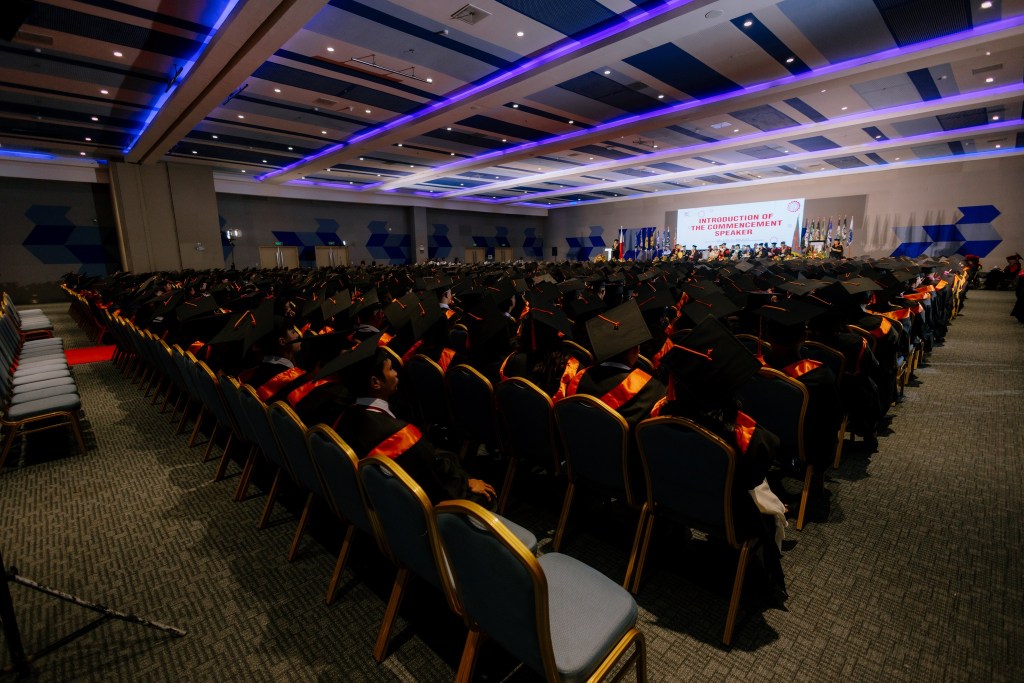
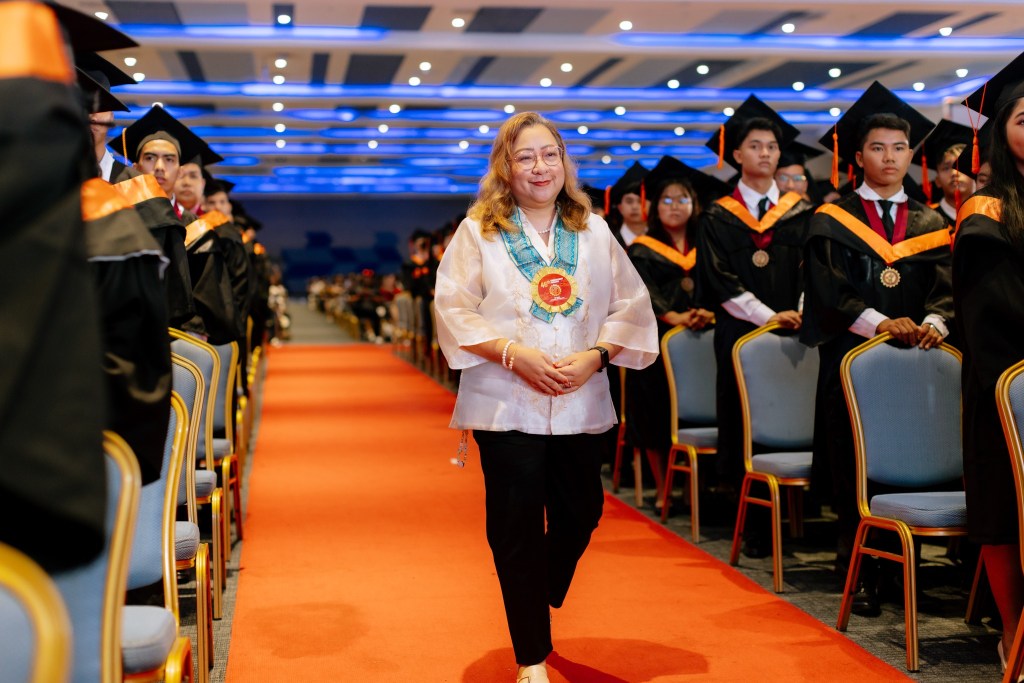


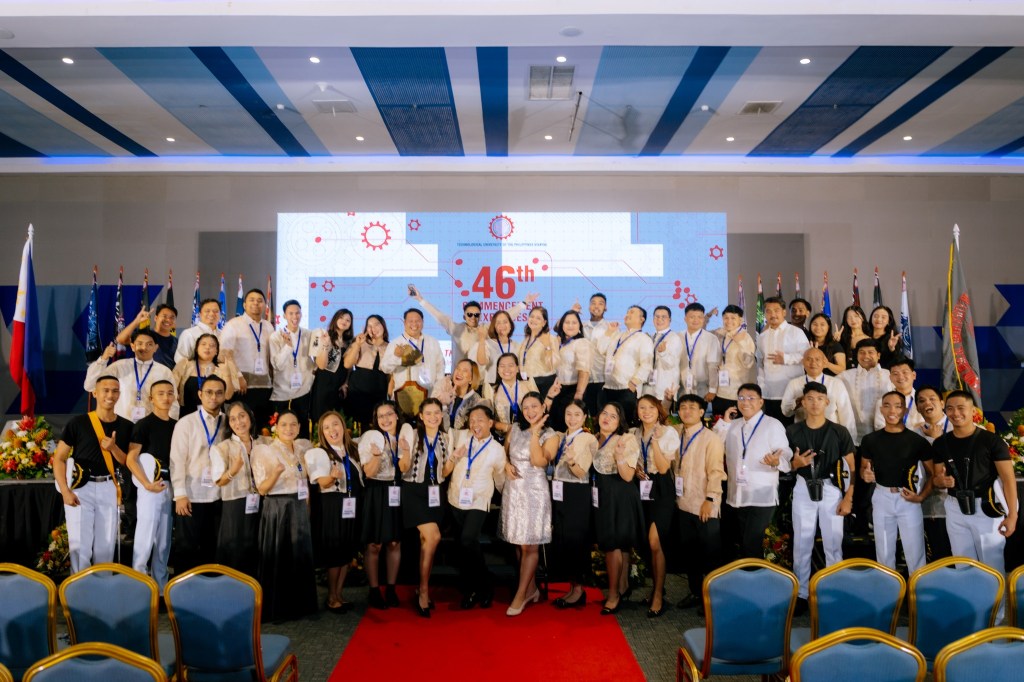
Here is the full speech of Atty. Jocelle Batapa-Sigue:
Class of 2025, Let me begin with a question—
Where do you think is the center of the universe?
We often imagine the universe starting from one special place—a glowing center where everything began. But here’s the surprising part: the universe doesn’t have one center. It didn’t grow out from a single spot. Instead, it expanded everywhere, all at once—like how a balloon stretches when you blow it up.
Imagine blowing up a balloon with dots on its surface. As the balloon inflates, every dot moves away from every other dot—not because one dot is at the center, but because they all are. In an expanding universe, every point is equally central.
And so today I say to you—if the universe has no center, then you have every right to be say you are standing in the center of this Universe. Yes right here, right now, in this hall, I declare: the center of the universe is where you choose to grow, create, and serve.
When I look at you, Class of 2025, I see not just graduates. I see dreamers – I see energy. I see builders of this nation.
You are standing at your own center of expansion—not just in space—but in time, in possibility, and in purpose.
Having said – Let me talk about three things today – about our county, about myself (I wish to share my story), and then we end with talking about all of you.

We are entering an important time in our nation’s history. This year – 2025, the Philippines will enter its demographic dividend window—a rare moment when our working-age population will be larger than our dependent population. This could be the beginning of rapid progress. But only if we invest in skills, create meaningful jobs, and include everyone—especially those in the countryside.
Let me tell you: that transformation will not come from the capital alone – not from Metro Manila. It will come from you. From us – here in Bacolod, Negros Occidental, in the Negros Island Region. From campuses like TUP Visayas.
The Philippine demographic dividend refers to the potential for accelerated economic growth that arises when a country’s working-age population (15–64 years old) becomes larger than the dependent population (children and elderly). This creates a unique window of opportunity—a “demographic sweet spot”—where the country can reap economic and social gains if the right policies and investments are in place.
The Philippine Context:
- As of 2025, the Philippines has a young and growing population, with a median age of around 25 years.
- Projections show that the country will continue to benefit from this favorable age structure until about 2045–2050—but only if employment, innovation, and inclusion keep pace.
- According to the National Economic and Development Authority (NEDA), we could achieve upper middle-income status if we leverage this demographic window wisely.
Why This Matters:
- A demographic dividend is not automatic. Without education, digital skilling, job creation, and good governance, the growing youth population can instead become a liability—leading to unemployment, social unrest, or brain drain.
- It’s especially critical in the Philippine countryside, where the digital divide and lack of access to opportunities can widen inequalities.
What Makes It a “Dividend”?
It’s called a dividend because it’s like a return on investment—if the Philippines can:Educate and skill its youth,I have always believed that the future of our country rests on how we empower our youth. For more than two decades, I’ve dedicated myself to teaching and leading digital literacy programs that equip young Filipinos—especially those in underserved regions—with 21st-century skills. Through ICT education, we can give them the tools to dream boldly and compete globally.
Provide quality jobs
I have championed the creation of digital jobs in the countryside because I believe Filipinos should not have to leave their hometowns just to find decent work. As Undersecretary for ICT Industry Development and as councilor of Bacolod , I helped lead programs to spark employment opportunities where they are needed most. Jobs must be inclusive, relevant, and transformative.
Ensure good health systems
Let us advocate for the use of technology to improve healthcare access. Digital transformation in health is essential—not just for efficiency, but for equity. By strengthening systems like telemedicine and digital health records, we ensure that every Filipino, especially in far-flung areas, receives timely and quality care.
Empower women to work
As a woman in tech and law, I’ve experienced the challenges and the triumphs. I’ve made it my mission to mentor and support other women to rise, lead, and thrive. I convened DIWA or the Digital Innovation for Women Advancement. When we empower women economically, we uplift entire families and communities. I stand for a digital future where gender is never a barrier to success.
Support innovation and entrepreneurship
I believe innovation must reach every corner of our nation—not just the urban centers. We need to support the development of local innovation hubs across the country like TUPVs “The HIVE” – across the country. These spaces are more than just physical centers—they are ecosystems where creative minds in the countryside are nurtured, empowered, and given a stage to thrive. We must continue to invest in local talent, transform ideas into sustainable enterprises, and ensure that innovation becomes a driving force for inclusive growth.
The demographic dividend is not just about having more people—it’s about unlocking the potential of each Filipino. Think of it as our best chance to build a strong, inclusive, innovation-driven economy. But the window is closing fast—the time to act is now.
I wish to share my own story –
I am a proud probinsyana. I was born and raised in Bacolod City. I attended elementary up to law in Bacolod City. I have always worked in Bacolod and served as councilor of Bacolod City. But I always believed in the power of possibility.
I refused to let geography define destiny. And worked to make Bacolod known nationally –
In 2004, I helped led the formation of BNEFIT—the Bacolod-Negros Occidental Federation for ICT—with a vision to transform my home province into a thriving digital hub. At that time, very few believed that Bacolod could compete in the growing ICT and BPO industry. But I saw potential—in our people, in our talents, and in our spirit.
We brought together stakeholders from government, academe, and industry to form one unified voice. We didn’t just advocate for jobs; we advocated for a future where innovation and inclusion could bloom in the countryside. BNEFIT became one of the first ICT councils in the Philippines and a model replicated in many regions – and eventually became one of the ten founders of the National ICT Confederation of the Philippines.
Through BNEFIT, we created opportunities—digital jobs for youth, support for startups, and a strong ecosystem that believed in the power of collaboration. This journey taught me that when a community comes together with purpose, transformation becomes possible.
And because of that perseverance, I had the honor of being named a TOWNS Awardee—The Outstanding Women in the Nation’s Service. This is a national award given every three years to women who have served the country with exceptional dedication. To me, it wasn’t just an award—it was proof that a woman from the province could help shape the future of the nation.
In 2013, I was humbled to receive the Philippine Individual ICT Contributor of the Year Award from the Canadian Chamber of Commerce and IBPAP. That recognition reminded me of how far our collective efforts in digital advocacy had come.
I was honored to be named one of the Top Ten Outstanding Young Leaders by the Asia Society Foundation—an affirmation of the leadership path I had taken in empowering communities through innovation.
More recently, I was deeply grateful to be awarded Philippine Blockchain Leader of the Year by the Global Blockchain Council, and recognized as a Distinguished Woman Leader in Digital Literacy at the International Women’s Assembly. These awards strengthen my resolve to keep pushing for inclusive, ethical, and transformative technology for all.
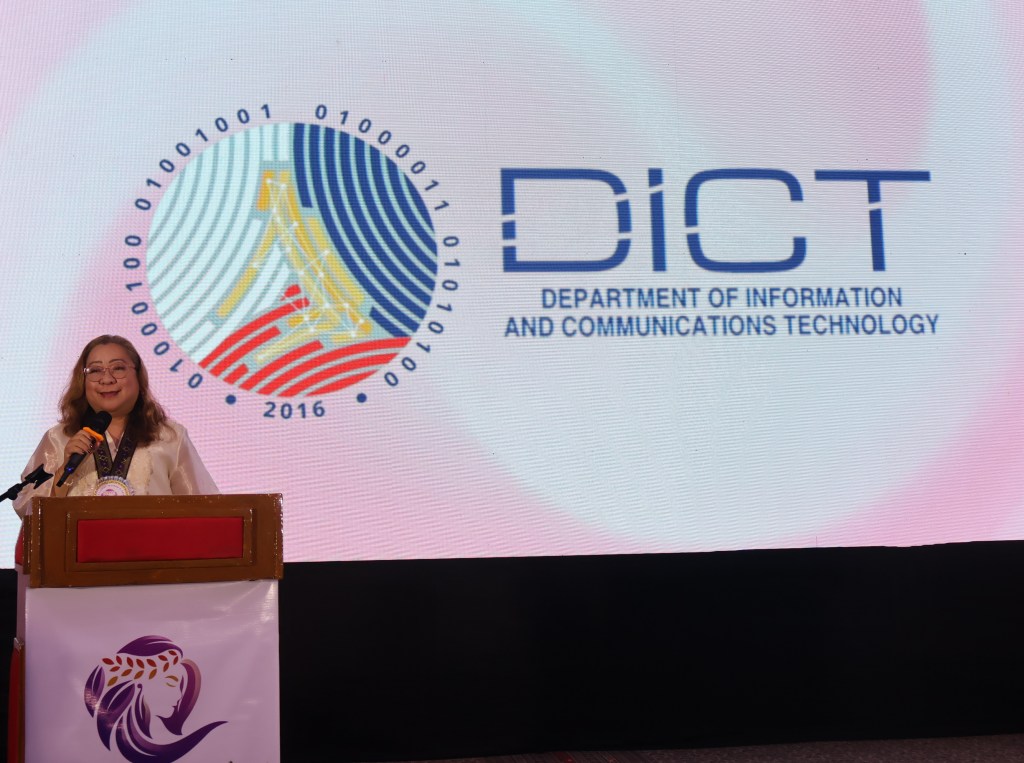
My passion for digital empowerment—fueled by years of working with local ICT councils and tech communities—paved the way for me to serve as Undersecretary for ICT Industry Development at the Department of Information and Communications Technology since August 2022 up to May of this year.
These roles gave me the privilege of meeting so many passionate, brilliant, selfless digital leaders across our nation—people building solutions for real life problems, pushing for digital skills in the barangays, and creating jobs in the most unexpected corners of our country.
Because of my stint at the DICT – I got the chance to serve as ITU Councilor for the Philippines for three years, helping guide international policy on digital development. The International Telecommunication Union (ITU) is a United Nations agency that coordinates global use of the radio spectrum, develops technical standards for communication technologies, and works to improve access to ICTs worldwide. I brought our voice—your voice—to the global stage.

The International Telecommunication Union (ITU) is a United Nations agency that coordinates global use of the radio spectrum, develops technical standards for communication technologies, and works to improve access to ICTs worldwide.
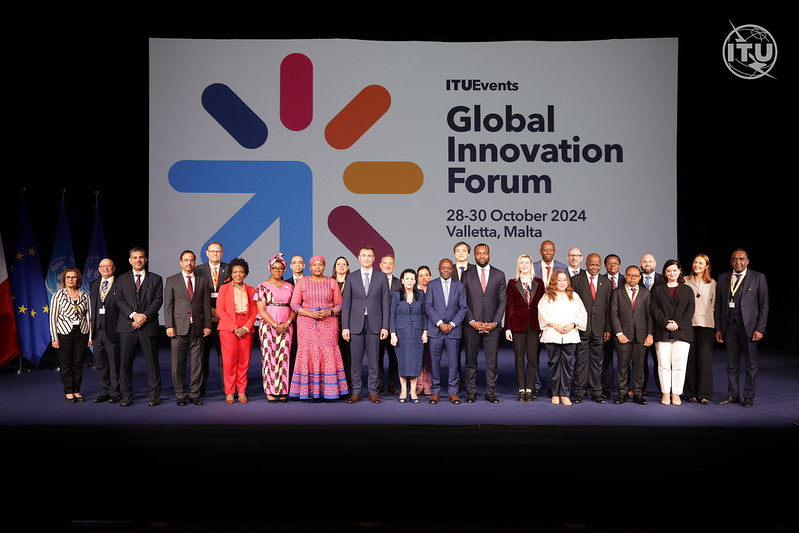
I brought our voice—your voice—to the global stage.
My experiences taught me this truth: The real digital transformation of the Philippines will come from the margins—from people like you and me who choose to lead, no matter where we are.

Now let’s talk about you –
We now live in a world reshaped by AI, automation, and rapid change. And yet, this is your advantage. Global studies show that – that Filipinos can lead in the Age of AI—if we master skills not just in technology, but in ethics, adaptability, and empathy.
This is what the countryside needs. This is what our future demands. So as a challenge, I throw to you five key directions:
FIRST: “Learn, unlearn, relearn—with urgency and humility.”
In this era of rapid change, the only constant is learning. Whatever course or discipline you completed—your tools and methods will keep evolving. The world will not wait. That’s why your mindset must be one of continuous learning. Embrace every opportunity to grow—not just for a job, but for a lifetime of relevance and service. Stay curious. Stay teachable. Because what you know today is just the beginning. In this economy, skills are the currency—and the ability to reskill and upskill is your survival kit.
SECOND; “Bring solutions to your communities.”
The truest test of education is its impact on others. Don’t just aim for success—aim to be useful. Use your skills to fix a problem in your community. Say improving sanitation, helping build safer infrastructure, or digitizing a community process. Every problem you solve locally strengthens the country nationally. The Philippines doesn’t need saviors—it needs problem solvers who stay inside the country.
THIRD: “Empower others with what you know.”
What good is knowledge if it stays locked inside your head? Share it. Mentor others. Guide others. Start a community where you can share your ideas. Train others in the skills you’ve mastered. A skill that’s passed on becomes a legacy. Leadership in the future won’t just be about titles or positions—it will be measured by how many lives you’ve touched and how many others you’ve empowered to lead.
FOURTH: “Push for ethical practices, inclusive access—and responsible use of technologies.”
Even as we innovate, we must also safeguard. For example – the rise of AI, robotics, and data systems demands ethical vigilance. We must build and use technology responsibly—ensuring it does not deepen inequality, spread misinformation, or ignore human dignity. And we must insist that everyone—especially those in the margins—has access to training, tools, and opportunities. As skilled professionals that you are now, your decisions will shape systems. Make sure they serve people fairly.
FINALLY – GOING BACK TO MY OPENING QUESTION – “Be the center of change your community and country needs—not tomorrow, but today.”Let me share with you again my story
You don’t have to be in a Metro Manila or in another country or wear a suit to create change. Find your own passion.
Because in this infinite, expanding universe, there are millions of stars. But only a few choose to shine with a purpose.
Choose to be that light.
Let your innovation be your revolution.
Let your leadership in whatever lever be your legacy.
Let your future story be one that inspires the next probinsyano or probinsyana.
Class of 2025, the universe expands through your courage. Embrace the fact that today – you are the center of the universe.
Congratulations to your parents and family, to your teachers, to your Alma Mater and most especially to YOU!
Mabuhay ang TUP Visayas!
Mabuhay ang Class of 2025!
TUP Visayas Receives Multiple Awards and Accreditations Across National, Regional, and Local Levels
As of June 30, 2025, the Technological University of the Philippines – Visayas (TUPV) has achieved numerous distinctions from national agencies, regional institutions, and local organizations, affirming its growing leadership in engineering education, research, and innovation. These accolades may be classified into key areas that reflect the university’s sustained pursuit of academic excellence, regulatory compliance, community engagement, and innovation leadership.
First, national-level recognitions highlight TUPV’s outstanding performance in licensure examinations and its contributions to national innovation initiatives. The university consistently ranked among the top-performing institutions in various Professional Regulation Commission (PRC) examinations. It was awarded as the Top 1 Performing School in the April 2025 Electronics Technicians Licensure Examination, Top 2 in the Electronics Engineers Examination, and Top 5 in the February 2024 Mechanical Engineering Exam. Further, it received exemplary performance awards for the Chemical Technician and Mechanical Engineering boards. Beyond licensure performance, TUPV was also recognized by the Intellectual Property Office of the Philippines (IPOPHIL) with Platinum, Silver, and Bronze awards under its ITSO programs for promoting intellectual property awareness, patent support services, and knowledge transfer. The Department of Science and Technology – Advanced Science and Technology Institute (DOST-ASTI) also awarded TUPV a plaque of appreciation for its commitment to technology and innovation partnerships. The Department of the Interior and Local Government acknowledged the university as a key partner in advancing smart, resilient public service under the “LGUs sa Bagong Pilipinas” campaign.
Second, regional-level awards affirm TUPV’s dominance in academic performance, community outreach, and cultural engagement across Western Visayas. CHED Region VI and Region XVIII cited the university multiple times as a top-performing school in board examinations for chemical, electronic, and plumbing engineering, further strengthening its academic standing. In regional competitions, TUPV emerged as champion in the 28th Philippine Statistics Quiz and as a runner-up in the Philippine Society of Mechanical Engineers (PSME) Quiz Bowl. The university was also commended for its integration of Indigenous Peoples (IP) education into its curriculum and for its sustained engagement with indigenous communities through the National Commission on Indigenous Peoples (NCIP). It played host to key regional events such as the DICT Digital Expo, Junior Level Science Scholarship Testing, and Robotics Training for teachers in partnership with NOLITC, demonstrating its strong support for technological advancement and capacity development in the region.
Third, provincial-level honors demonstrate TUPV’s continued excellence in academic competitions and local development programs. Students from TUPV secured championship titles in both the Interscholastic Provincial Quiz and the Provincial Math Olympiad organized by the Institute of Electronics Engineers of the Philippines – Negros Occidental Student Chapter. The university also received recognition from the Department of Agriculture as a provincial winner in the Young Farmers Challenge Start-up Competition, showcasing its contribution to youth entrepreneurship and agritech development at the grassroots level.
Fourth, TUPV has made significant strides in institutional accreditations and compliance milestones. The university earned distinction from CHED Region VI for achieving one hundred percent Certificate of Program Compliance (COPC) across its undergraduate programs—a key benchmark for State Universities and Colleges (SUCs) in ensuring quality assurance. It also received recognition for aligning with CHED Memorandum Order No. 5, Series of 2016, which promotes pathways to equity, relevance, and advancement in research, innovation, and extension. These acknowledgements reflect the university’s commitment to regulatory excellence and quality education.
Fifth, the university received several thematic recognitions for its support of specialized initiatives in innovation, education, and community partnerships. These included regional and national awards for participating in the Young Farmers Challenge, commendations for serving as a test center for the DOST Junior Level Science Scholarship, and consistent contributions to the Department of Education’s partner services. TUPV’s ongoing commitment to intellectual property management, research promotion, and extension services was also highlighted through various certificates of appreciation and plaques of recognition from regional and national stakeholders.
In summary, the Technological University of the Philippines – Visayas continues to establish itself as a center of excellence in engineering education, innovation, and regional development. These recognitions reflect not only the academic caliber of its faculty and students but also the institution’s commitment to inclusive progress, nation-building, and global competitiveness.

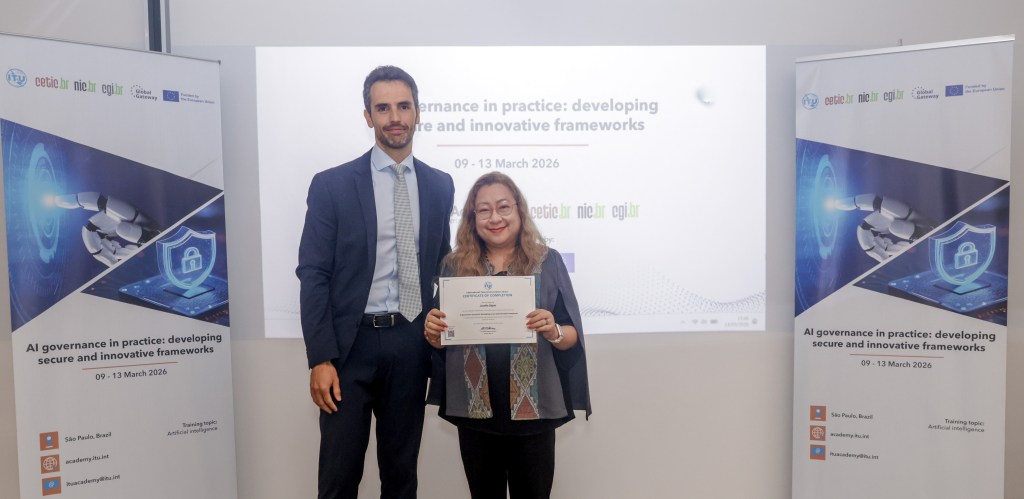

 Jocelle Batapa Sigue
Leave a comment