
On May 25, 2025, my resignation from the Department of Information and Communications Technology (DICT)became effective, ending my stint as Undersecretary for ICT Industry Development for 33 months beginning August 4, 2022. As I transitioned from my role at the DICT and embraced the opportunity to return as private citizen once again, my resolve to champion grassroots digital transformation has only grown stronger—firmly aligned with the mission I have pursued for over two decades.
In a world where artificial intelligence and digital technologies are reshaping industries and communities, the Philippines stands at a crossroads. Our digital economy, valued at over Php 1.97 trillion in 2023, has enormous potential—but only if we build systems and policies that prioritize human dignity, fairness, and inclusivity.
As the Philippines’ digital economy continues to expand, an inclusive and ethical approach to digital transformation is paramount. Drawing from my decades of leadership in law, policymaking, ICT development, and local governance, as well as global insights from the International Telecommunication Union (ITU), I am committed to co-creating a digital future that is human-centered, ethical, and inclusive.
My next chapter is driven by six core thrusts:
- A National AI Governance Framework that upholds ethical standards and cuts across every sector.
- Multi-stakeholder startup ecosystems in the regions that turn local talents into global competitors.
- Strategic LGU-based interventions to empower local governments as engines of innovation.
- Inclusive digital policies that put gender equity and environmental sustainability front and center.
- Multi-dimensional workforce development programs to future-proof Filipino workers for the digital era.
- Platforms for digital nomads and creatives, turning our towns and cities into vibrant hubs for innovation.
The global digital workforce is expected to grow by 25% by 2030. AI alone could add US$1 trillion to Southeast Asia’s GDP. If we invest wisely in governance, ecosystems, and human capital, we can turn this moment into an opportunity to bridge the urban-rural divide and lift every Filipino.
I commit to work closer with our business leaders, local governments, and communities to join me in this mission. Let’s work together to build an economy that values not just profit, but purpose and people—a digital economy that is, at its core, Filipino.
Reimagining Inclusive Digital Transformation: My Post-Government Strategy for the Philippines
This outlines my six strategic thrusts that will guide my work beyond DICT, each shaped by decades of experience in policy-making, ICT leadership, and countryside innovation:
I. National AI Governance Framework
AI adoption can add billions to our economy—but only if governed responsibly. ITU’s 2025 reports underscore the need for regulatory certainty, standards, and assurance to balance innovation and accountability. Building on my experience as ITU Councilor and global fellowships, I aim to help shape a cross-sectoral governance framework that integrates ITU’s principles of transparency, safety, and inclusivity—ensuring AI enhances, not replaces, human potential.
II. Multi-Stakeholder Startup Ecosystems
Data from the World Economic Forum shows global digital job growth could hit 25% by 2030. I will help design and spearhead programs that bridge regional talents to global markets, supporting mentorship networks and access to investment for countryside innovators.
According to the ITU’s Asia-Pacific digital development report, digital infrastructure is a key enabler for rural innovation hubs. My experience leading BNEFIT and NICP, combined with ITU’s data on countryside digital trends, reinforces the need to connect rural talents to global markets—amplifying regional startup ecosystems that nurture local and global competitiveness.
III. Strategic LGU-Based Interventions
From over 30 local ordinances I authored as a city councilor, I have seen how LGUs drive local economic growth. My focus is on data-driven digital roadmaps that position LGUs as competitive digital hubs—catalyzing job creation and inclusive investment.
ITU emphasizes that digital transformation at the local level requires data-driven policies and community engagement. As a city councilor and author of over 30 local ordinances, I understand the power of localized digital roadmaps. Drawing on ITU’s innovation ecosystem frameworks which I have lecture about for years now, I will help LGUs access data, forge inclusive public-private partnerships, and build smart governance models that create jobs and unlock investments.
IV. Inclusive Digital Policies
In 2023, the Philippines’ digital economy contributed significantly to national GDP, yet challenges in gender equity and rural access persist. I aim to craft policies that prioritize ESG (Environmental, Social, Governance) imperatives, setting a standard for inclusive digital growth.
The ITU’s 2023 reports highlight that digital transformation must be gender-responsive and socially just. My work in crafting policies as a Senate consultant and as a national digital inclusion advocate aligns with these values. I aim to support the development of ESG-aligned digital policies—addressing gender equity, rural access, and environmental sustainability as pillars of a thriving digital economy.
Throughout my decades of public service and digital advocacy, I have consistently championed gender equity as a core principle of digital transformation. As Chair of the Bacolod City Gender and Development Council for six years and leader of various women’s empowerment programs, I have witnessed firsthand how gender-inclusive policies create economic opportunities and foster more just societies. My advocacy for Girls in ICT—through capacity-building workshops and mentorship programs—reflects a deep commitment to closing the gender gap in technology. My brainchild, Digital Innovation for Women Advancement (DIWA) have spearheaded efforts to promote gender equity in the digital economy, ensuring that women and girls are equipped with the skills, tools, and confidence to thrive in a digital-first world. These experiences, reinforced by ITU’s global frameworks for gender inclusion, drive my mission to ensure that every digital policy we craft is not only transformative—but also equitable, just, and truly inclusive.
V. Multi-Dimensional Workforce Development
Global trends like the Coursera’s 2025 Job Skills Report show demand for data, AI, and cybersecurity skills. I will promote blended learning and micro-credentialing programs to ensure every Filipino has the tools to thrive in the digital economy.
ITU’s studies show that digital skills gaps are widening, particularly in rural areas. My background as a professor, combined with ITU’s insights, reinforces the urgency to expand micro-credentialing, blended learning, and out-of-the-box upskilling—preparing every Filipino to meet the demands of an AI-augmented workforce and global job trends.
VI. Digital Nomad and Creative Ecosystems
As the world embraces remote work, the Philippines can attract digital nomads and creative entrepreneurs. I will support policies and programs that transform our cities and towns into magnets for remote talent and creative industries.
International trends highlight the rise of digital nomadism and its potential to revitalize local economies. With my track record in transforming Bacolod into a Next Wave City and exposure to global digital nomad models through ITU and fellowships, I plan to support policies that position our LGUs as hubs for remote talent and creative entrepreneurship.
The global landscape of digital careers is undergoing a profound transformation, driven by technological advances and shifting workforce dynamics. According to ITU and WEF reports, digital jobs are projected to grow by up to 25% by 2030, fueled by the rise of e-commerce, digital media, and AI-powered services. Remote work has become a defining feature of this evolution—enabling professionals to transcend geographical boundaries and empowering local economies with global opportunities. The growth of digital nomadism and the creative economy further underscores the Philippines’ potential as a hub for remote talent and entrepreneurship. These trends emphasize the urgent need for policies that nurture flexible work environments, expand digital infrastructure, and invest in upskilling programs—ensuring that Filipino workers can confidently compete and thrive in the borderless digital economy.
Key Thrusts Moving Forward Based on My Expertise
Support and complement public-private partnerships to co-create AI and digital transformation policies
Throughout my time as Undersecretary and as ITU Councilor, I consistently worked to bring together government, industry, and academia. I aim to continue contributing to these efforts by sharing insights from the many multi-stakeholder collaborations I have led, including initiatives like the eGOV Awards for digital governance and my work as policy consultant in the Senate.
As an Eisenhower Fellow, Haggai Institute Alumna, and AVPN-BMW Foundation Policy Leadership Fellow, I have had the privilege of engaging with global leaders on ethical digital governance and inclusive innovation. These experiences taught me the power of cross-sectoral collaboration, which I will continue to harness to support existing efforts and help shape AI and digital policies that uphold fairness and human dignity.
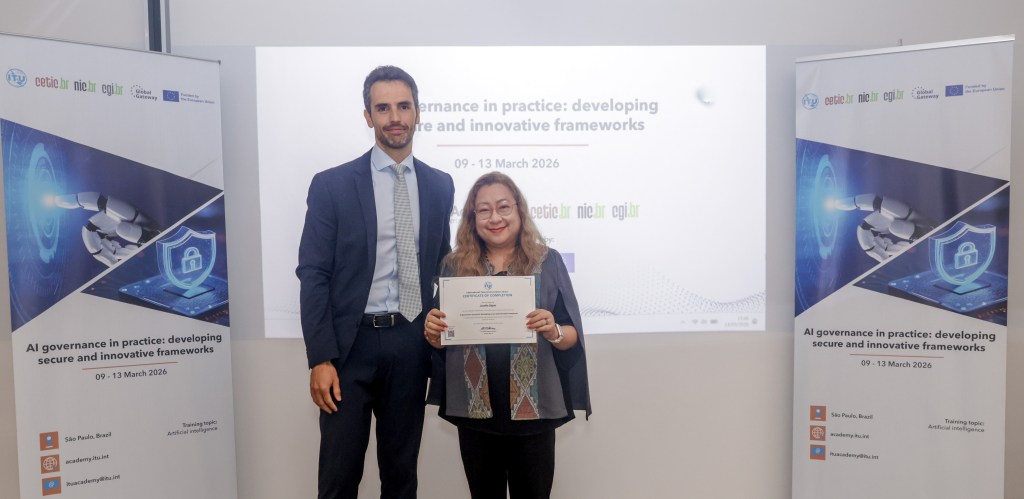
My leadership in artificial intelligence (AI) governance is deeply grounded in both national and global contexts, shaped by decades of work in policy, innovation, and digital empowerment. As Undersecretary for ICT Industry Development at the DICT, I championed inclusive and responsible AI adoption, always mindful that technology must serve people—not the other way around. Internationally, I was trained by the Alan Turing Institute on designing ethical AI governance frameworks, equipping me with insights on global standards and best practices. Building on this knowledge, I facilitated the Philippines’ participation in the Bletchley Declaration and the Hiroshima AI Process, ensuring our country was part of critical global conversations on AI safety and governance. I also participated in the Global AI Standards Summit, gaining a deeper understanding of the international regulatory landscape and its implications for local innovation. Most notably, in 2023, I chaired the ASEAN Digital Senior Officials Meeting (SOM), where I helped lead the crafting and approval of the ASEAN Guide on AI Governance and Ethics—a landmark framework that strengthens the region’s collective voice on responsible AI. These experiences, combined with my grassroots work in local governments and ICT councils, shape my enduring mission: to ensure AI in the Philippines is not only innovative and competitive but also just, inclusive, and grounded in our Filipino values of fairness, respect, and human dignity.
Assist LGUs in accessing resources and actionable data to implement local digital strategies
Having authored and championed over 30 local ordinances as a city councilor, I understand the importance of empowering local governments with both technical knowledge and data. My experience includes collaborating with LGUs to craft ICT policies and programs, and I will continue to lend my expertise to help local leaders develop context-specific digital strategies.
Throughout my public service, I have been deeply committed to empowering local governments and championing excellence in governance. My leadership in the Bacolod IT Investment Program, recognized as the Best Public Sector Practice in Region VI by NEDA and RDC VI, showcased how strategic digital investments can catalyze growth at the grassroots level. I also spearheaded the Excellence in Governance through ICT (eGOV) Awards under the National ICT Confederation of the Philippines (NICP), celebrating and scaling up best practices in digital governance across LGUs. As Chair of the Bacolod IT Focus Team, we were honored with the Go Negosyo – Best Government Support for Business award in 2007, highlighting our work to attract investments and digital jobs to Bacolod City. My advocacy further extended to social innovation through the Alternative Skills Program for the Commercial Sexual Exploitation of Children (CSEC), which was awarded by the International Labour Organization (ILO-IPEC) for its impact in protecting vulnerable communities. These recognitions and initiatives underscore my unwavering commitment to creating data-driven, community-centered, and award-winning local government interventions that put people first.
Contribute to strengthening regional innovation hubs by supporting and amplifying existing efforts to unlock the digital potential of the countryside
My advocacy as founder of BNEFIT and co-founder of the NICP was always about putting countryside innovation at the center. From helping establish Bacolod as a Next Wave City to championing regional ICT councils, I will continue to offer my network and insights to fortify local startup ecosystems and innovation hubs across the country.
My fellowship exposures—from the Korean Innopolis Science and Technology Park to MAGIC Corporate Innovation in Malaysia—have equipped me with fresh perspectives on smart city governance and localized digital transformation. I draw on these global insights to empower LGUs with the right data and strategies, ensuring they can chart their own digital futures with confidence. Having scaled the Negros First Cybercentre Technology Business Incubator gave me first hard experience in developing innovation hubs for startups.
My work as a Philippine delegate to international programs reinforced the importance of inclusive, grassroots innovation aligned with international best practices. Coupled with my track record in building ICT councils, I am committed to helping strengthen existing regional hubs—connecting local innovators to global best practices and networks.
Advocate for the expansion of lifelong learning programs that are aligned to global digital job trends
My international exposure has been a cornerstone of my leadership journey, enriching my work in championing digital transformation both in the Philippines and on the global stage. As Undersecretary for ICT Industry Development at DICT, I represented the Philippines at the International Telecommunications Union (ITU) Council, engaging in critical dialogues that shape global ICT policy and governance. My fellowship experiences, including as an Eisenhower Fellow, Aspen Fellow, Haggai Institute Alumna, and AVPN-BMW Foundation Policy Leadership Fellow, have deepened my understanding of inclusive and ethical innovation. I have served as a Philippine representative in high-impact forums such as the Asia Society Trade Mission to Taiwan, the Korean Innopolis Science and Technology Park Management Course, and the MAGIC Corporate Innovation program in Malaysia—each exposure sharpening my insights into creating dynamic and resilient digital economies. From speaking at the 1st BPO Guatemala Conference to leading capacity-building initiatives in India and the U.S., I have leveraged these platforms to advocate for policies that elevate marginalized voices, bridge the urban-rural digital divide, and empower local communities. These experiences inform my holistic, globally aware but locally grounded approach to driving equitable digital transformation, always guided by the principles of collaboration, fairness, and human dignity.
As an educator for over 20 years and a Go Negosyo mentor for digital entrepreneurship, I know firsthand how skills development transforms lives. I will continue to champion blended learning, micro-credentialing, and workforce upskilling—especially in the areas of AI, cybersecurity, and creative industries—to ensure our people can compete and thrive globally.
My leadership and learning experiences—from the Aspen Leadership Institute to the Eisenhower Fellowships Multi-Nation Program—have deepened my belief in lifelong learning as the key to human potential. Drawing on this global exposure, I will continue to champion upskilling and workforce development programs that are responsive to the evolving needs of the digital economy.
My commitment to digital skilling and workforce development has been a driving force throughout my public service and advocacy work. I have always championed the creation and expansion of digital literacy and upskilling programs that equipped Filipinos with the tools to thrive in an increasingly digital economy. My background as a professor for over two decades has fueled my belief in the transformative power of lifelong learning—an ethos I brought to national initiatives that promote micro-credentialing, blended learning, and future-proofing skills. As a Go Negosyo mentor and mentor to various ICT councils and regional innovation networks, I have actively supported programs that democratize access to digital careers, especially in the countryside. My leadership in crafting ICT training ordinances in Bacolod, and in advocating for digital inclusion policies at the national level, further reflects my deep belief that skills development is the backbone of inclusive progress.
A Call to Action
Leaving DICT is not an end—it is a pivot to serve beyond titles. I call on business leaders, policymakers, educators, and digital advocates to join me in building a future that values human dignity, shared prosperity, and authentic Filipino creativity.
For collaboration and partnerships, please connect via ceo@jocellebatapasigue.com
To ask more questions, visit my Jocelle AI at ChatGPT Pro.

 Jocelle Batapa Sigue
Leave a comment