

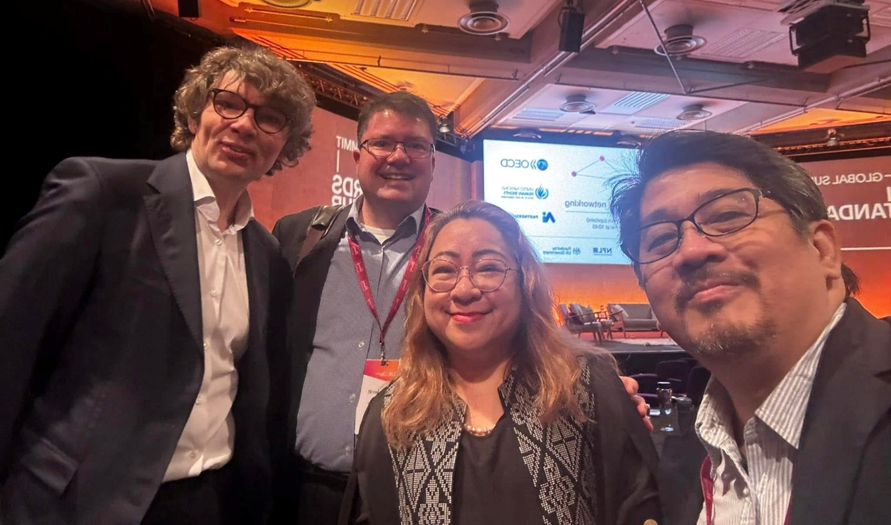
The AI Standards Hub Global Summit, held in London in March 2025, brought together global leaders, policymakers, and experts to shape the future of AI governance. Undersecretary Jocelle Batapa-Sigue of the Department of Information and Communications Technology (DICT) and Professor Giovanni Tapang, Dean of the College of Science from the University of the Philippines were among the key participants representing the Philippines. Together, they engaged in critical discussions on AI standardization, ethical frameworks, and international collaboration. This summit provided valuable insights into the role of standards in fostering global AI cooperation, ensuring ethical development, and creating a transparent regulatory landscape. Here, we explore the key takeaways from the event and how the Philippines is positioning itself as a proactive player in the global AI governance arena.
A Global Dialogue on AI Governance
The AI Standards Hub Global Summit took place on March 17–18, 2025, at the Queen Elizabeth II Conference Centre in London, United Kingdom. The inaugural Global Summit explored the critical role of standards in AI governance, examining recent developments, key challenges, and emerging needs to fostered global inclusiveness and collaboration in AI standardization . Organized in partnership with the Organization for Economic Co-operation and Development, the Office of the United Nations High Commissioner for Human Rights, and the Partnership on AI, the two-day event brought together diverse stakeholders from across the international AI ecosystem to examine the current state of AI standardization and explored the evolving role of standards in relation to AI governance frameworks and emerging regulation globally.
The AI Standards Hub Global Summit featured a dynamic programme of keynote speeches, expert panels, and lightning talks designed to foster deeper alignment, knowledge-sharing, and collaboration among key stakeholder groups and decision-makers in pursuit of robust, equitable, and coordinated approaches to AI governance and standardization.
The programme addressed both current developments and emerging questions in AI standardization , providing a unique platform to address immediate priorities in making AI standards a robust governance tool for the present as well as to explore forward-looking strategies for supporting the governance of advanced AI systems of the future.
One of the central themes of the summit was the interplay between AI standards, regulation, and global governance frameworks. Regulations such as the European Union’s AI Act have set important guidelines for AI deployment, but as experts at the summit emphasized, the practical application of these laws depends heavily on robust standards. These standards help ensure that AI systems operate safely, fairly, and ethically across borders, creating a predictable and transparent regulatory landscape.
The Philippines has been a key advocate for responsible AI, aligning its national strategy with global standards. At the summit, Batapa-Sigue shared insights into the Philippines’ EUREKA framework—an approach that combines education, universal access, responsible AI, and agile governance. This framework serves as a national roadmap, ensuring that AI technologies benefit all sectors of society, including underserved regions, and reflect the values of transparency, fairness, and inclusivity.
The Summit’s Key Discussions: A Deep Dive into AI Assurance and Safety
Day one of the summit was dedicated to exploring the foundations of AI standardization, including the critical role standards play in enabling regulatory interoperability and fostering inclusivity across geographical regions. The discussions highlighted the importance of building a robust AI assurance ecosystem—an essential mechanism for validating that AI systems meet both safety and ethical standards. The summit made clear that AI assurance frameworks are not just about compliance but also about building public trust in AI technologies.
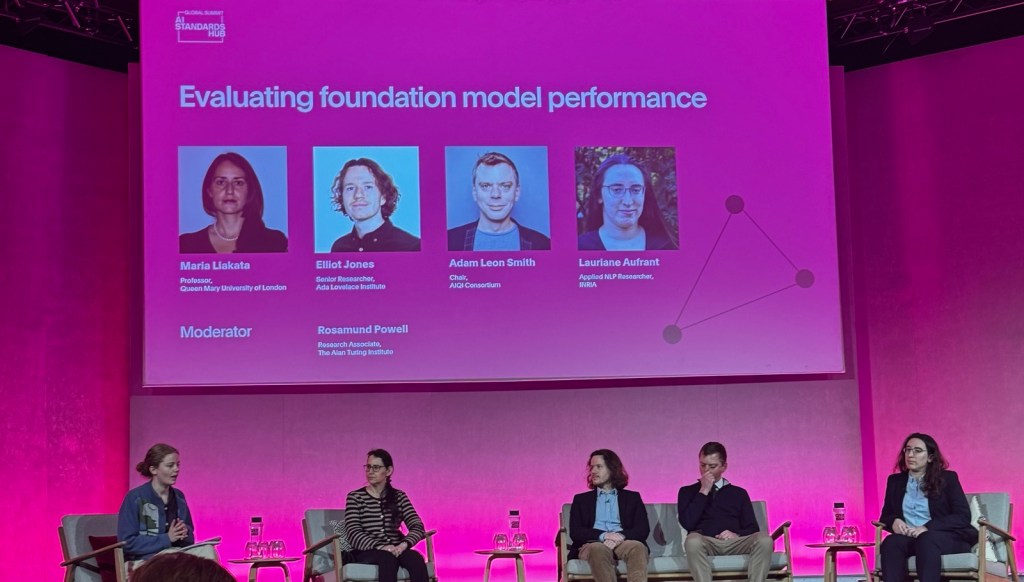
Day two of the summit brought forward discussions on governance challenges posed by foundation models—large AI systems that have been trained on massive datasets and have broad applicability across various domains. The rapid development of these systems necessitates a new approach to AI governance, one that integrates both safety and innovation. As AI technologies grow more complex, the role of standardization becomes ever more critical. Experts at the summit discussed the importance of aligning AI safety and standardization efforts to ensure that these technologies can be regulated effectively without stifling innovation.


Philippines’ Strategic Approach to Global AI Cooperation
The Philippines’ participation in the summit reflected its ongoing commitment to fostering international cooperation in AI governance. By engaging in these global dialogues, the Philippines positions itself as a leader in AI safety, ethics, and inclusion, advocating for AI systems that are not only technically advanced but also aligned with international human rights standards.
The DICT’s role in the development of the International AI Safety Report 2025—a landmark document produced by global AI experts—further solidifies the Philippines’ position at the forefront of AI governance. This involvement is part of the country’s broader strategy to contribute to the creation of global AI policies that promote transparency, accountability, and inclusivity.
Moreover, the Philippines has been proactive in its participation in global AI forums, contributing to the shaping of international frameworks that balance innovation with safety. The summit’s discussions on AI standardization and governance resonated deeply with the Philippines’ ongoing efforts to integrate ethical principles into national AI policies, particularly through the EUREKA framework.
Recommendations for the Philippines: Leading the Charge in AI Governance
The AI Standards Hub Global Summit provided a platform for key takeaways that will guide the Philippines in its quest for AI governance leadership. Undersecretary Batapa-Sigue the Philippines can effectively position the country as a responsible and innovative leader in the global AI ecosystem, fostering international collaboration, technical innovation, and ethical compliance in AI development.
She recommends the promotion of a sustained global dialogue on AI standards development and implementation. The Philippines should take proactive steps to ensure its position as a leader in responsible AI governance, fostering innovation while safeguarding public trust, human rights, and global interoperability. One essential recommendation is to promote a sustained global dialogue on AI standards development and implementation. The Philippines should engage with governments, international organizations, academia, industry leaders, and civil society to foster consensus and ensure harmonized AI governance frameworks. This will help the country balance innovation with regulatory compliance, supporting cross-border AI deployment.
The Philippines should also showcase exemplary models and benchmark best practices in AI governance. The Philippines can learn from and showcase the experiences and initiatives of leading institutions worldwide. By exchanging knowledge on regulatory mechanisms, ethical frameworks, risk management methodologies, and technical assurance practices, the country can better shape emerging AI governance strategies and integrate best practices into national policies.
Philippine policy makers should also address the multifaceted challenges of AI regulation and development. Another key focus is showcasing exemplary models and benchmarking best practices in AI governance. By learning from global leaders, the Philippines can integrate these insights into its own AI policies. This includes adopting best practices in AI safety, ethical frameworks, and risk management, and promoting the development of enforceable technical standards that ensure fairness, transparency, and compliance with ethical guidelines. Philippines should focus on AI assurance and certification, establishing voluntary certification systems and expanding testing institutions. This can be complemented by funding ethical AI research and hosting workshops to stay aligned with international trends in AI standardization. By creating a Philippine AI Governance Council, increasing participation in global forums, and building expertise through scholarships, the Philippines will ensure proactive and globally aligned governance while enhancing its capacity to adopt AI standards.
The country should also enhance cross-border collaboration and foster deeper cooperation in AI policy development. The Philippines must enhance cross-border collaboration and foster deeper cooperation in AI policy development, particularly with emerging economies. This will narrow the digital divide and enable capacity-building through international partnerships. In doing so, the Philippines can ensure that AI-driven growth is equitable and benefits all sectors of society, including underserved regions.
There is likewise the need to highlight the crucial role of civil society in shaping ethical and equitable AI systems. Additionally, civil society plays a critical role in shaping ethical and equitable AI systems. The Philippines should emphasize the inclusion of non-governmental organizations, advocacy groups, and academic communities in the development of AI governance models. Promoting inclusivity will ensure that diverse perspectives are integrated, leading to more equitable solutions that reflect the needs of all communities.
Undersecretary Batapa-Sigue stresses the need to support the advancement of the Philippines’ national AI strategy as a collective goal under the leadership of President Ferdinand Marcos, Jr. To further strengthen its AI governance framework, the Philippines should support the advancement of its national AI strategy by facilitating exposure to cutting-edge international standards and best practices. This includes establishing a National AI Safety Laboratory, developing open-source guidelines, and implementing open-source AI standards to safeguard public trust. The country should also create a comprehensive AI Standards Roadmap aligned with ASEAN and OECD frameworks, ensuring global interoperability.
The Philippines should focus on AI assurance and certification, establishing voluntary certification systems and expanding testing institutions. This can be complemented by funding ethical AI research and hosting workshops to stay aligned with international trends in AI standardization. By creating a Philippine AI Governance Council, increasing participation in global forums, and building expertise through scholarships, the Philippines will ensure proactive and globally aligned governance while enhancing its capacity to adopt AI standards.
Positioning the Philippines as a Global AI Leader
The AI Standards Hub Global Summit was a pivotal event for global AI governance, and the Philippines’ active participation exemplified its commitment to shaping international AI policies. By continuing to engage with global stakeholders, promote ethical AI development, and align national policies with international standards, the Philippines is positioning itself as a key player in the global AI ecosystem. This approach not only ensures that the country stays at the cutting edge of AI innovation but also reinforces its leadership role in advocating for AI systems that are safe, transparent, and inclusive for all.
Featured Speakers
The Global Summit featured leading voices from standards development bodies, national governments, intergovernmental organizations, AI Safety Institutes, the wider AI safety research community, and civil society. Notable keynote speakers were Baroness Joanna Jones, Parliamentary Under-Secretary of State for the Future Digital Economy and Online Safety, UK Government, who opened the summit with a keynote outlining the UK Government’s AI priorities, emphasizing the role of digital standards in international governance. Jerry Sheehan, Director of Science, Technology, and Innovation at the OECD, delivered a keynote speech examining the relationship between standardization and regulation in the context of AI governance. Tomas Lamanauskas, Deputy Secretary-General at the International Telecommunication Union (ITU), provided insights into the global AI landscape, highlighting the importance of international cooperation in AI standardization.

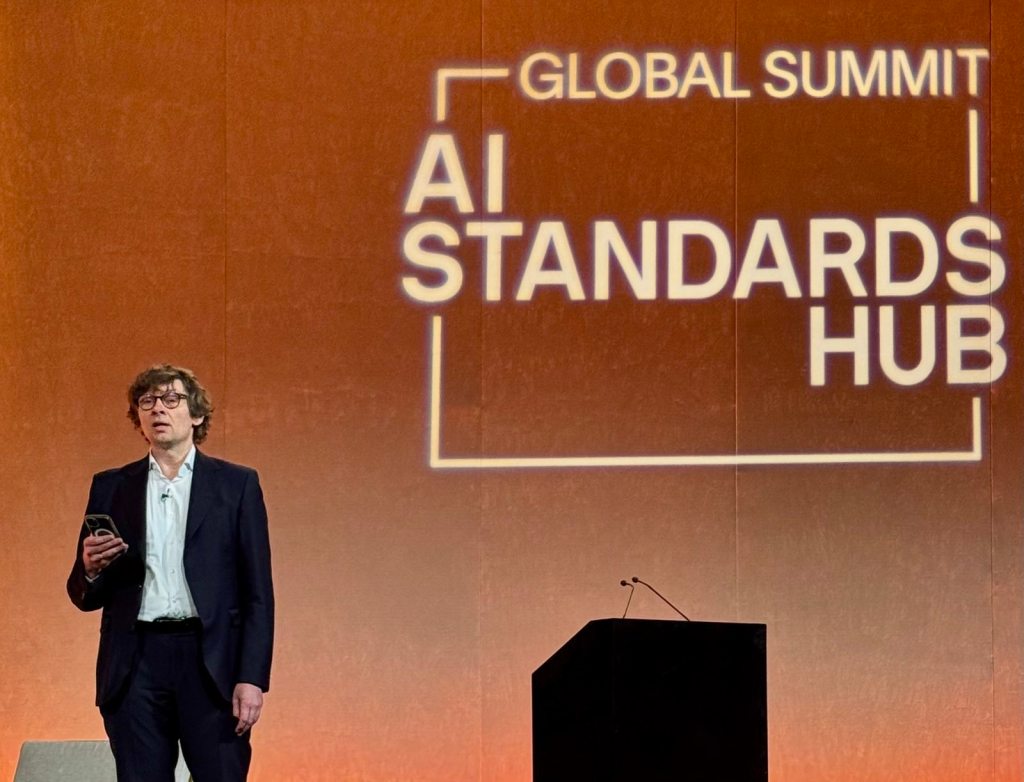
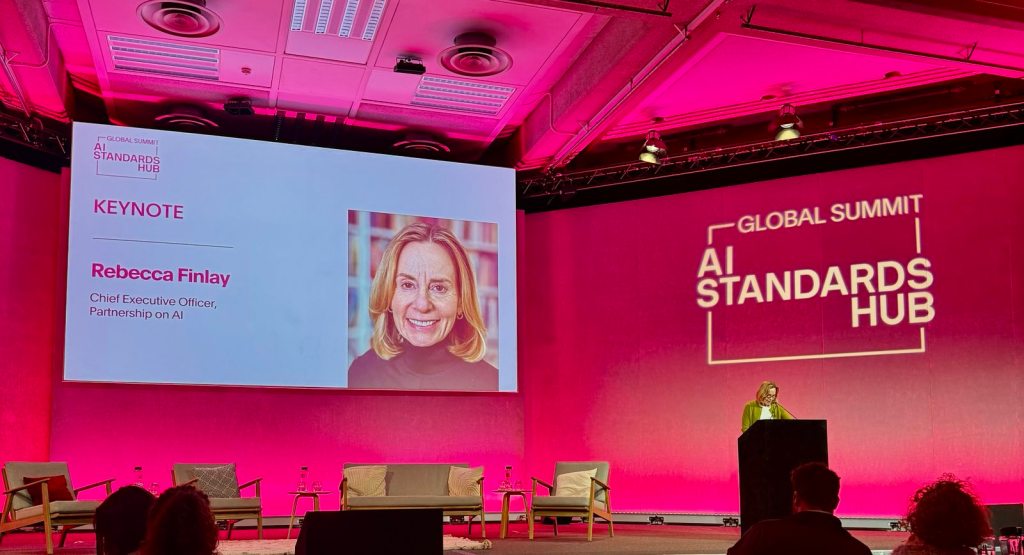
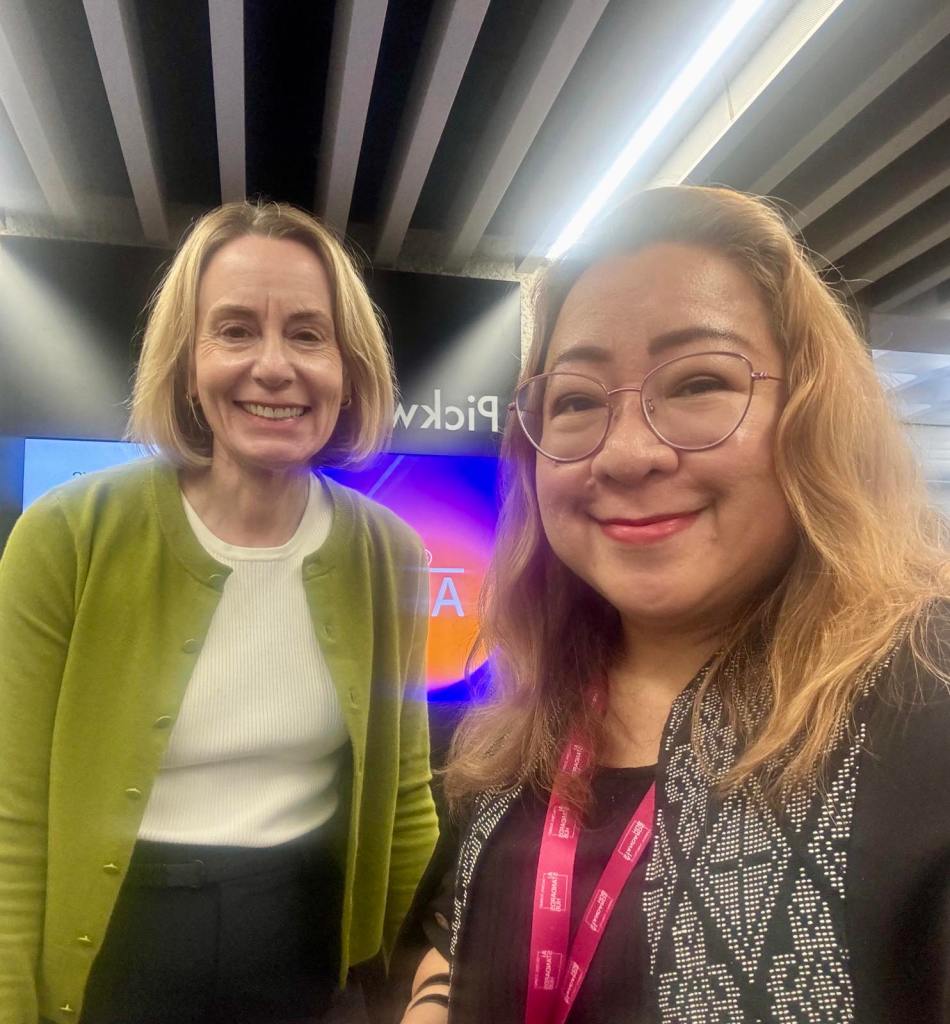
The AI Standards Hub Global Summit featured a distinguished lineup of speakers, including Laura Lazaro Cabrera, Programme Director for Equity and Data at the Centre for Democracy and Technology Europe, who leads efforts to promote human rights within the EU’s Artificial Intelligence Act. Rebecca Finlay, CEO of Partnership on AI, also shared her expertise in advancing positive AI outcomes through a global nonprofit that unites over 100 partners across 17 countries. Karine Perset, Acting Head of the OECD AI and Emerging Digital Technologies Division, provided insights into AI policy and governance frameworks. Anjana Ahuja, science journalist and author of Spike: The Virus vs The People, shared her deep understanding of the social, ethical, and political aspects of AI. Olivier Alais, Program Coordinator at the International Telecommunication Union (ITU), emphasized integrating human rights into technology standards.
Ana Alania, Research Manager for AI Governance at The Alan Turing Institute, focused on the intersection of AI regulation and standardization. Markus Anderljung, Director of Policy and Research at the Center for the Governance of AI, explored governance challenges in AI systems. Pierre Bilodeau, Vice President of Standardization Services at the Standards Council of Canada, shared his expertise on the global interoperability of AI standards. Lauraine Aufrant, Head of Standardization at Inria, the French National Institute for Research in Digital Science and Technology, contributed to discussions on AI assurance ecosystems. David Cuckow, Director of Digital at the British Standards Institution (BSI), addressed the role of standards in ensuring AI safety and trustworthiness.
Sahar Danesh, Senior Government Engagement Manager at BSI, played a key role in shaping the UK’s voice in AI governance. Jennifer Ding, Co-Director of Boundary Object Studio, highlighted AI’s impact on public interest and ethical considerations in AI initiatives. Silvio Dulinsky, Deputy Secretary-General at the International Organization for Standardization (ISO), shared his vast experience in international standardization. Paul Duncan, Principal Scientist at the National Physical Laboratory (NPL), presented his work on AI and data science in advanced systems. Ravi Subramaniam, Senior Director at IEEE, discussed the development of AI ethics certification programs.
Tatjana Evas, Legal and Policy Officer at the EU AI Office, provided valuable perspectives on the relationship between AI law and sectoral legislation. Juliette Fropier, AI Lead at the French Ministry of Environment, focused on digital transition and public data valorization in ecological governance. Arti Garg, Chair of the IEEE P7100 Environmental Impacts of AI Working Group, explored AI’s environmental implications and leadership in AI ethics. Matt Gantley, CEO of the United Kingdom Accreditation Service (UKAS), discussed accreditation in AI standards. Calum Handforth, Senior Adviser on Digital and Tech Transformation at the Tony Blair Institute for Global Change, presented on digital governance strategies and global AI priorities.
Stefan Haufe, Associate Professor at Technische Universität Berlin, shared insights into uncertainty modeling and machine learning in AI. Monica Atieno Okoth, Assistant Manager at the Kenya Bureau of Standards, contributed her experience in AI standardization across developing regions. Florian Ostmann, Director of AI Governance at The Alan Turing Institute, led conversations on regulatory innovation and AI assurance. Eduardo Paranhos, Head of AI at the Brazilian Software Association, discussed legal frameworks in AI governance. Tomas Lamanauskas, Deputy Secretary-General at the International Telecommunication Union (ITU), offered a global perspective on AI governance frameworks.
In-Ho Lee, Principal Research Scientist at the Korea Research Institute of Standards and Science, addressed challenges in AI standardization. David Leslie, Professor of Ethics, Technology, and Society at Queen Mary University of London, focused on ethical decision-making frameworks for AI systems. Maria Liakata, Professor at Queen Mary University of London, discussed the application of AI in processing sensitive user-generated data. Valerie Livina, Principal Scientist at the National Physical Laboratory (NPL), worked on AI’s application in energy and environmental sectors. Peter Mattson, President of MLCommons, shared his work in advancing AI benchmarks and standards.
Chris Meserole, Executive Director of the Frontier Model Forum, presented his nonprofit’s work in advancing AI safety and security. Philippe Metzger, Secretary-General & CEO of the International Electrotechnical Commission (IEC), led discussions on global standardization in AI technology. Monica Atieno Okoth, Assistant Manager at Kenya Bureau of Standards, shared her experience in ICT standards and AI regulation in emerging markets. Elizabeth Seger, Director of Digital Policy at Demos, focused on epistemic security and AI democratization. Gbenga Sesan, Executive Director of the Paradigm Initiative, advocated for digital rights and inclusion across Africa.
Jerry Sheehan, Director of the Science, Technology, and Innovation Directorate at the OECD, provided critical insights into AI governance at the international level. Sungpil Shin, Senior Researcher at the Korea AI Safety Institute, discussed global AI standardization efforts. Adam Leon Smith, Chair of AIQI Consortium, offered expertise in AI regulation and international standards for responsible AI. Susan Taylor Martin, CEO of BSI Group, discussed global AI quality infrastructure and conformity assessment frameworks. Volker Turk, UN High Commissioner for Human Rights, provided a human rights perspective on AI governance and the protection of vulnerable populations.
The AI Standards Hub Global Summit also featured Catherine Vigneron, Deputy Director of Standardisation at CEN-CENELEC, who holds advanced degrees in Economics and Finance and Applied Economics. Marta Ziosi, a Postdoctoral Researcher at the University of Oxford, shared her research on standards for General Purpose AI and her role as a vice-chair for the EU GPAI Code of Practice. Roberto Viola, Director General of DG CONNECT at the European Commission, provided insights from his extensive experience in managing EU connectivity and spectrum policy. Hanah Zoo, Assistant Professor at the Graduate School of Global Cooperation at Hallym University, contributed her research on AI governance in the context of international development cooperation. Camilla de Coverly Veale, Senior Manager for AI Policy at the Mozilla Foundation, led discussions on AI policy in the UK and her previous role with the Startup Coalition. Lastly, Dinah van der Geest, Digital Programme Manager at ARTICLE 19, spoke about her work advocating for rights-respecting policies and technical standards in Internet infrastructure.
The summit was organized and facilitated by key institutions such as The Alan Turing Institute, led by Dr. Florian Ostmann, Director of AI Governance and Regulatory Innovation, who played a pivotal role in organizing the event and facilitating discussions on trustworthy AI. The British Standards Institution (BSI) contributed to the development of standards for trustworthy AI and promoted diverse stakeholder perspectives on AI standardization. Additionally, The National Physical Laboratory (NPL) supported the summit by providing valuable insights into the technical aspects of AI governance and standardization. The summit was organized in collaboration with major international bodies, including the Organisation for Economic Co-operation and Development (OECD), the Office of the United Nations High Commissioner for Human Rights (OHCHR), and the Partnership on AI. These partners aimed to influence and shape global policies concerning AI governance.


Written with notes from Rafael J. Prudente III and Antonion N. Salvador.


 Jocelle Batapa Sigue
Leave a comment