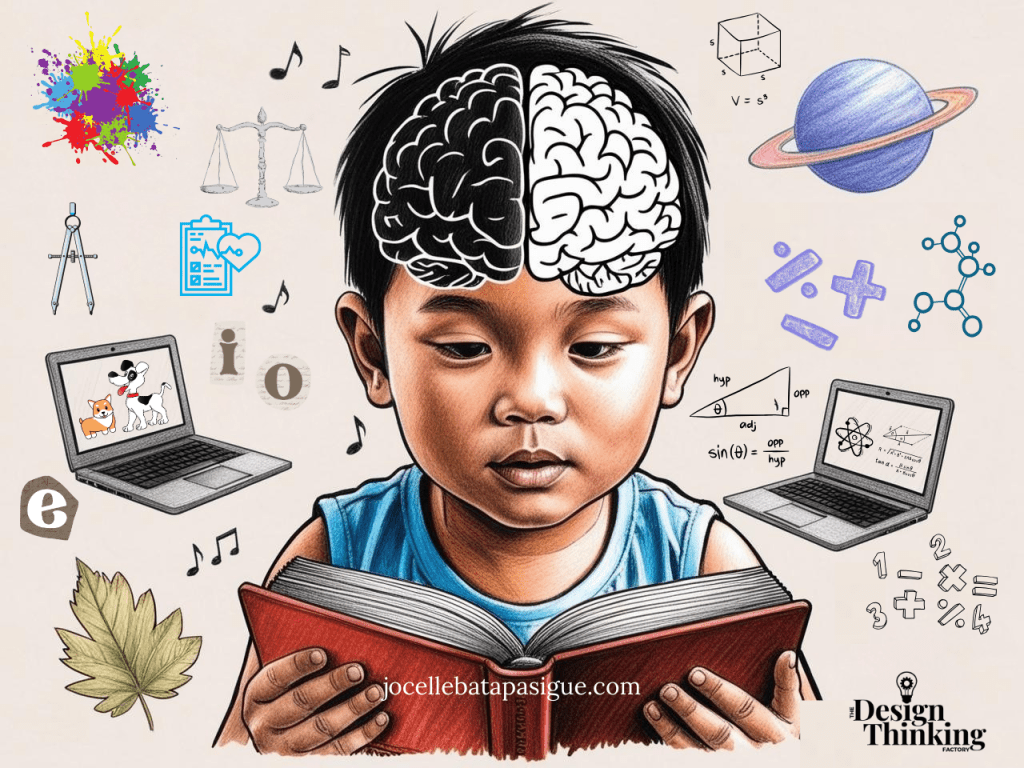
Brain development is a remarkable journey that unfolds from birth through adulthood, encompassing various critical stages. In early childhood (0-5 years), the brain experiences rapid growth and forms the foundational neural connections essential for language, sensory processing, and emotional development. By middle childhood (6-12 years), the brain continues to refine its cognitive abilities, emphasizing decision-making, impulse control, and social learning.
During adolescence (13-25 years), the brain, especially the prefrontal cortex, undergoes significant changes, refining cognitive abilities and understanding long-term consequences.
A vital skill that influences cognitive development is reading. Reading not only enhances comprehension but also stimulates critical thinking and problem-solving skills. However, in the Philippines, there is a pressing issue: nearly 19 million Filipinos who completed junior and senior high school between 2019 and 2024 are functionally illiterate. This means they can read but struggle to understand simple texts. This challenge highlights the urgent need for improved literacy programs to enhance reading comprehension skills.
Countries worldwide offer valuable examples of addressing functional illiteracy. In lower-income economies, government support organizations which focus on improving literacy through community-based programs, reaching millions of children and adults. These approaches anchored on the principles of social impact investing underscore the importance of community participation, personalized learning, and resource accessibility in combating functional illiteracy.
FACTORS AFFECTING FUNCTIONAL LITERACY
Reading is an essential skill that plays a crucial role in the overall development of children. In the Philippines, however, a significant number of children struggle with reading comprehension and literacy. Several factors contribute to this issue, many of which are deeply rooted in systemic challenges.
The factors contributing to lower reading skills and comprehension among Filipino children are multi-faceted and deeply interconnected. These include disparities in access to quality education, language barriers, limited reading culture, inadequate teacher training, and the socioeconomic challenges faced by many families. Addressing these issues requires a comprehensive approach that focuses on improving educational access, fostering a reading culture, supporting teachers, and addressing the broader socioeconomic factors that affect children’s learning. By tackling these challenges head-on, the Philippines can work towards building a more literate and informed society, where every child has the opportunity to succeed academically and beyond.
Access to Quality Education: Disparities in educational resources and facilities, particularly in rural or underserved areas, can impact learning outcomes.
One of the most significant factors contributing to low reading comprehension is the disparity in access to quality education. In rural and underserved areas, educational resources such as well-trained teachers, appropriate learning materials, and adequate infrastructure are often lacking. Schools in remote regions may suffer from overcrowded classrooms, where one teacher is forced to handle a large number of students. Many public schools, especially those in rural and conflict-affected regions, do not have sufficient textbooks, supplementary learning materials, or proper classroom facilities, which hampers the ability of children to engage effectively with their lessons. Without the necessary resources, children struggle to develop foundational reading skills, making it harder for them to comprehend texts as they advance in their education.
In addition to physical resources, the quality of instruction also varies significantly. While some teachers are highly dedicated and skilled, many others may lack the professional development opportunities needed to stay updated with effective teaching strategies. This discrepancy leads to unequal learning experiences, particularly for children in rural areas who are most at risk of falling behind in reading and literacy.
Language Barriers: Many Filipino children speak different languages or dialects at home, which can create challenges when the medium of instruction in schools is different.
Language barriers are another major challenge to reading comprehension in the Philippines. The country is home to a diverse array of languages and dialects, with over 170 languages spoken across various regions. While Filipino (based on Tagalog) is the official language, many children speak different dialects at home, such as Ilocano, Cebuano, or Hiligaynon. This multilingual environment can pose a challenge when the medium of instruction in schools is Filipino or English, as these children may not fully understand the language being used in class.
Regions where children speak local languages may struggle when their education is primarily conducted in Filipino or English. Research has shown that children learn best when they can connect what they read with the language spoken at home. As a result, the disconnect between home languages and the classroom language contributes to lower comprehension skills. Addressing this issue may require bilingual education models or language-sensitive teaching approaches to ensure that all students can grasp reading materials more effectively.
Reading Culture: Limited access to books at home and in communities, along with less emphasis on reading as a leisure activity, can affect literacy.
In many Filipino households, there is limited emphasis on reading as a leisure activity. This lack of a reading culture is partly due to limited access to books and educational materials. For children growing up in poverty-stricken families, buying books is often not a priority, and many may not even have access to a personal library at home. Many Filipino children have no access to books outside of their school textbooks. Without a culture of reading encouraged by parents or guardians, children miss out on the cognitive benefits that come with regular exposure to new words, ideas, and concepts.
While there are various initiatives aimed at improving literacy, such as mobile libraries and community-based programs, these efforts are often limited and concentrated in urban areas. As a result, children from rural areas are often left behind when it comes to developing a strong reading habit. The lack of access to books, compounded by insufficient encouragement to read at home, reinforces the cycle of poor literacy skills.
Teacher Training and Support: Teachers may need more training and resources to effectively teach reading skills.
Teacher training and support are pivotal in improving children’s reading comprehension skills. Many teachers in the Philippines lack specialized training in teaching reading, which can affect how well they can foster literacy in students. Traditional methods of teaching may not address the diverse learning needs of students, especially those with learning difficulties or those coming from non-literate backgrounds.
Efforts have been made to address this gap to trains teachers in various regions to better teach in the language familiar to their students. However, these initiatives are still in the early stages of development and are not yet widespread across all regions. In many schools, particularly those in remote or underfunded areas, teachers may not have the necessary resources, tools, or ongoing professional development opportunities to support effective reading instruction.
For instance, in schools where teachers are overloaded with administrative tasks or are teaching subjects outside their field of expertise, they may struggle to provide quality reading instruction. Strengthening teacher training programs and ensuring that educators are equipped with modern, research-based strategies for teaching reading would go a long way in addressing this issue.
Socioeconomic Factors: Poverty and related issues, such as malnutrition, can impact cognitive development and school performance.
Poverty is a major driver of poor reading skills and comprehension in the Philippines. Children from low-income families often face multiple barriers to success in school, including inadequate nutrition, poor living conditions, and limited access to educational resources. Malnutrition, in particular, has a profound impact on cognitive development, as studies have shown that children who suffer from malnutrition are more likely to struggle with focus, memory, and learning. These issues are compounded by the financial inability of families to provide necessary school supplies or extra tutoring support outside the classroom.
In the Philippines, a substantial proportion of the population still lives below the poverty line, and this directly affects children’s educational outcomes. Many Filipino children are at risk of poor educational performance due to poverty. Families living in poverty often prioritize basic needs such as food and shelter over education, which means that children in these households are less likely to be exposed to reading materials or have the support needed to develop strong literacy skills.
Addressing these issues requires a multi-faceted approach, including improving access to quality education, fostering a strong reading culture, and supporting teachers and families.
The factors contributing to lower reading skills and comprehension among Filipino children are multi-faceted and deeply interconnected. These include disparities in access to quality education, language barriers, limited reading culture, inadequate teacher training, and the socioeconomic challenges faced by many families. Addressing these issues requires a comprehensive approach that focuses on improving educational access, fostering a reading culture, supporting teachers, and addressing the broader socioeconomic factors that affect children’s learning. By tackling these challenges head-on, the Philippines can work towards building a more literate and informed society, where every child has the opportunity to succeed academically and beyond.
My Personal Journey as a Reader

I’d like to share my personal journey of cultivating a deep love for reading, which might seem unusual to some. As a child, I read wherever I could—even on a moving bus or in the bathroom. Every night, I would read until I fell asleep, often with a book resting on my chest—a habit that earned me gentle scolding from my grandparents.
Developing a strong reading culture is essential, not just for the sake of reading itself but for enhancing knowledge, memory, and understanding the world around us. My father instilled this value in us early on by insisting we read newspapers daily and stay informed about current events, scolding us when we didn’t.
I was so passionate about reading that I’d save up my money to visit a book club in the city, despite the challenge of commuting there. I’d rent books, spending 5 pesos per book and reading about three to five books weekly. My family also rented comics, which I loved. These comics, filled with pictures and engaging stories of fantasy, romance, horror, and drama, made reading enjoyable and accessible. Additionally, we had “Song Hits” magazines, which featured lyrics and profiles of favorite singers, enriching my love for both reading and music.
I spent countless hours reading my Lolo Jaime’s medical books and delving into fascinating stories about myths. Growing up, I was captivated by the lives of historical figures like Anne Frank and Martin Luther King, whose stories shaped my worldview. I often found myself struggling with graduation clearances due to overdue books, a challenge that followed me from elementary school all the way through college.
In high school, I’d borrow encyclopedias from friends and carry them home. I also devoured countless Barbara Cartland novels and Nancy Drew mysteries. Reading aloud in class was something I loved, and I dreamed of publishing my work. By the time I reached college, I had already published a poem and shared my opinions in a school publication. Collecting books became a passion, even when funds were tight.
When studying for the bar exam, I read for over eight hours a day, recording my readings on cassette tapes to replay and reinforce my memory. Writing down what I learned helped me retain information. I even set deadlines to motivate myself, like publishing a poem before college.
This dedication to reading has been foundational for me, and I hope that by sharing my story, I can inspire others to embrace reading as a powerful tool for growth and learning. I believe that addressing literacy challenges in the Philippines is crucial for nurturing functionally literate individuals capable of understanding and utilizing what they read.
Tips on How to Expand Reading Skills
Expounding on Reading Strategies for Improving Reading Skills

Reading is one of the most fundamental skills that unlocks knowledge and imagination. To truly improve your reading skills and make the most of your reading time, it’s important to implement several key strategies. These strategies, including reading regularly, joining a book club, setting goals, expanding your vocabulary, and utilizing reading apps, not only enhance comprehension but also make reading a more engaging and enjoyable activity. Below, I’ll expound on each of these strategies in detail.
1. Read Regularly
The most effective way to improve your reading skills is to make reading a regular habit. The more you read, the better you will become at comprehending complex materials, understanding different writing styles, and expanding your vocabulary. It’s not just about reading frequently but also diversifying the types of content you consume. Try to incorporate a variety of materials into your reading routine—such as books, articles, essays, short stories, and even poetry. Each genre offers unique challenges and opportunities for growth. For instance, fiction may engage your imagination and emotional intelligence, while non-fiction can improve your ability to understand factual content and complex arguments. By mixing up your reading material, you’ll become a more versatile reader, equipped to tackle various subjects with ease. Moreover, this regular exposure to different contexts, tones, and vocabularies will enhance your ability to critically analyze and appreciate the richness of language.
2. Join a Book Club
Reading alone is wonderful, but discussing what you’ve read with others can exponentially boost your comprehension and make reading a more social experience. Joining a book club offers the opportunity to exchange perspectives, learn from others, and see things from different viewpoints. This interaction can deepen your understanding of the material, as hearing someone else’s interpretation of the story or subject matter can highlight ideas you may have missed. Moreover, it encourages you to read more thoughtfully, knowing you’ll have to discuss the material with others. Book clubs often focus on specific genres, which can expose you to new authors and topics you wouldn’t have considered on your own. For many, this communal approach to reading makes the experience more enjoyable, as it fosters a sense of connection with fellow readers and encourages consistency in keeping up with reading goals.
3. Set Goals
One of the most effective ways to establish a reading habit is by setting achievable, measurable goals. Without clear goals, it’s easy to lose track of your reading or get discouraged by the size of a book. Start with small, manageable goals that you can easily incorporate into your daily routine. For example, you could set a goal of reading 10 pages a day or finishing one chapter a week. As you become more comfortable with this routine, you can increase the challenge by setting more ambitious targets. The key is to create a sense of accomplishment as you progress, which will motivate you to continue. It’s important to note that your goals should be flexible, allowing you to adjust as needed based on your reading pace and availability. Achieving your set goals, no matter how small, will boost your confidence as a reader and make it easier to establish a long-term reading habit.
4. Expand Your Vocabulary
Reading regularly provides an excellent opportunity to enhance your vocabulary, which in turn makes reading easier and more enjoyable. When you encounter unfamiliar words, take the time to look them up and try to incorporate them into your own writing and speaking. A broad vocabulary allows you to understand more nuanced texts, enjoy a wider range of books, and express your thoughts more clearly. By learning new words, you’ll become more comfortable with complex reading materials and feel less overwhelmed by difficult passages. You don’t need to memorize every word you encounter, but try to familiarize yourself with words that appear frequently in the genres you enjoy. A great way to expand your vocabulary is by using a vocabulary journal, where you write down new words and their meanings. Over time, this will help build a stronger connection to the language and make you a more proficient reader.
5. Use Reading Apps
In today’s digital age, reading apps offer a wealth of resources to enhance your reading experience. Audiobooks and e-readers, for example, provide an accessible and engaging alternative to traditional reading. Audiobooks are particularly useful for individuals who are on the go, as they allow you to listen to books while commuting or exercising. This can help you “read” more, even during times when holding a physical book isn’t possible. Audiobooks also have the benefit of narrators bringing the text to life, with varied tones and inflections that can deepen your understanding and enjoyment of the material. E-readers, on the other hand, provide convenience with features such as adjustable text sizes, dictionaries, and highlighting tools, which make reading more accessible. Many e-reader apps also allow for the integration of features like notes and bookmarks, so you can keep track of important passages. Both types of reading apps can help you engage with books in a way that is tailored to your personal preferences and lifestyle, making it easier to integrate reading into your daily routine.
Conclusion
By incorporating these strategies into your reading habits, you can significantly enhance your reading skills. Regular reading, setting clear goals, expanding your vocabulary, and engaging in discussions through book clubs are all powerful tools that can improve your comprehension and make reading more enjoyable. Moreover, leveraging technology with reading apps like audiobooks and e-readers opens up even more opportunities to connect with literature. No matter your current reading level, these approaches will help you grow into a more confident, engaged, and skilled reader over time. The key is to stay consistent, explore different materials, and make reading a part of your everyday life.
 Jocelle Batapa Sigue
Leave a comment