
As the May 12, 2025 Philippine elections approach, the call for transformational leadership rings louder than ever. The Philippines stands at the precipice of opportunity and challenge, and only leaders with visionary qualities, firm moral compasses, and strategic foresight can guide the nation toward a future of inclusive prosperity.
The Qualities of Transformational Leaders
The future of the Philippines demands leaders who embody authenticity and integrity, those whose governance is anchored on truth and transparency. Leaders must uphold fairness, respect human dignity, and foster trust through every decision and action.
More than technical proficiency, leaders must lead with empathy, embracing a servant leadership mindset that genuinely listens to the needs of every Filipino, especially those in underserved regions. They must embody resilience, standing firm against corruption, misinformation, and divisiveness, while showing courage in standing for truth even when unpopular.
A transformational leader must be equipped with competence and digital literacy. They must understand the language of technology and harness it for the good of the people, driving data-driven governance, cybersecurity, and digital transformation.
Most importantly, visionary thinking and innovation are critical. Leaders must anticipate global trends — from artificial intelligence and clean energy to the surge of digital jobs — and strategically position the Philippines at the forefront of these arenas.
Digital Transformation and Data-Driven Governance
As the world moves deeper into the digital era, the Philippines stands at a crucial crossroad. According to the ITU Facts and Figures 2024, while global digital connectivity has made remarkable strides, Southeast Asia — and particularly the Philippines — continues to face persistent gaps in access, quality, and inclusivity. In our country, though urban centers like Metro Manila enjoy fast and reliable internet, rural communities often remain disconnected or trapped with high costs and low speeds. Despite growing investments, true digital equity remains an unfulfilled promise.
While global digital connectivity has improved, gaps remain, especially in regions like Southeast Asia. Leaders must institutionalize open data frameworks, enabling interoperability across government agencies and creating citizen-accessible data portals. Transparency must be an embedded principle, not a mere campaign slogan. Corruption thrives in the absence of strong open data policies. Data-driven integrity frameworks allow citizens to flag fraud and misgovernance, fostering accountability.
For the new leaders who will emerge after May 12, this is a call to action — a mandate to accelerate digital transformation not as a token program but as the backbone of governance itself.
First, there is an urgent need to rethink how we connect every Filipino to opportunity. It is no longer enough to claim rising internet penetration; the question must be, who still remains offline? The Philippines must make serious investments to expand broadband coverage into remote islands, coastal towns, and upland barangays. Leaders must envision a future where no schoolchild is left behind because their community lacks fiber optic lines, and no entrepreneur is forced to migrate to cities just to access markets online. Public-private partnerships must be designed to bring high-quality, affordable internet to every corner of the archipelago, treating connectivity as a basic right, not a luxury.
Connectivity alone, however, is not enough. Transparency must also be woven into the very fabric of governance. New officials must institutionalize open data frameworks that allow government agencies, from the smallest barangay to the highest national department, to share information seamlessly. Citizens must be able to track public funds, scrutinize infrastructure projects, and follow up on local initiatives in real time through easy-to-access digital portals. Open data is not merely about publishing spreadsheets online; it is about returning power to the people — creating a culture of accountability where governance is no longer hidden behind closed doors.
Building a truly interoperable system across agencies is equally vital. Too often, government services remain trapped in isolated silos, forcing citizens to hop from one office to another for the simplest tasks. Leaders must break down these barriers by setting clear, enforceable standards for system interoperability, enabling services to talk to one another and respond more quickly to the needs of ordinary Filipinos.
But even the most advanced systems are useless without people who know how to use them. Digital literacy must become a cornerstone of public policy. Future programs should focus not just on providing gadgets or installing Wi-Fi hotspots, but on teaching citizens — young and old alike — how to navigate the digital world safely and meaningfully. Teachers, farmers, small business owners, and senior citizens must all be given the tools to participate confidently in the digital economy. Technology cannot be allowed to widen the inequality gap; it must be used as a bridge that lifts everyone.
Cybersecurity must be treated with the gravity it deserves. As more government transactions move online, citizens must be assured that their data is protected. Leaders must invest in fortifying the digital infrastructure against breaches and misuse, creating clear policies that protect the digital rights and privacy of every Filipino.
Beyond these critical areas, a shift in mindset must happen across the government itself. Data must become the foundation for policymaking, not mere political intuition. Officials should be trained to understand, interpret, and use real-time data to drive decisions, measure program impacts, and continuously adapt policies. A government that listens to numbers, evidence, and the voices of its people is a government that truly serves.
At the heart of all these efforts must be an unwavering commitment to transparency. Digital transformation is meaningless if it does not lead to greater citizen empowerment. Leaders must ensure that every peso spent, every policy implemented, and every project launched can be seen, questioned, and improved by the people it is meant to serve.
The ITU Facts and Figures 2024 make it clear: digital transformation is no longer optional. For a country like the Philippines — young, vibrant, and brimming with potential — it is the key to unlocking true inclusive growth. It is the path to better education, stronger health systems, more dynamic local economies, and a more resilient democracy.
The new leaders of the Philippines have before them a once-in-a-generation opportunity. If they embrace technology not just as a tool, but as a philosophy of governance rooted in openness, inclusivity, and evidence, they will not just close the digital divide — they will usher in a golden era of Filipino empowerment.
Empowering Countryside Innovation
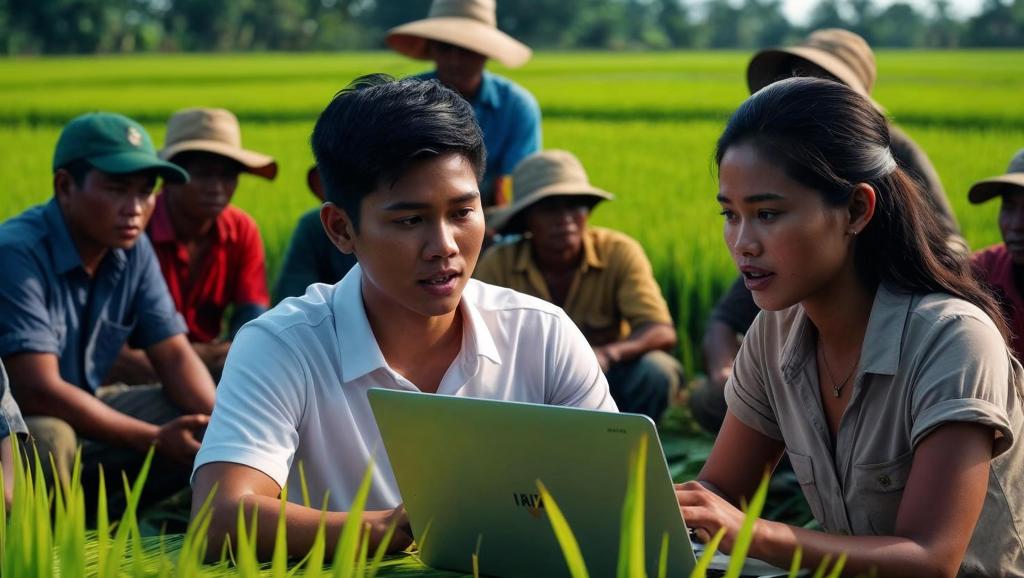
Leadership must decentralize prosperity, empowering provinces, cities, and municipalities to self-actualize economically and socially. As detailed in the State of Digital Development and Trends in Asia and the Pacific 2025 (ITU), rural digital innovation holds the key to inclusive national development. Supporting ICT councils, building digital ecosystems, and fostering public-private-academe collaborations are critical steps.
Empowering countryside innovation is not simply about bringing technology to rural areas; it is about nurturing the spirit of self-determination within local communities. New leaders must view provinces, cities, and municipalities as engines of innovation in their own right, not mere recipients of centralized programs. As highlighted in the ITU’s State of Digital Development and Trends in Asia and the Pacific 2025, rural digital hubs can drive transformative growth when local governments are given the tools, authority, and resources to lead their own digital revolutions. True empowerment means trusting local leaders to chart their own pathways based on their unique strengths and challenges.
To build a strong digital countryside, one crucial strategy is strengthening and expanding local ICT councils. These councils, composed of dynamic collaborations between the academe, private sector, and government, have already shown success in cities like Bacolod, Iloilo, and Davao. Future leaders must fund, professionalize, and institutionalize ICT councils across the country, ensuring they have the mandate to design digital roadmaps, attract tech investments, and champion skills development initiatives tailored to their locality. Innovation thrives when local stakeholders — not distant agencies — drive the vision, ensuring technology addresses real community needs from agriculture to tourism to education.
Beyond governance structures, building digital ecosystems means creating vibrant networks where entrepreneurs, youth, farmers, and SMEs can access digital skills training, mentorship, funding, and markets. Public-private partnerships must be crafted not only to build infrastructure but to stimulate digital entrepreneurship in the countryside. Leaders must envision rural innovation centers, smart agriculture programs, creative industries, and tech-enabled cooperatives rising across the archipelago — positioning the Philippines not as a nation with a few thriving cities, but as a country where every community has a digital heartbeat, pulsing with opportunity.
Youth Digital Empowerment and Lifelong Learning
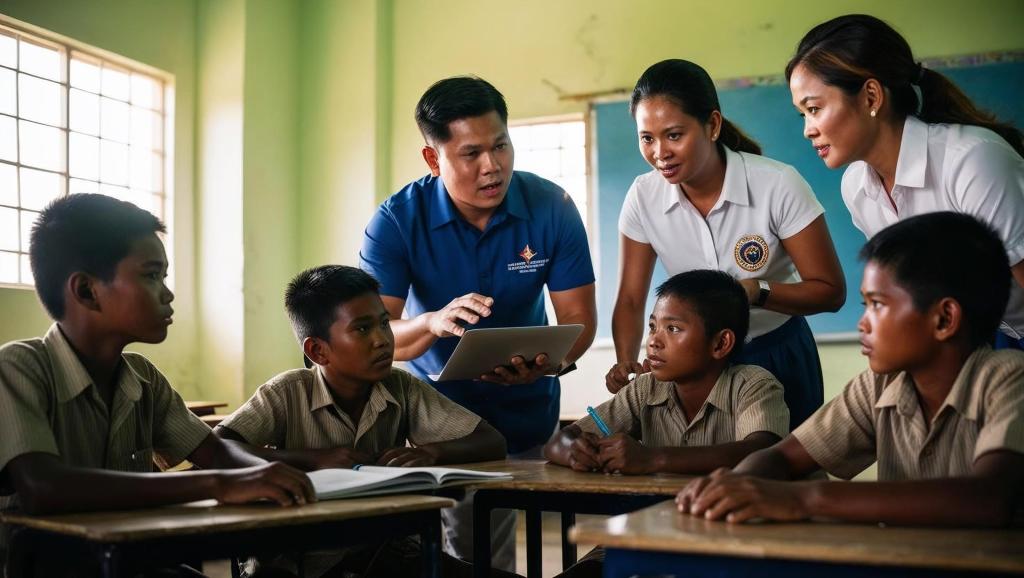
The Global Skills Taxonomy Toolkit 2025 and Job Skills Report 2025 from the World Economic Forum emphasize the urgency of a skills-based economy. Filipino youth must be equipped with digital, AI, and entrepreneurship skills. Leaders must foster ecosystems where future-ready skills are developed in schools, communities, and online platforms, ensuring the Philippines does not just consume technology but also creates and innovates.
Newly elected leaders must recognize that empowering Filipino youth goes far beyond offering traditional education pathways; it demands building a dynamic ecosystem where skills are constantly evolving to meet the needs of a digital economy. According to the Global Skills Taxonomy Toolkit 2025, it is no longer sufficient to measure success through degrees or diplomas alone — the future belongs to those who possess real-world digital competencies, entrepreneurial mindsets, and the adaptability to thrive in a rapidly changing global landscape. Leaders must create policy environments that prioritize skill validation, micro-credentialing, and industry-recognized certifications to help young Filipinos compete on a world stage.
Beyond reforming education, leaders must invest in community-driven platforms for lifelong learning. Community centers, libraries, local ICT hubs, and even barangay halls must be transformed into micro-learning ecosystems where young people, regardless of income or location, can access free or affordable training in coding, AI, e-commerce, data analytics, and emerging green technologies. The Job Skills Report 2025 stresses that the fastest-growing job opportunities will require foundational knowledge of AI and digital tools — and thus access to these learning resources must become as fundamental as access to healthcare or public schooling.
Finally, fostering innovation among youth requires more than just teaching technical skills — it demands cultivating entrepreneurial spirit and creativity. Leaders must promote youth startup competitions, seed funding programs, mentorship networks, and innovation labs where young creators can turn ideas into real-world solutions. By championing a culture that values experimentation and responsible risk-taking, newly elected officials can ignite a new generation of Filipino innovators, ensuring that the Philippines not only keeps pace with the global economy but becomes a vital contributor to it.
Job Creation Through Digital and Green Economies

The Rise of Global Digital Jobs 2024 outlines how remote digital work is becoming the new normal. Southeast Asia, including the Philippines, can tap into millions of digital jobs by creating favorable investment climates, upskilling workers, and embracing remote work infrastructures. Simultaneously, sustainable green economy initiatives must be prioritized to future-proof growth and protect the environment.
Creating jobs through digital and green economies requires a strategic break from outdated models of employment that rely heavily on physical presence and resource extraction. The Rise of Global Digital Jobs 2024 report shows how remote digital work is no longer a temporary trend but a structural shift in the global economy. New leaders must see beyond traditional outsourcing and BPO models and focus instead on nurturing a truly borderless Filipino workforce. This means aggressively promoting policies that improve remote work infrastructure — from faster internet speeds to co-working spaces in provincial towns — and offering tax incentives for companies that hire remote Filipino talent, whether in IT, creative industries, finance, or emerging tech sectors.
Alongside the digital push, embracing the green economy is critical to future-proof the country’s growth. New policymakers must stimulate green sectors such as renewable energy, sustainable agriculture, eco-tourism, and circular manufacturing. This aligns with global sustainability goals and opens doors to a new generation of green jobs. Leaders should introduce targeted programs that re-skill workers displaced by traditional industries, equipping them with skills in areas like solar panel installation, sustainable farming techniques, environmental auditing, and clean technology entrepreneurship. These efforts are not just about protecting the environment — they represent a major opportunity for rural development and economic resilience.
At the intersection of digital and green lies a transformative potential that Philippine leaders must harness: digitally-enabled green jobs. Farmers can be trained in precision agriculture using drones and AI. Fisherfolk can use data analytics for sustainable fishing. Small businesses can tap into e-commerce platforms that prioritize eco-friendly products. To make this happen, newly elected leaders must prioritize policies that break down barriers between innovation, environment, and employment — building ecosystems where technology and sustainability are no longer treated separately, but as twin engines of inclusive, lasting prosperity.
Recently, Malacanan has issued an order authorizing the issuance of a Digital Nomad Visa. Here is a link to my article regarding Digital Nomad.
Ethical AI and Technology Governance

The International AI Safety Report 2025 stress the need for responsible innovation. Philippine leaders must champion ethical AI governance, ensuring transparency, fairness, and respect for privacy. Regulatory frameworks must be developed to foster innovation while safeguarding citizens’ rights.
As artificial intelligence (AI) increasingly shapes economies, governance, and everyday life, newly elected Philippine leaders must place ethical AI stewardship at the forefront of their policy agenda. The International AI Safety Report 2025 makes it clear that without proactive measures, AI could exacerbate social inequalities, manipulate public opinion, and expose citizens to new forms of exploitation. In the Philippine context, where regulatory frameworks are still evolving, leaders must urgently establish national AI principles rooted in fairness, accountability, transparency, and inclusivity. This is not just a matter of innovation policy — it is a human rights imperative.
Leadership must champion the creation of agile and forward-looking regulatory bodies that can oversee AI deployment across sectors such as health, education, agriculture, and public administration. Leaders must push for dynamic risk assessment systems, ethical standards for AI procurement, and stringent audits for AI applications that interact with sensitive citizen data. Particular attention must be paid to preventing algorithmic bias that could deepen existing inequalities — for instance, biased lending algorithms or discriminatory facial recognition technologies must never be allowed to take root in Philippine systems.
Beyond regulation, ethical AI governance also demands public engagement and education. Leaders must ensure that ordinary citizens are empowered to understand how AI affects their lives and how their data is being used. Transparency must be built into every AI-powered service, with explainability requirements that allow people to challenge and seek redress for harmful automated decisions. By treating AI not merely as a technical tool but as a societal force requiring ethical guidance, the Philippines can leapfrog into a digital future that respects dignity, promotes innovation, and leaves no Filipino behind.
Inclusive Growth and Environmental Sustainability

The 2023 ESG Report by McKinsey underscores that inclusive growth is not optional but necessary for sustained prosperity. Leaders must ensure that economic policies uplift marginalized communities and that sustainability becomes an integral part of national development agendas.
Newly elected leaders must recognize that inclusive growth is no longer a lofty ideal but a fundamental economic necessity. The 2023 ESG Report by McKinsey highlights that economies anchored in inclusivity are more resilient, innovative, and able to weather global disruptions. Filipino leaders must craft policies that deliberately target the barriers faced by marginalized sectors — including rural farmers, urban poor communities, women entrepreneurs, and indigenous groups. Access to capital, digital tools, education, and market linkages must be democratized, ensuring that national progress is not concentrated in the hands of a few, but felt at every grassroots level.
Environmental sustainability, similarly, must move beyond isolated projects and be embedded into the heart of national development planning. With the Philippines among the most climate-vulnerable countries in the world, leaders must integrate climate resilience into infrastructure, agriculture, tourism, and urban planning initiatives. Drawing insights from ITU’s regional reports on sustainable digital development, policies should incentivize the growth of green industries such as renewable energy, sustainable transport, eco-tourism, and green tech startups in local economies. These sectors not only mitigate environmental risks but also create new employment opportunities aligned with a low-carbon future.
Future leaders must also push for strong accountability mechanisms that track both economic and environmental impact. National and local governments should regularly publish ESG (Environmental, Social, and Governance) performance reports, aligning public sector transparency with global best practices. Embracing international sustainability standards will not only attract responsible investors but will also ensure that Philippine growth stories in the next decade are built on fairness, ecological stewardship, and the unwavering principle that no Filipino and no community is left behind in the journey toward prosperity.
Regional and Global Leadership

As outlined in Harnessing AI: Transforming Southeast Asia’s Workforce by LinkedIn, Southeast Asia stands to gain approximately US$1 trillion from AI by 2030. Philippine leaders must not only participate but lead regional digital initiatives, ensuring that benefits cascade to all Filipinos, not just to big businesses or urban centers.
Newly elected leaders by May 12 must recognize that the Philippines’ strength in the digital future will depend on its ability to lead, not just follow, in regional conversations about technology, innovation, and economic transformation. As noted in Harnessing AI: Transforming Southeast Asia’s Workforce, the Southeast Asian region stands to unlock a trillion-dollar opportunity from artificial intelligence by 2030. Philippine leaders must actively shape regional AI standards, champion cross-border collaborations, and ensure that our local industries and workers are strategically positioned to benefit from new markets and emerging technologies, not merely serve as passive consumers or low-cost labor sources.
Leadership on the global stage begins with vision and credibility. New policymakers must invest in strengthening diplomatic and multilateral engagement around digital economy frameworks, cybersecurity agreements, AI governance, and talent mobility within ASEAN and the Asia-Pacific. Participation in global innovation forums, data-sharing alliances, and international regulatory harmonization efforts must be deliberate and proactive. Rather than focusing solely on attracting foreign investment into urban centers, leaders should advocate for frameworks that promote countryside technology investments, regional innovation clusters, and inclusive startup ecosystems — ensuring that the Philippine provinces, too, are connected to global digital value chains.
Equally important, regional leadership must be anchored in developing the Philippine workforce into a global talent powerhouse. As outlined in the WEF Global Skills Taxonomy Toolkit and the Job Skills Report 2025, building internationally recognized skills in AI, cybersecurity, digital entrepreneurship, and data science will position Filipinos not only to thrive locally but also to lead globally. Newly elected officials must champion policies that aggressively internationalize Filipino tech talent, foster digital export industries, and integrate local enterprises into regional supply chains. Only by standing confidently alongside its Southeast Asian neighbors — with skills, innovation, and governance excellence — can the Philippines ensure that the rise of AI and the digital economy truly uplifts all its citizens.
Ignoring international best practices in digital policy, artificial intelligence (AI) governance, and innovation frameworks is no longer a harmless oversight — it constitutes a strategic failure. In an increasingly hyper-competitive, AI-driven global landscape, nations that fail to benchmark their policies, investments, and strategies against international standards risk falling irreversibly behind, not only economically but also technologically and socially. For the Philippines, disregarding the relevance of global standards is a critical miscalculation. These standards are not theoretical ideals; they define the very arena in which the country must compete to secure its digital future. It is equally important for local officials across Philippine cities and municipalities to actively study and learn not only from successful international models but also from best practices within progressive cities and provinces across the country. Digital transformation requires collaborative intelligence — a willingness to innovate locally while thinking globally — to ensure that no community, regardless of size or geography, is left behind in the digital economy.
A New Philippine Social Contract
Upon winning their seats, leaders must immediately launch a 100-Day Transformation Plan, showcasing quick wins in digital governance, youth skills development, and countryside empowerment. Citizen councils must be established to create participatory governance mechanisms, amplifying the voices of women, youth, and indigenous peoples.
A zero-tolerance policy for corruption must be enforced through mandatory transparency portals, citizen audits, and rigorous public reporting. Lifelong learning policies must be embedded into the educational system, with digital literacy and ethics taught across all levels.
Above all, transformational leaders must think beyond their term limits by institutionalizing 10-year national transformation blueprints, ensuring continuity of vision beyond politics.
Conclusion: Beyond the Elections
The May 12 elections are not merely an exercise of democracy. They are a defining moment — a choice between stagnation and true transformation. As a proud Filipina, digital advocate, and public servant who began her mission as a city councilor of Bacolod City, I know this is our moment to reframe the future.
In Bacolod, I started my digital advocacy by pushing the belief that technology could create jobs, spark innovation, and uplift lives in the countryside. What began in a single city grew into a national movement — the birth of ICT councils nationwide, and today, as Undersecretary for ICT Industry Development at the Department of Information and Communications Technology (DICT), I continue to champion this mission at the highest level of service.
The Philippines must now leverage its greatest asset: our young, dynamic, and digitally native population. We are one of the youngest nations in Asia — brimming with creativity, resilience, and untapped potential. But the competition is fierce. Across the globe, nations are racing to dominate the digital economy. If we do not act with urgency, innovation, and unity, we risk being left behind.
We must invest deeply in future skills, countryside innovation, digital jobs, and ethical technology governance. We must create an inclusive economy where no Filipino is left out — and where every innovation uplifts, not excludes.
This election is a choice between staying comfortable — or leading with courage. I call on every Filipino to choose hope, integrity, and transformation. Let us build a Philippines that thrives not just locally, but globally. A Philippines where technology serves humanity, where dignity and innovation walk hand in hand.
If you would like to ask me more about my advocacies, platforms, and vision — you can directly engage through my official AI assistant here: Ask Jocelle AI
The time to act is now — LET US ALL BUILD A FUTURE WE WANT FOR THE PHILIPPINES TODAY because the world will not wait for us.


 Jocelle Batapa Sigue
Leave a comment