
BEIJING, CHINA – Filipino technology leaders and policymakers participated in the APEC Workshop on Women in Science, Technology, Engineering, and Mathematics (STEM), held December 12-13 in Beijing, China, which highlighted the Philippine’s innovative strategies and approaches for promoting women in STEM fields. The workshop, addressing the persistent challenge of women’s underrepresentation in STEM fields across APEC economies, was organized under the advisorship of the Asia Pacific Economic Cooperation (APEC).
As the centerpiece of the program to foster gender equality and innovation, Asia-Pacific leaders unveiled the Development Initiative of Asia-Pacific Women’s Science, Technology, Innovation, and Entrepreneurship, a strategic framework aimed at empowering women to drive scientific progress and economic development in the region.
The initiative recognizes the critical role of women in science and technology as key contributors to social advancement, emphasizing the need to eliminate gender barriers and create an inclusive, collaborative innovation ecosystem.
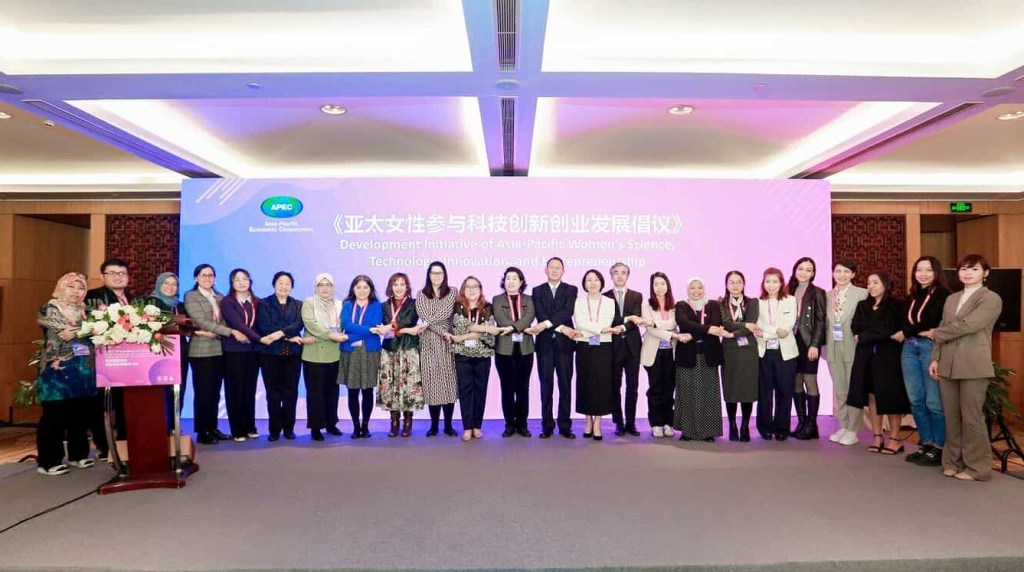
The initiative is built on four key pillars: Reverence for Science, which encourages women to lead in research and innovation; Equality and Inclusivity, advocating for equal opportunities and collaboration across sectors; a Human-Centered Approach, prioritizing women’s well-being and supportive environments; and Openness and Cooperation, promoting cross-border collaboration to advance women’s contributions to regional progress.
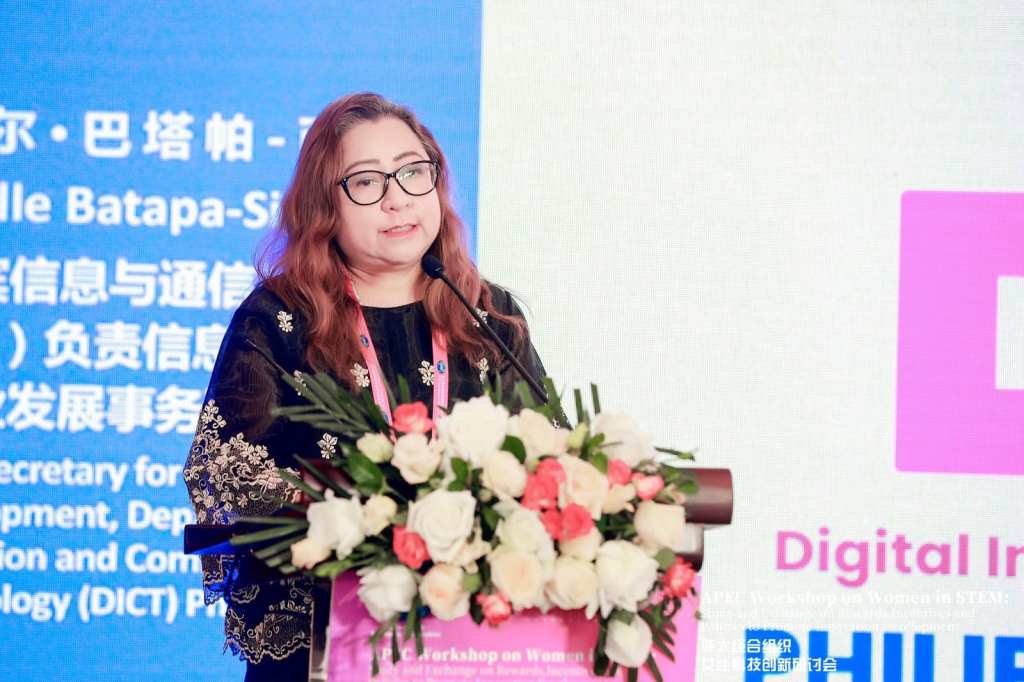
Undersecretary Jocelle Batapa-Sigue of the Department of Information and Communications Technology (DICT) gave an in-depth speech on the Philippines’ Digital Innovation for Women Advancement (DIWA) initiative. Her presentation outlined pioneering approaches to achieving gender digital inclusion across the Philippines, where strategic initiatives are creating new pathways for women in technology.
Mary Joie Cruz, the founder and CEO of Limitless Lab, on “Innovating for Inclusion: Design and Technology for Social Good.” Cruz emphasized how having more Women in STEM through both designers and engineers can enable society to create more inclusive tech because of our innate abilities such as empathy.

Extempo’s Head of Operations, Katherine Dillena, stressed the role of women as the key drivers in tech startups, bringing unique perspectives and leaderships that foster creative and inclusive solutions.

The Executive Director and Chief Sustainability Officer of SmartCT, Kris Villanueva Libunao, who served as the lead researcher of DICT on APEC presented significant findings from the recently concluded APEC-DIWA workshop held in Manila,Philippines September this year. Her presentation, “Advancing Women in Science & Technology: Key Policy Insights from APEC-DIWA Workshop,” provided valuable insights into successful strategies for increasing women’s participation in ICT and STEM fields.

Libunao outlined five strategic focus areas to empower women in ICT: Education and Early Engagement, Workplace Policies and Culture, Entrepreneurship and Leadership, Integrated Gender and ICT Policy and Legislation, and Technology Access and Digital Literacy. These strategies are envisioned to create a more inclusive and sustainable environment where women can thrive in the digital age.
The workshop, hosted by the Beijing Academy of Science and Technology (BJAST) and the ZGC Global High-Level Think Tank Alliance (ZGCTA), brought together leaders from 10 APEC economies, including government officials, researchers, entrepreneurs, and industry leaders. Under the direction of Project Overseer Li Junkai, Secretary General of ZGCTA and Director at BJAST, the event was supported by prestigious organizations including the Network for International Cooperation on Technology Commercialization (NICTC), the China Women’s Association for Science and Technology, and several other prominent institutions.
The event addressed the critical issue of women’s underrepresentation in STEM areas, where, in the majority of APEC economies, participation rates are still around 35%. It focused on practical solutions, including financial programs, grants, and policy initiatives designed to attract and retain women in STEM industries.

“This workshop represents a significant step forward in our collective effort to break down barriers for women in STEM across the APEC region,” Li Junkai stated. “The strong participation across APEC demonstrates the region’s commitment to leading innovative solutions in this crucial area.”



Earlier this year, Chinese delegates attended the APEC-DIWA Workshop which brought together leaders and experts from across the Asia-Pacific region to advance the role of women in Information and Communications Technology (ICT) and promote inclusive growth. Held at the Henry Sy, Sr. Hall of De La Salle University in Manila on September 23-24, 2024, the workshop addressed critical challenges hindering women’s full participation in the digital economy. Delegates from APEC economies—including China, Australia, Canada, Japan, Mexico, and Indonesia—joined international organizations like the International Telecommunication Union (ITU) to share best practices and discuss strategies for empowering women and young girls in ICT.
At the heart of the workshop were three key objectives: developing practical policies for women in ICT, enhancing advocacy and knowledge about women’s roles in the sector, and removing structural barriers that prevent women from fully participating in the digital economy. The insights gathered will contribute to a white paper authored by the Philippines, set to be published across 21 APEC economies in 2025.
The APEC Women in STEM Workshop featured an impressive lineup of experts, policymakers, and innovators from across the Asia-Pacific region, each contributing valuable insights on fostering gender inclusivity and advancing women’s roles in science, technology, engineering, and mathematics (STEM).
The workshop began with powerful opening messages from key leaders:
- Yang Xuemei, Deputy Director-General of China Science and Technology Exchange Center (CSTEC), set the stage by underscoring the importance of gender equality in STEM as a driver for innovation and economic development.
- Vanessa Guest, representing the APEC Policy Partnership on Science, Technology, and Innovation (PPSTI), emphasized APEC’s ongoing commitment to supporting women’s participation in STEM across member economies.
- Gao Ruiping, Executive Vice President of the China Women’s Association for Science and Technology (CWST), highlighted the need to address structural barriers hindering women’s success in the digital economy.
- Zhang Yulei, Deputy Director General of Beijing Municipal Science and Technology Commission, shared insights on Beijing’s role in fostering technological advancements.
- Wu Jianmin, President of Beijing Academy of Science and Technology (BJAST), reflected on the transformative impact of creating inclusive innovation ecosystems.
Keynote Speeches
The keynote session featured distinguished leaders who presented national strategies and programs to empower women in STEM:
- Atty. Jocelle Batapa-Sigue, Undersecretary for ICT Industry Development at DICT Philippines, shared the Digital Innovation for Women Advancement (DIWA) strategy, outlining policies and initiatives for gender digital inclusion.
- Zhang Jingjie, a distinguished researcher from the Chinese Academy of Sciences, discussed the vital role of women in marine technology innovation.
- Myra Evelyn Flores, Technical Secretary of Peru’s Women STI Committee, highlighted Peru’s national policies and programs that promote women’s participation in science, technology, and innovation.
- Maizatul Nasyira Mohd Suratin, Principal Assistant Secretary from Malaysia’s Ministry of Science and Technology, emphasized building an inclusive system for women to excel in STEM.
Case Studies: Women in STEM Incentives and Initiatives
The session showcased best practices and programs across economies:
- He Yihua (China) shared innovations in preventing and controlling birth defects through women-led scientific initiatives.
- Yanuar Farida Wismayanti (Indonesia) addressed women’s roles in green economy initiatives and climate adaptation policies.
- Panisa Harnpathananun (Thailand) presented Thailand’s efforts to develop future-ready STEM skills among women.
- Duong Thi Phuong (Vietnam) shared Vietnam’s supportive policies and awards for women in STEM.
- Kazuyoshi Shimada (Japan) discussed Japan’s strategies to promote diversity and inclusion in science, technology, and innovation.
Seminars on Women’s Innovation and Entrepreneurship
The workshop featured two dynamic panel discussions:
- Public Sector Initiatives
- Sri Hartini Rachmad (Indonesia) shared digital empowerment strategies for women entrepreneurs.
- Vu Quynh Anh (Vietnam) explored Vietnam’s supportive policies for innovative entrepreneurship.
- Private Sector Contributions
- Mary Joie Cruz (Philippines), Founder of Limitless Lab, emphasized designing technology for social good.
- Zhao Jie (China), President of BabyTree Group, highlighted AI-driven advancements in maternal and child care.
- Katherine Dillena (Philippines) and Kris Villanueva Libunao (Philippines) showcased women’s leadership in Philippine tech startups and sustainability projects.
Young Women in STEM: Challenges and Opportunities
The final panel focused on inspiring the next generation of women leaders:
- Rocio Cabrera Gomez (Peru) and Suthida Piriyakarnsakul (Thailand) discussed emerging opportunities for young women in STEM.
- Cheng Yu (ITU) shared global initiatives to empower women in digital technology.
Through these presentations, discussions, and case studies, the APEC Women in STEM Workshop provided a comprehensive platform for exchanging insights, sharing success stories, and forging actionable pathways toward gender equality in STEM across the Asia-Pacific.
With contributions from Kris Villanueva-Libunao. Pictures from APEC Women in STEM Beijing
 Jocelle Batapa Sigue
Leave a comment