
The dynamic landscape of the gaming and Web 3.0 industries witnessed a significant milestone as CRETA, a next-generation gaming entertainment multiverse, launched its platform in the Philippines. This event marks the beginning of a new chapter in the gaming world, with the Philippines poised as a strategic hub for this groundbreaking initiative. The launch featured inspiring speeches from Undersecretary Jocelle Batapa-Sigue of the Department of Information and Communications Technology (DICT) and Thomas Vu, a renowned League of Legends producer and partner of CRETA.

Undersecretary Jocelle Batapa-Sigue opened the event with an enthusiastic welcome to the distinguished guests, including Sang Youn Lee, CEO of CRETA; Thomas Vu; Ray Nakazato, Chief Creative Officer and Head of CRETA Japan; and other CRETA officials. Also present were members of the Blockchain Association of the Philippines led by its president Donald Lim.
“First and foremost, I want to extend my heartfelt congratulations to CRETA on their ambitious project—a next-generation gaming entertainment multiverse,” stated Undersecretary Batapa-Sigue. “Your innovation and dedication to pushing the boundaries of gaming are truly commendable and hold immense promise for transforming the industry.”
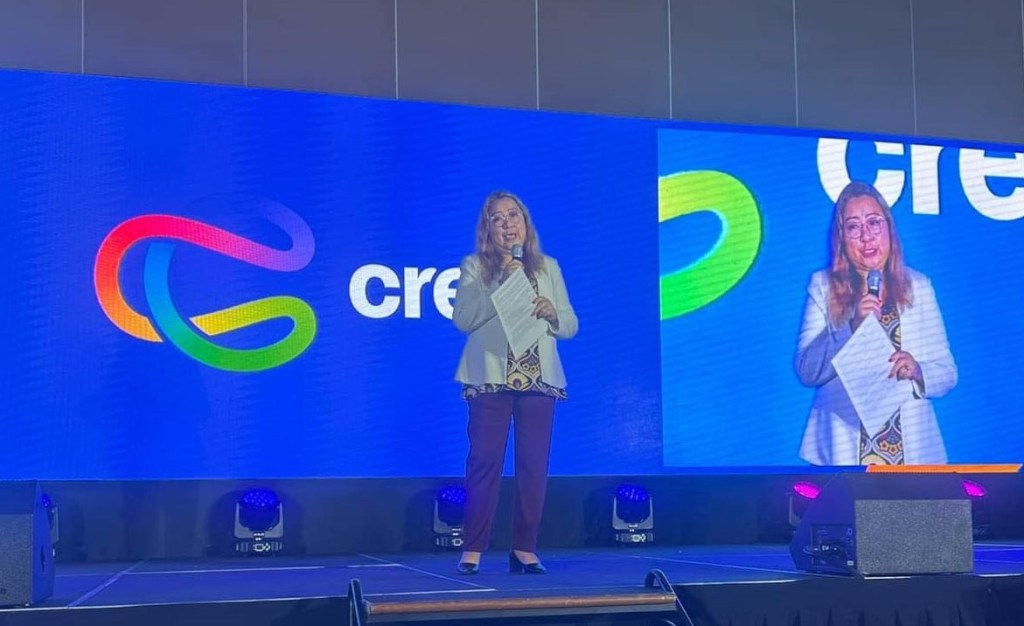
She highlighted three key advantages that position the Philippines as a prime location for this innovative endeavors, namely, large MetaMask user base, business-friendly environment and highly skilled gamers.
Firstly, the Philippines boasts one of the highest numbers of MetaMask users in Asia, demonstrating a robust interest and adoption of blockchain technologies. This widespread use of MetaMask highlights the country’s active engagement in decentralized finance (DeFi) protocols, NFT transactions, and other Web 3.0 activities, making it an essential player in the emerging Web 3.0 ecosystem.
Striving to create a supportive framework for digital enterprises, the Philippines also fosters collaboration between businesses, academia, and the government to drive sustainable technological advancements. This business-friendly environment underpins the growth of Web 3.0 by providing a stable and conducive landscape for innovation, investment, talent development, and cross-sector partnerships.
Filipinos are renowned for their passion and expertise in gaming, producing competitive gamers who excel on the global stage. This highly skilled gaming community contributes significantly to the Web 3.0 landscape, driving the adoption and credibility of decentralized gaming platforms, and showcasing the practical applications of blockchain technologies in the gaming industry.
Undersecretary Batapa-Sigue encouraged CRETA to leverage these strengths, promising mutual benefits that drive innovation and economic growth in the gaming sector. She also called upon media partners to support and amplify CRETA’s vision, inspiring more collaborations and innovations that benefit communities and industries.

Thomas Vu, in his engaging speech, shared his excitement about the potential of blockchain technology and digital ownership in revolutionizing the gaming industry. Vu, a veteran in the gaming industry, has an impressive background, having served as the lead producer for the globally acclaimed game League of Legends. His expertise spans over a decade of experience in game development, production, and innovative technology integration.
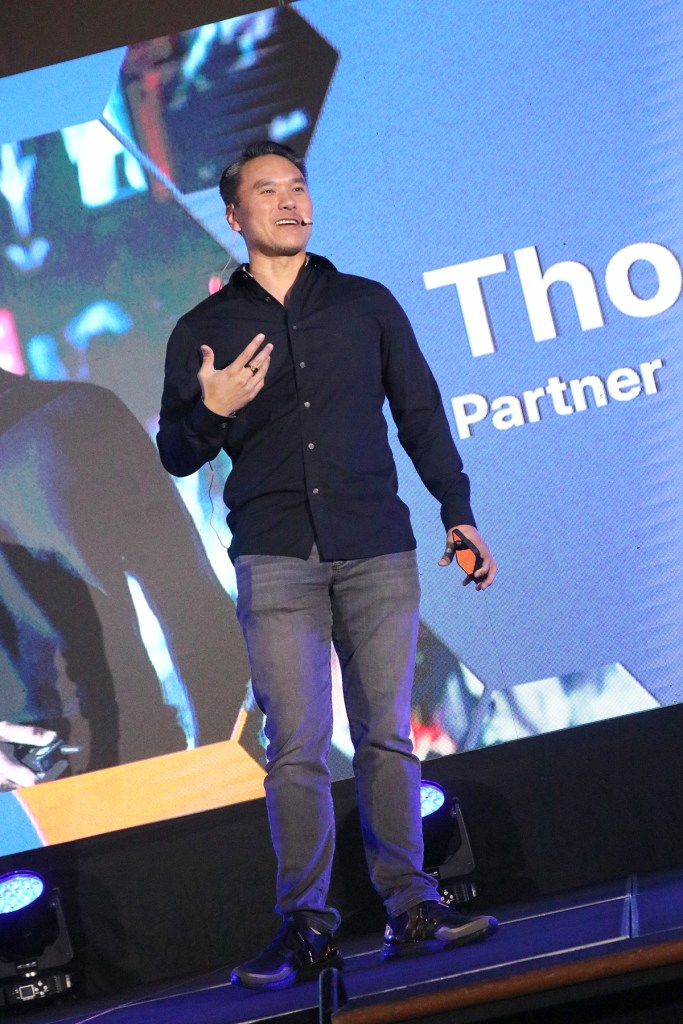
“I’ve been tracking blockchain for a while now and believe in the idea of digital ownership,” said Vu. “I was blown away by what the CRETA team was doing—building a fully-fledged ecosystem that combines social media, game-making capabilities, and amazing games.”
Vu shared his belief in digital ownership, comparing it to owning a car that can be used, rented, or sold at will. He highlighted the groundbreaking work of the CRETA team in developing a next-generation blockchain layer that ensures true ownership of digital assets, a crucial innovation for the future of gaming.
Vu underscored the immense growth potential of Southeast Asia, particularly the Philippines, as an emerging market for the gaming industry. Drawing parallels with the explosive growth seen in the Korean and Chinese game industries, he expressed his confidence that Southeast Asia would be the next major growth area. He praised the region’s young, energetic, and talented community, emphasizing that this dynamic environment is ideal for fostering innovation and disruptive new experiences in gaming.
“I’m actually so excited to launch CRETA in the Philippines. This is a region that was near and dear to my heart, obviously, from my upbringing coming to the U.S. But also, the heart and energy and talent that I see every day from Filipinos, from Southeast Asians in general, it’s just really inspiring”, said Vu.
Reflecting on his personal journey and the evolving landscape of gaming, Vu highlighted the unique cultural shift towards digital experiences. He noted that today’s young gamers view virtual worlds as their primary social environments, a stark contrast to previous generations. Vu believes that gaming offers impactful forms of knowledge and experience, contributing significantly to personal development. He expressed his excitement about launching CRETA in the Philippines, a region close to his heart, and his enthusiasm for collaborating with the talented and motivated Filipino gaming community to drive the future of the industry.
Vu emphasized the transformative potential of regions like Southeast Asia, highlighting the Philippines’ energetic and talented young community. “This is a region that’s going to be massive. The heart, energy, and talent I see every day from Filipinos and Southeast Asians, in general, is just really inspiring,” he added.
He recounted his experiences launching League of Legends in Vietnam and expressed his belief that Southeast Asia would be the next major growth area in gaming, similar to the explosive growth seen in the Korean and Chinese game industries. Vu’s vision for the future of gaming is one where technology seamlessly enhances the gaming experience, regardless of whether it’s Web 2.0 or Web 3.0.
Nakazato explained the various aspects of the CRETA platform, which includes the CRETA Game Studio, a tool supporting game developers; the CRETA Game Platform, described as a game service platform and a Web3 version of Steam; the CRETA Multiverse, likely a digital universe or environment within CRETA; and SuperClub, a community feature that connects the entire CRETA platform. These components seem to be integral parts of the overall CRETA ecosystem, focusing on game development, gaming services, and community building.
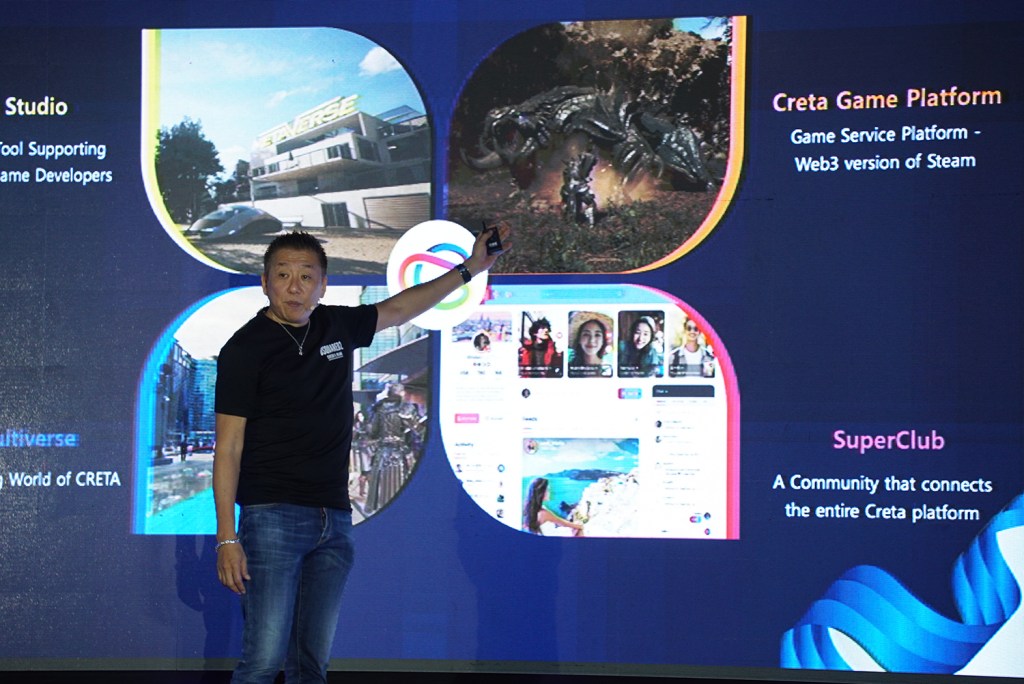
The event concluded with a Q&A session, where Vu reiterated his excitement about CRETA’s launch in the Philippines and the immense potential of the region in driving the future of gaming and digital innovation.
The launch of CRETA in the Philippines signifies not just the introduction of a new gaming platform but the beginning of a collaborative journey towards a technologically advanced and inclusive future. As the country continues to establish itself as a tech and gaming hub, events like these underscore its growing influence and the endless possibilities that lie ahead.

Related Story: World’s Gaming Titans Launch Next-Gen Platform CRETA in Manila, Announces Listing in Coins.ph
In Manila, Philippines, leading game creators launched CRETA, a multiverse gaming entertainment platform, with its token to be listed on Coins.ph starting July 8. Thomas Vu, known for League of Legends and Netflix’s Arcane, and Ray Eiichiro Nakazato, former VP at Electronic Arts Japan, announced the launch at the Grand Hyatt in Taguig City. The team includes industry veterans like Kay Youn, Yoshiki Okamoto, Joohyung Jang, and Nakazato, ensuring a next-generation gaming experience on a decentralized metaverse platform. CRETA integrates Web3 features, combining S2E (Share to Earn), P2E (Play to Earn), and C2E (Create to Earn) models, and uses the scalable, low-cost Locus Chain blockchain. It also includes a proprietary Game Creation Engine for user-generated content and the upcoming Super Club platform for gaming and social media. Nakazato emphasized CRETA’s goal to revolutionize the entire gaming industry, not just target Web3 gamers.

Photos Courtesy of The New Channel, Apple Manansala and Gail Macapagal-Cruz
Full Transcript of Thomas Vu’s Speech
Gaming is interesting because of the new game engines and like Unreal and Unity technologies like AI. The making of games has changed dramatically.
I think in the next few years we’re going to see teams of 1, 2, and 10 people make billion-dollar games. That’s truly what’s going to happen. But what really is the power of it? What’s really going to make that happen? And I’ve really got this incubator with some of the top talent in the world.
And I was really looking for technology that would feature-proof what I’m going to be doing. I wanted to look for a group. And part of that is blockchain technology.
I’ve been tracking blockchain for a while now. And I really believe in this idea of digital ownership. Back in the day when I was playing games, we’d buy mobs and now it’s just yours.
But now we have all these different business mobs. We have free-to-play, we buy digital assets. But what happens to the digital assets if the game goes away? Like who truly owns it, right? I use this analogy, which is like if I bought a car from, let’s say, Toyota, I can do whatever I want with my car.
I can drive my car, I can Uber, I can rent my car out, I can sell my car. But that’s not true with digital goods today. So how do we make that more possible? I knew that blockchain was going to be the keys to making it happen.
And so, I went around and looked for actually – I talked to almost every single blockchain developer out there. And really there were some great ones. And I happened to run into Mr. Lee and the CRETA Team.
And what really blew me away was they’ve been very quietly building out a next-generation layer of blockchain. I was blown away by what they were doing, especially if you consider this technology that Ray was talking about. But I was also blown away by their backgrounds.
These are the guys that built the Korean game industry, the Japanese game industry. And not only that, but they built some of my favorite games. I grew up playing Street Fighter.
I grew up playing Resident Evil. I grew up playing Lineage. These are games that were legendary to me and impacted how I look at games.
And so, Mr. Li and the CRETA Team was really – I mean initially what they were doing was an ecosystem. And typically, when I think about games, I think like I’m a game maker. So, I make games.
And usually, my games go out to places like Steam or go to a publisher like EA or Xigar or Activision. But what they’re building out is a fully-fledged ecosystem that combines social media, that combines game-making capabilities so they can build UGC, that combines some amazing games that you just saw. You know, there are MMOs.
These guys are like the kings of MMOs, metaverses. It was so much. It was initially overwhelming.
I was like, oh, my God. This is kind of where your dreams come true as a partnership because I want to make games. I want to build a great gaming computer to make the best games and recruit the best talent and build the best IPs in the world.
And so, we partnered up. And I’m so thankful because of the ability to use and leverage technology like blockchain, AI, the new technologies like their game engines, to me, this is the future. And what’s beautiful is that while I was at Riot, I was overseeing Li during its massive growth.
It had this crazy growth where we went into all these emerging markets. And what I found going all over the world and uniquely, when I launched League of Legends in Vietnam, I launched it out of the town that I left as a refugee, which is beautiful to me. But regions like the Philippines, regions like Thailand, all of Southeast Asia, we really believe that it’s this incredible emerging market that’s going to just explode.
We saw the growth of the Korean game industry. We saw the growth of the Chinese game industry. We believe that Southeast Asia is going to be the next massive spike in the games.
There are three billion gamers. And if you think about it, what is every kid like? I have two daughters, and their favorite games are 11 and 13. Their favorite games are Minecraft and Roblox.
And soon they’re going to be playing League of Legends and Fortnite, and the games that are on the platform. What’s beautiful is that every kid I know, every young person I know, loves video games. And the way they think about games is so different than the way I experienced games as a kid.
I bought a box, and I rented it from Blockbuster. But this is their natural environment. I once saw one daughter turn to the other daughter, and she looked at her and said, hey, you want to go play in the real world or play outside? Because their experience in games is their world.
That’s where all their friends are. That’s their social. And they are so worldly.
They are so thoughtful. And I truly believe that games have this impactful form of knowledge that is good for young people. Knowledge is only knowledge until it becomes wisdom.
And the only way it becomes wisdom is experience. It’s a self-internalized experience. Now if you think about how games have impacted so much, I have some friends who are NASCAR riders, and they’re in games 12 hours a day on simulators.
I have friends who are pilots who are flying planes. It allows you to take risks and do many, many things without the risk of failure. And so, this is what our kids are going through.
Kids are going through some incredible experiences. They’re going to have so much. I think about Elon Musk recently.
I was watching his stream, and he was playing Diablo 4. And the way he thinks about the world is so out of the box. And I contributed to him growing up playing lots of games. I also think about what Sam Altman said recently.
He’s a founder of Generative AI. He said, movies will be video games, and video games will be something that we can’t even imagine. I truly believe that CRETA and what the team is doing is going to empower this.
As the creator, I’m so excited to join forces and partner up with the team. And I’m so excited to launch CRETA in the Philippines. This is a region that was near and dear to my heart, obviously, from my upbringing coming to the U.S. But also, the heart and energy and talent that I see every day from Filipinos, from Southeast Asians in general, it’s just really inspiring.
It’s a very young community with so much energy, with so much motivation, with so much heart. And to me, I believe that it takes new regions to disrupt and incubate new experiences. And I think this is going to be a region that’s going to be massive.
Again, 10 years ago, 15 years ago, I saw what happened to China. And now China’s the largest game industry in the world. I think this literally is going to happen here in the emerging markets.
And I don’t think – I don’t delineate between Web 2 or Web 3. It’s just games. I trust everybody to know that people just want to play games. Whatever technology is in the background, it should just be there to help games be better, to help people have more in games.
And so that’s really the spirit and the heart of it. The spirit is to make great games regardless of whatever technology. When I watch a movie, I don’t ask what camera they’re using to record it, right? It’s just technology.
And so we want to make great experiences. We want to make great fantasies that people can fall in love with. And so, I’m super excited to be here.
I’m super excited to be back here in the Philippines. And I think we’re going to do some questions. I’m going to call Greg.


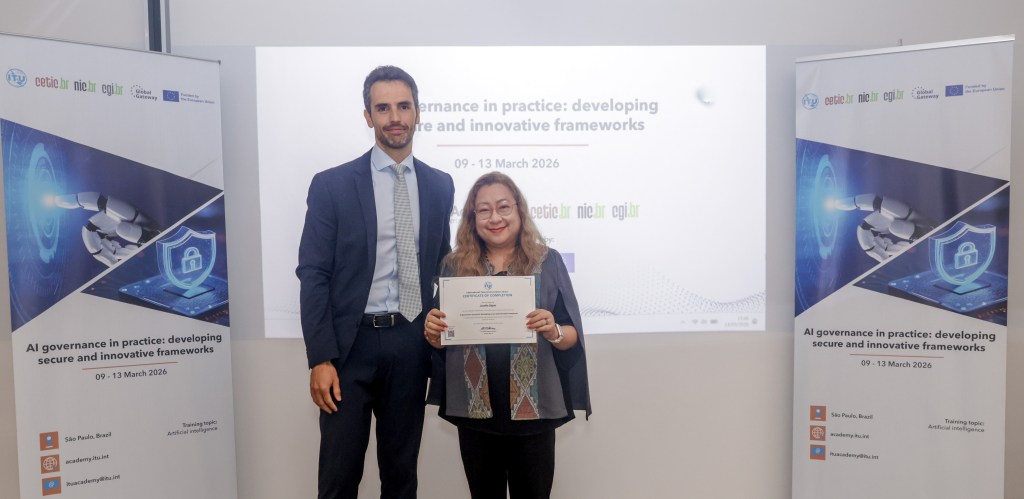

 Jocelle Batapa Sigue
Leave a comment