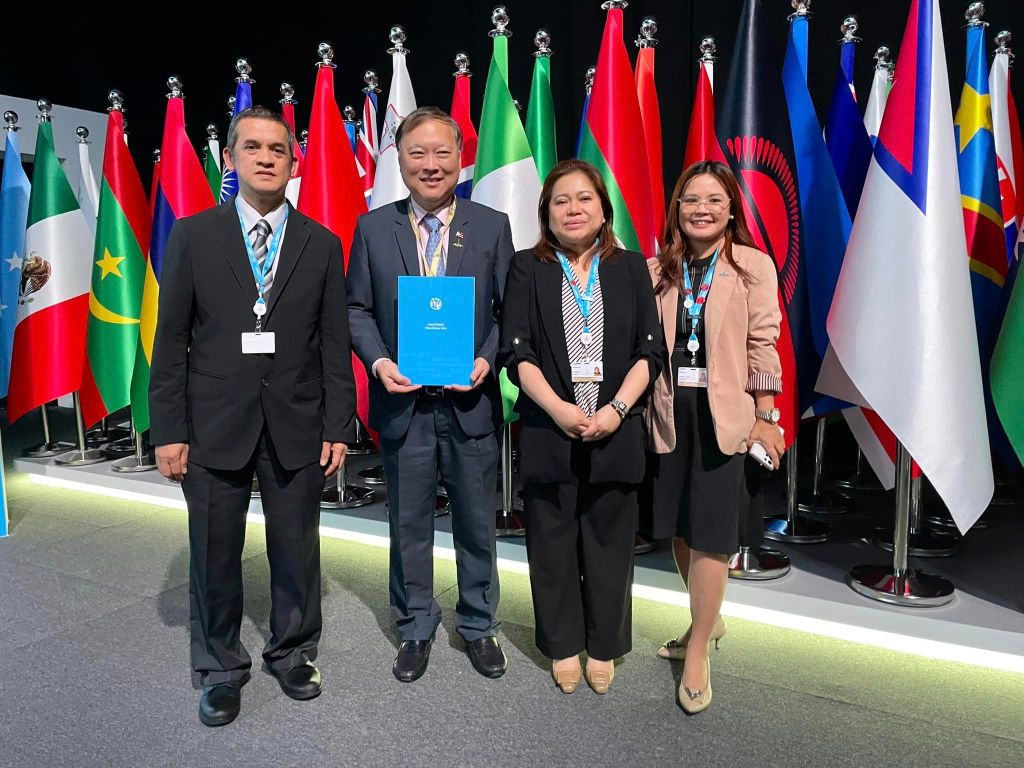
At the forefront of global telecommunications advancements, the Philippines actively participated at the 2023 World Radiocommunication Conference (WRC-23), joining forces with 151 member states to redefine the landscape of radiocommunication. The conference, significant in setting the course for future telecommunications, saw the Philippines’ delegation demonstrating exemplary leadership and commitment. Their active participation and contributions were instrumental in shaping key decisions on space, 6G technologies, spectrum allocation, and other critical areas of radiocommunication, marking a new era of technological collaboration and innovation on the global stage.

The WRC-23, held in Dubai, United Arab Emirates, from November 20 to December 15, 2023, is a significant event where member states review and, if necessary, revise the Radio Regulations. These regulations are an international treaty governing the use of the radio-frequency spectrum and both geostationary-satellite and non-geostationary-satellite orbits. Revisions to these regulations are made based on an agenda determined by the ITU Council, which considers recommendations from previous world radiocommunication conferences

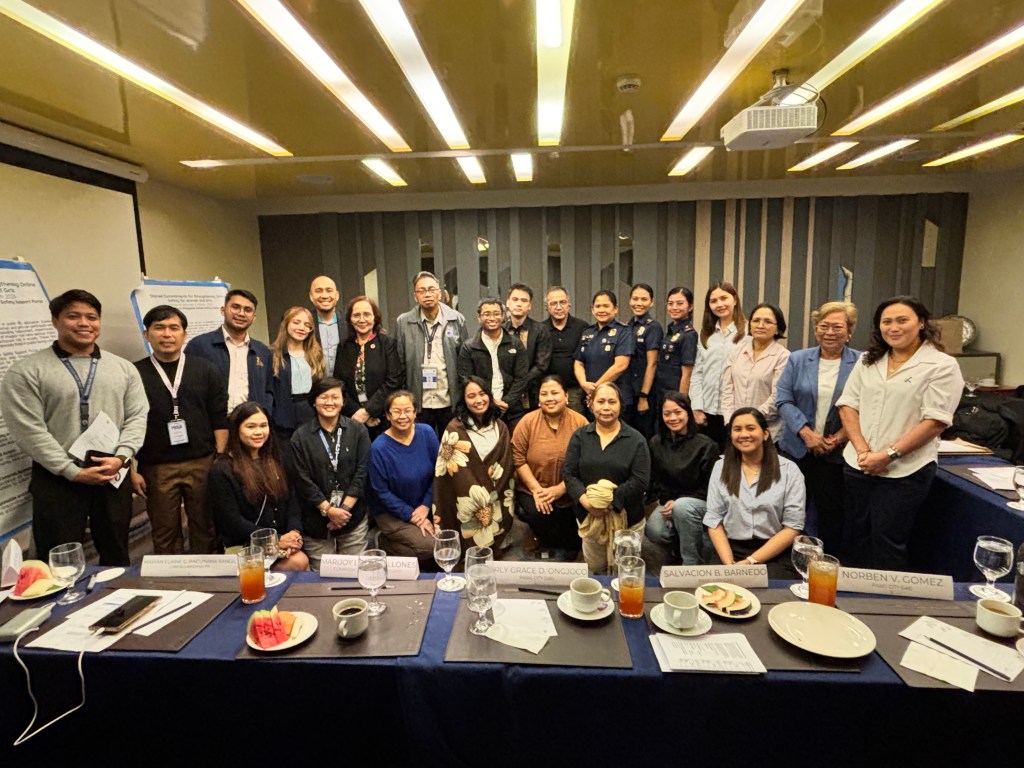
Led by Department of Information and Communications Technology (DICT) Secretary Ivan John E. Uy and with National Telecommunications Commission (NTC) Commissioner Ella B. Lopez as the Deputy Head, the Philippine delegation played a crucial role in the conference. The presence of Ambassador Alfonso Ferdinand A. Ver, the Philippine Ambassador to the UAE, during the signing of the Final Acts and Closing Ceremony, underscored the country’s commitment to international collaboration in the field of radiocommunication.
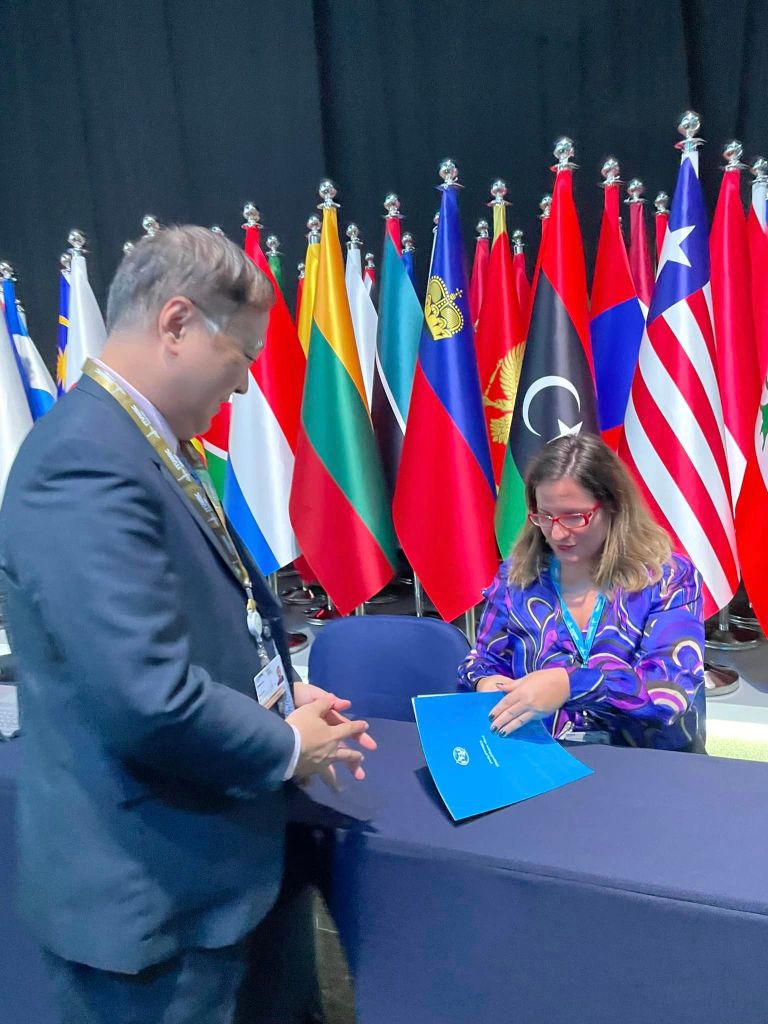
The Final Acts, a product of intense consultations, negotiations, and agreements, reflect a spirit of compromise and collective effort. These acts represent a unified approach towards managing radiocommunication regulations, a testament to the month-long engagement’s success and the collaborative spirit of the member states.
The Philippines, DICT and the NTC, actively participated in the ITU WRC-23, focusing on the future of space-, sea-, and land-based radiocommunications. The conference aimed to update the Radio Regulations and allocate the scarce radio-frequency spectrum. It played a crucial role in advancing the development of IMT-2030 for 6G mobile technologies. The WRC-23 was instrumental in revising the ITU Radio Regulations to support spectrum sharing and technological innovation, approving sixth-generation radio interface technologies, and allocating new spectrum for broadband connectivity, safety of life, and space and Earth observation.
The success of the Philippine delegation was largely due to the tireless efforts of the technical team led by the NTC, in close collaboration with DICT. Their dedication, evident in extended working hours and navigating through several highly contested agenda items, was instrumental in ensuring that the Philippines’ voice was heard and its interests represented.
The outstanding hosting of the WRC-23 and RA-23 by the United Arab Emirates deserves special mention. Despite the challenging agenda and a large number of delegates from 160 member states, the UAE ensured a smooth and efficient conference, facilitating a conducive environment for productive discussions and decisions.
Reflecting on the Philippines’ participation in the WRC-23, it is evident that the conference was not just about technical negotiations but also about fostering international relations and understanding. The delegation’s efforts highlight the Philippines’ growing role and influence in global telecommunications discussions.
Looking ahead, the agreements reached at the WRC-23 will have far-reaching implications for the country’s telecommunications industry and policies, paving the way for more innovative and inclusive approaches in the sector. For more detailed information on the agenda items and specific outcomes of WRC-23, please visit the official website of the International Telecommunication Union (ITU), which provides comprehensive details on the conference and its resolutions.

DICT ITU Focal Frances Loraine Valdez said the WRC-23 demonstrated the effectiveness of global collaboration, highlighting the significant contribution of the Philippines in the development of international telecommunications. The successful outcome of the conference was attributed to the combined efforts of the skilled Philippine delegation and the gracious hosting by the United Arab Emirates. This event not only celebrates the achievements of the Philippine team but also anticipates the beneficial impacts that these new agreements will have on the future of radiocommunication worldwide.
Related News
ITU World Radiocommunication Conference 2023 addresses future of space-, sea- and land-based radiocommunications
WRC-23 to update Radio Regulations and allocate scarce radio-frequency spectrum
Dubai, 20 November 2023
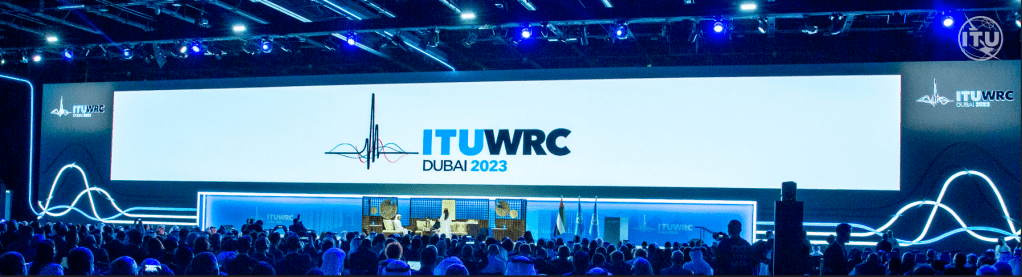
The World Radiocommunication Conference 2023 (WRC-23) opened today in Dubai, United Arab Emirates, bringing governments together for negotiations on the allocation of radio-frequency spectrum.
The conference, organized every three to four years by the International Telecommunication Union (ITU), will review and update the Radio Regulations, the international treaty governing the use of spectrum and geostationary and non-geostationary satellite orbits.
His Highness Sheikh Ahmed bin Mohammed bin Rashid Al Maktoum, Second Deputy Ruler of Dubai, attended the WRC-23 opening ceremony.
For the opening, United Nations Secretary-General António Guterres noted that the World Radiocommunication Conference, “is a testament to the power of international cooperation in tackling global challenges.” In the message delivered on his behalf, Guterres added, “Radio frequencies, whether on Earth or in space, form the backbone of advanced communications for all of humanity. From education to healthcare, from agriculture to climate monitoring, expanding radiocommunication services and bridging the digital divide is key to reducing inequalities and advancing the Sustainable Development Goals.”
Much of the technology in everyday life uses radio-frequency spectrum allocated by ITU’s world radiocommunication conferences. Ensuring that the Radio Regulations reflect the changing demand for spectrum use is critical for the efficient operation of existing and future radiocommunication services and equipment.
“We are at an inflection point in tech history, and radiocommunications are at the top of the global agenda,” said Doreen Bogdan-Martin, ITU Secretary-General. “Equitably managed spectrum and the associated satellite orbits are among the best tools in our toolbox to make good on our commitment to build a digital future that works for everyone and for our planet.”
“While today’s world is full of challenges, this conference comes to set the course and direct the compass toward sustainable human development by updating the Radio Regulations and establishing international consensus on the frequencies necessary for the coming era,” said H.E. Eng. Majed Sultan Al Mesmar, Director General of the UAE Telecommunications and Digital Government Regulatory Authority (TDRA). “With the broad horizons it brings in the fields of smart cities, digital economy, knowledge society, space and others, we are confident that this conference will achieve the results that meet the expectations and aspirations of our peoples.”
H.E. Eng. Mohammed Al Ramsi, Deputy Director General for the Telecommunication Sector of TDRA was elected as the chair of WRC-23. The conference is hosted by TDRA and will take place from 20 November to 15 December.
“This conference will revise and update the Radio Regulations to support the introduction of new radio-based technologies, systems, technologies and services and their growing spectrum requirements while continuing to protect the vital radio services we rely on today,” said Mario Maniewicz, Director of ITU’s Radiocommunication Bureau. “Newer innovative technologies will allow us to better monitor our changing planet, and better connect communities and people everywhere: on land, at sea, in the air, and in space. I count on the spirit of cooperation of the ITU Membership and your technical expertise to make WRC-23 a resounding success and leave a legacy of prosperity for billions of people across the globe.”
The WRC-23 agenda items include:
- Identifying additional frequency bands for the continued development of International Mobile Telecommunications (IMT), including the use of high-altitude platform stations as IMT base stations for the universal deployment of wireless networks.
- Improvements to the international regulatory framework for geostationary orbit (GSO) and non-geostationary orbit (NGSO) satellites while promoting equitable access for all countries.
- Use of satellite technologies for broadband services to improve connectivity, particularly in remote areas.
- New spectrum to enhance radiocommunications in the aeronautical mobile service, including by satellite, and to facilitate the use of the space research and Earth exploration-satellite services for climate monitoring, weather prediction and other scientific missions.
- The modernization of the Global Maritime Distress and Safety System (GMDSS).
- The regulatory framework for the use of earth stations in motion on board aircraft and ships for communication with GSO and NGSO satellites.
- The future of the ultra-high frequency (UHF) broadcasting band which has implications for television broadcast, programme-making and special events, as well as public protection and disaster relief.
The Radio Regulations ensure that the use of the radio-frequency spectrum is rational, equitable, efficient, and economical – all while aiming to prevent harmful interference between different radiocommunication services.
The international treaty on radiocommunications dates back to 1906, when the International Radiotelegraph Convention was signed. In the 117 years since, the Radio Regulations have undergone 38 revisions and expanded to a four-volume agreement of more than 2,000 pages.
WRC-23 was preceded by the ITU Radiocommunication Assembly which met in Dubai from 13-17 November to establish the structure, working methods and programme of the ITU Radiocommunication Sector.
Overall, 4,000 participants are expected for WRC-23, including delegates from ITU Member States and ITU Radiocommunication Sector Members representing international organizations, equipment manufacturers, network operators and industry forums attending as observers.
ITU advances the development of IMT-2030 for 6G mobile technologies
Sixth generation radio interface technologies to be approved by the end of the decade
Dubai, 01 December 2023
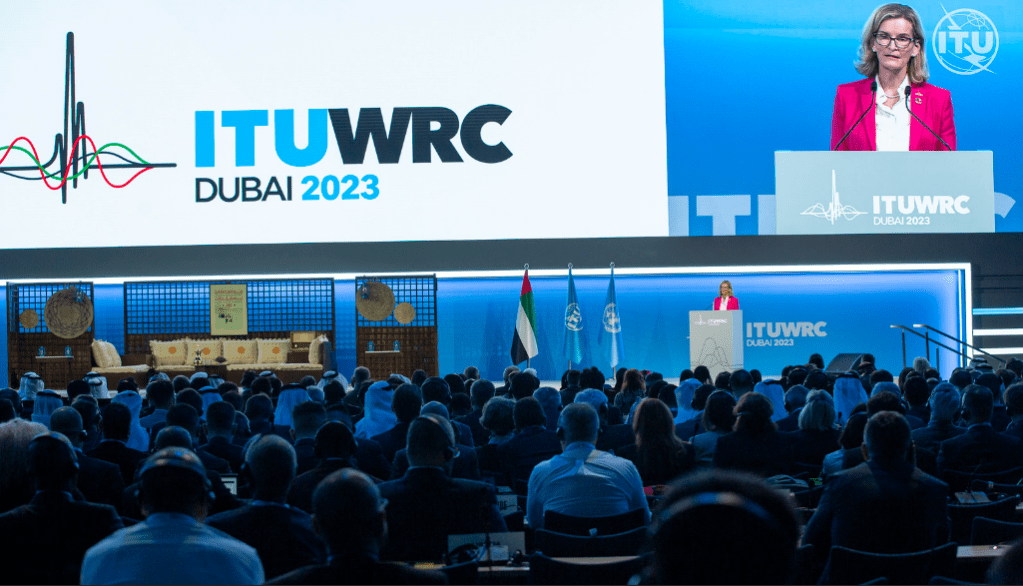
The International Telecommunication Union (ITU) has published the framework for the development of standards and radio interface technologies for the sixth generation of mobile systems, popularly referred to as 6G.
The details of the 6G framework are contained in Recommendation ITU-R M.2160 on the “IMT-2030 Framework” approved by the ITU Radiocommunication Assembly (RA-23) at its recent meeting in Dubai, United Arab Emirates.
ITU’s Radiocommunication Sector (ITU-R) will now focus on defining technical requirements, the submission process, and the evaluation criteria for potential 6G radio interface technologies.
“Mobile communications are central to our efforts to ensure that everyone is meaningfully connected,” said Doreen Bogdan-Martin, ITU Secretary-General. “By agreeing on a way forward on 6G, ITU Member States have taken an important step toward ensuring that technical progress is synonymous with affordability, security, and resilience — supporting sustainable development and digital transformation everywhere.”
The ITU-R Recommendation represents significant progress in the development and implementation of globally accepted standards for mobile systems using 6G. All the previous mobile telecommunication generations – analogue cellular (1G), digital cellular (2G), IMT ‑ 2000 (3G), IMT‑ Advanced (4G), and IMT ‑ 2020 (5G) – were also standardized through ITU.
“Terrestrial wireless systems to be developed under IMT-2030 are expected to drive the next wave of innovative radiocommunication systems, promote digital equity and advance universal connectivity,” said Mario Maniewicz, Director of the ITU Radiocommunication Bureau. “The publication of the Recommendation on future 6G mobile technologies is a testament to ITU’s longstanding multi-stakeholder approach which ensures the development of globally accepted technical and regulatory solutions.”
For the next phase of 6G development, companies and industry associations will submit proposals for the IMT-2030 Radio Interface Technology (RIT) for ITU-R consideration in early 2027. These submissions will then be evaluated against the agreed minimum requirements prepared by ITU’s expert group on IMT systems (ITU-R Working Party 5D), with the prospect of getting a final set of 6G technology standards approved by 2030.
The IMT-2030 Framework Recommendation identifies 15 capabilities for 6G technology. Nine of those capabilities are derived from existing 5G systems.
IMT-2030 is also expected to help address the need for increased environmental, social and economic sustainability, and also support the goals of the Paris Agreement of the United Nations Framework Convention on Climate Change.
Expected usage scenarios for 6G include:
- Immersive communication to provide a rich and interactive video experience for users.
- Hyper-reliable and low-latency communication to enable the scale-up of intelligent industrial applications including telemedicine and management of energy and power grids.
- Enhanced ubiquitous connectivity, especially in rural, remote and sparsely populated areas with the aim of bridging the digital divide.
- Massive communication to include expanded use of Internet of Things (IoT) devices and applications in smart cities, intelligent transport systems and sectors such as health, agriculture, energy and environmental monitoring.
- Artificial intelligence (AI) and communications to support AI-powered applications.
- Integrated multi-dimensional sensing to improve assisted navigation, and high-precision positioning including object and presence detection, localization, imaging and mapping.
ITU’s Radiocommunication Assembly, held between 13 and 17 November, also agreed on “IMT-2030” as the technical reference for the latest generation of International Mobile Telecommunications and updated the principles (Resolution ITU-R 65) for future development of IMT for 2030 and beyond.
World Radiocommunication Conference revises the ITU Radio Regulations to support spectrum sharing and technological innovation
Updated treaty allocates new spectrum for broadband connectivity, safety of life, space and Earth observation
Dubai, 15 December 2023
Member States of the International Telecommunication Union (ITU) agreed on revisions to the global treaty governing the use of the radio frequency spectrum, both on Earth and in space, at the close of the World Radiocommunication Conference 2023 (WRC-23) today in Dubai, United Arab Emirates.
The agreement on updates to the Radio Regulations identifies new spectrum resources to support technological innovation, deepen global connectivity, increase access to and equitable use of space-based radio resources, and enhance safety at sea, in the air, and on land.
“WRC-23 puts the world on a solid path towards a more connected, sustainable, equitable and inclusive digital future for all,” said Doreen Bogdan-Martin, ITU Secretary-General. “Key regulatory achievements on spectrum for space, science and terrestrial radio services build on the momentum of ITU’s ongoing work to achieve universal connectivity and sustainable digital transformation.”
A total of 151 Member States signed the WRC-23 Final Acts. The Final Acts constitute a record of the decisions taken at the conference including both the new and revised provisions of the Radio Regulations, all Appendices, and the new and revised Resolutions and ITU-R Recommendations incorporated by reference into the treaty by the conference.
“The agreements reached at WRC-23 are a testament to the unwavering spirit of cooperation and compromise among all of our members,” said Mario Maniewicz, Director of the ITU Radiocommunication Bureau. “Navigating the complexities of spectrum sharing to update the Radio Regulations has helped us forge a path that provides a stable, predictable regulatory environment essential for the development of innovative radiocommunication services for all.”
Revisions to ITU’s Radio Regulations
Among the decisions, WRC-23 identified spectrum for International Mobile Telecommunications (IMT), which will be crucial for expanding broadband connectivity and developing IMT mobile services, also known as 4G, 5G and, in the future, 6G. That new spectrum includes the 3 300-3 400 megahertz (MHz), 3 600-3 800 MHz, 4 800-4 990 MHz and 6 425-7 125 MHz frequency bands in various countries and regions.
WRC-23 also identified the 2 GHz and 2.6 GHz bands for using high-altitude platform stations as IMT base stations (HIBS) and established regulations for their operations. This technology offers a new platform to provide mobile broadband with minimal infrastructure using the same frequencies and devices as IMT mobile networks. HIBS can contribute to bridging the digital divide in remote and rural areas and maintain connectivity during disasters.
For non-geostationary fixed-satellite service Earth Stations in Motion (ESIMs), the conference identified new frequencies to deliver high-speed broadband onboard aircraft, vessels, trains, and vehicles. These satellite services are also critical following disasters where local communication infrastructure is damaged or destroyed.
Provisions were included to protect ship and aircraft mobile service stations located in international airspace and waters from other stations within national territories.
To support the modernization of the Global Maritime Distress and Safety System (GMDSS), WRC-23 took regulatory actions including the implementation of e-navigation systems to enhance distress and safety communications at sea.
The conference provisionally recognized the BeiDou Satellite Messaging Service System for GMDSS use, subject to successful completion of coordination with the existing networks and elimination of interference.
The WRC-23 negotiations were led by conference Chair, H.E. Eng. Mohammed Al Ramsi from the United Arab Emirates with assistance from six committee chairs: Basebi Mosinyi (Botswana); Cindy Cook (Canada); Hiroyuki Atarashi (Japan); Anna Marklund (Sweden); Abdouramane El Hadjar (Cameroon); and Christian Rissone (France).
The conference, which took place in Dubai from 20 November to 15 December, was hosted by the Telecommunications and Digital Government Regulatory Authority (TDRA) of the UAE.
“Across the globe, numerous countries, institutions, and companies eagerly anticipate the outcomes of this conference,” said Al Ramsi, Chair of WRC-23 and Deputy Director-General for the Telecommunication Sector of TDRA. “We have emerged from this conference with significant results that contribute to the advancement of numerous radio services, serving the interests of countries, societies, and humanity at large.”
Overall, WRC-23 approved 43 new resolutions, revised 56 existing ones, and suppressed 33 resolutions. Other key WRC-23 outcomes include:
- Allocation of additional frequencies for passive Earth exploration satellite services to enable advanced ice cloud measurements for better weather forecasting and climate monitoring.
- Allocation of new frequencies to the aviation industry for aeronautical mobile satellite services (117.975-137 MHz). The new service will enhance bi-directional communication via non-GSO satellite systems for pilots and air traffic controllers everywhere, especially over oceanic and remote areas.
- Allocation of the bands 15.41-15.7 GHz and 22-22.2 GHz in Radio Regulations Region 1 and some Region 3 countries to the aeronautical mobile service for non-safety aeronautical applications. This will enable aircraft, helicopters, and drones to carry sophisticated aeronautical digital equipment for purposes such as surveillance, monitoring, mapping, and filming, and have the capacity to transfer large data from these applications using wideband radio links.
- Adoption of regulatory actions for the provision of inter-satellite links. This will allow data to be made available in near-real time, enhancing the availability and value of instrument data for low-latency applications such as weather forecasting and disaster risk reduction.
- Endorsement of the decision by the International Bureau of Weights and Measures (BIPM) to adopt Coordinated Universal Time (UTC) as the de facto time standard by 2035, with the possibility to extend the deadline to 2040 in cases where existing equipment cannot be replaced earlier.
- Recognition of the importance of space weather observation in a new Resolution and a new Article in the Radio Regulations to recognize the operation of space weather sensors as part of the meteorological aid service to observe space weather phenomena including solar flares, solar radiation and geomagnetic storms which can interfere with radiocommunication services including satellites, mobile phone services and navigation systems.
- Approval of a recommendation by the Radio Regulations Board to allow 41 countries to acquire new and usable orbital resources for satellite broadcasting. The countries were unable to use their assigned orbital slots in recent years due to factors such as lack of coordination and interference from other satellite networks. The decision aims to enable countries to implement subregional satellite systems.
To prepare for future world radiocommunication conferences, the WRC-23 also adopted several resolutions that mandate the ITU Radiocommunication Sector Study Groups to undertake studies on specified topics that include:
- Possible new or modified space research service (space-to-space) allocations for future development of communications on the lunar surface, and between lunar orbit and the lunar surface.
- The development of regulatory measures to limit the unauthorized operations of non-geostationary-satellite orbit (non-GSO) earth stations in the fixed-satellite service (FSS) and mobile-satellite service (MSS).
- Technical and regulatory measures for fixed satellite systems (FSS) while taking into account the specific needs of developing countries including the need for equitable access to the relevant frequency bands.
- Technical and regulatory provisions necessary to protect radio astronomy operating in specific Radio Quiet Zones from radio-frequency interference caused by systems in the non-geostationary-satellite orbit.
- Possible new allocations to the mobile-satellite service for direct connectivity between space stations and mobile user equipment to complement terrestrial mobile network coverage.
- Spectrum needs and appropriate protection criteria for space weather sensors.
- Potential new frequency allocations and regulatory actions for future development of low-data-rate non-geostationary mobile-satellite systems (small satellites).
- Identification of measures to facilitate the operation of earth stations on board unmanned aircraft, including identification of suitable frequency bands to decide on the appropriate course of action to be taken in 2031 (WRC-31).
WRC-23 also approved the agenda items for the next World Radiocommunication Conference (WRC-27) and the provisional agenda for WRC-31.
Over 3,900 delegates from 163 Member States attended WRC-23, including 88 ministerial-level participants. Women made up 22 per cent of all WRC-23 delegates, an increase from 18 per cent at WRC-19 in 2019.
Author Jocelle Batapa-Sigue as DICT Undersecretary serves as ITU Councilor of the Philippines to the ITU Council. The International Telecommunication Union (ITU) is the United Nations specialized agency for information and communication technologies (ICTs), driving innovation in ICTs together with 193 Member States and a membership of over 900 companies, universities, and international and regional organizations. Established over 150 years ago, ITU is the intergovernmental body responsible for coordinating the shared global use of the radio spectrum, promoting international cooperation in assigning frequencies and, if necessary, associated satellite orbits, improving communication infrastructure in the developing world, and establishing the worldwide standards that foster seamless interconnection of a vast range of communications systems. From broadband networks to cutting-edge wireless technologies, aeronautical and maritime navigation, radio astronomy, oceanographic and satellite-based earth and oceanographic monitoring as well as converging fixed and mobile phone, Internet and broadcasting technologies, ITU is committed to connecting the world. For more information, visit: www.itu.int


 Jocelle Batapa Sigue
Leave a comment