
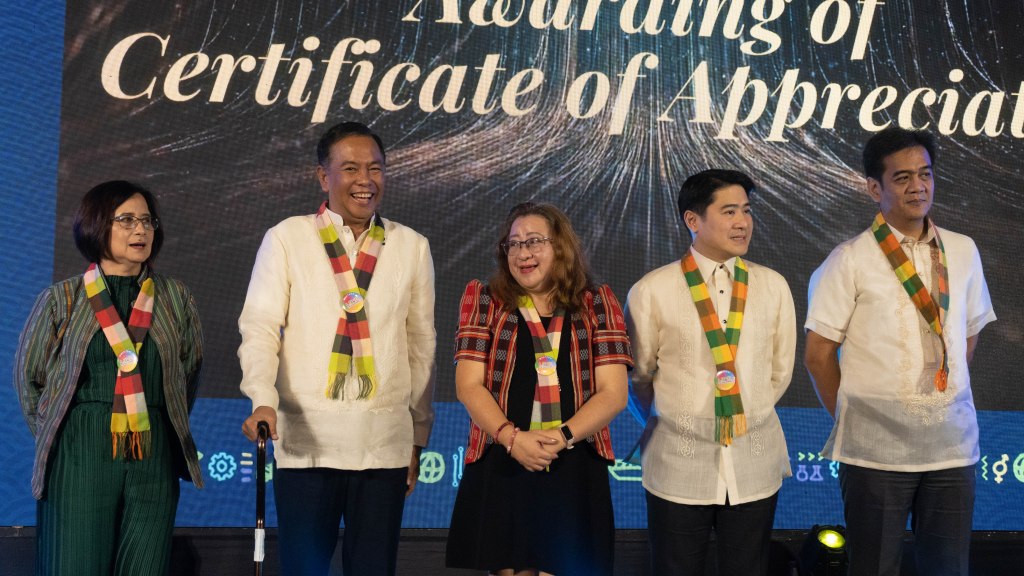
Iloilo City – At the 2023 National Science and Technology Week (NSTW), the Department of Science and Technology (DOST) named eighty (80) local government units (LGUs) as pilot sites for its Smart and Sustainable Communities Program, while the Department of Information and Communications Technology (DICT) aligned its Digital Cities Program for countryside empowerment for digital jobs and investments in support of DOST’s initiative.
The DOST successfully hosted the 2023 National Science, Technology, and Innovation Week from November 22-26 at the Iloilo Convention Center. This prestigious event included the 2023 Community Empowerment through Science and Technology Forum, held on November 25th, under the banner “Science, Technology, and Innovation: Transitioning Empowered Communities toward Smart and Sustainable Nation.”
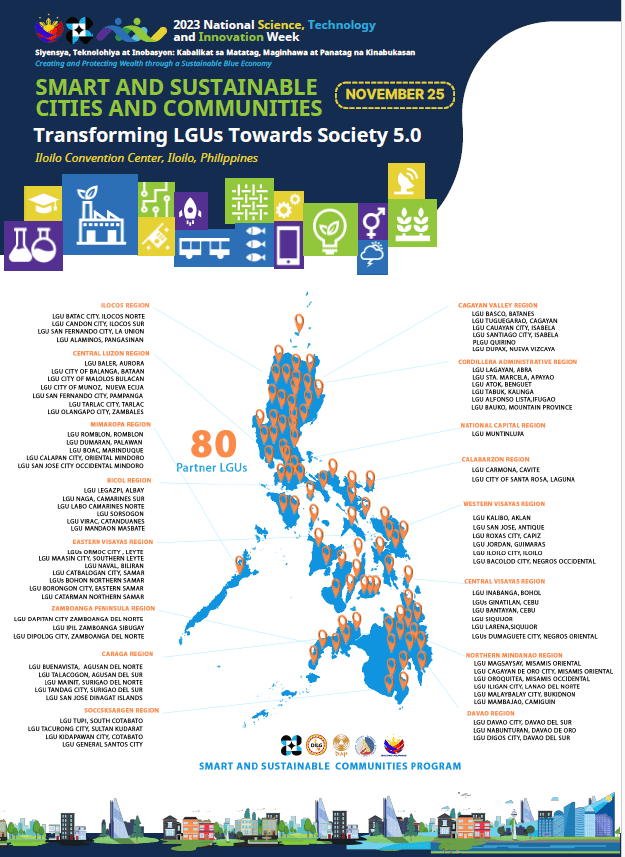
The forum, aimed at increasing awareness of Science, Technology, and Innovation (STI) in community development, served as a dynamic platform for sharing knowledge, ideas, and best practices. It focused on how STI can secure the future of communities by fostering collaboration and empowerment.
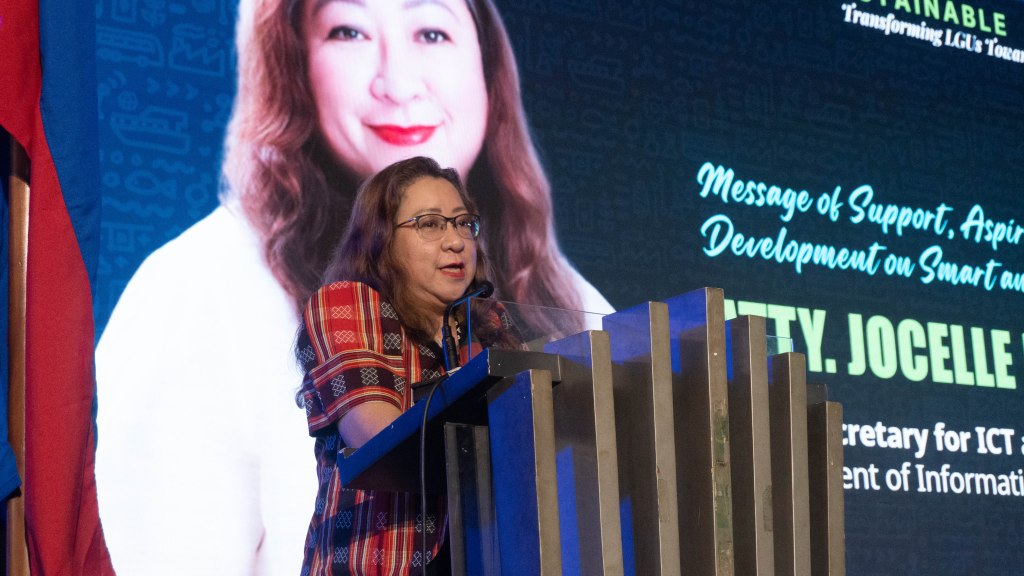
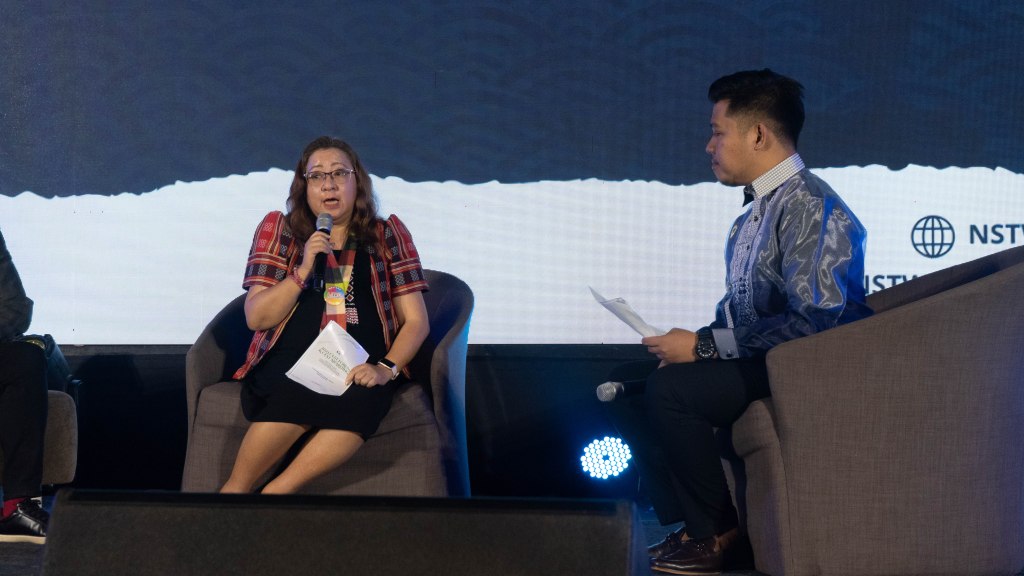
Department of Information and Communications Technology (DICT) Undersecretary Jocelle Batapa-Sigue, was invited to discuss “The Role of Digitalization in the Development of Smart and Sustainable Communities.” She emphasized how digitalization could make communities smarter, more resilient, and environmentally sustainable.
Aligned with the initiative of DOST, Batapa-Sigue shared the Digital Cities PH initiative, a collaborative advocacy program by the Department of Information and Communications Technology (DICT), the Information Technology and Business Process Association of the Philippines (IBPAP), and the Lee Chiu and Associated.
The initiative aims to bolster the ICT industry in the countryside and promote digital cities as viable IT-BPM destinations, both locally and internationally. This program is crucial for creating economic opportunities outside Metro Manila, thereby driving inclusive growth and development across the country.
The Digital Cities Program has set ambitious objectives, including the establishment of IT-BPM locators in various Centers of Excellence and Digital Cities by 2025, with a goal to generate significant job opportunities in the countryside. As of 2023, the program has achieved remarkable milestones, including the establishment of 14 Digital Cities with completed roadmaps and the development of 7 Digital Cities Promotional AVPs as part of their roadmap implementation.
An integral part of this program is the Digital Cities Scorecard, a four-point evaluation system assessing IT-BPM location viability based on talent development, infrastructure, cost of doing business, and business environment. This scorecard has been instrumental in selecting cities for IT-BPM development.
The results of these initiatives are evident in the statistics: 486,000 direct jobs in the countryside out of 1.5 million and 42 cities hosting IT-BPM locators. Furthermore, in the Tholons Global Business Innovation Sustainability (TBIS) Index 2023, the Philippines ranked 15th among the Top 50 Digital Nations, with nine cities, including Bacolod, Bacoor (Metro Cavite), Baguio, Cebu, Davao, Iloilo, Manila, Metro Clark, and Santa Rosa, being recognized as “Super Cities.”
The 2023 National Science, Technology and Innovation Week not only celebrated scientific advancements but also underscored the crucial role of digitalization in empowering communities towards a smarter and sustainable future.
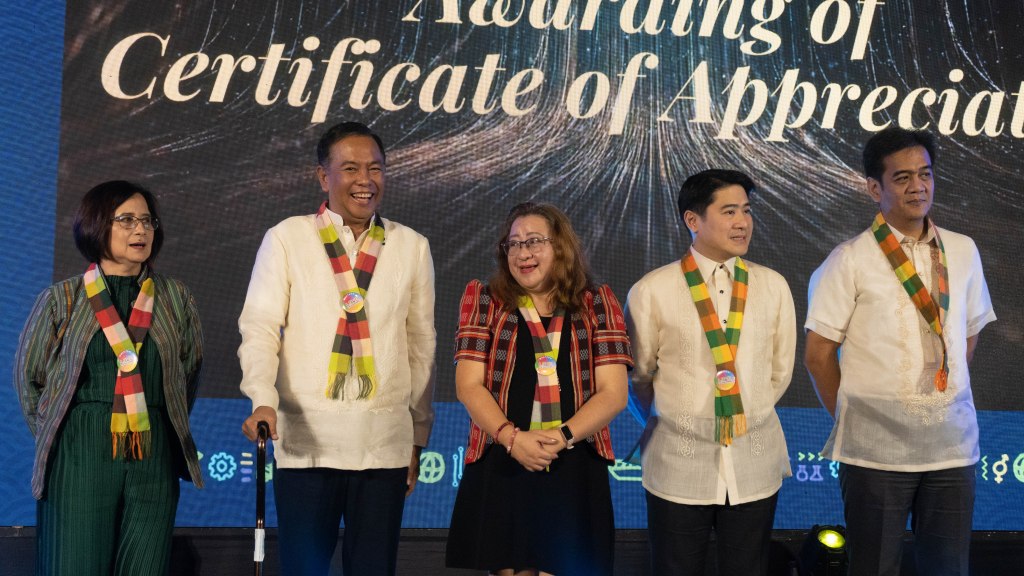
Sharing their inspiring messages were DOST Secretary Dr. Renato U. Solidum and Engr. Sancho A. Mabborang, DOST Undersecretary for Regional Operations. Keynote speaker, Senator Joel Villanueva, further emphasized the importance of science and technology in community development.
The highlights of the forum include a discussion on “Sustainable Community Solutions: The Green Tech Advantage” by Dr. Michael Angelo B. Promentilla from the National Academy of Science and Technology.
Dr. Rico C. Ancog from the University of the Philippines Los Baños delved into the “Blue Economy: A Promising Frontier in the Journey Toward Smart and Sustainable Communities.”
A pivotal presentation by the DICT on “The Role of Digitalization in the Development of Smart and Sustainable Communities,” focusing on how digital technologies can enhance community resilience and sustainability, where Undersecretary Batapa-Sigue shared the Digital Governance programs under Undersecretary David Almirol.
The eGov SuperApp PH, spearheaded by the Department of Information and Communications Technology (DICT), is an ambitious initiative designed to transform and streamline the delivery of government services in the Philippines.
The eGov SuperApp PH is part of the Philippine government’s larger effort to establish a Digital Philippines. It focuses on adopting digital transformation systems and solutions to enhance the convenience and efficiency of government services.
The app aims to provide faster, more streamlined, and convenient delivery of government services, allowing easy navigation and access to different services. It integrates various aspects of government service delivery. This includes E-Local Government Units (ELGU), E-Government Applications (EGovApp), EGovpay, E-Travel, and E-Cloud. The integration ensures that these services are connected and easily accessible in one place.
The app is designed to be the go-to application for Filipino citizens to avail themselves of both national and local government services. It is structured to aggregate existing services without disrupting current systems used by government agencies.
One of the key features of the eGov SuperApp PH is its provision of one-stop-shop access to accounts and transactions with National Government Agencies (NGAs) and Local Government Units (LGUs). It also includes sectors like tourism, job searching, travel, and health. Importantly, it allows users to access all their valid personal IDs in a digital format, including driver’s licenses and passports. Overall, the eGov SuperApp PH represents a significant step towards digitalization in government service delivery in the Philippines, aiming to make these services more accessible, efficient, and user-friendly for its citizens.
The forum in the afternoon also featured an open forum segment, allowing for an interactive exchange of ideas among participants.
The event’s second part, the CEST Awards, recognized outstanding contributions in the field of science and technology. The awards, introduced by Director Emelita Bagsit of DOST IV-A, included the announcement of seven semi-finalists and three finalists, culminating in the awarding ceremony. Professor Fortunato De La Peña, Chairman of the Board of Judges, announced the winners, with Secretary Solidum and other dignitaries presenting the awards.
The closing message was delivered by Engr. Ernesto M. Granada, Regional Director of DOST VIII, marking the successful conclusion of the event.
The 2023 CEST Forum and CEST Awards highlighted the significant role of science, technology, and innovation in empowering communities towards achieving a smart and sustainable future, demonstrating the collaborative efforts of DOST and DICT in promoting scientific advancement and digitalization in the Philippines.

 Jocelle Batapa Sigue
Leave a comment