
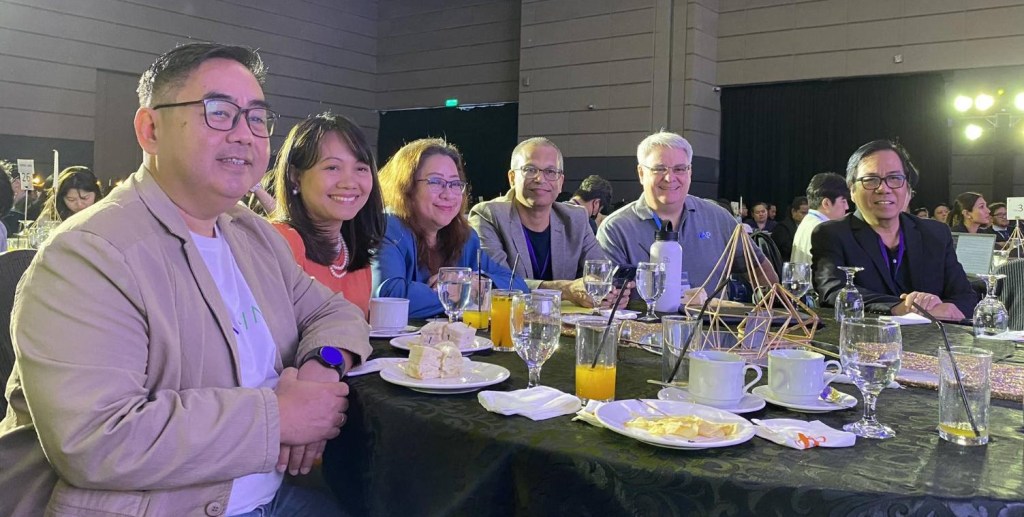
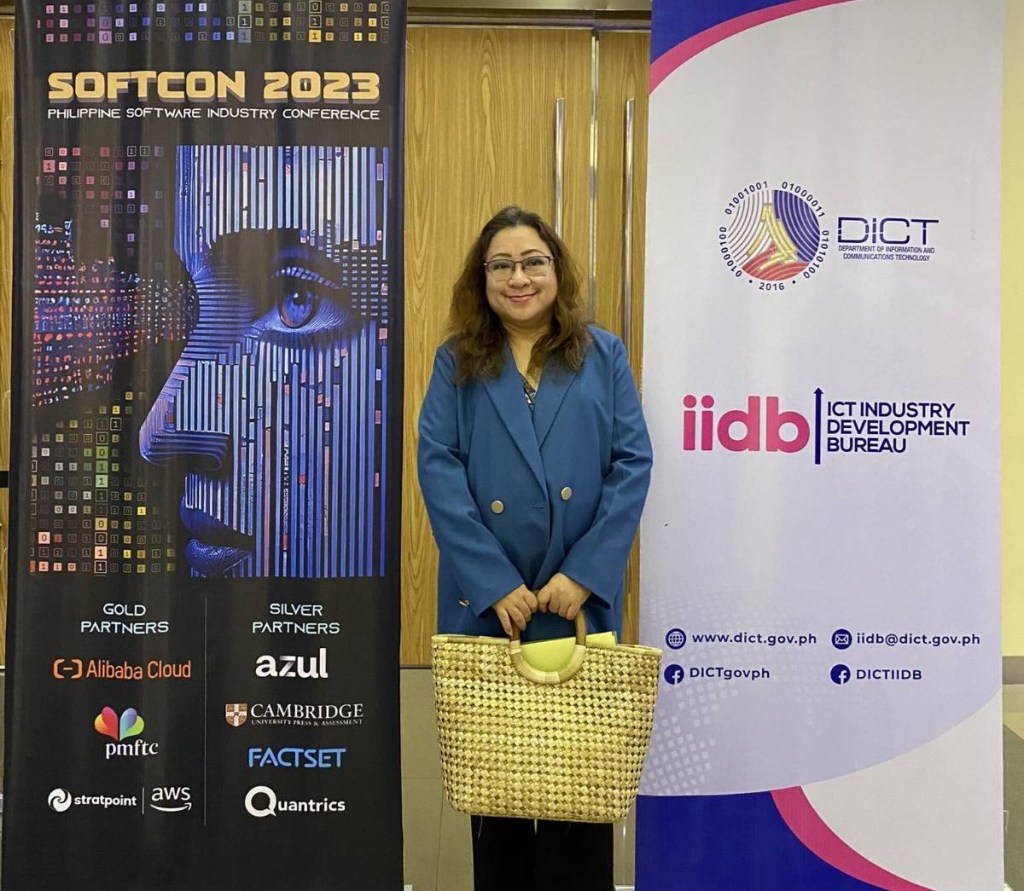
TAGUIG CITY — On October 27, 2023, at the SMX Convention Center, SOFTCON 2023: DECODING AI, a pivotal event for the nation’s tech industry, brought together a distinguished assembly of experts, stakeholders, and public servants.
Department of Information and Communications Technology (DICT) Undersecretary for ICT Industry Development (UIID), lawyer Jocelle Batapa-Sigue delivers the welcome remarks for the Philippine Software Industry Association (PSIA)’s SOFTCON.ph 2023: Decoding AI today at the SMX Aura Convention Center.
SOFTCON.ph is the biggest and widest annual Software Industry Conference and Expo in the Philippines. This event aims to gather software rainmakers, IT professionals, and other industry leaders in IT and Software development and to exhibit the latest technology and software around the globe.
According to the Undersecretary, while the demand for IT and Software Professionals is present, we need to provide the supply for these jobs to project the country as a more attractive destination for IT Outsourcing.
Batapa-Sigue expressed her hope for strong partnership with the PSIA in continuously finding ways to improve the lives of the Filipinos through technology.
In her welcoming remarks, Undersecretary Jocelle Batapa-Sigue of the Department of Information and Communications Technology (DICT) conveyed her gratitude to the Philippine Software Industry Association (PSIA), notably addressing its president, Jonathan De Luzuriaga, and its board members. Reflecting on the previous year’s emphasis on the Metaverse, Batapa-Sigue emphasized the timely relevance of this year’s focus on artificial intelligence (AI).
Acknowledging AI’s transformative influence across various sectors, she highlighted its identification in the IT-BPM Industry Roadmap as a vital instrument for global digital transformation. Everest Group’s research further substantiated this, suggesting over 72% of industry enterprises have already initiated their AI explorations.
Furthermore, Batapa-Sigue shared ambitious projections for the IT and Software industry, targeting a revenue generation of US$9.6 billion and the employment of 280,000 full-time workers by 2028. She affirmed DICT’s unwavering support to achieve these milestones.
Ensuring an advanced digital infrastructure remains at the forefront of DICT’s endeavors. Significant progress includes the National Broadband Program aimed at enhancing internet speeds, especially in isolated regions. This initiative also encompasses the Free Wi-Fi for All program. Additionally, under President Ferdinand Marcos Jr.’s administration, Executive Order No. 32 has streamlined the permit process for internet and telecommunications infrastructure development.
Recognizing the increasing threats in cyberspace, Batapa-Sigue underscored DICT’s concentrated efforts to bolster national cybersecurity measures. Awaiting the president’s endorsement, the National Plan on Cybersecurity promises to define the nation’s strategic approach, pinpointing critical areas requiring fortification.
Addressing the dominance of countries like India in the global IT outsourcing sector, Batapa-Sigue perceived an ample opportunity for the Philippines to bridge the existing gap. Collaborative endeavors with various entities, including Department of Trade and Industry (DTI), Department of Education (DepEd), Technical Education and Skills Development Authority (TESDA), IT Business Process Association of the the Philippines (IBPAP) and others, have birthed a holistic 5-year Talent Development Program for the IT-BPM sector, aiming at upskilling, reskilling, and enhancing the country’s professional landscape.
Further underpinning DICT’s commitment, Batapa-Sigue shared updates on various projects aimed at sustainable growth. To bridge the gap between skills and competencies required for jobs in the current workforce, this November, the DICT is implementing the Philippine Skills Framework (PSF). The goal of the PSF is to enhance employability, labor productivity, and increase competitiveness of the Filipino workforce. The PSF will consist of the situation and conditions of human resource management in the Philippines, career tracks, skills maps, functional skills, and competencies, enabling skills and competencies, and the technical guide for the utilization of the PSF. This project aims to provide the Skills Framework for the Contact Center, Healthcare Information Management Services, Global In-House Center, Software Development, and Data Analytics and Artificial Intelligence Industry.
As of this year, through the Digital Cities Program, nineteen (19) Digital Cities have developed and launched their Digital City Roadmaps which will provide investors an overview of their locations and convince them to locate in the respective Digital Cities. This year alone, eighteen locations were able to conduct Institutional Development workshops which is a prerequisite for the development of their own roadmaps. All-in-all, the Digital Cities Program has had an indelible impact on the creation of jobs outside Metro Manila as the country currently has 42 cities hosting IT-BPM Locators and 486, 000 out of the 1.5 million FTEs that are outside of Metro Manila.
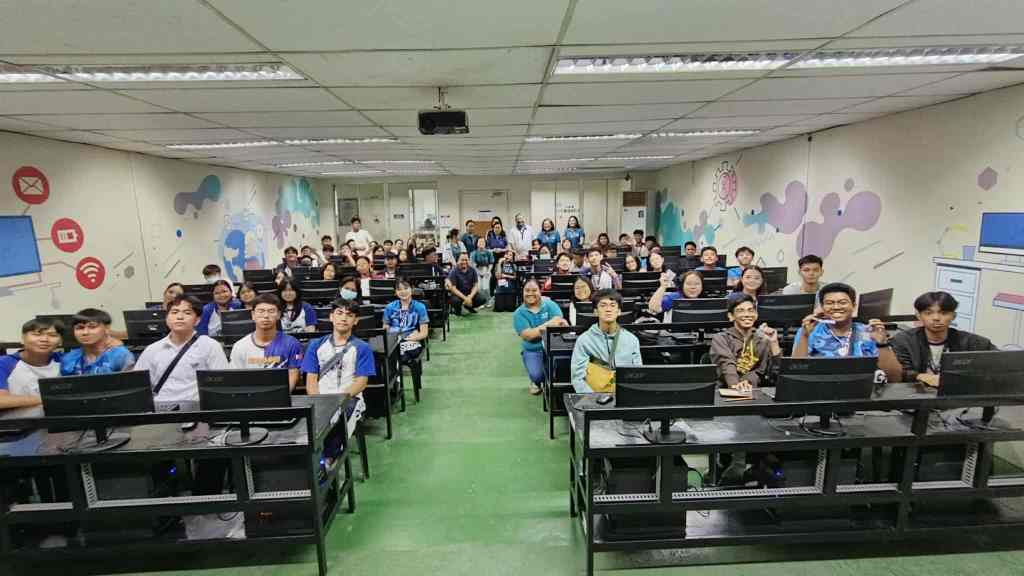
DICT also envisions to mainstream emerging technologies to the public especially to senior high school and college students through a webinar series dubbed as Tech Trends. Through the program, DICTs ICT Industry Development Bureau (IIDB) had successfully completed all the basic, intermediate, and advanced tracks in Artificial Intelligence, Blockchain, Cloud Computing, Internet of Things, Cybersecurity, Data Analytics, and Gig Economy this year with the last advanced session for Internet of Things conducted last October 12. For 2023, IIDB conducted five (5) intermediate and seven (7) advanced sessions with 7, 204 total participants via Zoom and over 218, 000 total audience reached via Facebook.
Emphasizing the importance of policy-making, Batapa-Sigue introduced the EUREKA Policy Dialogues on AI and the IoT National Strategy for Policy and Industry Road Mapping and Ecosystem Development (INSPIRED).
“EUREKA” is policy model that embodies the critical facets of integrating Artificial Intelligence (AI) and digital transformation through an ethical and inclusive lens. EUREKA stands for Empowerment through Education, Universal Access, Responsible AI, Ethical Innovations, Knowledge-driven Society, and Agile Governance. Each component emphasizes the marriage of technology with humane principles, aiming to shape a society that harnesses AI’s advantages responsibly and inclusively. The framework offers both national and regional insights, guiding us in establishing consistent standards in emerging technologies. This aids the Philippines in adeptly navigating the intricacies of a digitally evolved society, positioning EUREKA as a foundational pillar for strategy and development.
The IoT National Strategy for Policy and Industry Roadmap and Ecosystem Development (INSPIRED) aims to holistically guide the cultivation, adoption, and expansion of IoT technologies within the nation. This strategy elucidates a distinct vision for the IoT sector, linking it with national objectives such as economic growth and improved quality of life. Key pillars of INSPIRED include a defined policy framework, prioritizing digital infrastructure, fostering industry alliances, promoting research, nurturing talent, highlighting pivotal IoT use cases, ensuring cybersecurity, establishing funding mechanisms, and advocating international cooperation. Serving as a pivotal document, INSPIRED sets the strategic trajectory and actions essential for maximizing the nation’s benefits from IoT innovations.
She extended an invitation to the PSIA and other industry associations to participate in these critical discussions.
In conclusion, she expressed her privilege to collaborate with key figures in the Philippine IT and Software industry. With the nation on the cusp of a dynamic digital revolution, Batapa-Sigue reiterated DICT’s commitment to shaping an empowered future for all Filipinos.
Other experts also followed the remarks of Batapa-Sigue, such as “How Nvidia Uses Its Own AI Technologies in Optimizing Its Supply Chain” featuring Anthony Nogueira, a Business Solutions Architect from NVIDIA. Sanjiv Gupta, the President & Country Head of IBM Solutions Delivery, Inc. talked about “CEO Decision-Making in the Age of AI”, “Accenture Plenary” immersed in a CIO roundtable discourse, and also tour an exhibition. Kervi Laborate, an Industry Solutions Architect at Alibaba Cloud Intelligence elucidated on “The Generative AI Revolution: Shaping Industries and Transforming Businesses”. In summation, the event offered a profound journey into the confluence of AI and contemporary business, enriched by perspectives from luminaries of premier tech enterprises.
 Jocelle Batapa Sigue
Leave a comment