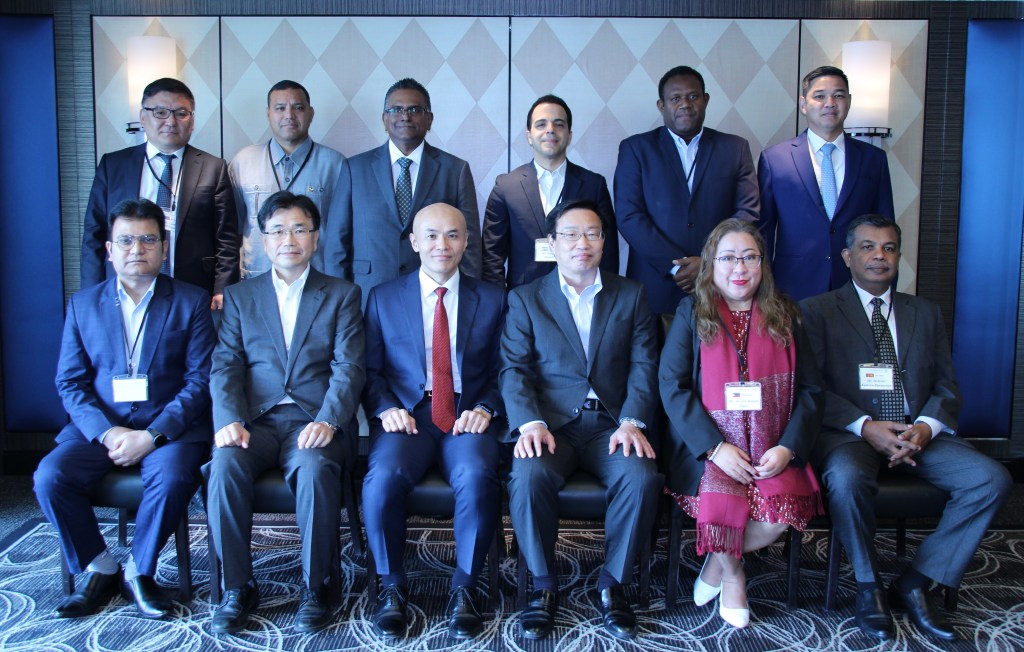
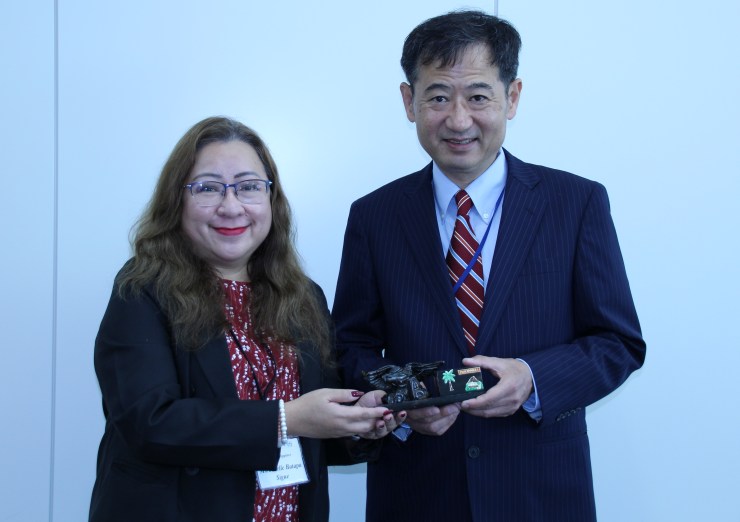
The Workshop on Policy Development for High Level Officials took place from June 26th to June 29th, 2023, in Tokyo, Japan. The workshop focused on policy-related issues concerning information and communication technology (ICT) and was organized by the Asia-Pacific Telecommunity (APT).
The fellowship was an international assembly of high-level officials representing their respective countries’ digital and communication sectors, namely Behzad Ahmadi, Director of The Center of International Cooperation and Strategic Studies from the Ministry of ICT Islamic Republic of Iran; Ma Sivanesan Marimuthu, Deputy Secretary General from Malaysia’s Telecommunication Infrastructure and Digital Economy Sector; Waylon Muller, Assistant Secretary from RMI-Ministry of Transportation, Communications and IT in the Marshall Islands; Ganbat Bulgaa, an Advisor to the Minister from the Ministry of Digital Development and Communications in Mongolia; Anil Kumar Dutta, Joint Secretary from the Information Technology Department of the Ministry of Communication and IT of Nepal, Jocelle Batapa Sigue, Undersecretary of the Department of Information and Communications Technology from the Philippines; Ranatunga Gamaralalage Helasiri Kumara Ranatunga, Acting Director General of the Telecommunications Regulatory Commission of Sri Lanka; Dr. Ekapong Rimcharone, Inspector General of the Ministry of Digital Economy and Society of Thailand; and Brian Winji Molitaviti from the Telecommunications, Radiocommunications and Broadcasting Regulator of Vanuatu.

The event began with an opening ceremony featuring speeches from APT’s Secretary-General, Masanori Kondo, and other high-ranking officials. A series of country presentations on the status, issues, and challenges on ICT policy and administration in various nations marked the first day of the workshop.
Day two started with continuation of country presentations, followed by a session on Connectivity. This session highlighted the disparity in digital access between different regions and sectors due to rapid digitization. It further delved into global digital divide issues, ICT infrastructure development, and local 5G initiatives to bridge regional disparities. The session was moderated by Dr. Hitoshi Mitomo from Waseda University.
The session discussed how governments could enhance efforts to increase access to affordable and resilient digital infrastructure in unserved and underserved areas. The rapid progress of digitization had brought various changes to society and the economy, but as digitization progressed, disparities widened not only between individuals and regions, but also across various fields such as the economy, technology, and education.
Discussion touched on the current situation and challenges of the global digital divide, the status of ICT infrastructure development, the need for policy support in local regions, and their initiatives and examples of local 5G initiatives that contributed to the resolution of regional disparities and the reduction of costs, especially local 5G initiatives that aided in addressing solutions to regional issues and creating new values,
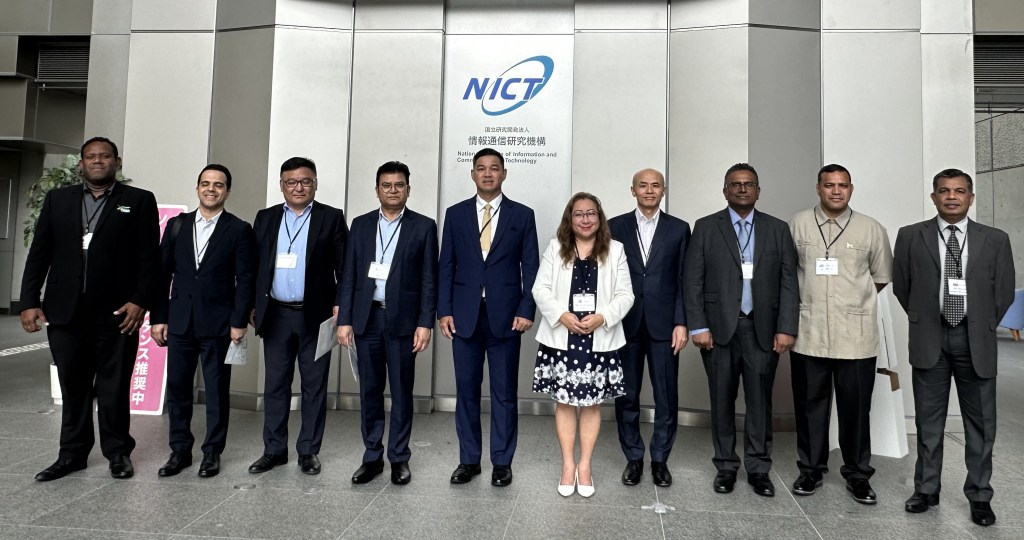
The participants also had the opportunity to visit the National Institute of Information and Communications Technology (NICT) and explore exhibits related to 5G technology and more. The visit concluded with a presentation on resilient ICT R&D for disaster response and management.
Day three of the workshop began with a session on Trust and Safety. The participants discussed the need for all-out efforts from both public and private sectors to protect critical infrastructure services. The session also highlighted the rising cybersecurity challenges due to increasing digitization.
Participants pointed out that as the development of digital infrastructure progressed and digital utilization continue to grow, and cybersecurity presented an ever-increasing challenge as susceptibility to cyberattacks grew.
Various initiatives were discussed for the cybersecurity of critical infrastructure upon which people’s lives and socioeconomic activities heavily relied, as well as examples of private sector initiatives for cybersecurity from a digital transformation perspective.
The next session titled Innovation focused on the critical issue of shortage of human resources, the role of AI in transforming business models, and how society should coexist with Generative AI. In the age of AI, each country faced a myriad of social challenges, with the shortage of human resources emerging as a common issue across all sectors. In Japan, the shortage of human resources due to the declining birthrate and ageing population had also become a major challenge in both the public and private sectors. For instance, there were concerns that if it became difficult to secure personnel with certain skills in government organizations, current public service levels couldn’t be maintained with existing work processes.
The private sector also recognized that complex external factors such as the environment, welfare, and economy were having a greater impact on their businesses than ever before and seek to transform their business models using advanced technologies like AI to adapt to these changing circumstances.
The session had introduced a case study of a municipality that had formulated a ‘DX Promotion Plan’. This municipality was promoting various initiatives utilizing diverse data and digital technologies such as AI under the three pillars of ‘improving convenience for residents’, ‘creating new value’, and ‘serving all residents’. Furthermore, the evolution of AI expected over the next 10 years and issues about how humanity and society should coexist with Generative AI were also discussed, particularly from the perspective of an IT company.
The day concluded with a two-part discussion session on the issue of Fake News, where the participants shared the status and challenges of fake news in their respective countries. The session aimed to foster international cooperation and collaboration to combat the risks associated with fake news.
On the final day, participants had an exchange of opinions with Japanese ICT companies and later attended a dinner reception hosted by APT. Osamu Onodeara, the Director-General for International Affairs, Global Strategy Bureau, MIC, addressed the gathering, marking the end of the four-day workshop.
In her speech, Philippine Undersecretary Batapa-Sigue expressed appreciation for the learning gained by all fellows during the training and thanked APT, MIC, JTEC and Japan government for the opportunity.
Philippine Policy Updates
Undersecretary Batapa-Sigue shared how in recent years, the Philippines has been actively working on policy development initiatives to address the challenges and enhance the ICT landscape in the country. These initiatives have introduced new incentives, strengthened public-private partnership mechanisms, and relaxed foreign participation in the ICT sector, paving the way for growth and development.
To facilitate investment in the ICT sector, several landmark laws and policies have been enacted. The Innovative Startup Act (Republic Act No. 11337) and the Corporate Recovery and Tax Incentives for Enterprises (CREATE) Act (Republic Act No. 11534) have provided support and incentives for startups and businesses in the industry. The Amendments to the Retail Trade Liberalization Act (Republic Act No. 11595), the Foreign Investments Act (Republic Act No. 11647), and the Public Service Act (Republic Act No. 11659) have relaxed regulations and opened doors for increased foreign participation.
In addition to these laws, the government has implemented Administrative Order No. 44, which directs the adoption and implementation of the National Competition Policy, promoting fair competition in the ICT sector. Furthermore, the amended 2022 Implementing Rules and Regulations of the Built-Operate-Transfer (BOT) Law have provided a framework for infrastructure development projects in the country.
Recognizing the importance of digital connectivity infrastructure, the government has accelerated its deployment through various policies and regulations. The Philippine Space Act (Republic Act No. 11363) has facilitated the development and utilization of space technology for communication purposes. Executive Order No. 127 has expanded the provision of internet services through inclusive access to satellite services. The Department of Information and Communications Technology (DICT) has issued circulars and guidelines to implement the national policy for expanding internet services and promoting the co-location and sharing of telecommunication tower infrastructure.
Moreover, the government has placed emphasis on elevating the country’s status in terms of ICT innovation and human resource competitiveness. The Philippine Innovation Act (Republic Act No. 11293) and the Philippine Creative Industries Development Act (Republic Act No. 11904) have been enacted to foster innovation and creativity in the sector. The Philippine Digital Workforce Competitiveness Act (Republic Act No. 11927) aims to enhance the skills and competitiveness of the digital workforce in the country.
In response to the growing challenges of online malicious activities, the government has introduced stricter laws. The Anti-Online Sexual Abuse or Exploitation of Children (OSAEC) and Anti-Child Sexual Abuse or Exploitation Materials (CSAEM) Act (Republic Act No. 11930) and the SIM Registration Act (Republic Act No. 11934) have been enacted to combat online sexual abuse and exploitation, as well as ensure the proper registration of SIM cards to prevent misuse.
These policy development initiatives demonstrate the government’s commitment to nurturing the ICT sector, promoting innovation, ensuring connectivity, and addressing the challenges faced by the Philippines in the digital age. By creating an enabling environment for investment, infrastructure development, human resource competitiveness, and online safety, the country is positioning itself for ICT advancement and socio-economic growth.
About Asia-Pacific Telecommunity (APT)
The Asia-Pacific Telecommunity (APT) is an intergovernmental organization founded in 1979 by a joint initiative of the United Nations Economic and Social Commission for Asia and the Pacific (UNESCAP) and the International Telecommunication Union (ITU).
APT is a platform for regional member countries to come together and discuss key issues related to telecommunication and information and communication technology (ICT). It aims to promote the development of telecommunication services and information infrastructures throughout the Asia-Pacific region.
The APT operates with the principles of promoting regional cooperation, providing assistance to members, coordinating telecommunication activities, and fostering the development and implementation of new technologies in the region. Its work covers a wide array of ICT and telecommunication aspects, including policy and regulation, spectrum management, rural connectivity, disaster communication, cybersecurity, and more.
APT has 38 member countries, four associate members, and 130 affiliate members which consist of telecom operators, manufacturers, research & development organizations, and other industry-related organizations. The APT’s headquarters is in Bangkok, Thailand.


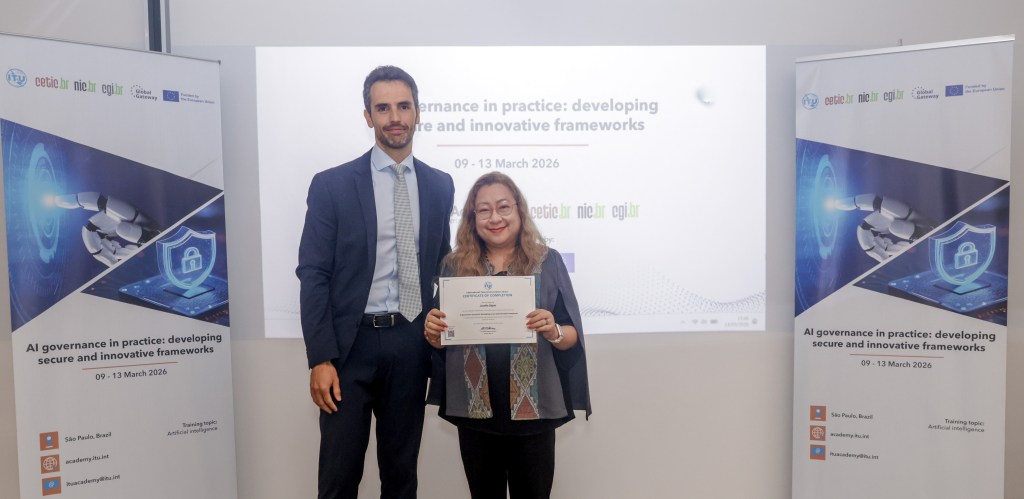
 Jocelle Batapa Sigue
Leave a comment